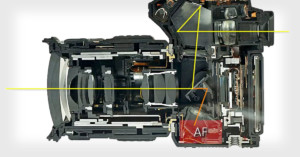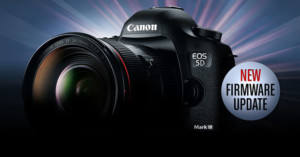
Canon today officially launched a new firmware update (version 1.2.1) for the 5D Mark III that brings two notable improvements to the camera: uncompressed HDMI output and the ability to use cross-type autofocus at f/8. Read more…
It’s fairly well known that not all lenses are created equal. Put that in combination with manufacturing variables and lenses don’t always perfectly align with the camera mount. Generally the differences are minor and for the most part negligible, but I buy old Minolta lenses from eBay and I want to get the best bang for buck out of them.
I started making micro adjustments to my lens/camera combinations when I first got Sony’s a77, and have now micro adjusted all my lenses for the a99 and D3. After reading what the Internet had to offer regarding “micro adjustment” or the “fine tune” functions higher level DSLRs offer, I quickly printed off some charts similar to rulers and taped them to my wall to start making adjustments. Read more…
Want to focus your camera simply by looking at a particular area of the viewfinder? If you’re a Sony shooter, you might be enjoying that feature as early as next year. The company is reportedly working on building Eye Tracking autofocus into its cameras, with the initial version arriving in a flagship camera sometime in 2014. Read more…
Want to see how fast the new AF is? We captured the short video above during a brief hands-on time we had with the camera. It doesn’t show an in-depth test or much variety in subject matter, but should offer a taste of what “world’s fastest AF” looks like in the flesh. Read more…
The Canon EOS M is quickly becoming the laughingstock of the mirrorless party due to its autofocus system, which leaves much to be desired in terms of speed. To show just how sluggish the system really is, Tomek Kulas over at M43.eu did this very simple yet informative “hands-on test” that pits the EOS M against one of its archrivals: the Olympus OM-D EM-5. Read more…
The Canon 1D X firmware update that Canon accidentally leaked yesterday is now official and available over on Canon’s website. The upgrade adds two autofocus features that photographers have been asking for since the camera was released: illuminated AF points and the ability to use cross-type autofocus at f/8. Read more…
Sony is reportedly focusing on autofocus as one of the main battlegrounds it’ll wage war on in the DSLR market. According to sonyalpharumors, the company is working on a new A99 SLT camera that’s already being tested by photographers in the wild, and one of the main selling points of the camera is a whopping 102 autofocus points — all of them cross type. For comparison, Canon’s 1D X has 61 AF points with 41 of them cross type, and the Nikon D800 has 51 AF points with 15 of them cross type. Granted, the autofocus performance of a camera is much more than the number of cross-type points it has, but perhaps this is the beginning of a new “cross-type war” now that the “megapixel war” is cooling down a bit.


Contrast detection is one of the two main techniques used in camera autofocus systems. Although focusing speeds continue to improve, the method uses an inefficient “guess and check” method of figuring out a subject’s distance — it doesn’t initially know whether to move focus backward or forward. UT Austin vision researcher Johannes Burge wondered why the human eye is able to instantly focus without the tedious “focus hunting” done by AF systems. He and his advisor then developed a computer algorithm that’s able determine the exact amount of focus error by simply examining features in a scene.
His research paper, published earlier this month, offers proof that there is enough information in a static image to calculate whether the focus is too far or too close. Burge has already patented the technology, which he says could allow for cameras to focus in as little as 10 milliseconds.
Canon’s new 1D X is an impressive fusion of the old 1D and 1Ds lines, boasting state of the art sensor quality combined with impressive speed, but there’s one downside that may be a big disappointment to some photographers: the camera loses autofocus when used with lenses with a max aperture of f/8.
While there aren’t any Canon lenses that naturally have an f/8 maximum, adding a 1.4x extender to a f/5.6 lens or a 2x extender to a f/4 lens results in a lens with a max of f/8. If you’re planning on upgrading to a 1D X but need extended reach (e.g. you do bird photography), you may need to shell out some extra cash for a faster lens.
Photographer Adrian Onsen wanted to use the AI Servo autofocus mode on his Canon 40D in low-light situations, but found that the AF assist beam is only emitted once until focus is achieved rather than every time the camera needs to refocus. He then purchased a laser pointer from a dollar store, disassembled it to obtain a defocused beam of light, and attached it to the top of his camera. The hacked-together AF assist tool ended up working pretty well — Onsen was able to shoot sharper photos at a dance club without anyone noticing the extra light. To learn more check out his in-depth writeup here.