
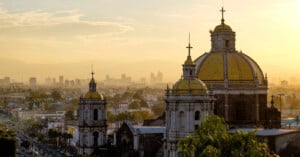
If You’re Traveling to Mexico, Beware of the Camera Tax at the Border
A little-known tax law in Mexico has the potential to trip up photographers visiting the country if they are carrying more than two cameras or even lenses.
A little-known tax law in Mexico has the potential to trip up photographers visiting the country if they are carrying more than two cameras or even lenses.
This was a busy year for Canon, highlighted by a very good video camera in the Canon EOS C50 and an even better hybrid camera in the EOS R6 Mark III, PetaPixel's Camera of the Year. But Canon's 2025 included much more than just these two cameras, so let's take a deeper dive into Canon's year, how it transformed the EOS R landscape, and how it sets the stage for more excellence from Canon in 2026 and beyond.
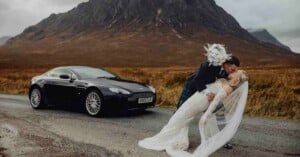
A wedding photographer’s images gained widespread attention after a passer-by -- who turned out to be a popular influencer -- lent his Aston Martin for a couple's photo shoot in the Scottish Highlands.
As part of Germany's rearmament, the army is recruiting an unusual creature for warfare: a giant Madagascar hissing cockroach.
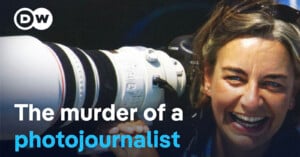
A harrowing documentary explores the life of photographer Anja Neidringhaus, who died in a targeted assault in Afghanistan while covering the 2014 presidential elections.
A photographer has captured an incredible interaction between a skunk and a mountain lion on one of his trail cameras.
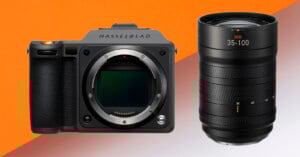
After an uncharacteristically prolific 2024, Hasselblad slowed down in 2025 in terms of quantity but reached new heights when it comes to quality.
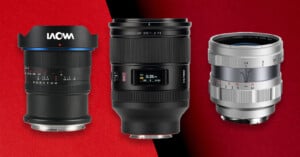
We're kicking off our annual recap series with a look back at the best and most interesting Chinese lenses of 2025. From 7Artisans to Viltrox, let's remember some great Chinese glass that hit the scene in 2025.
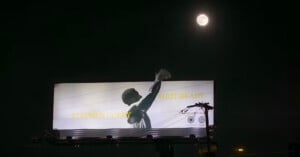
To mark the release of Steph Curry's new book Shot Ready, the publisher Random House teamed up with a creative agency to create a unique billboard that harnesses an astronomical event.
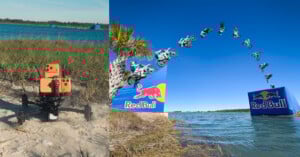
Apple recently deployed more than 40 new iPhone 17 Pro Max devices to capture Red Bull motocross athlete Tyler Bereman hopping from island to island on his motorcycle.
After spending all day skateboarding in the desert Sun, photographer Travis Burke was surprisingly stressed. Why? He had the shot of his dreams to capture.
The cinematographer behind the hit Netflix movie Wake Up Dead Man: A Knives Out Mystery has revealed how he used lighting to give the film a rich, gothic look that changes with every scene.
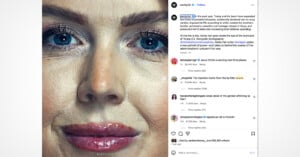
Vanity Fair photographer Christopher Anderson has defended his close-up photographs of President Donald Trump's Cabinet, particularly the portrait of White House press secretary Karoline Leavitt.
Wedding photographers must be ready for anything, including spur-of-the-moment photo requests. But one such picture inquiry proved too much for a prudish wedding photographer who turned down a groom's request that he and his groomsmen be photographed in their boxer shorts.
Michele Singer Reiner tragically died last night alongside her husband Rob. While Rob was a famous director and actor, Michele was a talented photographer whose images were seen by millions.
Photographer Peter Turnley arrived in Paris in 1975 aged 20. Since then he has thrown himself into the City of Light, documenting its comings and goings on his trusty Leicas.
The National Portrait Gallery in London, U.K., is hosting a major exhibition examining Cecil Beaton’s pivotal role in shaping twentieth-century fashion and portrait photography.
Some obsessions never let you go. For Jack Lueders-Booth, it began when he was nine years old and saw his first motorcycle and fell in love.
No club scene anywhere else in the world can match Berlin for its mystique, magnetism, and music. The city draws in creatives from all over -- including photographer Chris Noltekuhmann, who has spent the past two and a half years taking portraits of ravers moments after they left the venue.
A photographer unknowingly captured a poignant photo of a family’s final walk with their terminally ill dog on a San Francisco beach.
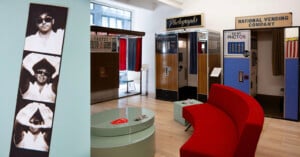
A permanent collection of analog photo booths has opened to the public in New York City -- and it's attracting lines around the block.
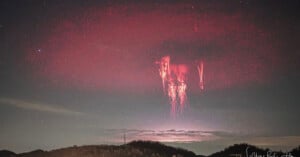
A photographer has captured not one but two rare forms of lightning, which he compares to the famous scene from Independence Day when the alien mothership destroys the White House.
A new book Dear Marilyn: The Unseen Letters and Photographs reveals a collection of long-lost photographs of Marilyn Monroe and explores the photographer behind some of her most iconic images.
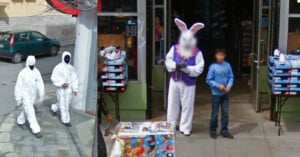
When Google Street View rolled out in 2007, it became the "world's photographer." Since then, artist Jon Rafman has been collecting moments captured by Google's Street View cars.
The Italian coffee brand Lavazza hired street photographer Alex Webb to shoot its 2026 calendar, using his colorful aesthetic to capture the essence of life in Italy.
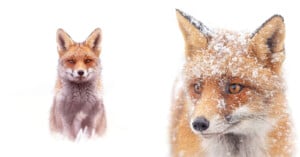
A photographer has captured a series of exquisite images of foxes in snow to highlight each of their personalities and to show they don't deserve their "sly" and "cunning" labels.
Last month, The Dream (The Bed) by Frida Kahlo sold for $54.7 million, breaking the auction record for a work by a woman. Fascinatingly, Kahlo's 1940 painting was created for -- and inspired by -- American photographer Nickolas Muray, who produced some of the most iconic portraits of the artist.
Late in 2021, Jack Smith opened the first of two carefully wrapped boxes filled with old photographic slides that had been sitting in his parents' garage for his entire life. What he found was astonishing: his grandfather’s archive of 80,000 images taken across decades and 40 countries.
At the end of each year, TIME selects its Top 100 photos of the year. As always, the 2025 edition is replete with superb photography, ranging from split-second action shots of important news events to powerful photos from longer-term projects, the collection is a compelling visual reminder of the major events of 2025 and, perhaps as importantly, photography's power in telling the world's most important stories.
After returning from a six-month voyage to space, astronaut and enthusiastic photographer Don Pettit has plenty of photos to go through. While Pettit has photographed plenty of celestial objects, he often trains his lens on his home planet below -- and recently shared a photo of one of Earth's most sacred sites.
The winners of the 2025 International Wedding Photographer of the Year Awards (IWPOTY) have been announced, with U.K. photographer David Scholes awarded the Grand Winner title for his
humorous and beautifully composed capture of a young wedding guest peering curiously at the wedding cake.
With this week's reveal of the very impressive Sony a7 V, the mid-range full-frame camera market has never been hotter. The oldest competitor of the bunch, the Nikon Z6 III, has been out just a little over a year, while the Canon EOS R6 III and Sony a7 V are brand-new. All the major players have put their best foot forward, but which of them is actually the best when it comes to key specs and features?
After an X user posted his arresting portrait taken for his passport photo and declared that the "Chinese passport photo lady on Elizabeth" is the best portrait photographer in New York City, the tiny shop where he got the passport photo done has become a viral sensation.
The brand-new Sony a7 V ushers in many improvements, ranging from a new image sensor and a first-of-its-kind processor to better autofocus and faster continuous shooting. Let's take a closer look at the most significant changes between the a7 IV and the new a7 V.
The winners of the 12th International Landscape Photographer of the Year have been announced, and J. Fritz Rumpf of the United States has been named as the winner.
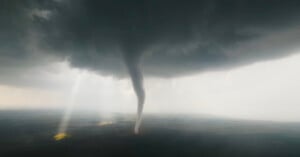
An FPV drone pilot flew a GoPro directly into a tornado to capture decidedly spellbinding footage of an atmospheric twister churning up the Oklahoma landscape.
It’s easy to imagine that anxiety over manipulated images began with Photoshop or AI, but photographers have been wrestling with the problem almost since the birth of the medium. More than a century ago (113 years back to be exact), the U.S. faced a scandal over doctored images of the president, and the outrage nearly led to a national ban on fake photos.
Finally the day has come: The Stringer: The Man Who Took the Photo, a film about who really took the famous Napalm Girl photo during the Vietnam War, has dropped on Netflix meaning anyone with a subscription can now see what the fuss is all about.
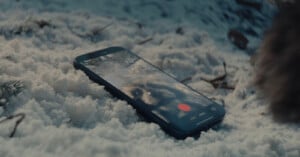
Apple has released its annual holiday film, A Critter Carol, that was shot entirely on its latest iPhone 17 Pro. Depicting a group of woodland critters who come together after a hiker drops his phone, the short film celebrates unexpected friendship.
Back in 2015, Scottish photographer Alan McFadyen spent six years and fired off 720,000 shots in his quest to capture the perfect kingfisher photograph -- an image that went on to become an internet sensation. A decade later, armed with modern camera technology, he recreated the same shot in just six minutes.
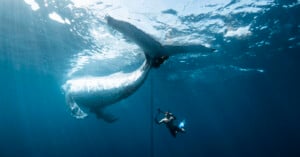
A stunning photograph of divers freeing an endangered humpback whale from an entangled chain has been announced as the Grand Prize winner of The Nature Conservancy’s 2025 Oceania Photo Contest.
A routine news shoot led to a life-changing medical opportunity for a cameraman who has quietly battled a condition that made even the simplest tasks at work and in daily life a challenge.
The Stringer: The Man Who Took the Photo, which lands on Netflix this week, opens with a line implying Nick Ut is a liar: "What you do know is what you didn’t take." But is that really true? I've always thought the inverse makes more sense.
Alfred Buckham was an aerial photographer who took to the skies at a time when pilots' lives were measured in weeks, not years. But he was also a master manipulator in the darkroom and paved the way for Adobe Photoshop and today's AI photo apps.
A filmmaker has launched a cinematic timelapse film series capturing the raw beauty and quiet resilience of America’s national parks in the hope that his work might support the NPS.
Award-winning photographer Stephen Wilkes has two photos in this year's National Geographic Pictures of the Year, a celebration of 25 of the best and most important photos featured in this year's issues of National Geographic. The photos, Wilkes' famous Day to Night images, add a new layer -- time -- to beautiful wildlife scenes.
2011's Drive was one of the last Hollywood movies shot on the streets of L.A. before the iconic orange-yellow sodium vapor lights were replaced by the more clinical white LEDs -- much to the chagrin of photographers and filmmakers.
"The older I get, the closer I get," says street photographer Bruce Gilden. Now in his seventies, Gilden's latest book examines photographs he made in the U.K. across the 1970s and 2000s -- when he was very, very close to his subjects.
A Magnum photographer has released new work that focuses on young people living in the peripheries of Spain -- reflecting the alienation and uncertainty of the present era.
In National Geographic's new documentary, Chris Hemsworth: A Road Trip to Remember, filmmakers follow the world-famous actor as he connects with his father, who has Alzheimer's, on a therapeutic "road trip back in time."