Reviewing the Most Beautiful Digital Camera Ever Made 22 Years Later
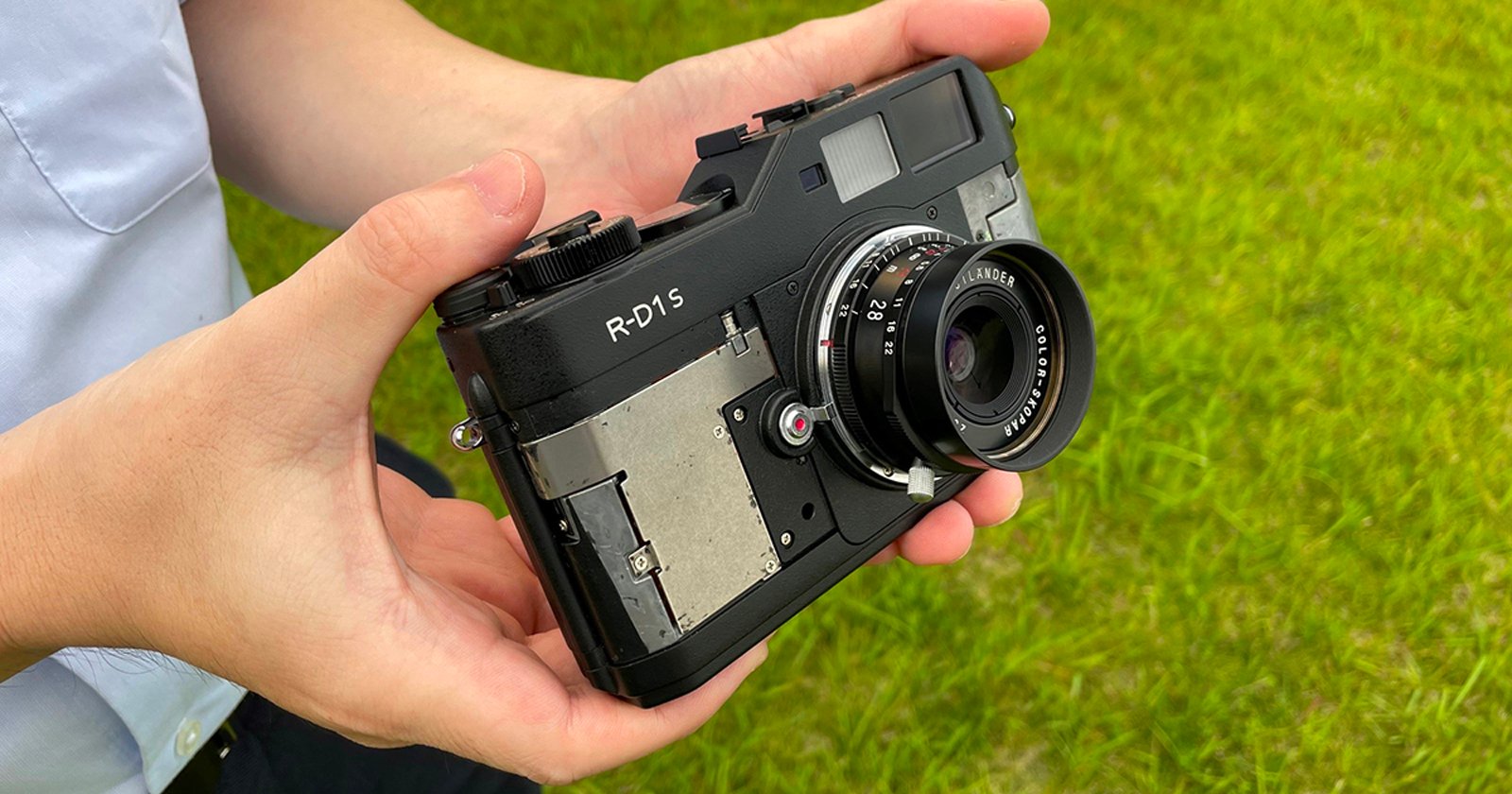
In 2004, Epson and Voigtländer teamed up to create a truly legendary camera, the Epson R-D1. It was the world’s first digital rangefinder, packed with exceptional features and style to match. Cameralabs‘ Gordon Laing has given the Epson R-D1 his wonderful “Retro Review” treatment, giving the R-D1 another chance to shine and show the world what made it so special more than 20 years ago.
As Laing explains, despite how special and groundbreaking the R-D1 was when it arrived in 2004, it is not particularly well known. But photographers who do know it almost exclusively love it. The R-D1 is a beautiful, meticulously designed photographic pioneer.
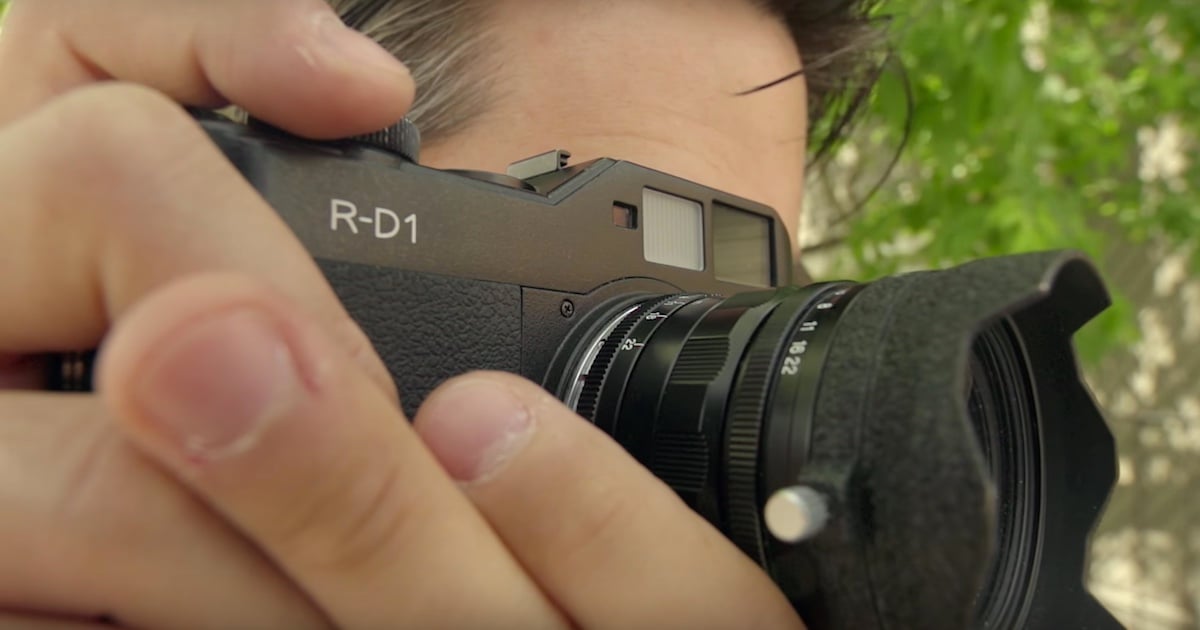
Epson beat Leica to the digital rangefinder market by a whole two years, as the Leica M8 didn’t arrive until September 2006. The R-D1 had plenty of Leica charm, though, as it featured a Leica M-Mount, welcoming Leica M lens owners into the digital era. The Epson R-D1 sported a 6-megapixel APS-C CCD image sensor, a proper optical rangefinder, and, as Laing writes, one of the best camera designs in history. It even leveraged Epson’s Seiko connections through beautiful, functional analog watch-style gauges.
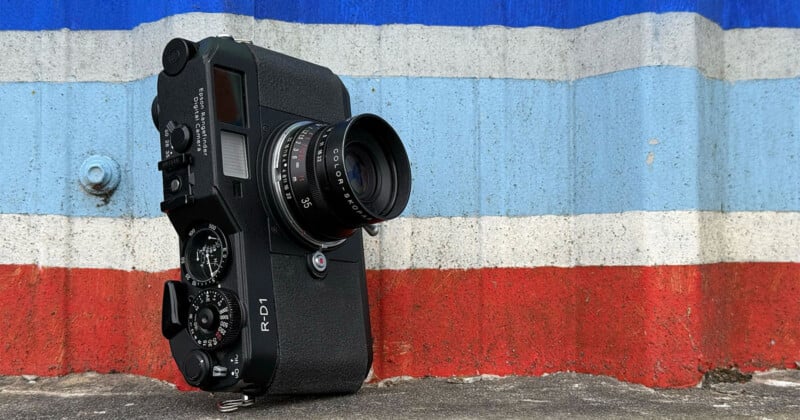
The R-D1 wasn’t just the first digital rangefinder camera, either. It has another claim to fame, though one that remains somewhat debated among photographers today. The R-D1 was technically the first mirrorless digital camera with interchangeable lenses, as the Panasonic Lumix G1 didn’t hit the scene until November 2008.
Many of the vintage digital cameras Laing reviews are easy to track down on the used market for pennies on the dollar. Sometimes he even scores functional, classic cameras for under $50. However, the Epson R-D1 is sadly not for bargain hunters. The camera launched in 2004 for about $3,000, and even today, thanks to its cult-classic status and relatively scarce supply, used copies can easily cost $2,000 or more. Laing notes he was able to borrow one from a kind Epson employee for the review.

Voigtländer Bessa fans will immediately notice the similarities between their beloved analog rangefinder and the digital Epson R-D1. That’s no coincidence. Epson, keen to make its name as a photography company, worked with Cosina, owner of the Voigtländer brand, on the R-D1. The R-D1 is essentially a customized version of the Bessa R2.
The Epson R-D1 is truly a Dr. Frankenstein’s monster type of camera. It has a Voigtländer body, Seiko gauges, and the same 6-megapixel CCD sensor that Nikon used in 2003’s D100 DSLR. Although Laing notes that he believes this sensor was “tweaked for the R-D1.” And then, of course, there’s the Leica M-Mount. What a mishmash!

The R-D1 was not only the combination of a wide range of components from other companies, but also the confluence of analog and digital photography. The Epson R-D1, long before the Fujifilm X, fully embraced analog-style controls and mechanics. The camera has a “film” advance lever that mechanically links to the shutter, so photographers have to wind it to capture their next digital frame. It is a truly mechanical digital camera, and that’s fantastic.

Laing’s comprehensive and excellent Epson R-D1 Retro Review has many more details, analysis, and great sample photos. But did it earn its legendary status in Laing’s book?
“I shot with the R-D1 for several weeks, but made my mind up almost immediately. This is not only a gorgeous-looking camera but one of the most enjoyable I’ve used in a long time,” Laing concludes.

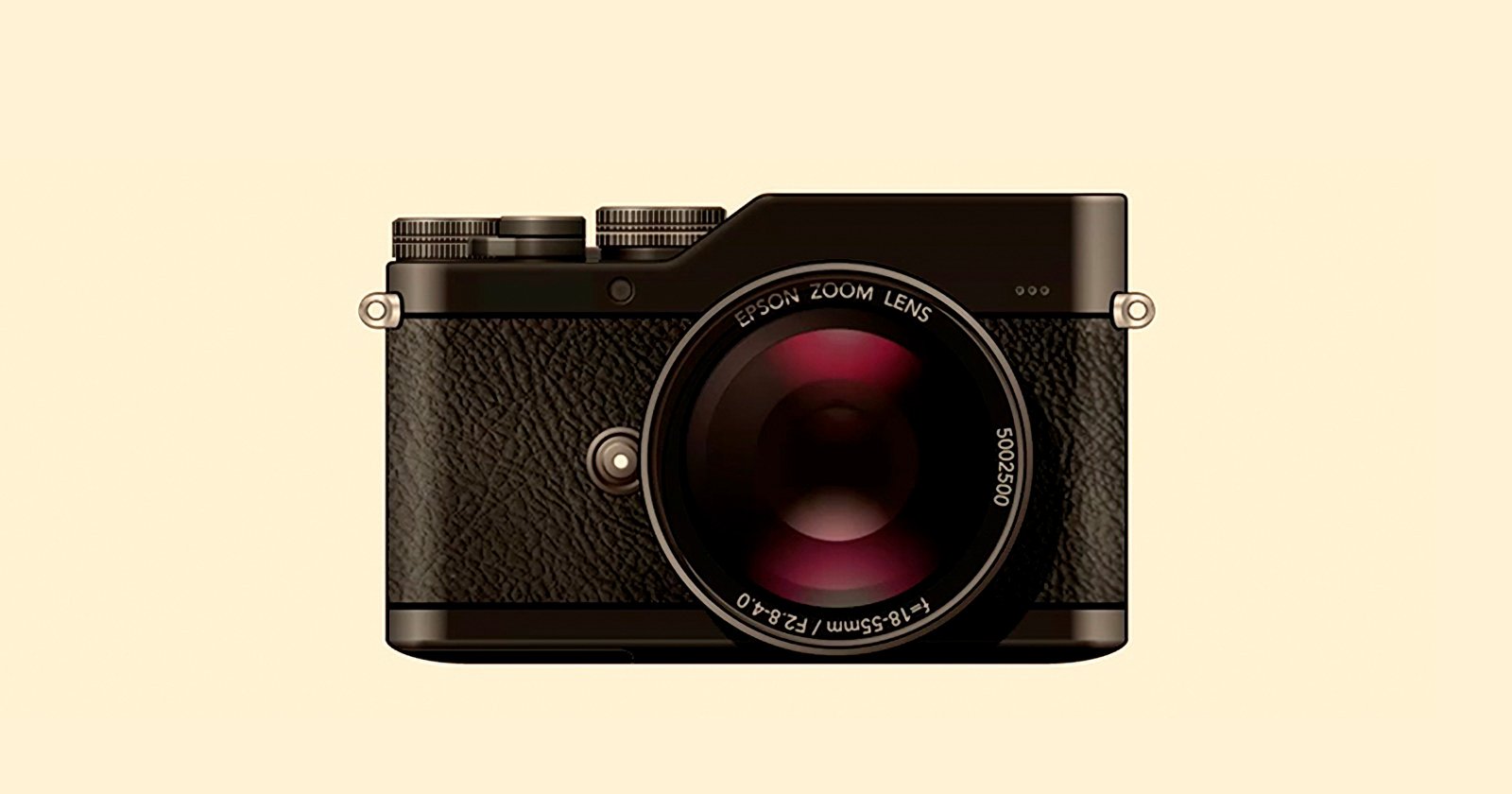
Sadly, while the Epson R-D1 and its successors ooze charm and excellence, the cameras were not a smashing commercial success. However, as I’ve written before, and I believe Laing would agree, a brand-new Epson R-D series camera could succeed today for the very same reasons the original failed a couple of decades ago.
The R-D1 simultaneously arrived too late and too early. It was too old-school in 2004, when photographers were clamoring for fast-paced digital cameras and huge technological leaps. It’s a shame the R-D1 didn’t arrive much later, when vintage photographic experiences came back in favor. In a parallel Universe, where the R-D1 came out in 2024, not 2004, it could have carved out a very successful niche.
Image creditsGordon Laing (Cameralabs)
Affiliate Disclosure PetaPixel articles may include affiliate links; we may earn a commission if you buy through one.