
Student Captures Cosmic Radiation on Film by Sending Negative to Space
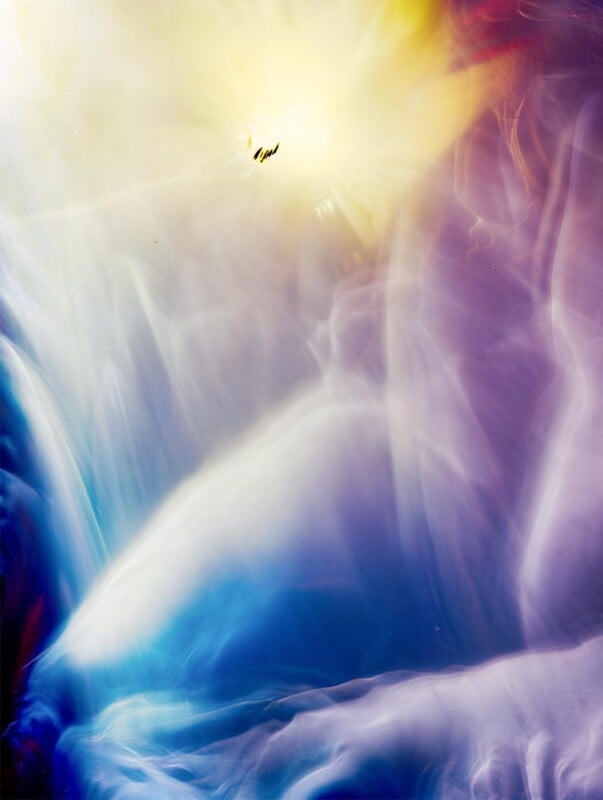
A photography student sent a 5×4 color negative into space on April 19 and exposed it to cosmic radiation, capturing a beautiful, abstract portrait of space unlike anything done before.
Tom Liggett is a third-year BA (Hons) photography student at the Arts University Bournemouth (AUB) in the U.K. His groundbreaking project, HELIOS, saw him travel to New York state where he sent a series of weather balloons with negatives attached to them to altitudes of over 121,000 feet — about three times higher than commercial aircraft and far above the protective layers of Earth’s atmosphere.
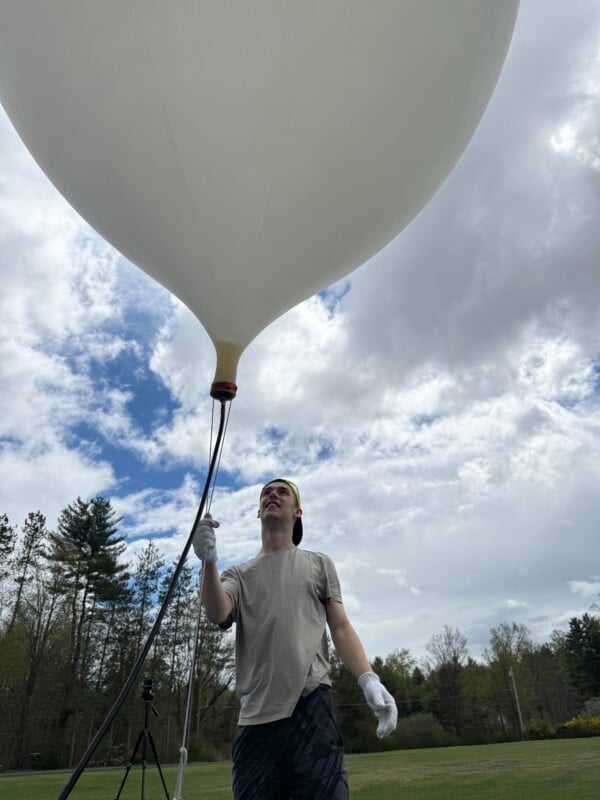
Liggett wanted to see how analog film would capture the invisible energy of the Universe. There was no camera or lens, just a piece of film duct-taped inside a plastic bag.
“Knowing that various kinds of radiation exist in the atmosphere, I wondered if I could send a negative into space to capture cosmic radiation directly onto the surface of the film,” Liggett says.
The curious student partnered with Filmed in Space, an outfit that specializes in sending objects into the stratosphere for photo and video purposes. He sent the 5×4 film — more typically found in a large-format camera — up into space sealed in a dark bag to ensure that the film emulsion was only exposed to UV-C rays, muons, and high-energy particles.
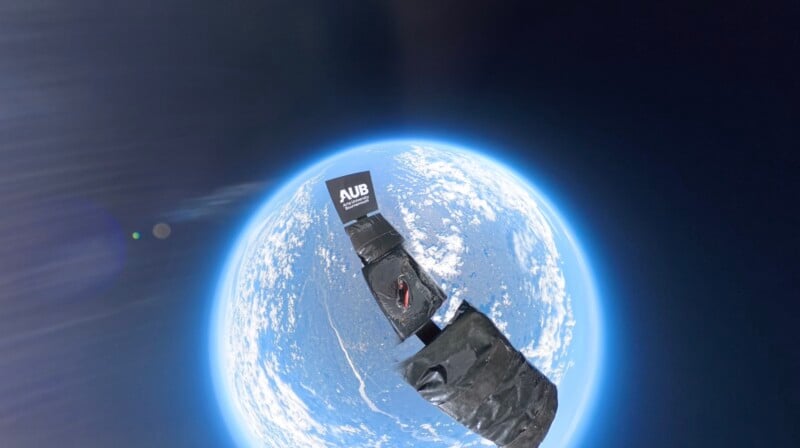
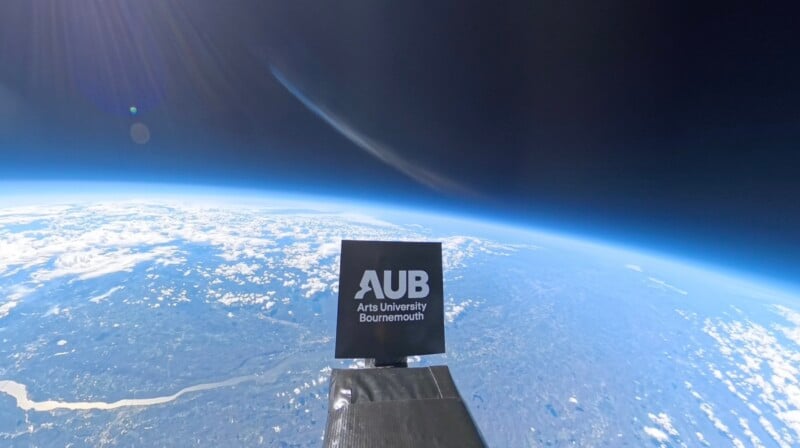
Liggett says his expectations were low: “All I wanted was a speck of dust or something,” he says. But what he got instead was a colorful kaleidoscope image with ghostly patterns and textures caused by energies from far off in the Universe.
“The duration of the flight is as critical as the altitude itself,” Liggett explains on Instagram. “As the balloon ascended, the film was continuously exposed, not through a lens, but through direct interaction with altitude, radiation, and atmospheric thinning.”
“At just over 100,000 feet, the balloon burst, a rare and unpredictable moment, before the payload began its descent,” he continues. “At this height, the emulsion is subjected to extreme levels of cosmic radiation and high-energy particles, recording not an image, but an accumulation of encounters over time.”
Liggett tells the BBC that he has deduced that a chunk of the image was caused by UVC radiation, which exists above the ozone layer. The rest of it consists of “cosmic radiation and muons from black holes, billions of light-years away”.
“Even if it was a completely blank image with a tiny alteration in the film, I would have been happy,” he adds. “But to get these celestial abstract results, which are forged from black holes and the sun’s radiation… I was very shocked, but really happy. I’ve turned a dream into a reality and it feels surreal!”
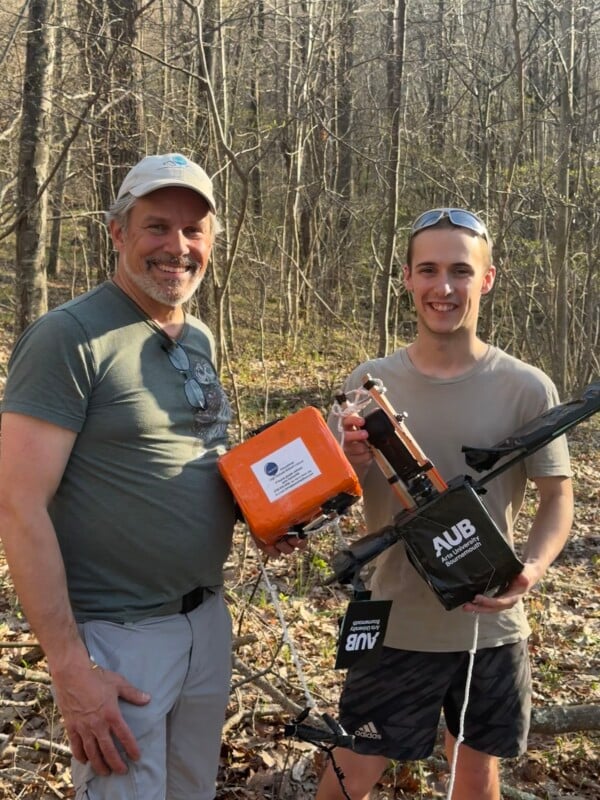
The payload with the exposed film landed 50 miles away from the launch site. Not only that, but it landed on someone’s private property in Connecticut, meaning the team had to ask permission from the landowner to search for it. While it landed on the ground, the bag was pierced by a tree on the way down, which caused the “violent yellow bloom” at the top of the frame, but it really does add to the image.
Liggett developed the negative in the AUB lab and tells the BBC, “I actually think it’s a more accurate representation of space than a photograph is… It’s capturing the actual molecular formula of space.”
More of Liggett’s space photographic experiments can be found on his Instagram and website.
Image creditsTom Liggett
Affiliate Disclosure PetaPixel articles may include affiliate links; we may earn a commission if you buy through one.