Dear Clients: Don’t Ask Photographers for a Reshoot of Good Photos
To those who may hire a portrait photographer: …
To those who may hire a portrait photographer: …
For street photography, the choice of cameras and lenses is, simply put, huge. So where do we start? What IS the best lens for street photography?
I arrived in Ireland a couple days ago, and I have been taking plenty of photos along the way. I’ll post them in future articles, but there is something more important to discuss for now: the dangerous, idiotic behavior I saw at the Cliffs of Moher.
If you simply want something, do you just take it? In the world of photography, content is stolen everyday and used without permission. It's too easy, and I'm sick of it.
Sometimes we, as humans, wrestle with big issues -- large complex questions with no easy answers.
Street photography ethics are a touchy subject and I am not talking of street photography rules but rather more how photographers choose to behave. When shooting (candid) street photography in London or anywhere else, many street photographers seem to leave their values at home as soon as they head out to photograph strangers.
I’ve pretty much shot RAW all my life. There are so many benefits of shooting RAW in terms of how much flexibility you have with the files, as well as the raw data in the files. However, as time goes on, I’m starting to lean more towards shooting JPEG and realize the benefits of doing so.
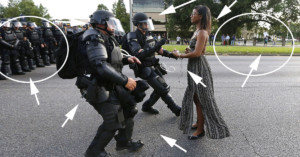
Amidst a barrage of violent imagery in the past week graphically illustrating the deaths of Alton Sterling, Philando Castile, and five Dallas police officers, Jonathan Bachman’s image of a protest in Baton Rouge has emerged as iconic.
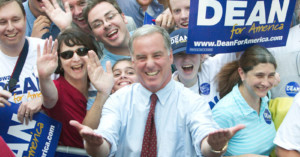
Here are random observations from my time as staff photographer for Dean for America. I wrote this some time ago as advice for somebody who was going to be a campaign photographer.
In this article, I'll discuss seven reasons why I'm still a Nikon DSLR user... plus three reasons why I could be convinced to move on.
My name is Carlos Chavez, and a couple of years ago I completed a "100 Strangers Project." I never expected this project to become as important to me as it is.
I kept this post as a draft for months, unsure if I should publish it since it discusses things and events that aren't very easy to share. I hope it can inspire and help at least one person from my personal life experience.
This post will probably sound harsh to some, but I think it's needed as street photography has a problem. It may be because of a so-called renaissance in street photography in the past few years, or just the fact it’s become fashionable, but the sheer number of terrible photos is quite impressive.
With only 4 hours notice, Kaustubh from Jungle Lore asked me join him for a trip to Ranthambore National Park in Rajasthan, India. I packed my bag quickly and decided that I am going into the forest to photograph wildlife with my new Sony bridge camera, the RX10 III.
“D” is digital. “X” is cool and mysterious. And “1” is, well, number one. Since the introduction of the Nikon D1x, camera manufacturers have been riffing on these three letters. Canon has their 1D X, and most recently Hasselblad introduced the X1D. But how do all these cameras compare?
What is the best camera for street photography? What do you recommend? That is the question I get asked most.
Fisheye lenses are often considered a ‘no-no’ among professional landscape and cityscape photographers. People see them as not much more than a gimmick. I often hear complaints about fisheye lenses because of ‘that ugly distortion’.
A lot of people have asked us why we only shoot “Victoria’s back” and why we rarely ever show her face. Believe it or not, we actually have a reason why we shoot a lot of faceless imagery, and we wanted to write it down, once and for all, so you can reference it any time you want.
Last week, I sat near the stage’s edge in the Paramount Theater to witness the ever-inspiring Look3 Festival in Charlottesville, VA. Hearing the presentations reminded me of the passion and conviction of the photographers who have dedicated years of their lives to specific projects.
You open the box and there it is; a new digital camera. You’ve wanted to be a professional photographer for a long time and now is your time. This camera is the symbol of your next step.
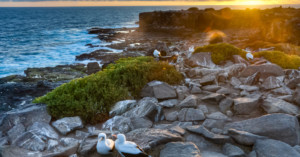
While shooting in the Galapagos Islands a few years ago, a friend said to me, "Dennis, you shoot from the heart." We had been traveling together for several days by then and this was the beginning of one of many conversations we had about photography.
I hear a lot of chatter about how the decreased volume of camera sales is going to make some camera makers leave the market, or get absorbed by another company, or worse. Most of that speculation is all wrong for one very simple reason: it ignores the goals of the companies.
A couple of weeks ago, my team and I pulled together a weekend poolside shoot with models, perfect weather, and a drone. I operated the drone and got some beautiful footage. Magnificent footage. Award-winning footage.
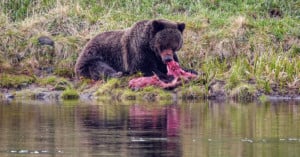
I just got back from a trip to Yellowstone National Park to test out the Nikon D500, Nikon D5, and Pentax K-1 DSLRs and I wanted to share my experience, specifically my frustrations with visiting and photographing this amazing location, which has been my top spot for many years for photographing both wildlife and landscapes.
One of the most toxic feelings that a photographer (or human being) is to feel envy. Apparently envy is a trait that is deeply embedded in us, even as babies. But why is it that we feel envy, what are we envious about, and what can we do about it?
The doctor looked straight to my mother's eyes. He wanted to break eye contact but he couldn't. There was bad news to deliver first.
I will begin by saying that my intention is not to attack Steve McCurry or defame him in any manner. It is only an attempt to clear certain facts that have come to light regarding his work and to also raise certain questions on aspects that may or may not have been missed, but certainly have not been expressed till now... at least not publicly.
There’s an article, published here on PetaPixel, that’s currently making the rounds on social media. It's called “A Disturbing Trend in Photography.” In it, long-time photographer and photo educator Neal Rantoul makes the argument that the art photography of today is heavy on words and light on quality.
Remember your first time taking photographs? I'm talking about before you joined Reddit or a camera forum, before you started posting pictures to Instagram or sharing them with your friends. The time when you considered yourself a hobbyist. The time when you were considered a tourist in your own neighborhood.
In March, ex-Stanford student athlete Brock Allen Turner was convicted of three felony counts: assault with intent to commit rape of an intoxicated woman, sexually penetrating an intoxicated person with a foreign object and sexually penetrating an unconscious person with a foreign object. Last week he was sentenced to six months in jail.
I shoot with a Sony a6000, a Sigma 19mm f/2.8, and a vintage Helios 44-6. My entire kit cost me less than $500 (second hand) and technically, it sucks.
I'm old. Believe me, I know it. I'll be 70 in a few months. That fact may make it hard for you to take me seriously, but bear with me for just this post. With age comes wisdom, right? What I want to write here is that I think the field of photography by those making art is changing in a disturbing way. Read on.
I have to admit, when I first started my photography business I didn’t think it was going to be that difficult. I thought I’d get a camera, take some photos, put some stuff out on Facebook and people would start hiring me. They would give me money, I would give them photos—done deal! How tough could it be?
"To me, photography is the simultaneous recognition, in a fraction of a second, of the significance of an event." — Henri Cartier Bresson
One morning last December, I woke up and noticed that a dream of mine came true: I had taken a picture that went viral. A picture I took at a friend’s wedding had been shared by UNILAD on Facebook with the caption “Best wedding photo ever.”
When I started photography nine years ago, I didn’t have a problem going out and finding inspiration. Everything was so new and, subsequently, there seemed to be no end to the ideas I felt I could produce. Looking back, I can see that my work wasn’t particularly indistinguishable from many others—there was no depth, no originality.
On Friday, I lost my $2,800 Apple MacBook Pro by following standard TSA security protocols at Los Angeles International Airport (LAX).
I was at John Wayne Airport on Friday morning before the sun rose, heading to a training event in Colorado. Whenever I travel by air and I’m waiting in the airport, my mind takes me back to an article that ran in a photography magazine in the early 1980s when I was a young photographer, still in school, and hoping to make a place for myself in this industry.
Cameras record a ton of information about the exposure settings of your camera, and these have been standardized into EXIF metadata fields. What few people realize is that metadata is not limited to these standard fields, and your camera is recording far more information than you ever thought possible.
Photo projects usually are planned, researched and given approval to. This one just kind of fell into my lap after a single day of shooting on a bunch of expired film on a whim at the Daytona 500.
Recently there has been a spate of very sad, and ultimately defeatist articles decrying the “death of photography”. We have no shortage of examples. Seriously.
It always staggers me that each time I’m in the shower, or camping in my tent, or having a coffee in a rural town in the middle of nowhere in France, I keep getting fantastic ideas for future projects, blog posts, photographs, travels, discoveries, and world domination.
At 1:21am on May 6, 2016, SpaceX continued its run of aerospace brilliance with a night launch of its Falcon 9 rocket, carrying its Japanese communication satellite payload to geostationary orbit.
On April 3, The New York Times Magazine photography critic Teju Cole penned a piece largely dismissing the work of renown photographer Steve McCurry. The piece caused a minor ruckus in photography circles with people (like myself) writing in his defense, while others castigated his imperialist eye and amplified whispers of staged scenes.
When taking a photography workshop, it’s important to perform some due diligence to ensure you’re investing your money wisely. Whether you’re a brand new or seasoned photographer, one things holds true — if you belong to any website, photography Facebook group, or have photographer friends, you are likely to get bombarded on a weekly, maybe even daily, basis with educational opportunities and workshops.
"We have to be humane," said the driver. It was nine o'clock at night, and since six there had been no cars or buses on the plain of Chiaraje. We were the last unnatural disruption of the monotonous highland landscape, abandoned with a failed engine.
“Fauxtographer” (according to Urban Dictionary): A person that claims to be a good photographer when in reality they just set their camera to automatic mode a start shooting. This person also happens to fumble over photographic terms or has no knowledge of the terms or switches the color mode to monochrome and calls it artistic no matter what the hell is in frame.
Just because you think it can’t possibly happen to you, doesn’t mean it won't happen anyway.
Who wouldn’t want to explore one of the world’s most haunted places given the chance? Okay, on second thought, maybe most people... Well, while on holiday with my family in Venice, I was recently given that chance and I wasn’t going to turn it down.
A few days ago I met up with two younger photographers at a coffee shop in San Francisco.