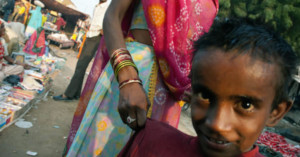
If a Kid Grabs Your Camera and Snaps a Photo, Who Owns the Copyright?
If a stranger suddenly grabs your camera and takes a photograph, who owns the copyright to that photograph? Photographer …
If a stranger suddenly grabs your camera and takes a photograph, who owns the copyright to that photograph? Photographer …
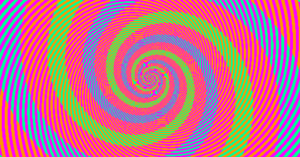
We’ve shared a couple stories in the past month on how human eyes are very subjective and …
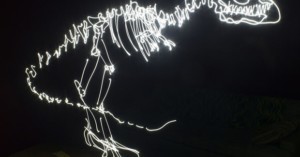
San Diego-based graphic artist Darren Pearson takes light-painting to a whole new level with his Light Fossil series -- long-exposure photos with detailed dinosaur fossils carefully drawn into the frame.
Could allowing the use of your photos for free actually be a way to increase income? Portrait photographer Jonathan Worth -- the man behind Coventry University's free photo courses -- used to send take-down notices to any website that shared his work without permission. Then he met author Cory Doctorow, a proponent of Creative Commons licensing, who suggested that he try giving away his work for free. Worth then made a high-res photo freely available online and quickly sold 111 signed prints, netting him £800 (~$1,270).
Japanese business newspaper Nikkei reported yesterday that Nikon is on the cusp of announcing its entry into the mirrorless …
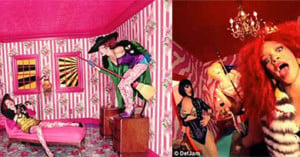
The debate over David LaChapelle copyright infringement lawsuit against Rhianna rages on -- lawyer John William Nelson has written an article on why copyright should extend only to the literal copying of a photograph and not the elements within the photo.
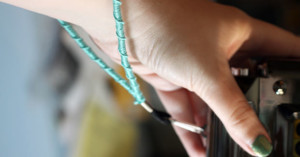
Here’s a weekend project idea: personalize your camera’s wrist strap by making it look like a friendship bracelet! All …

DSLRs are finding their way into more and more consumers’ hands, and apparently many of those consumers are tired …
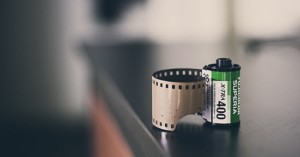
Things aren't look very bright in the world of film. Citing plummeting consumer demand for silver halide films, Fujifilm has announced that they're cutting a number of films in the lineup in order to ensure that production of films -- presumably the more popular ones -- will continue. They've already stopped producing the discontinued films, so you might want to grab some rolls and freeze them before they become extinct...
Shutterlog is an interesting YouTube channel started earlier this year by …
Here’s a video in which renowned street photographer Joel Meyerowitz shows us his …
In response to the "widespread, continuing pattern of law enforcement officers ordering people to stop taking photographs or video in public places", the American Civil Liberties Union has published a helpful article that clearly details what your rights are as a photographer in the United States.
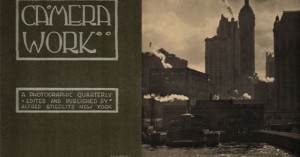
Between 1903 and 1917, photographer Alfred Stieglitz published a quarterly photographic journal called …
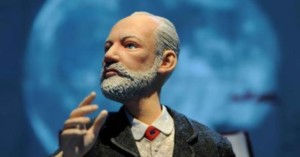
Here’s a creative way to offer a behind-the-scenes look at how a stop-motion video is created: while animator …
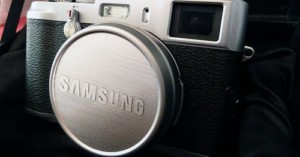
With the success of the Fujifilm X100, camera companies are starting to realize that consumers love both the design of old school cameras and the ease of shooting digital. Samsung may be looking to join the retro party -- the latest rumor to hit the Internet is that Samsung is planning a X100-style camera called the R1... with interchangeable lenses!
After Hurricane Katrina hit New Orleans, photographer Richard Misrach visited the empty city …
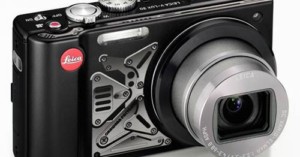
Leave it to Leica to come up with strange ideas for special edition cameras. The company is …

Adobe announced a new cloud-based photo storage and sharing service today called Carousel, …
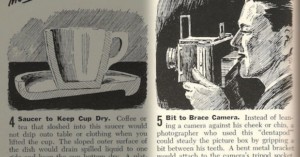
Back in March of 1954, Popular Science magazine featured an invention called the “dentapod” — a metal bracket attached …
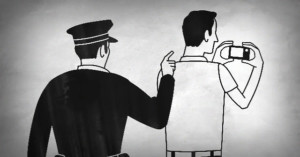
Here’s a startling video on how 9/11 turned using a camera in public into a “suspicious activity”: After 9/11, …

Bloomberg reports that Canon and Nikon’s failure thus far to enter the mirrorless …
Here's an uber-inspiring video in which National Geographic photographer Sam Abell discusses the difference between "taking" and "making" photographs through his experience of shooting one particular photograph for a story on painter Charles M. Russell. He explains that taking an image is shooting a photo as a reaction, without any preparation, while making a photograph is a process.

What you see here may be the first leaked photograph shot with the upcoming iPhone 5. The EXIF data claims it was shot with the iPhone 4, but other EXIF details indicate otherwise. Although the leaked image was cropped, the original size of the image was 3264x2448 (roughly 8MP), the rumored resolution found on the next iPhone. The lens info was recorded as "4.3mm f/2.4", more similar to a point-and-shoot than then 3.85mm f/2.8 lens found on the iPhone 4. Finally, the geotag info in the photo shows it was taken at 37.33216667,-122.03033333 -- the location of Apple's headquarters. Check out the full-res file with EXIF intact here.
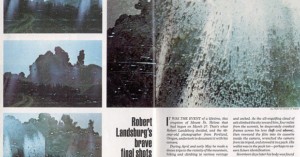
When Mount St. Helens erupted on May 18, 1980, photographer …
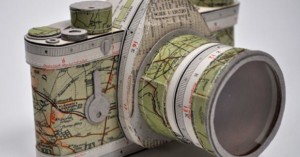
Artist Jennifer Collier uses found and recycled paper as if it were fabric to recreate common household objects, including cameras! Here are a few that were made using maps, postcards, and letters.
Gigalinc is an “immersive photography” project by University of Lincoln student …
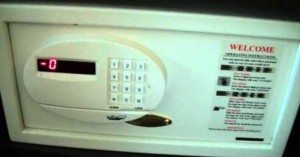
Here’s another public service announcement for those of you who travel often (see our warning on zippered …
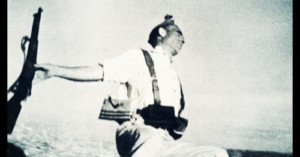
What would famous photographs look like if the photographers who created them had been using Instagram? That's a question that's answered by Mastergram, a site that takes the work of renowned photographers and passes them through Instagram filters.
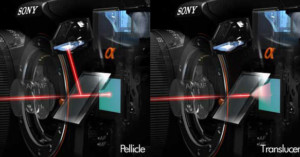
Mike Johnston of TOP explains why Sony shouldn’t call its pellicle mirror “translucent”: …
If you want to do street photography, attacking people with cameras like …

After finding out that he was going to become a father, photographer Tom Robinson decided to make a creative photo project out of the task of telling his family and friends by capturing their expressions at the moment of hearing the news.
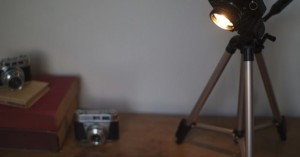
Kirsty over at kootoyoo transformed her old Cosina CT-2 into …

After moving into their new dorm room, Caleb Ungewitter and his roommate Kyle decided that their walls looked too empty, so they decided to decorate it with a photo. Not just any photo, mind you, but a gigantic do-it-yourself print of a beautiful city skyline. Using a free program called The Rasterbator, they converted the photograph into 152 separate frames, which they printed out themselves and attached to the wall in a grid.
A huge photo scandal erupted over in Sweden this past weekend after a well-known and award-winning wildlife photographer admitted to faking some of his photographs. Terje Helleso -- a nature photographer who was named Nature Photographer of the Year by the Swedish Environmental Protection Agency in 2010 -- was discovered to have published multiple images in which stock photographs of hard-to-find animals were Photoshopped into nature scenes.
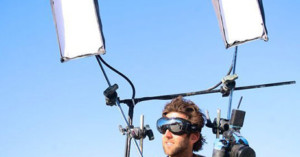
Photographer Eric Schwabel was trying to think of a creative way to photograph the people at Burning Man, and ended up making a portable photo studio called the "Human Light Suit" for lighting portraits in the desert. It's like the photography version of a one-man band!

Here’s some good news for people who find memory card readers and data cables a hassle — Toshiba has …

Sometimes pricing your services creatively can be a good marketing tactic. Other times, as in the case of this …
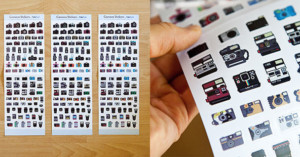
Update: This giveaway is now over. The winner was randomly selected and announced below. Our new Camera …
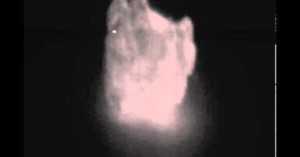
According to the smart folks over at MIT, this video shows footage that …
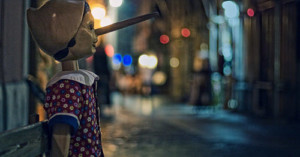
The debate regarding what makes a photograph "truthful" or not is probably as old as the art of photography itself. By sheer coincidence, there were a couple interesting articles published today on this issue, and written from two different points-of-view.
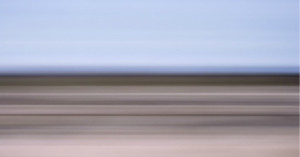
For his series titled "Drift", photographer David Burdeny traveled along roads in Canada, France, Japan, England, Belgium, and the USA, and captured the shifting light and color of the diverse landscapes by shooting at slow shutter speeds.

We love sharing about photography-related movies that you might want to add to your “films to watch” list, and …

The Art Institutes, one of the nation's largest for-profit school systems where people can receive an education in photography, has come under fire. Last month, the US Department of Justice filed a massive lawsuit against the company behind the schools, Education Management Corporation, accusing it of fraudulently collecting $11 billion in government aid by recruiting low-income students for the purpose of collecting student aid money. Whistleblowers claim that students graduate loaded with debt and without the means to pay off the loans, which are then paid for with taxpayer dollars.
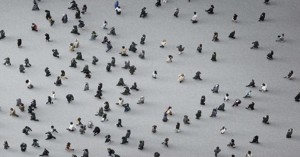
The photographs in Adam Magyar's Square series appear to show crowds of people bustling about in open town squares, seen from a height that makes them look almost like ants. In reality, each photograph is actually a composite of hundreds of individual photos, and none of the squares actually exist. Magyar photographed strangers walking on sidewalks from only 3-4 meters off the ground, and then blended the photographs together to make them seem like they were captured from a fake height!
It’s no secret that Hollywood directors are using DSLRs more and more these days to film scenes that traditional …
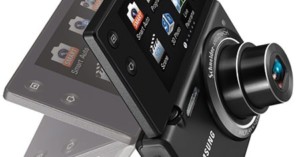
Samsung's DualView feature adds a small LCD screen to the front of compact cameras for self-portraits, but why use a small screen when you can use the screen on the back? Announced today, the company's new MultiView MV800 camera has a large 3-inch touchscreen on the back that can flip up 180-degrees, letting narcissists users view it from the front (or above, or below). No word on when it will be released, but the 16MP camera will be priced at $280 when it is.
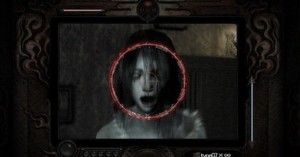
Back in 2009 we published a post highlighting 8 video games that feature photography. One of them …
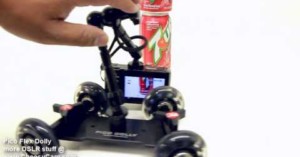
Since we wrote about CineSkates last week, the tripod-on-wheels project has already raised nearly $200,000 in preorders …
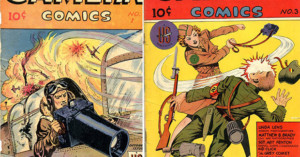
Between July 1944 and 1946, the U.S. Camera Publishing Company published a comic book titled "Camera Comics" in an attempt to get kids interested in the growing hobby of photography. Covers showed pilots pointing huge cameras out of planes and baddies getting whacked with cameras.
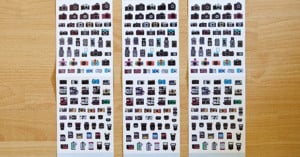
Today, we're excited to introduce our new Camera Stickers: cute little stickers based on the awesome pixel illustrations of designer Billy Brown. The stickers are printed on durable and tear-proof PVC plastic. 91 stickers per sheet, and 3 sheets -- 273 stickers total -- cost just $5 with free shipping within the US! You can buy them over in our store.