
Google Photos Now Suggests Photos to Archive Using A.I.
Google has been steadily adding features to their Google Photos app since I/O 2017. The new archive feature isn’t the most exciting of them, but it has an interesting trick up its sleeve.
Google has been steadily adding features to their Google Photos app since I/O 2017. The new archive feature isn’t the most exciting of them, but it has an interesting trick up its sleeve.
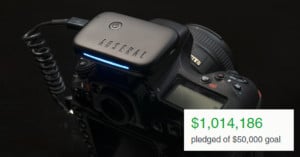
It looks like there are many photographers who want an intelligent camera assistant that helps determine optimal camera settings. Arsenal, the camera add-on that promises to offer just that, has just blown past the $1 million mark in crowdfunding on Kickstarter.
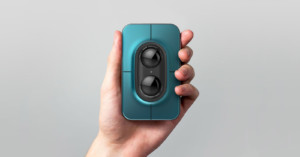
Digital instant cameras are an emerging trend in the world of photography: Polaroid launched the Pop in January, and Fujifilm followed suit with the SQ10 a few short months later. But industrial designer and photographer Jordan Steranka thinks he can do better: his Print is a concept instant camera designed with an ultra-modern aesthetic.
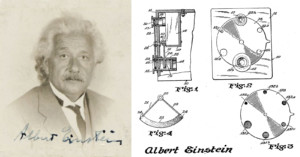
Here's an interesting piece of photo history: five years before Kodak’s automatic Super Six-20, Dr. Albert Einstein received a patent for a camera which could automatically determine the proper aperture and exposure to take a photograph. Yes, that Einstein.
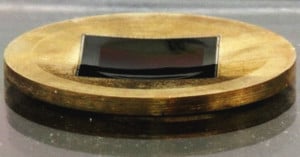
The development of curved image sensors may be the biggest advance in camera technology in decades, allowing for simpler, flatter lenses with larger apertures as well as dramatically better image quality. Canon, Nikon, and Sony are working on the technology, and now Microsoft Research has developed a sensor with three times more curvature than previously achieved.

Android co-founder Andy Rubin and his new startup company, Essential Products, just launched its first product: a powerful smartphone called the Essential Phone. Its photo-related features include dual 13MP cameras, 4K video, and a dedicated monochrome sensor for "true" black-and-white photography.
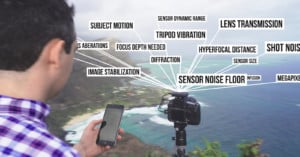
Arsenal is a new attachment for your DSLR or mirrorless camera that suggests the best settings for your shot using artificial intelligence, while also enabling you to fully control your camera using a smart phone.
As Triggertrap continues winding down its business, their Triggertrap Mobile Dongles are becoming increasingly difficult to find. But there's some good news now: the company has decided to open source the hardware, making it is possible to build your own dongle.
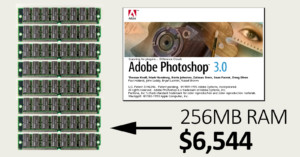
Back in January 1995, I upgraded my Mac 8110 desktop to 256 megabytes of RAM for $6,544. Why? Because Photoshop needed a minimum of 5 times the RAM to work with a 8.5×11 RGB 8-bit color page, and that was 24 megabytes.
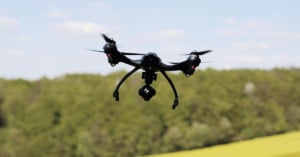
In their work with ETH Zurich, MIT’s Computer Science and Artificial Intelligence Laboratory (CSAIL) have developed a drone that simplifies aerial tracking by removing humans almost entirely from the equation.

This is amazing. The researchers at UC Berkeley who came up with the automatic colorizer algorithm we first shared back in March, 2016 have released a major update. The software now lets you team up with the algorithm to colorize complex black and white photos accurately in seconds.

Google made a bunch of interesting and exciting camera-related announcements at I/O 2017, and we'll cover them all, but one of the most intriguing was also one of the shortest. Google briefly showed off a powerful "content aware fill" feature that left people wide-eyed and clapping furiously.
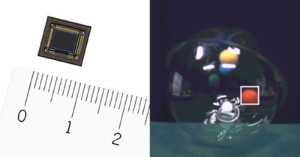
Sony is pluming the depths of stacked sensor technology and uncovering all sorts of amazing gems—the a9's 20fps capabilities, the Xperia XZ's 960fps slow motion feature, and now, an industrial sensor that can recognize and track objects at an insane 1,000fps.

Microsoft will be launching their Windows 10 Creators Update in September, and the company has just unveiled one of the apps that’ll come with it. It’s called Story Remix, and it’s a video-crafting app that looks to be the spiritual successor to Movie Maker.

Google announced this week that they are releasing a new certification standard that they are calling “Street View Ready”. This certification will be used for 360° cameras that are able to publish to Street View, and are guaranteed to support the level of quality required for Google’s 360-degree mapping service.
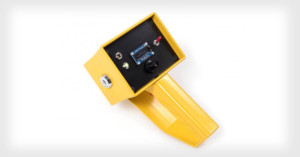
The Trophy Camera is an experimental camera powered by artificial intelligence that can only shoot images that it deems to be "award-winning."
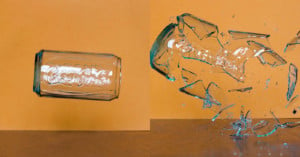
Are you stressed? What better way to de-stress is there than to break things while making cool photographs at the same time? You can break anything, from spaghetti to fancy glassware, there is no limit. It will take you about half an hour to build the Arduino circuit and write the code for this sound triggering photographic system.
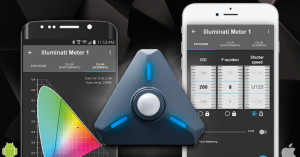
The Illuminati is the world's first Bluetooth light and color meter that works wirelessly with smartphones. It's a battery-powered device that connects to your iOS device, Android or smartwatch over Bluetooth, allowing you to take live readings without stepping away from your camera.

Videos are made up of about 24 frames every second, but what would happens if you fed a single photo into a motion prediction algorithm, and asked it to create the next 100,000 frames de novo after that? This video is what happens.

Heads up: you can now upload photos to Instagram from a desktop browser... using a special, unofficial trick. In this step-by-step tutorial, I'll show you how it's done.
MIT's 1-trillion-frame-per-second camera is now outdated. Researchers in Sweden have created a new world's fastest camera that shoots a staggering 5 trillion frames per second.

Amazon has announced a new camera. Called the Echo Look, it's a hands-free camera that you can use to shoot self-portraits that are triggered by your voice.

When Google software engineer Florian Kainz showed his friends on the Gcam team a nightscape he captured using his fancy Canon 1DX, they threw down the gauntlet. Take that same photo, they challenged him, but with a smartphone camera instead. He accepted, and succeeded.

Absolutely nothing?
Ten years ago, a Nikon D3 saved me while shooting a gig in a dimly lit club. It’s expansive ISO range of 200-6400 allowed me to shoot with a 24-70mm f/2.8 at about 1/20th of a second. Good enough for jazz as it was.
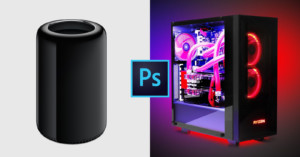
AMD's new highly anticipated Ryzen CPU has shown impressive performance in benchmark tests, propelling the company's stock price from less than $2 to over $13 in a little over a year. Now a new test has found that a $1,780 PC running AMD Ryzen processors destroys a $5,660 Apple Mac Pro when it comes to Photoshop performance.
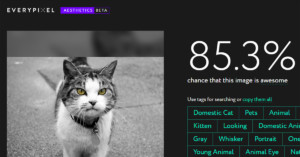
The stock photography search engine Everypixel has launched a new web app called Everypixel Aesthetics that uses a neural network to tell you how awesome any photo is.

In the world of Instagram, there is a practice known as botting -- and I hate it. For the uninitiated, botting is the process of tying your Instagram account to a wide variety of automation software, which charge users small sums of money to juice their profile. At the heart of it, it’s a pay-to-play relationship where you’re paying money to grow your following on Instagram.

The future is exciting for mobile photography. Adobe just released this sneak peek that shows off some amazing features powered by Adobe Sensei, which uses artificial intelligence and machine learning to do edits on photos.

Rotating an image in Photoshop might seem like a pretty simple process: you just... rotate it, right? Not quite. As this video from 2010 demonstrates, one of the ways a computer rotates an image is actually by applying 4 sequential transformations. (Warning: math incoming).

Sony recently updated their sensor roadmap for 2017 and 2018, and there's some exciting news for medium format shooters on it. Not only will cameras like the Fuji GFX and Hasselblad X1D get a 100MP option, Sony is also developing a 150MP sensor for larger cameras like the Phase One 100XF.
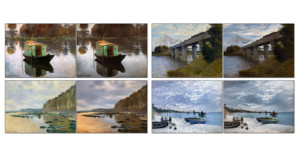
A team of researchers at UC Berkeley have revealed an 'Unpaired Image-to-Image Translation' technique that can do something really interesting: it can turn a painting by Monet into a 'photograph'... also, it can transform horses into zebras and summer into winter.
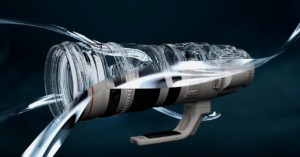
Here's a juicy research & development tidbit straight from the executives at Canon. In an interview with Focus Numerique at the Utsunomiya L lens factory in Japan, Canon said they're working on a "new lens technology."
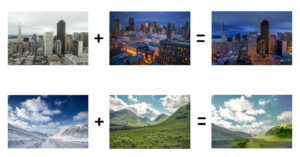
Two pairs of researchers from Cornell University and Adobe have teamed up and developed a "Deep Photo Style Transfer" algorithm that can automatically apply the style (read: color and lighting) of one photo to another. The early results are incredibly impressive and promising.

Want to process your iPhone photos for Instagram on a laptop without having to transfer any files? In the future there may be a crazy new way you can do so. Apple has patented a new "accessory" that transforms a cell phone into a full-fledged laptop.
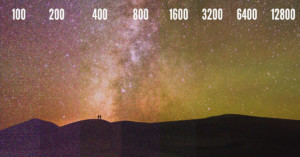
ISO is one of the three major exposure settings in the exposure triangle of a digital camera -- shutter time, f/number, and ISO. Of the three, it is ISO that is probably most misunderstood. Even more so than f/number. In fact, it is a common misconception that higher ISO settings will cause images to be noisier. In fact, the opposite is often true. Wait, what?
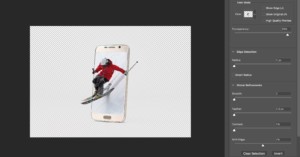
Adobe Research has been working on some pretty interesting photo and video editing features, but their latest research might just revolutionize photo editing as we know it. Imagine if Photoshop could automatically cut out complex subjects in seconds, no matter the background... no pen tool required.
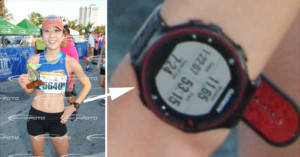
Jane Seo, a professional food blogger, dashed through the finish line to clinch the Fort Lauderdale Half Marathon in an outstanding 1 hour and 21 minutes back on Feb 19th, beating thousands to win the 2nd place with an impressive 6:15-per-mile pace. However, she was soon revealed as a cheater by a sharp-eyed sleuth who found proof in her finish line photo.

Google has just released a brand new, open-source JPEG encoder called Guetzli that can do two very neat things. First, it can decrease JPEG file size by 35% without a noticeable decrease in quality, and second, it can increase the quality of an image without increasing file size at all.

Wildlife photography and videography is more incredible today than ever before, thanks in large part to the last decade's amazing leaps in camera technology. This behind the scenes look at the cameras used by the BBC to shoot Planet Earth II shows you how advances in camera tech have allowed us to see the creatures of the night in ways never before thought possible.
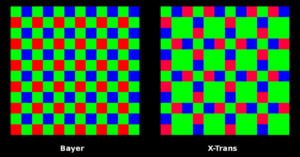
Since the introduction of the Fujifilm X-Series line of cameras, reviewers and consumers have struggled to compare them directly to the competition. Fujifilm’s is a tightly integrated system, wherein everything is a little bit different.
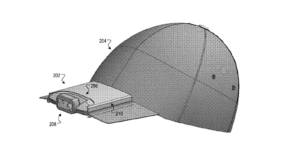
Well this is... interesting. It doesn't seem like the very public failure of Google Glass—due, in large part, to the built-in camera—has deterred Google from pursuing wearable camera tech. A recent patent shows that they're at least considering putting a camera and microphone onto a baseball cap.
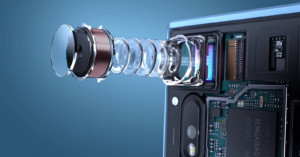
Remember Sony's crazy smartphone image sensor we told you about earlier this month? Well that sensor, which can shoot up to an insane 1,000fps in HD, is already making an appearance in Sony's latest flagship smartphones.
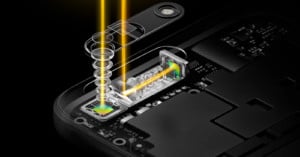
One of the major ways smartphone cameras fall short of even old point-and-shoots is zoom. How are you supposed to squeeze an optical zoom mechanism into that little space? Chinese company OPPO has figured it out.
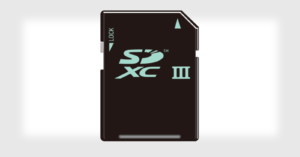
Hot on the heels of Sony's "world's fastest SD card" announcement, the SD Card Association has announced a new, much faster standard for SD and microSD memory cards: UHS-III.

When FujiFilm’s X-Trans III sensor was introduced in the X-Pro2, many users began noticing a strange new artifact in their backlit photographs. Upon further experimentation, it became apparent that the same artifact could also be found in images from cameras using the older X-Trans II sensor.
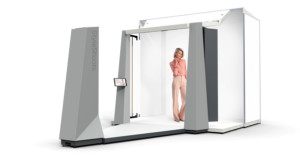
Fashion photographers now have a very real reason to claim that robots are taking their jobs. A company called StyleShoots has designed a fully-robotic fashion photography studio that can set up its own lighting and capture its own pictures and video while poor unemployed photographers stand by and watch.

Sony is making a lot of their new 100mm f/2.8 GM lens with its Smooth Trans Focus technology. But what exactly is this so-called STF, how does it work, and why does it produce smoother bokeh? This short video explains all.

1 terapixel equals 1 million megapixels, or 1 trillion pixels. And San Francisco-based satellite startup Planet plans to capture 50 of these terapixels each day starting later this year. Specifically, they plan to capture one 50 terapixel image of our entire planet every single day.

In my previous article on the difficulty FujiFilm’s X-Trans sensor has preserving fine color detail, I used the free software Darktable to process the RAW examples. I showed how, specifically in terms of color detail, Darktable was able to do a better job than FujiFilm’s own processing.
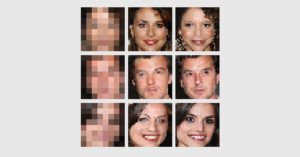
How many times have you rolled your eyes at those "zoom... enhance... zoom in closer... I SAID ENHANCE!" scenes on television shows? Well, Google is attempting to unroll your eyes with a pair of neural networks that can intelligently "enhance" images using a source image that is just 64 pixels.