The Value of a ‘Photographic’ Photograph
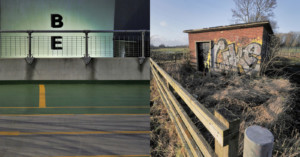
Discussing what makes a “photographic” photograph can seem like a bit of a tautology, but I think that my understanding of what I’m trying to achieve with my photographs has been helped by this idea.
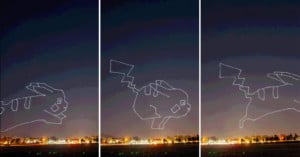
Before we jump into this blog post if you haven’t already read how I do drone light paintings horizontally in the sky be sure to check this out here. If you have done that already (or don’t wanna read something else) get ready to have your socks knocked off because we are flipping them into vertical space and animating our light paintings all with stop motion.
When you’re very early in your photography career, getting an agent will seem like a mysterious process. Many photographers feel that signing with an agent will offer the key to their fortunes. When they do sign, some photographers will feel they have finally made it.
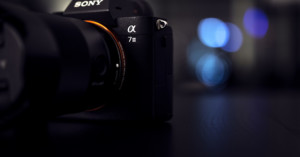
The third of this month marked two years since I took my first foray into the Sony Alpha Ecosystem. I thought it would be a good idea to look back to see how I’m liking the system and if my views have changed since my 12 month a7 III review.
I look at hundreds of photographs everyday and I’ve noticed that how people take photos is in direct correlation to how they live their day to day lives. This may not sound like a startlingly profound fact but, put simply: your personality can create the biggest barrier to achieving interesting and unique photographs.
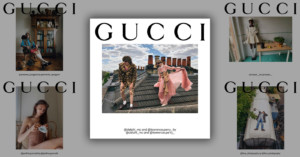
Who is the photographer for Gucci’s fall winter 2020–2021 campaign? Surprise! There is no photographer. Yes, that’s right: no photographer and no make-up artist, hairdresser, stylist, or assistant … only models, who received a parcel of clothes and photographed themselves. Selfies.
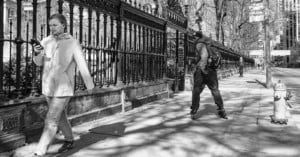
It's funny how deceiving a photograph can be. I wouldn't blame anyone for thinking that this roller skater has turned his head to check out the girl on her phone as he skates past her. Without any context, that does appear to be the story here.
After nine years covering the photography industry, today marks the end of that long journey across multiple outlets, ending with my time here at PetaPixel. I'm not leaving journalism, but I am switching things up a bit. After a short break, I'll be working in a new segment at a new outlet.
A few months ago I found out about the upcoming Google Licensable badge. Provided you embed the required metadata in your image files, it’s a label that will be added to your photos in Google Images, with links to a page that includes your Web statement of rights and a link to license the photo.
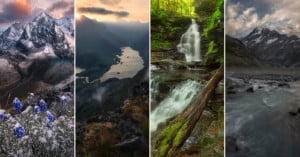
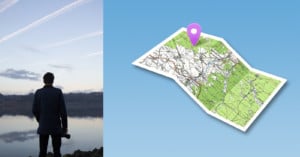
One of the most hotly debated questions for landscape photographers is how to answer the age-old question, “Where did you shoot that?” While the question is simple enough, whether to answer (and how to answer) is an internal question many shooters contend with in the age of Instagram.
Should your photograph have a name? If not, why not? If so, then why? And does anyone really care? I’m of the opinion that it should always have a name, an identity, a personality. Well, all of mine at least. What you do with yours is entirely up to you. And as it should be.
There are many different reasons that photographers love photography. Almost always any individual photographer’s interest is a mixture of multiple aspects.
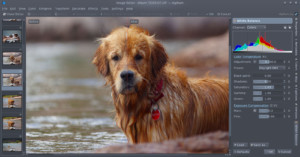
Whenever a discussion touches on the subject of RAW processing and photo management applications, digiKam rarely comes up. Even when talking about open source photography software, RawTherapee and darktable are often the only names that are thrown around. So let me give you an elevator pitch that makes a case for digiKam.
I don't normally rant, but this has been bothering me for quite some time. I try not to worry about what gets written on the Internet because I believe everyone is entitled to their own opinions and it's healthy to have many different opinions for others to pick and choose what works for them. Let's face it, there is no hard and fast rule that photographers must abide by.
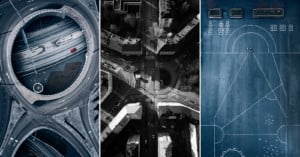
Helsinki-based photographer and filmmaker Anders Lönnfeldt loves drone photography, architecture, and geometric compositions that draw you in. Now that he's found himself out of work due to the pandemic, he's bringing all three of those sensibilities together in a new series of done photos called Urban Aerials.
In most parts of the world, life has turned upside-down over the past few months. People are staying in their homes, freedom of movement is restricted, schools, parks, restaurants and many shops remain closed, and businesses are suffering.
The sudden global stop of many types of content production, ranging from full-blown TV/film through to commercial photo shoots, has hit the creative industry hard. With agencies unable to organize a shoot for a brand in the usual manner, and most photographers unable to leave their homes, we are in a situation where we are having to really think outside the box.
It’s very easy to get stuck in grooves in photography, to find something that makes sense or comes from a position of authority; once habits are formed around ideas about genre, style, or technique, it can be very difficult to break out of those constraints.
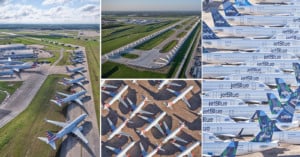
"I shouldn’t be here." That’s all I could think as I brought my camera to my eye to frame a shot overlooking the massive expanse of Dallas/Fort Worth International Airport. I was in a Robinson R44 Raven II helicopter, the door removed at my request. The sun had barely risen over the north Texas landscape as we approached what is typically one of the busiest airports in the world.
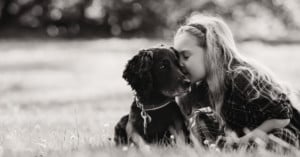
If you’re lucky enough to have a wonderful dog around while you're stuck in lockdown, this is the perfect opportunity to hone your pet photography skills and try to get some beautiful portraits of your furry friend.
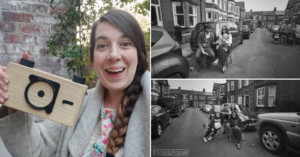
Working as an analogue photographer at Little Vintage Photography, Worldwide Pinhole Photography Day (#WPPD) is something that I love taking part in every year. Sadly with lockdown happening, the workshops and photowalks I'd normally run were of course, put on hold.
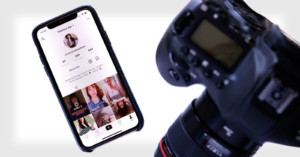
If another social media craze comes out, I think I just might tear out my eyelashes one-by-one. I’m sure many of us professional photographers have thought that (or something similar) when we’re daunted by the task of keeping up with today’s culture. However, Instagram turned out to be pretty powerful for photographers. Snapchat, maybe not so much. What about TikTok?
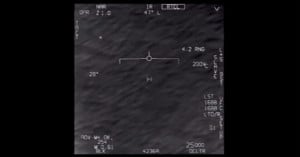
The Pentagon made headlines around the world this week when it officially released several UFO videos that were internally declassified in 2017, confirming their authenticity. And while this has sparked a flurry of "aliens among us" speculation, some are pointing out that there is an optical explanation behind each of the three clips.
Every time Fuji releases a new camera I feel like this is the generation that will let me leave Canon behind. I had the same hopes and eventual disappointments with the XT2 and the XT3. Inevitably, I would realize full frame always beats out crop frame, that high ISOs and battery life can’t be matched, that Fuji was just not good enough to beat my Canons.
When Sony released the a7R III all the way back in 2017, most people speculated what this release could mean for the a7S series of cameras. Many of us were anticipating a mark III for the S series to be announced, and potentially even released not long after the update to the R model.
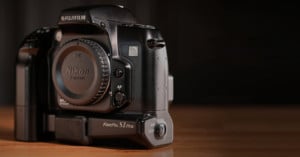
It was early 2000, and the world looked on towards a new and exciting millennium, thankful that their worst fears surrounding Y2K never surfaced. At the time, I was getting ready to launch my portrait photography business using a completely digital capture and workflow, and was intent on investing in the Nikon D1 as my primary camera.
Celebrating Earth Day – and its 50th anniversary – against the backdrop of COVID-19 is something we’ll likely remember for quite some time.
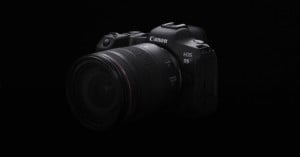
I'm not one to generally heap praise on camera products that one, I haven't tested or two, haven't even been fully announced yet let alone released. But given what we know about Canon's upcoming EOS R5, I have to change precedents, sit back and just clap.
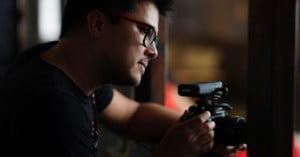
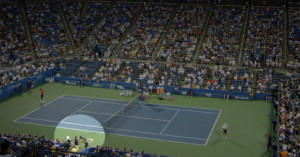
A few months ago, I was hired as an on-court, fixed broadcast camera operator for an Association of Tennis Professionals event as an independent contractor. While we were not broadcast live on a network, we were broadcasting throughout the stadium and event village as well as being taped for the network.
In many parts of the U.S. the reality of social distancing policies have only been in place for about a month. Yet during that time and the few weeks that preceded it, photographers have already churned through a number of phases to document and depict the outbreak.
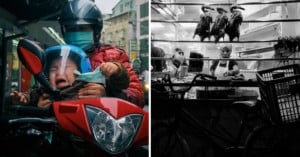
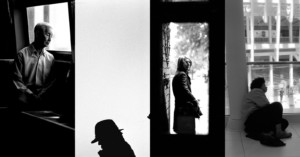
One of the byproducts of the new-wave approach to street photography, which champions anonymity, mystery, and a cinematic aesthetic, is that there is an absolute abundance of images featuring silhouetted figures and shadow play. These are the kind of images I started off creating, and there are some fantastic artists who have utilized this style over the years, my favorite of these being Fan Ho, one of the classic progenitors of this style.
I am a traveling model, working in the industry for a little over 20 years. I also work on a drag racing team as a promotional model and videographer. I had two tours planned for the east coast in March & April, but unfortunately these plans have canceled due to COVID-19. With my tours canceled and race scheduled changed, I was out of work for the unseen future. Time to get creative!
I get asked all the time about my process: what applications I use, what gear I use, how I do what I do. So I figured, since I'm locked in my apartment by myself because of COVID-19, I might as well write my first blog post about it.
The past few years have made it abundantly clear that platforms hold disproportionate power in the online sphere – from Uber to Grubhub to Amazon. Online success is predicated on building both utility as well as a critical mass of users, and for that, platforms should be congratulated.
I’m a wildlife photojournalist, my work and my personal project focus on stories related to wildlife conservation. I’ve seen first-hand the destruction left behind by the horrific illegal wildlife trade.
As the coronavirus has spread throughout the U.S., it has left a wake of economic turmoil. As of Wednesday, April 9th, over 16 million Americans have filed for unemployment. Like many other freelancers, photographers have seen an abrupt drop in income. For many, late March brought about cancellations in droves over the course of about a week.
I've been an amateur landscape photographer for some time now. I remember fondly my first years in the field—I loved roaming around and shooting like mad. I even started getting good at it. Year by year, though, I found myself shooting less and less.
It's common knowledge that being an artist—and trying to turn art into a profitable career—is one of the most challenging pursuits a person could undertake. But for many artists, there is no other option than to make it work, one way or another.
If you haven’t heard about this following situation, then you might just lose your temper now.
After a recent bad experience in Ukraine, I returned to the UK upset, fed up and tired of things not going my way. I can't get into details about what happened in Ukraine and although it was personal, it acted as a catalyst which then got me reflecting negatively on other areas of my life too.
Since mid-March, various policies have been implemented at the state and federal level in the U.S. to mitigate the spread of the coronavirus and the disease it causes, COVID-19.
I have sometimes been critical when landscape photographers combine two or more photos not taken at the same time to make one great photo -- adding northern lights or beautiful skies to a photo that did not have them, for example -- and then making people believe it was something that really happened.
I don’t remember the first time I became aware of my family photo album, but from a very young age I always found looking at those photos a time absorbing, and totally enthralling pastime. I would sit for long periods of time staring at those familiar faces, all those captured moments of times gone by, and lose myself in a world of wonder.
As amusing as some COVID-19 memes and tweets have been (not to mention a welcome break from the endless news cycle), we want to be very clear about the importance of taking care of your mental health right now.
My name is Brad Trent, and I'm a portrait photographer based in New York City. Yesterday, on April Fools' Day, I received an anonymous email that pointed me to a photographer’s website who seemed to be passing off one of my photographs as his own.
As with a majority of newbies to photography, the obsession with gear and chasing the newest toys proved to be irresistible to me. I spent far more time reading reviews, comparing charts, watching youtube videos, and looking for deals than actually going out and shooting.
Last night, once the kids were safely nestled in bed and only the wife and I remained awake, I reached for my iPhone, opened up the Remote app to fire up my Apple TV, launched Apple TV+, and hit play on one of the tech giant's newest shows: Amazing Stories.
Since we're all stuck inside and social distancing, I recently took out my drone and photographed people in their homes through their windows or on their terraces. It's a 100% zero-human-contact way to see how people are going crazy during quarantine times.
We are living in unprecedented times. As a photographer of social events (weddings), individual, family, business portraits and sports, the recent closing of schools and the virtual shut down of our towns and cities—basically our lives as we have known it—has shut everything down.
On March 12, 2020, the American Society of Media Photographers (ASMP) held a webinar with General Counsel Thomas Maddrey entitled “Potential Business Ramifications of Coronavirus (COVID-19).” Maddrey covered a variety of topics, including cancellation clauses in photographer contracts.