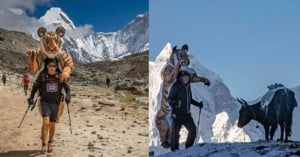
Wildlife Photographer Runs Everest Marathon in a 33-Pound Tiger Suit
A British wildlife photographer completed the Everest marathon while wearing a tiger suit in order to raise over £100,000 ($126,198) to help protect the endangered predators.
A British wildlife photographer completed the Everest marathon while wearing a tiger suit in order to raise over £100,000 ($126,198) to help protect the endangered predators.
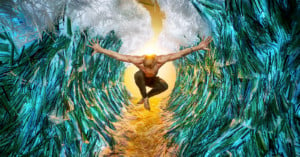
Photographer, artist, and activist Benjamin Von Wong believes that the fear of irrelevancy in the social media age can actually be a fuel that empowers photographers to become more creative and impactful -- the same way Wong has experienced as much in his career.
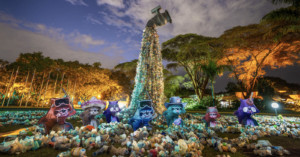
This is the story of how a single photograph and an irreverent NFT community became the international emblems of the United Nations global plastic treaty.
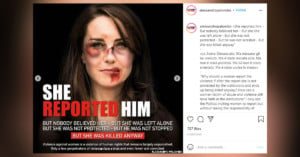
Photos of Kate Middleton and other high-profile women have been heavily Photoshopped as part of a domestic violence campaign on Instagram, which has sparked anger from some users while others have praised it for raising awareness.
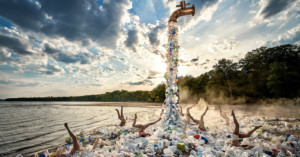
Photographer Benjamin Von Wong -- known for tackling environmental issues in his photographic work -- has released his latest project that raises the discussion of plastic pollution in a creative and collaborative way.
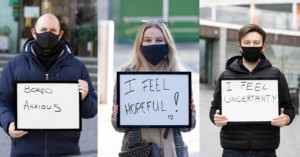
A U.K.-based photographer has given complete strangers a platform to share their thoughts and emotions regarding the last year with the goal of raising awareness of the pandemic's impact on mental health.
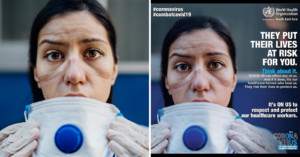
About a month ago, photographer Eldar Nurkovic took a spur-of-the-moment portrait of his girlfriend—a pharmacist-in-training—in the middle of the street. That photo, showing the imprints of her mask and fear in her eyes at the impending outbreak, is now the face of an international awareness campaign by the World Health Organization.

The United Nations has published a "global call to creatives" from around the world—photographers, filmmakers, artists, and beyond—asking them to submit engaging content that can help in the fight against the novel coronavirus.
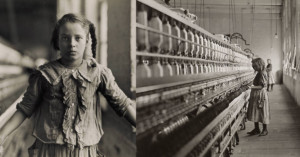
Photographs have the power to bring issues to the forefront of public consciousness and spark change in society. Here's a 6.5-minute video by Vox that tells the story of how photographer Lewis Wickes Hine helped end child labor in the United States.
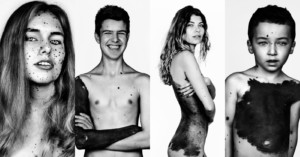
British photographer Brock Elbank has a series of portraits titled How Do You C Me Now? that features people with Congenital Melanocytic Naevus, an extremely rare birthmark that can cover up to 80% of the body.
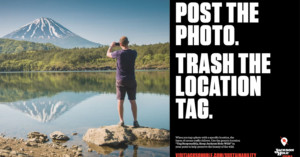
There has been much discussion in recent days of how location tagging in social media is harming natural landmarks around the world. And now even authorities are taking a stand: the Jackson Hole Travel & Tourism Board in Wyoming has launched a new campaign against location tags.
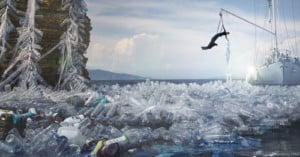
Photographer Benjamin Von Wong recently came across a statistic that shocked him: "Every 60 seconds, the equivalent of a truckload of plastic enters the ocean." Wanting to make a difference, Von Wong decided to toss an actual truckload of plastic into the ocean to create photos showing the magnitude of the problem.

Electronic waste, or e-waste, is the endless low of discarded electronic devices that are thrown out on a daily basis around the world. To raise awareness of this ever-growing problem, photographer Benjamin Von Wong got his hands on 4,100 pounds of e-waste and used it to create a set of amazing surreal portraits.
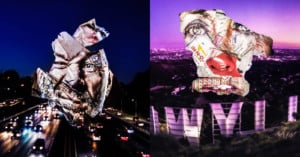
Photographer Philippe Echaroux wants to spread an important message about the problem of trash littered on streets. His new photo project After the Dream is a creative series designed to raise awareness about this issue.
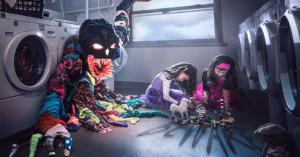
Benjamin Von Wong, a viral photographer turned environmentalist, has released a new project to raise awareness about "toxic laundry" that is full of plastic. An estimated 94% of American tap water contains invisible plastic fibers, and Von Wong felt compelled to do something about it.
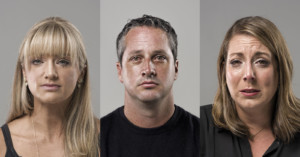
Photographer Rich Johnson recently completed a photo project for a local childhood cancer nonprofit in Orlando, Florida. Titled #NoMoreOptions, it's a series of portraits of people who lost a loved one to childhood cancer.
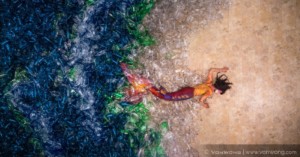
Over the past year or so, photographer Benjamin Von Wong has taken his talent for epic photo shoots and turned it towards trying to raise awareness for "boring" topics like climate change or wildlife conservation. His latest project continues this trend; this time, he's taking on plastic pollution.
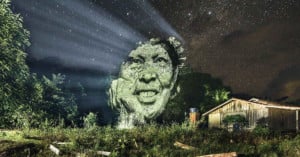
For his latest project, titled "The Blood Forest," French photographer Philippe Echaroux shot a series of photos showing portraits of indigenous Brazilians projected onto the trees of the Amazon rainforest.
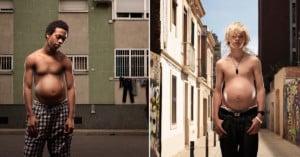
It's one of the more shocking pieces of advertising photography ever created. These photos, created by non-profit advertising agency SERVE back in 2007, have resurfaced a few times over the years, each time proving to be a powerful tool in the battle against teen pregnancy.
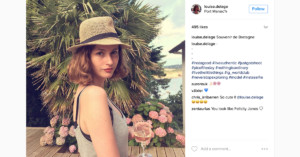
25-year-old French socialite Louise Delage has amassed some 44,000 followers and over 50,000 likes on Instagram in the last 2 months. An impressive feat by social media standards... except that she's not a real person.
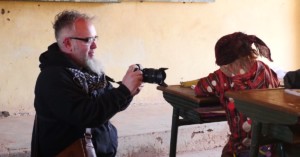
When Fujifilm offered to pay photographer Zack Arias to create a promotional video about their products, Arias didn't simply create a typical behind the scenes or gear review video. He turned the opportunity into a trip to Morocco, to help out a worthy cause.
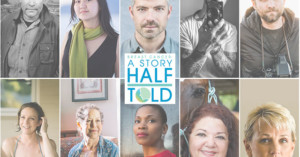
In March 2013, we featured photographer Angelo Merendino's heartbreaking photo project that documented his late wife's battle with breast cancer. Merendino recently became involved in another project that aims to draw awareness to the subject of metastatic breast cancer.
For Breast Cancer: A Story Half Told, Merendino and four other photographers were commissioned by Pfizer to capture the daily lives of 5 women who are living with the disease.
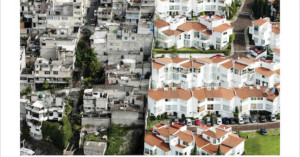
The gap between the wealthy and the poverty-stricken is very wide in Mexico, but that gap doesn't necessarily translate into physical distance, as this striking ad campaign by photographer Oscar Ruíz and Publicis Mexico boldly illustrates.

In an effort to combat the ongoing belief amongst a great deal of the general public that pit bulls are an aggressive breed of dog, bred only to fight and hurt people, photographer Douglas Sonders has put together a PR campaign called Not a Bully -- and it is already helping to change people's perception of this lovely breed.
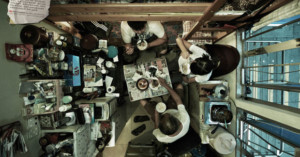
In the middle of last year, The Economist released rankings for the world's most livable cities, and Hong Kong was found at the top. What many people don't know, however, is that there is a percentage of Hong Kong residents living in rather horrid conditions.
In an attempt to draw attention to the issue, human rights organization Society for Community Organization recently commissioned a series of photographs showing what a number of unacceptable living spaces look like when viewed from directly overhead. (Here's a larger version of the photo above.)

I have been taking pictures for almost twenty years now and so much has changed over those years. Back in the beginning gas used to cost $1.00, Bill Clinton was president, and I was picking up a camera for the first time. I started out in high school playing with my father’s Nikon FM2 and taking pictures for the school newspaper. Today, I work with a medium format digital back shooting national ad campaigns, magazine articles, and catalogs. Some aspects of how I photograph have stayed unchanged, but a great deal has changed considerably.
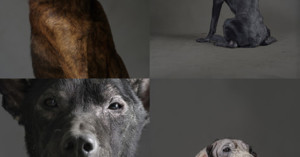
For the past two years, 37-year-old photographer Tou Chih-kang has been capturing the last moments of dogs at Taoyuan …
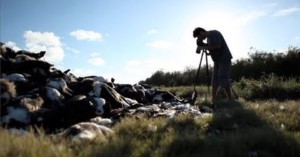
Photographer Chris Jordan uses his photography to bring awareness to a problem that …