Educational

PetaPixel's editorials are in-depth stories, thought-pieces, and opinions on the photography industry led by the minds of our editorial team.

Eerie Hidden Mothers in Vintage Photos

Did you know that in vintage tintype photographs of infants mothers were often present in the photo but hidden by a veil? Subjects needed to remain still due to the longer exposure times required back then, so mothers were often asked to hold their children tightly while the portraits were being exposed. It was common practice back then, but the resulting photos are pretty eerie when you look at them now.
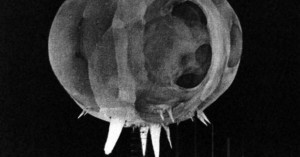

Photo of a Nuclear Explosion Less than 1 Millisecond After Detonation

This might look like some kind of microscopic organism, but it's actually a high-speed photograph of a nuclear explosion. It was captured less than 1 millisecond after the detonation using a rapatronic camera, which is capable of exposure times as brief as 10 nanoseconds (one nanosecond is one billionth of a second). The photograph was shot from roughly 7 miles away during the Tumbler-Snapper tests in Nevada (1952). The fireball is roughly 20 meters in diameter, and three times hotter than the …

A Night-Vision Lens Used by US Military Photographers

Think your lens is good in low-light conditions? Check out this Nikon D700 with a Nightstalker II night-vision system attached -- standard issue for the Navy's Combat Camera unit. PopPhoto has published an interesting article that offers a glimpse into what life is like as a US military photographer. You an also see an example photo shot with the above lens here.

The Crazy Hazards of Being a National Geographic Photographer

Ever wonder what National Geographic photographers go through to get the beautiful shots that appear in the yellow-bordered magazine? The Photo Society -- an interesting new website created by the magazine's Photographer’s Advisory Board -- recently surveyed 45 Nat Geo photographers about hazards they've encountered while on assignment. All the incidences were then counted up and turned into a fascinating table showing how "glamorous" the photographers' lives are. You can also read short …

Test the Shutter Speed of Your Camera Using a TV or Monitor

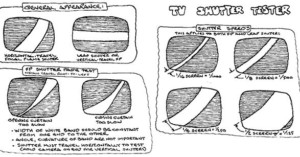
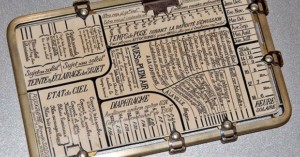
Wondering whether or not the shutter speeds on your camera are accurate? Instead of taking it to a shop or buying expensive testing equipment, you can use an old television or CRT monitor as a simple shutter speed tester! Camera enthusiast Rick Oleson has an easy to understand diagram showing what you can expect to see from the screen at different shutter speeds. For a more technical explanation and tutorial, check out this article that appeared in a 1967 issue of Popular Science.

The First Known Light Painting Photos

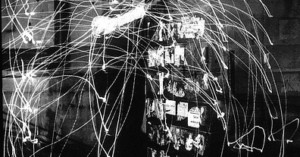
The first known light painting photographs were made way back in 1914, when Frank and Lillian Moller Gilbreth used small lights and long exposure photos to capture the motion of workers. Subjects ranged from handkerchief folders to bricklayers. The photos weren't meant as art, but were instead made to help develop ways to increase employee output and simplify job tasks.

Bluetooth Headsets Double as Wireless Shutter Releases for the iPhone

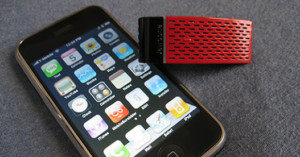
With the introduction of iOS 5, Apple finally turned the iPhone's volume up button into a shutter button and its headphones into remote shutter releases. However, did you know that many Bluetooth headsets can now be used as wireless shutter releases? As long as your device can wirelessly increase the iPhone's volume (and not just its own) it should work. This means that even Bluetooth keyboards can be used as wireless remotes! …

A Brief Tour of the Eastman House’s Vintage Camera Warehouse

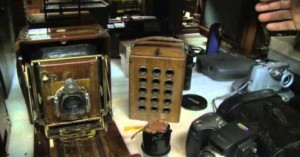
The George Eastman House in Rochester, NY is the world's oldest museum dedicated to photography. A couple years ago, curator Todd Gustavson wrote a book on the history of photography featuring the museum's gigantic collection of historical cameras. This behind-the-scenes video with Gustavson gives a glimpse into the drool-worthy warehouse and a brief tour of some legendary cameras.

Photographs Launched into Space on the Voyager Space Probes

If you had the task of choosing some photos that represented Earth and mankind to extraterrestrial life forms, which photos would you select? NASA had to do this back in 1977 when it launched the Voyager space probes, which are now the farthest human-made objects from Earth. A committee led by Carl Sagan eventually settled on 116 images: …

Google Doodle Honors Louis Daguerre, Father of Photography

Check out Google's homepage: the doodle today celebrates the 224th birthday of Louis Daguerre, inventor of the daguerreotype and one of the fathers of photography (the others are Nicéphore Niépce, William Henry Fox Talbot, and Thomas Wedgwood). Daguerre was born on November 18, 1787, and unveiled his daguerreotype process at the French Academy of Sciences in Paris in 1839, when he was 51 years old.

How Quickly a Camera Bag Can Be Stolen

If you're ever sitting down in a public place with your camera bag, having it close by isn't enough to protect it from theft -- you need to make sure it can't be easily snatched. Tom Bird of the UK learned this the hard way: he was at a pub recently when his camera bag suddenly disappeared. It's contents? Just thousands of dollars worth of gear including a Canon 5D Mark II, a 24-70mm f/2.8, a 50mm f/1.2, a 16-35mm f/2.8 and a laptop.

Did You Know: Film and Photo Paper Are Made Using Animal Parts

If you're a vegan film photographer, you might want to think about switching to digital. Why? Because virtually all photographic films and papers are made with animal parts. Most of the thickness in film comes from gelatin, which is used to hold the silver halide crystals in an emulsion. Gelatin is made from animal hides and bones -- mainly cows and pigs. People have tried to come up with substitutes, but they haven't been able to find anything suitable that's as stable or cheap as gelatin.

Gursky World: A Portrait of Photographer Andreas Gursky

German photographer Andreas Gursky is one of the most successful artists of our time, and yesterday a print of his titled "Rhein II" became the world's most expensive photograph, selling for $4.3 million. Back in the early 2000s, director Ben Lewis made this interesting 23-minute feature that gives an inside look into "Gursky World."

Old School Flash Powder Compared to a Modern Day Flash

Maurice Ribble of Tech Photo Blog recently found the ingredients list for flash powder, which was used for state-of-the-art photographic lighting 150 years ago. After making some of the powder, he began to test it to see how it compares to modern day flashes (more specifically, a Canon 580EX II).

A Striking Look at How Focal Length Affect Head Shots

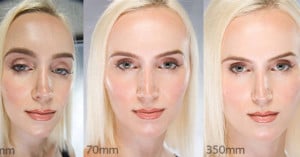
You've probably heard before that focal lengths between 85mm and 135mm produce the best head shots because they provide a desirable perspective in head shots, but how much of a different does the focal length actually make? Photographer Stephen Eastwood decided to find out, shooting 10 portraits of the same subject with focal lengths ranging from 19mm to 350mm.

CMOS Inventor Eric Fossum Lectures on Sensors, From Basics to State of the Art

Eric Fossum, the man who invented the CMOS image sensor, recently gave an hour-long lecture at Yale that provides an educational overview of the technology. He covers a wide range of topics, ranging from digital imaging history to the latest state-of-the-art technologies in the sensor field. If you're at all interested in learning how your camera works, this'll be an interesting lecture to take in.

Camera Companies Need to Be Willing to Cannibalize Themselves

Kodak's fall from grace is an interesting case study that modern day companies can learn from. Even though the world's first digital camera was invented by one of its engineers, the company was unwilling to cannibalize its film business that, at the time, was making money hand over fist. By the time digital cameras started catching on, Kodak had missed the boat.

Watch the Crowdsourced Documentary ‘Life In A Day’ For Free

'Life In A Day' is a historic crowdsourced documentary film that shows what the world was like on a single day: July 24, 2010. People in 140 countries around the world captured snippets from their lives on that day and submitted 80,000 video clips to YouTube. Oscar-winning director Kevin Macdonald and executive producer Ridley Scott then edited those 4,500 hours of footage into a 95 minute long feature film. After debuting at Sundance and being streamed on YouTube earlier this year, the film is …

Mini-Documentary on ‘Archtographist’ Anthony Vizzari

Philip Bloom recently shot this interesting mini-documentary on Anthony Vizzari using a Sony NEX-5N. Vizzari is a guy who collects photographs and cameras, owns a photo shop, and runs a photobooth business. Here's an artist, architect, antiquarian, photographer, and storyteller, and calls himself an "archotographist".

Composite Nighttime Space Photo Shows India’s Growth Over the Years

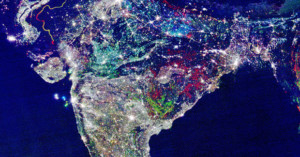
This amazing image might look like a computer generated graphic, but it's actually a composite photograph by NASA showing India's population growth over the years. The white areas show the illumination visible in the country prior to 1992, while the blue, green, and red lights indicate new lights that became visible in 1992, 1998, and 2003, respectively. The four photos were tinted and then combined into an image that reveals where new populations are appearing. NASA definitely needs to do one …

Everybody Street: A Documentary Film About NYC Street Photographers

Everybody Street is an upcoming documentary film about New York City street photographers (e.g. Bruce Gilden and Joel Meyerowitz) who have taken some of the most iconic images of the past century. Created by photographer Cheryl Dunn, the film was originally a 36-minute short film, but is being expanded into a feature length movie.

A Look At How Much the iPhone Camera Has Improved

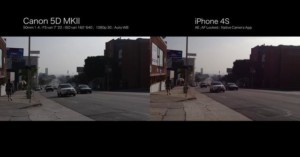
Photographer Lisa Bettany has an interesting post over at Camera+ comparing the iPhone 4S camera to the cameras on each of the previous versions (and a couple other cameras as well). It's an interesting look at how much cell phone cameras have improved since the original iPhone was announced at the beginning of 2007.

Unseen Photos From the Sinking of the Titanic Emerge After 99 Years

The 100 year anniversary of the sinking of the Titanic will come in April of next year, and auction houses are already seeing a spike in the number of artifacts from the disaster being put up for sale. Among them are a set of previously unseen photographs made the morning after the sinking, which show the rescue ships, lifeboats, and an icy Atlantic ocean.

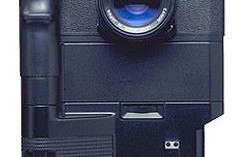
What a 14fps Canon SLR Looked Like Back in 1984

Canon's new 1D X DSLR shoots at a whopping 14 frames per second, but did you know that it's not the first Canon SLR capable of that frame rate? Nearly 30 years ago, back in 1984, Canon unveiled the "F-1 High Speed Motor Drive Camera": a camera powered by huge battery packs that could chew through a roll of film in 2.57 seconds.

This is the Best-Selling Getty-Licensed Photo on Flickr

Two years ago, Flickr partnered up with Getty to allow Flickr users to sell photographs, and today Getty announced that its "Flickr Collection" has grown to over 250,000 images. Getty also revealed that the above image titled "Rock Concert" by Flickr user Michael Bodge is their best seller. No word on how many copies it has sold, though.

Eyes Are Amazing: A Slow Motion Look at Our Biological Lens

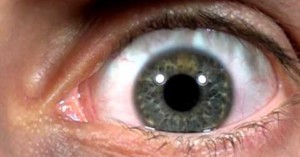
Here's a slow motion video showing a closeup look at the human eye, our amazing biological lens (and sensor). You might be surprised at how mechanical its movements are and how fluid the iris is. Another crazy fact is that we're continually relying on "image stabilization" to see things clearly: …

The “Leica Gun”: Designed to Shoot Both Animals and Athletes

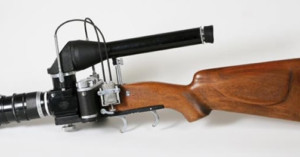
Here's a strange (and extremely rare) piece of camera gear: the Leica Telephoto Assembly Rifle. Also known as "the Leica Gun", it was made for photographers at the 1936 Olympics in Berlin, Germany, and became popular among wildlife and sports photographers during the interwar years. One of them will be auctioned off at the Tamarkin Rare Camera Auction on October 30th, and is expected to fetch up to $100,000.

The Basics of Google+: 10 Tips to Help Photographers

Google+ is becoming pretty popular among photographers as a way to share work and connect with others. If you've been thinking about jumping in but don't know where to begin, Scott Kelby and Co. made this helpful (and free) hour-long primer with tips on how to use the service effectively.

Steve Jobs’ Role Model? Edwin Land, the Founder of Polaroid

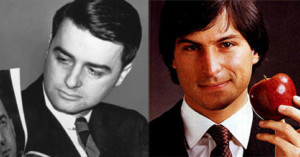
If you think about it, there are many parallels between Apple and Polaroid: both companies introduced innovative products that redefined markets in their time, both were founded by college dropouts, and both emphasized design and usability in their products. What you might not know is that it's not a coincidence. Christopher Bonanos wrote a fascinating article for the New York Times on how Steve Jobs idolized Polaroid founder Edwin Land and modeled his career after Land's: …

The Basics of Photography by National Geographic

Here's a helpful 22-page guide by National Geographic that explains many of the basic concepts of photography, from lens types to composition. It's a free excerpt taken from the 400-page book "National Geographic Ultimate Field Guide to Photography", and is a great read for anyone just starting out.

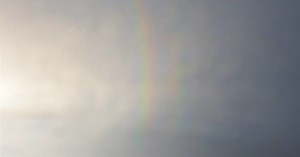
First Ever Photograph of a Fourth-Order Rainbow

Seeing a double rainbow is a relatively rare treat, but how about three or four rainbows? Scientists have only reported seeing triple rainbows five times over the past 250 years, but German photographer Michael Theusner was recently able to capture this first ever photograph of a fourth-order rainbow. Ordinary rainbows (first and second order) appear in the area of the sky opposite the sun (and aren't seen in his shot), but when higher order rainbows appear, they show up on the sunward side.

Free Photo Class Phonar Now Underway

Phonar, the free and open undergraduate photo class we wrote about a couple months ago, is now underway. While the physical class can only be attended by students at Coventry University, the general public can take part through the assignments and recorded materials shared through the website. Here's the first assignment that's due on October 13th: …