Educational

PetaPixel's editorials are in-depth stories, thought-pieces, and opinions on the photography industry led by the minds of our editorial team.

Viral Photographs Bring Instant Success

Photographers used to spend lifetimes building up their portfolios and networks before their work became widely known to a global audience, but with the advent of the Internet, the fact that anything can "go viral" is completely changing the equation for success.

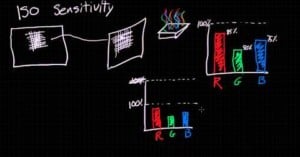
A Simple Explanation of How ISO Works in Digital Photography

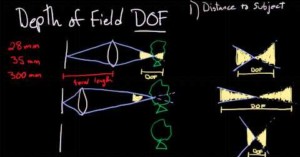
If you're a fan of learning things through Khan Academy, then you might enjoy learning about how ISO works in this similar-styled tutorial by Dylan Bennett. Bennett might not have Salman Khan's soothing voice, but he does his best to break down the magic of digital camera sensors into easy to understand ideas. For a more detailed and comprehensive understanding of how things work, check out Cambridge in Colour's excellent tutorials.

How Before and After Bodybuilding Photos are Often Faked

Here's a clip from the bodybuilding documentary "Bigger Faster Stronger” in which photographer Rich Schaff spills the beans on some industry secrets for how those unbelievable before-and-after photos promoting bodybuilding products are made. He shows how both shots can be of the same model on the same day, with various tricks and image manipulations used to achieve the drastic differences you see.

Everything is a Remix Explores the Derivative Nature of Creativity

Everything is a Remix is a fascinating four-part video series by filmmaker Kirby Ferguson that explores the concept of creativity, and how everything created has some degree of copying, transforming, or combining of old ideas. While the series isn't specifically directed towards photographers, the ideas are quite relevant to the discussion of "original" work.

A Glimpse Into How the Art World Works

Here's an interesting 12-minute video that offers one explanation into how the world of art works. Even if you don't agree with the philosophy and worldview described in the video, it's still an eye-opening tour of the different things that influence and power the mysterious world of art.

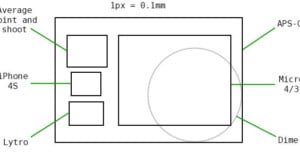
The Size of Lytro’s Sensor Compared with Other Common Formats

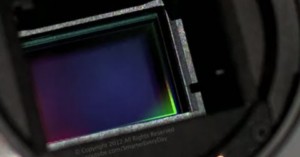
Devin Coldewey of TechCrunch created this helpful diagram showing the relative sizes of various sensors, including the one found inside the Lytro light field camera (a camera that lets you focus after shots are taken). The FCC published photos of the Lytro camera's guts last week, revealing that the sensor inside is roughly 6.5×4.5mm (smaller than our previous estimate). This means that it's slightly larger than the iPhone sensor and slightly smaller than the one in most point-and-shoot …

‘Pillars of Creation’ Photo Was Captured When Pillars Were Already Long Gone

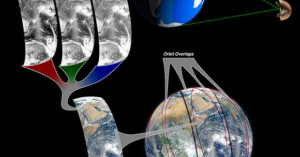
Captured on April 1, 1995 by the Hubble Telescope, the photograph Pillars of Creation is one of the most famous space images ever made. Here's a crazy fact though: did you know that the "pillars" seen in the photo were already long gone by the time the image was captured? Astronomers have concluded that the pillars -- which measure up to 4 light years in length -- were destroyed about 6,000 years ago by the shock wave from a supernova. Because of how long it takes light to travel across such …

High ISO Performance of DSLRs From the 2001 Super Bowl Versus Now

Want to see how far DSLRs have come in the past decade? Lee Morris of Fstoppers published these two photos taken at Super Bowl halftime shows. The crop on the left was captured in 2001, possibly with the Nikon D1H at 2.7 megapixels and ISO 800 (state of the art specs at the time). The slice on the right was from this past weekend, and was shot with a Nikon D3s at 12MP and ISO 12,800.

Did You Know: Sepia Toning is Named After the Common Cuttlefish

Here's your interesting photo fact of the day: did you know that sepia toning (when B&W photos are given that distinctive warm tone) is named after the Common Cuttlefish? The scientific name of the species is Sepia officinalis, and the ink produced by the cuttlefish was used for sepia toning when the technique first emerged in the 1880s.

3,000 Photos Are Uploaded Every Second to Facebook

Facebook officially filed to become a publicly traded company today and, in doing so, spilled the beans on many of its internal figures and statistics that are normally under wraps. A crazy fact that emerged is that an average of 250 million photographs are uploaded to the service every day. That's equal to 10.4 million per hour, 174,000 per minute, or 3,000 photographs per second. In terms of storage, the photos and videos hosted by the service take up 100 petabytes, or 100 million gigabytes.

A Look At Yuri Arcurs’ Microstock Empire

German broadcaster Deutsche Welle produced this interesting segment on photographer Yuri Arcurs and how he turned his microstock photography into a million-dollar photography empire. Here's a mind-boggling statistic: on average, Arcurs sells one of his images every 8 seconds.

This is Lady Gaga’s Photo Release Form

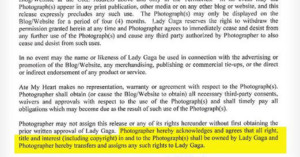
Early in 2011, there was a brouhaha after newspaper photographer Jay Westcott complained about Lady Gaga's photo release form given to photographers attending her concerts. PDN characterized the story as a "fame monster gobbling up photographers’ copyrights". What you see above is a copy of the actual release form given at concerts. Apparently contracts like this one are pretty standard these days.

Jumping Spiders’ Eyes May Inspire New Camera Technologies

In a paper published in Science this week, Japanese researchers reported on a discovery that jumping spiders use a method for gauging distance called "image defocus", which no other living organism is known to use. Rather than use focusing and stereoscopic vision like humans or head-wobbling motion parallax like birds, the spiders have two green-detecting layers in their eyes -- one in focus and one not. By comparing the two, the spiders can determine the distance from objects. Scientists …

Why Wedding Photographers’ Prices are ‘Wack’

Earlier today my friend and fellow photographer posted a link to a craigslist ad from a woman in Seattle looking for a wedding photographer. The woman was upset because she thought that $3,000 for a wedding photographer was “wack” because all we do “is hang out at a wedding taking tons of photos and editing them” and that we are “making so much money it's crazy.”

A DSLR Camera Shutter in Slow Motion

Destin of Smarter Every Day wanted to show how a DSLR shutter works, so he pointed a Phantom high speed camera at a Canon 60D and made this slow motion video showing the magic that happens every time you press the shutter.

Kodak Saw The Future But Couldn’t Avoid Its Own

Here's a video that's fascinating in light of Kodak's bankruptcy announcement today. It was created back in 2006 for the company by partners+napier, and was shown at the All Things Digital Conference in California before Kodak CEO Antonio Perez took the stage to talk about the company's digital transformation. The predictions made in the video are seemingly prophetic, accurately describing the current landscape of digital and mobile photography. It's too bad that Kodak couldn't right its ship, …

A Day In the Life of a College Football Photographer

Want to know what it's like to cover a football game as the chief photographer of a school's athletic department? Photographer Joel Hawksley created this day-in-the-life time-lapse video after being assigned to cover a football game between Ohio University and Temple University. It starts early in the morning when he pulls out of his driveway, and ends at night when he pulls in. In between we see everything from setting up, shooting, post-processing, and uploading/emailing photographs. Hawksley …

Take a Virtual Stroll Inside B&H Using Google Street View

B&H is one of the most popular retailers in the photo world, but most customers haven't set foot inside the physical superstore in New York City, one of the largest photo stores in the world. If you've been wondering what it looks like on the inside, you can take a virtual tour through Google Street View (click the arrow pointing into the building). Starting late last year, Street View started including imagery of the inside of some buildings in addition to its street-level views.

Mini-Documentary About Kodachrome and The Last Lab That Processed It

The final nail in the Kodachrome coffin came at the end of 2010 when the last lab that processed the film, Dwayne's Photo in Parsons, Kansas, ceased its support. In Kodachrome's final years, every roll sent to Kodak for processing from around the world was sent to Dwayne's. This mini-documentary created by Xander Robin offers an interesting glimpse into Kodakchrome processing at Dwayne's Photo before it came to an end.

US Army Darkroom Aluminum Shelter

If you've always wanted your own military-grade portable darkroom, today's your lucky day! There's a used US Army one for sale on eBay with the starting price of $4,500. The 4,500LB shelter contains 3 rooms with 614 cubic feet of space, and comes with all the darkroom equipment you need, including a fridge, film drying cabinet, film processors, sink, storage spaces, and an escape door! It even packs its own temperate water control system and heating/AC unit. You can find more photos here.

Amazing Visualization Showing a Year of Photos Around the World

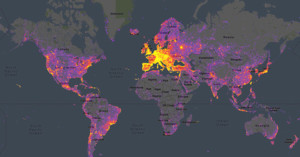
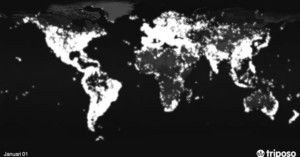
The folks over at Triposo wanted to know when people around the world take pictures, so they harvested the timestamps and geolocation data from photos shared on the Internet and created this beautiful visualization showing one year of photos taken around the world (be sure to watch it full screen and in HD). It's neat seeing certain parts of the world light up with photo activity on special days.

How National Geographic Photography Worked 20 Years Ago

Ever wonder how the photographs found on the pages of National Geographic come together? Here's a fascinating behind-the-scenes video showing how the images of the 1992 cover story titled "The Sense Of Sight" -- photographed by Joe McNally -- were shot, edited, and arranged. McNally writes, …

Case With Built-In Cameras Reveals the Journey of Checked Baggage

Earlier this month we shared some advice from an anonymous airline baggage handler, who revealed that hard-sided “spinners” suitcases are safest if you must transport valuables (e.g. camera gear) in checked baggage. To see why, check out the video above by Delta Airlines. They drilled holes into a hardcase and installed six outward-facing cameras to document what a bag goes through after it disappears behind those black rubber flaps and before it emerges onto the conveyor belt in the …

What 5MB of Storage Looked Like in 1956

This photo shows what 5MB of hard drive storage looked like in 1956. The IBM 305 RAMAC hard disk was state of the art, weighed just shy of a ton, required a forklift to be carried around, and was composed of 50 separate 24-inch discs that occupied 16 square feet. The annual cost of using it was a staggering $35,000 -- steep even in today's money. Nowadays most RAW photos outweigh the storage capabilities of that behemoth of an external hard drive...

Britons Drunk in 76 Percent of Tagged Facebook Photos, Survey Finds

Now here's an absolutely bizarre statistic if it's actually true: 76 percent of Facebook photos with tagged Britons show the subjects in some state of drunkenness. Photo book service MyMemory.com surveyed 1,781 Britons over the age of 18, asking them to estimate the percentage of their pics that showed them under the influence of alcohol. A quarter of those respondents also said that their privacy settings allowed the general public to view their tagged images.
Why Camera Gear May be Safest in a Four-Wheeled Suitcase When Flying

You probably already know that it's not a good idea to include your expensive camera gear with check in luggage, but what if you have no choice? If you must, then putting your gear inside a hard-sided "spinner" suitcase with four wheels is your best bet. The Huffington Post has published an interesting interview with an anonymous baggage handler, who gives the following advice: …