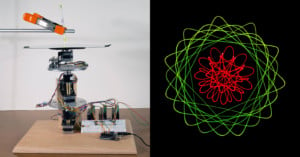

Light Painting Photos with a Geometric Drawing Machine
Originally, the geometric chuck was a device to make ornate patterns on a lathe. Invented in the 1860s, the device could have up to 8 layers—each driven by a central shaft.
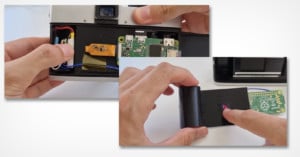
YouTuber befinitiv has published a video where he shows how he updated an old Cosina Hi-Lite film camera with a cartridge based on a Raspberry Pi that turned the analog camera into one capable of capturing digital photos and videos.
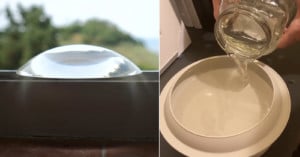
In an effort to challenge herself, Italian photographer Ursula Ferrara has made her own lenses for her large-format film camera using plastic epoxy and silicone cake molds.
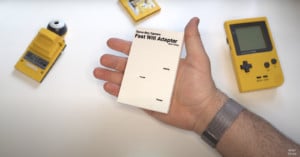
An engineer has figured out a way to bring the Game Boy Camera into the twenty-first century with a DIY wireless adapter that allows him to easily transfer all the images taken with the aged handheld gaming console camera to his smartphone.
I have been shooting 4x5 color transparencies or commonly known as color slide film for many years but the best that I could enjoy them was to put them on the light table and viewing them through a loupe. Unlike my 35mm and 120 slides, I have never seen them projected big simply it is not easy to locate a 4×5 slide projector.
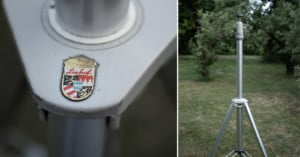
After an accident that left an otherwise well-built Linhof tripod in a bad shape, watch as photographer Markus Hofstätter brought it back to life with full functionality.
Researchers in Germany have found a way to take old iPhones -- specifically an iPhone 5 -- and combine them with LEGO to make a DIY high-resolution microscope designed for young students.
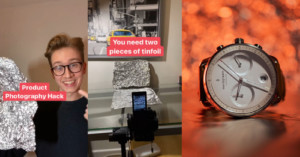
Having shared numerous videos of creative photography tips and tricks, a photographer proves that you don't always need to invest in expensive equipment to create eye-catching content.
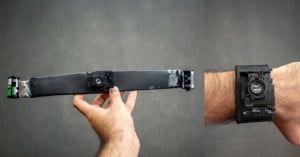
Iranian photographer and camera tinkerer Alireza Rostami has created a new homemade wrist camera that operates in a neat way: two 35mm film cassettes are attached to the strap under the wrist, and 35mm film travels through the camera inside the straps.
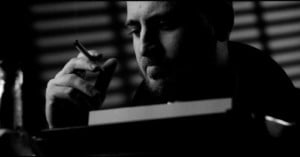
Sometimes all it takes to bring a shoot to the "next level" is a little DIY work and a couple of cheap accessories. In a recently published video, videographer Alex Perri goes over how he used an affordable light shaping modifier along with duct tape and cardboard to create some iconic film-noir looks for a short film he produced for fun at home.
Ensuring there is enough power for every piece of gear while on set is easy, but what if a shoot's location is moved to someplace away from the convenience of outlets? A battery is needed of course, but they can be expensive and have limitations. So can one be built?
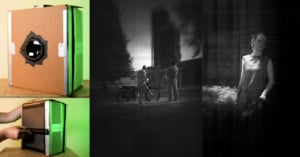
Camera accessory manufacturer Fotodiox has published a video that explains how to make a digital camera obscura that can be used for both video and photo capture made from a box, a magnifying glass, and frosted plastic.
A content creator has designed and built his very own 3D-printed camera motion control rig, which he says can create footage comparable to that of highly off-the-shelf expensive camera rigs.
Apple is continuing its "Experiments" videos series and has released the latest in the collection which was shot on iPhone 12 titled "Full Bloom," just in time to celebrate the spring season.
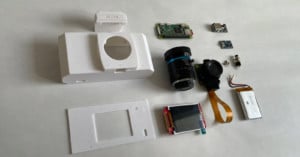
Inspired by do-it-yourself camera parts and projects, Ping-Hsun Chen and Ruha Cheng took things a step further and released a retro-style RUHAcam kit built around a Raspberry Pi Zero W connected to the High-Quality Camera Module.
Photographer Jens Heidler recorded a 10-day timelapse of a cracked egg in macro and captured the various stages of its drying and crystalization. What results is are some beautiful and unexpected patterns.
An electronics engineer has created a do-it-yourself hot-swappable battery solution for photographers who want to keep their cameras going through shoots without stopping or losing any footage.
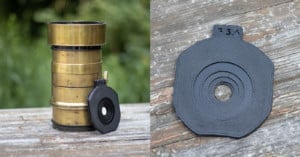
For years now, industrial super-fast lenses have been on the back of my mind. But one thing always held me back, and that was the fact that most images I could find were frankly uninspiring, boring, fuzzy macro shots at best. So I couldn’t justify spending hundreds of dollars on unpractical medical equipment.
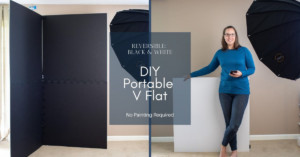
Having a portable V-Flat in your photography kit can provide a unique tool when creating images for your clients. A V-Flat can be used as a background or a tool to bounce or absorb light on your subject.
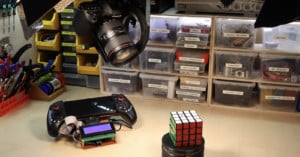
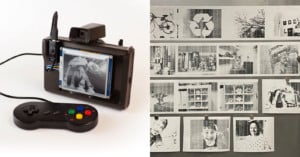
In this article, I'm going to tell you the story of my latest camera creation: a digital Polaroid camera that combines a receipt printer with a Raspberry Pi. To build it I took an old Polaroid Minute Maker camera, stripped out its guts, and replaced the innards with a digital camera, an E Ink display, a receipt printer, and an SNES controller to operate the camera.
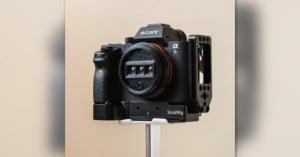
Designer and commercial architecture photographer George Moua has designed and 3D printed a highly unusual photo tool that he calls a stereoscopic "wiggle lens." In short, it allows you to combine multiple frames shot with a single lens into a moving image that appears to have depth.
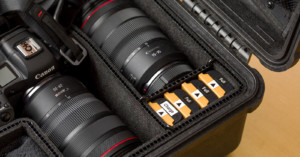
Keeping batteries charged for your camera and accessories is the bane of the professional photographer. With the increasing popularity of battery-hungry mirrorless cameras like the Canon EOS R5 and R6, this has become all the more challenging and important, and that’s what drove me to create this simple hack to track which batteries are charged, and which ones need to go into the AC charger when I get home from a shoot.
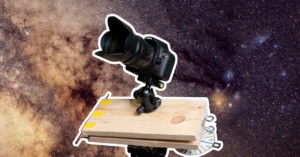
Star trackers are important for capturing long exposures of star formations by slowly moving to compensate for the rotation of the Earth. Most modern star trackers use motors to do this, but in this 22.5-minute video, photographer Nico Carver shows how he built a hang-crank version for just $30.
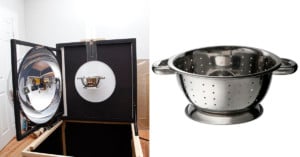
Photographer Erik Espinosa was tired of fighting with his own reflection when it came to shooting shiny products and decided there had to be a better way. Fresh off an approved patent, his new domed box concept calls "Entero" removes that problem entirely.
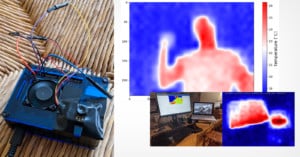
Thermal cameras are expensive. They can cost anywhere between a few hundred to a few thousand dollars to buy and can cost $50 a day to rent. So why not just build one for around $100?
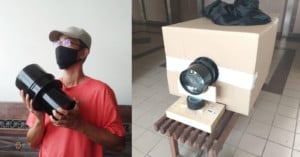
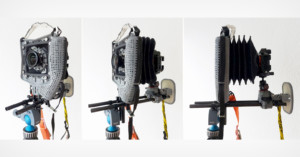
A few years ago I built an ultra-large-format (ULF) camera that is 24 inches by 24 inches. While it was a pretty huge camera, it was a simple build it was just two square standards, one for the front and one from the back that were connected by a big bellow.
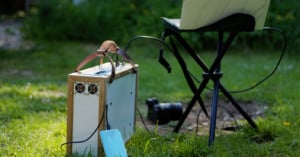
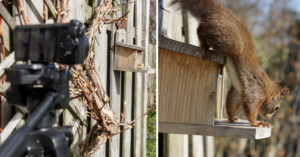
Recently a squirrel noticed our nut box that was waiting to be raided for almost a year now. But as our squirrels here are a bit skittish, I needed to come up with a way to get in close to take nice pictures of them.
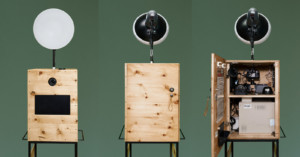
These days people love photo booths and once you have set it up it works -- and pays -- for itself. I found various plans and tutorials, but in my opinion, none of them had a good purchase list or a really good manual. So I decided to make my own.
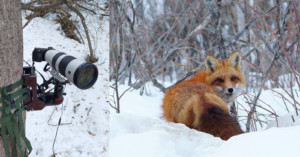
Wildlife photographer Levi Dojczman was out photographing birds one morning when he noticed a fox. Unfortunately, he was unable to get a photo without spooking it. Not to be denied, Dojczman spent the next few days testing a method to photograph the fox using a remote tethering solution.
Over the past year, it seems the whole world has been on hold due to the rampages of COVID-19. In the Facebook groups I’m in, many users were seeing shortages in analog photography supplies. Some online stores stopped shipping Rodinal (a caustic liquid) and other products were just nowhere to be found.
Although the original Polaroid as a company is no longer manufacturing their film, their ethos and idea behind instant imaging is still very much alive and kicking.
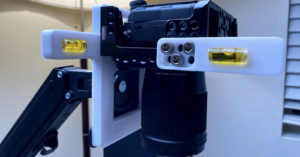
Though there are multiple off-the-shelf solutions for over-head camera angles, DIY-er Jay Doscher decided that there was a better way. By combining a VESA mount monitor arm with a few "universal" parts along with some 3D printed pieces, he made his own.
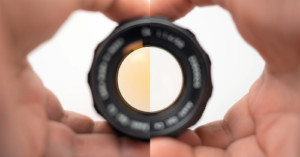
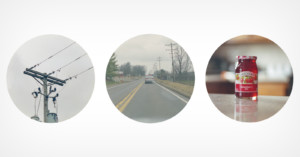
Student and photographer Imran Nuri was driving alone one day when he started to think about photography and its shape. He asked himself "why are photos rectangular?" The answer might be obvious, but it also got him thinking about what it would be like to capture circular photos instead.
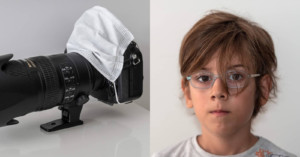
I recently found a very practical solution for diffusing a camera flash. The solution is perhaps the most practical thing available during the COVID-19 pandemic: the spare medical mask that I kept on my bag.
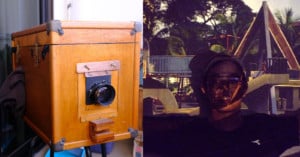
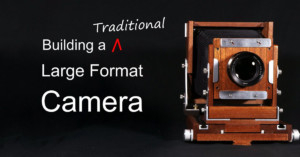
Patrick Sullivan is a woodworker with over 50 years of experience under his belt. In this 15-minute video, Sullivan shares how he spent the last couple of months building a traditional large format camera -- a project that kept him "absolutely fascinated."
There are certain vintage lenses out there that are prone to have glass elements that yellow over time. If you have one of these lenses, you don't have to live with yellow-tinted results: here's a 3-minute video in which photographer Mathieu Stern shares a simple trick for restoring the lens.
The purpose of a snoot is to take a light source and focus it down into a more defined point, but The Beyond Photography Show host Andrew explains in this 11-minute video that the physics of snoots makes them terrible at their job.
In an endeavor that seems to be driven only by curiosity, Photographer Jay P. Morgan modded an old IMAX lens to allow it to work with his Canon EOS R. But just getting the lens to work wasn't enough, as Morgan decided to take the lens way out of its element: street portraiture.
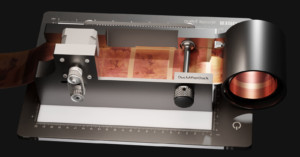
Despite what some people think about LIDAR for cars, in the near future it is foreseeable that this technology will take its rightful place in our daily lives. Not just for cars but with almost anything and everything. We have already seen Apple’s new iPad and iPhone utilizing this technology. I wanted to see if I could use a LIDAR, in its most fundamental function, on a film carrier that is printed on a 3D printer.
A pinhole camera is a simple image capture device that doesn't use a lens but instead makes images through a tiny aperture. The simplest ones are just a light-proof box with a hole in it, and in this 7-minute video, you'll learn how to make one as well as how to make your digital camera into one.
If you're a film photographer who likes to go the do-it-yourself rather than store-bought route, here's a fun little tutorial for you. In this 3-minute Darkroom Magic episode by the George Eastman Museum, Historic Process Specialist Nick Brandreth shows how you can make your own photo paper developer at home from scratch.
Industrious designer Benjamin Bezine has created a Raspberry Pi-powered film scanner that combines with a film advancer made from Lego and a mirrorless camera that along with machine learning automatically scans whole rolls of film.
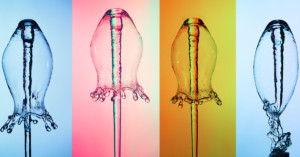
Each year I update experiments in the collection of the High-Speed photography lab at Rochester Institute of Technology (RIT). One of this year’s additions is an air-powered water bell.
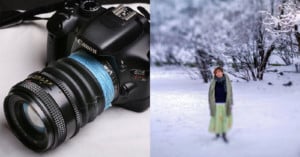
I’ve been making tilt-shift lenses for a while now, and they’re a bunch of fun to make and shoot with. I don’t think I need to sell you on the creative possibilities of this type of photography and videography.
The Canon R5's overheating time limit has been the subject of much discussion and controversy. Regardless of how or why the overheating happens, Matthew Perks over at DIY Perks has come up with an unusual mod that actually works to fix it: he watercooled his camera.
Adafruit Industries has created a machine learning camera built with the Raspberry Pi that can identify objects extremely quickly and audibly tell you what it sees. The group has listed all the necessary parts you need to build the device at home.
Iranian photographer and camera tinkerer Alireza Rostami wanted to shoot tilt-shift photos but found the specialized lenses too expensive, so instead he decided to make himself a selective focus lens using a cheap CV boot.
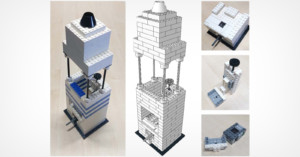
A photographer in Japan was forced to sell his favorite camera earlier this year after being impacted by the COVID-19 recession. Instead of letting that put a stop to his art, he decided to build his own 4x5 large format camera... using LEGO blocks.
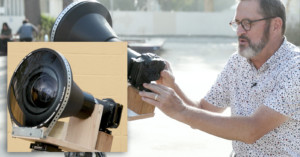
Why does someone build their own camera? Maybe for technical reasons, usability enhancements, or perhaps personal style and artistic outlook. The raison d'ètre for the experimental camera I made here falls somewhere between all of the above.
Want to shoot indoor "natural light" photos... at night? All you have to do is build yourself an artificial sun. That sounds wild, but it's actually neither too difficult nor too expensive -- this 24-minute tutorial by DIY Perks will teach you exactly how it can be done.