Leica in 2025: Leica Did Leica Things This Year
This year, Leica celebrated the 100th anniversary of the Leica I, the first 35mm camera. That alone makes it an excellent year for the legendary German company, but it was also jam-packed with new cameras, lenses, and, as always, special edition product launches.
Before getting into Leica’s 2025 product launches that are actually relevant to this recap, it’s worth looking again at some of the other things Leica did this year.
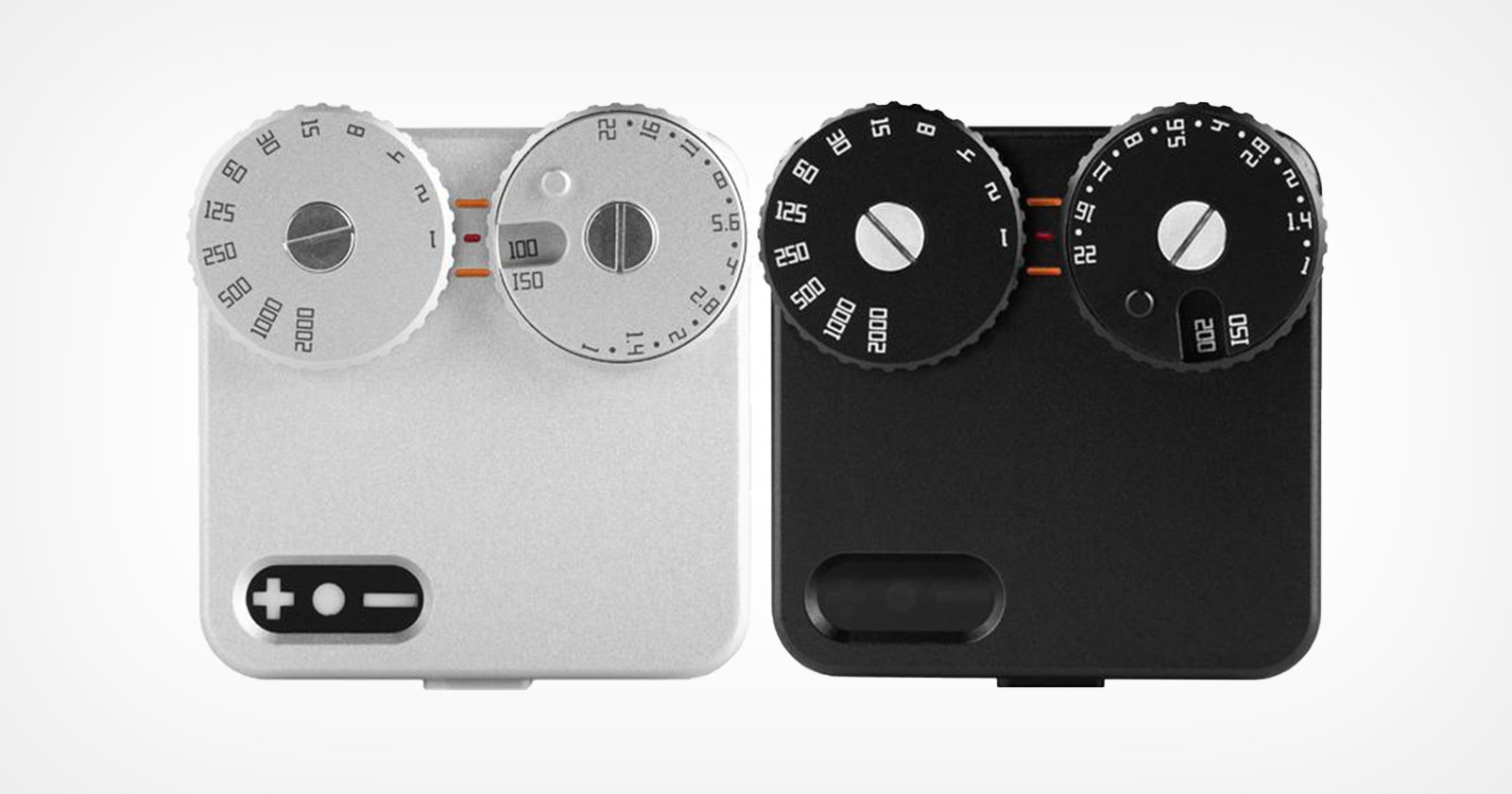
In February, Leica released the Lux Grip, a premium camera grip for iPhone to work alongside Leica’s Lux camera app. That same month, the company released the ZM 12 luxury watch.

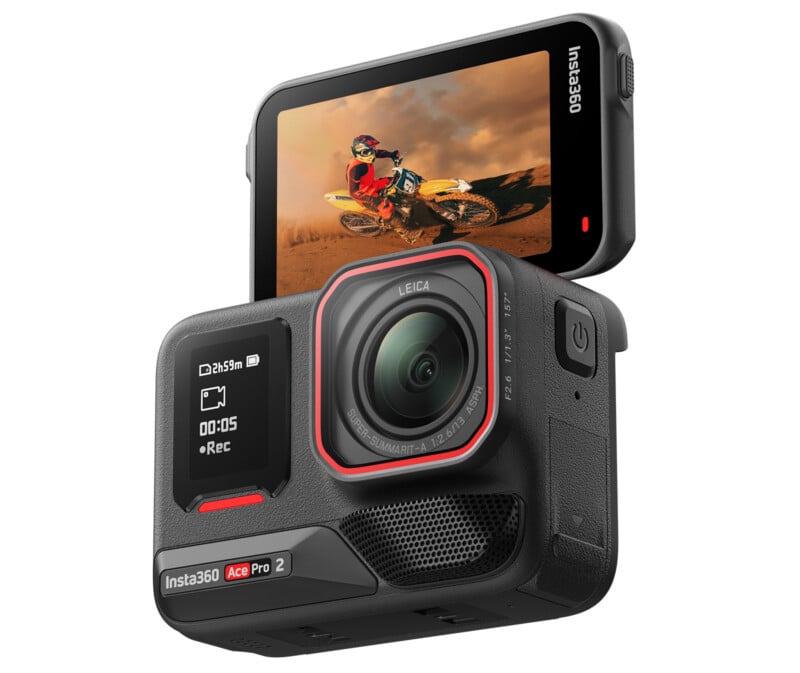
Insta360 and Leica extended their strategic partnership, and promised new products. Those arrived later in the year in the form of the new Insta360 Ace Pro 2 action camera with Leica imaging technology and optics. Leica also entered a strategic partnership with Capture One this year.
Leica also debuted new 35mm film this year, Monopan 50, the company’s first-ever true Leica film. As it turns out, it’s a lovely film, too.
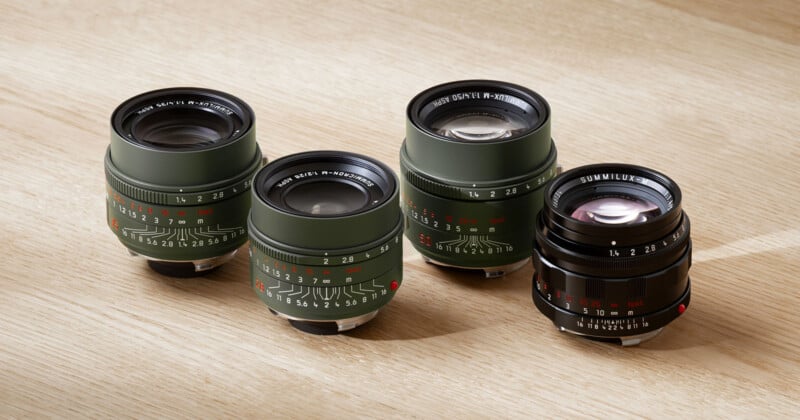
Leica also released plenty of new editions of its existing photography products, like special city edition M11 cameras and Safari edition cameras and lenses.
While that’s all great, and Leica yet again achieved record sales for the fourth year in a row, it’s time to get into the all-new Leica cameras and lenses launched in 2025, and there are some exciting things to discuss.
Three New Leica Cameras Across Three Different Systems
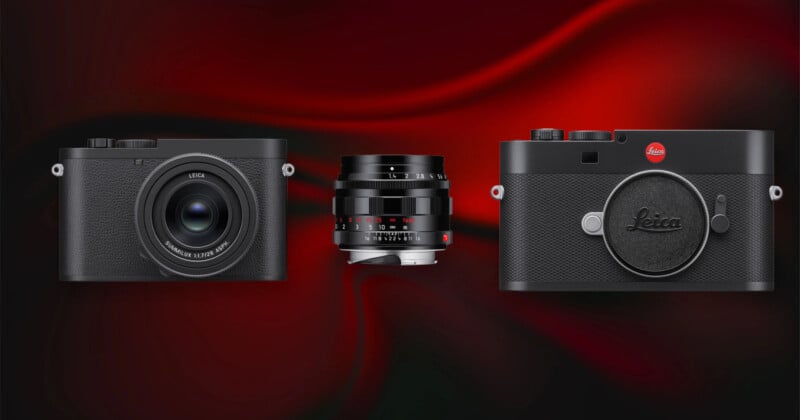
Leica was unusually busy last year when it released four cameras, but it nearly reached the same mark in 2025. And much like 2024, Leica’s 2025 cameras were all across different systems and formats.
Leica’s first camera of the year was likely also its least compelling, the Leica SL3-S. The 24-megapixel hybrid camera has some interesting features, such as an IP54 weather resistance rating, C2PA functionality, and speedy continuous shooting, but it’s unclear that it does enough to justify its existence in the L-Mount System, especially in view of something like the Panasonic Lumix S1 II.
Ultimately, as Chris Niccolls explained, the Leica SL3-S is a very good camera at a very high price. The camera launched at $5,300 and, thanks to tariffs, is now $5,665. That is a lot of money to pay for what is essentially a Lumix S5IIX with Leica branding and a refined user experience.

For some users, that premium may very well be worth it, but for us, the SL3-S doesn’t deliver anything truly special enough to justify its price tag.
Leica’s second camera of the year, on the other hand, is truly different from the rest. The Leica M EV1 is Leica’s latest M-Camera and the first ever to feature an integrated electronic viewfinder. Gone is the rangefinder, but what remains is Leica M-Camera style and its beloved emphasis on a manual photographic experience.
It is a bold, polarizing departure for the company, but the results are outstanding. People could argue endlessly about whether the Leica M EV1 should exist, but we are glad it does. It gives a wider group of photographers a chance to have much of the Leica M experience, and makes the system more accessible, at least from a usability perspective. It’s still awfully pricey.



“The M EV1 was fun to use and perfectly capable on the streets. It even saves the potential buyer a little bit of money due to the lack of an expensive mechanical rangefinder linkage. Like it or not, the EV1 brings some serious utility and merit to the M series and deserves a place at the table of this illustrious family of cameras,” Chris Niccolls wrote.
Leica wrapped up its slate of 2025 cameras with another winner, the Leica Q3 Monochrom. The 60-megapixel camera retains the standard Q3’s luxurious form factor and outstanding built-in Summilux 28mm f/1.7 ASPH. prime lens but pairs it with a 60-megapixel sensor that ditches the standard Bayer pattern color filter. The result is extremely sharp monochromatic images with exceptional tonal depth. The image quality is among the very best of any full-frame camera, bar none.
Many photographers love black-and-white photography, and Leica has never shied away from giving monochromatic enthusiasts dedicated models for all their color-less needs. Basically, if you love the Leica Q3 and you love black and white photography, Leica has delivered yet another winner.


“Leica will no doubt continue to have success mating its popular camera models with powerful monochromatic sensors. If black and white photography is your passion and you want a compact fixed-lens camera, the Q3 Monochrom is waiting for you,” Niccolls concluded.
Tons of New Glass
We’ll be discussing both Leica and Leitz Cine in this section, as Leitz, Leica’s cinema division, had exciting launches this year relevant to our audience. We also cover cinema-oriented lenses from other manufacturers, so it makes sense to include Leitz Cine.
First, Leica. In February, Leica released the Summilux-M 50mm f/1.4 Classic Line prime for the M-System. This vintage-inspired lens sports “Classic” Leica styling inside and out, including an optical formula derived from the legendary Leica Summilux-M 50mm f/1.4 (II). This lens, released in 1962, was made for over 40 years before being discontinued. Photographers love it for its distinct wide-open rendering and image quality, so Leica brought it back in a new iteration.


The retro-styled lens is not just a rehash, though; it can focus closer than the original version, has a refined design and build quality, and promises improved performance when stopped down than its predecessor.
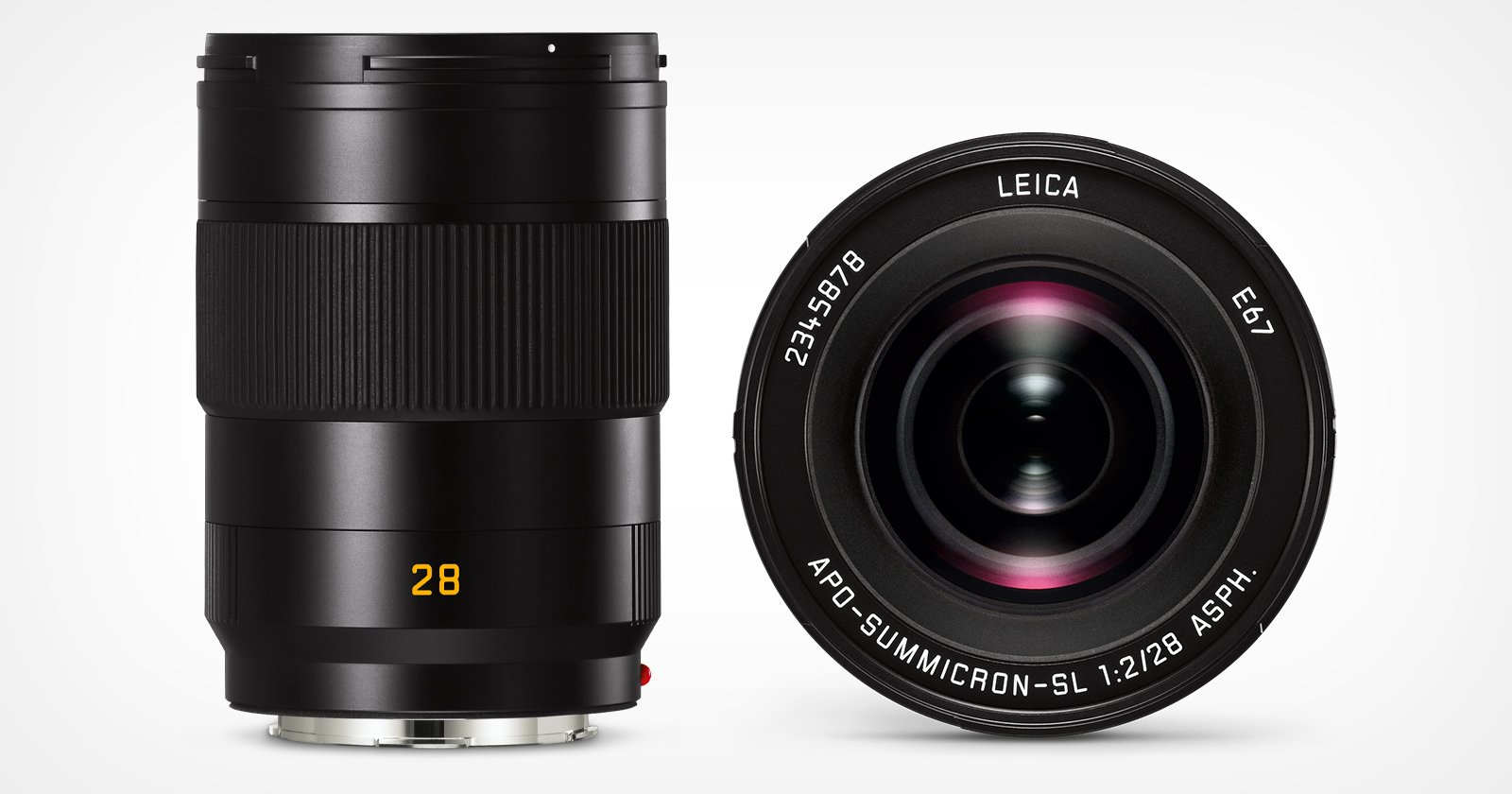
Leica’s second lens of the year is for L-Mount, the compact and lightweight Vario-Elmarit-SL 28-70mm f/2.8. The new zoom is SL System’s lightest zoom lens yet and is a new kit option for the Leica SL3 and SL3-S cameras.
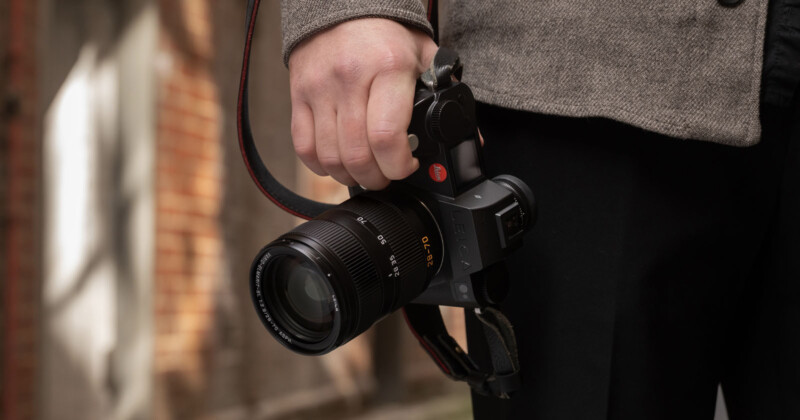
While perhaps not the most exciting Leica SL lens to date, it fills a valuable and flexible role in the L-Mount system as a whole and is, by Leica standards, reasonably priced at $1,890.
Leitz Cine was very busy in 2025. In August, Leitz Cine announced the Hugo 40mm T1.5 prime lens, bringing Leica’s M-System optical spirit and engineering to professional filmmaking.

It is the 14th lens in the Leitz Cine Hugo series and comes in LPL and L-Mount options. Leitz says the 40mm focal length is a classic choice in cinema, and the lens promises low contrast, smooth falloff, and artful flare.
The following month, Leitz Cine launched its first-ever lenses designed specifically for mirrorless cameras. The brand-new Leitz Cine Hektor lens lineup comprises six T2.1 primes, ranging from 19mm to 100mm focal lengths, and all the lenses are available for Sony E, Canon RF, Nikon Z, and L-Mount cameras.
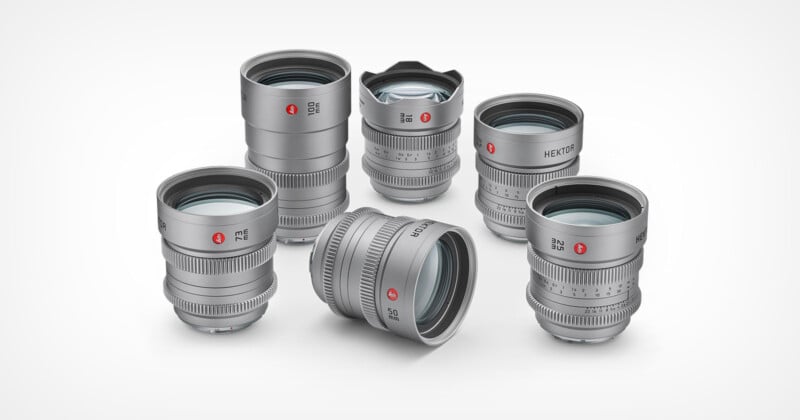
The lenses may represent an all-new direction for Leitz Cine, but they still embody the company’s trademark approach to engineering and optics. The lenses aim to deliver a look similar to Leica’s M-Lenses from the mid-20th century with a dash of Petzval spirit.
Grading Leica in 2025
Leica is a difficult company to grade. There’s good reason why Chris Niccols and Gordon Laing gave Leica an “L” grade for the year. Leica just doesn’t do things the same way as everyone else. This is mostly a good thing. But it’s also an expensive thing.
On the one hand, you can easily make the case that Leica released a series of overpriced cameras and lenses in 2025. But on the other hand, you can also argue that Leica released products that deliver unique, valuable photographic experiences.
I mostly land in the latter camp, although I think that the SL3-S is a particularly challenging sell since it isn’t that different from the competition but is much more expensive. The Leica M EV1 and Q3 Monochrom reflect Leica at its best. These are compelling, interesting products with excellent photographic capabilities and unique takes on what makes photography so darn fun.
Leica’s products are not necessarily for me, and there are plenty of people who don’t have the budget or desire to pick up what the legendary German company is putting down. But there is no question that Leica’s products this year are inherently good.
I do hope to see a bit more from Leica next year, especially in terms of optics. I think there is still plenty of room to make interesting, distinct lenses across the M and SL systems.
Grade: B
Image credits: Header photo created using an asset licensed via Depositphotos.