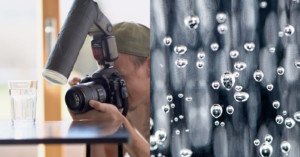
5 Macro Photo Ideas to Shoot at Home
Want to get creative without leaving the comfort of your own home? Here's a 5-minute video by COOPH that contains 5 ideas for macro photographs you can do with a small budget, simple gear, and everyday items.
Want to get creative without leaving the comfort of your own home? Here's a 5-minute video by COOPH that contains 5 ideas for macro photographs you can do with a small budget, simple gear, and everyday items.
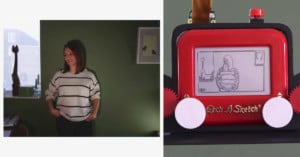
Self-taught programmer Martin Fitzpatrick of Two Bit Arcade has created the world's first Etch A Sketch digital camera. It captures digital photos and then outputs them by drawing them onto the Pocket Etch A Sketch "screen" found on the back.
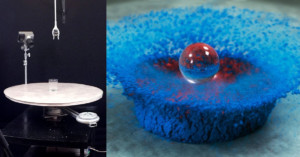
Ben Ouaniche of the YouTube channel Macro Room spent the past many months working on a high-speed spinning camera rig project. The result is a rig that can capture incredible slow-motion action footage while spinning around a tabletop set at 150 rotations per minute.
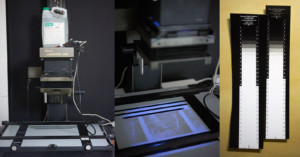
I recently converted my friend's Durst Laborator 1200 enlarger to use LED lights. In this article I'll share how I did it.
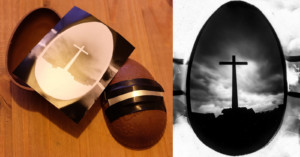
For Easter, I made a pinhole camera out of a chocolate Easter egg. In this 5-minute video and article, I'll show you how it's done.
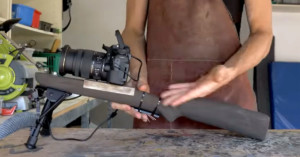
Want a camera stabilizer that's sure to attract (perhaps unwanted) attention? Just add a rifle-style stock to it. Alex over at I did a thing made this humorous 5-minute video showing how he built such a stabilizer for his own DSLR.

Can an ordinary person made a camera lens from scratch? Here's a 22-minute video in which Andy George of How To Make Everything answers that question by producing clear glass and metal and combining them to create a camera lens.
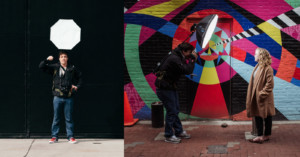
My name is Brendan Burkett, and I believe I have created an original device and street photography method. What I have done is attach a softbox to my back for ultimate portability. This allows me to get street portraits with a very unique light.
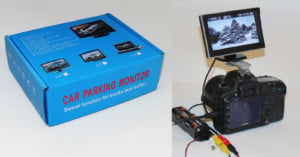
I was often disappointed by my Canon 5D Mark II not having a flipping or better yet a detachable monitor. Instances of this happened when I placed the camera on a fully extended tripod and had the camera pointed downwards to make a photograph of something on the floor. Getting one’s eye above the view screen was sometimes impossible.
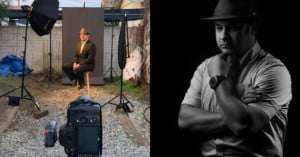
Photography. It’s expensive. And who really has the money to buy all the name brand photo gear? I certainly don’t. With that said, expensive equipment does NOT make the photograph -- the photographer does, which is why I am exploring various non-photography-specific gear and using it for my photography.
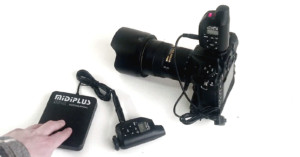
I have been looking into shooting other sports outside of the motorsport world, and I have been particularly interested in soccer, basketball, and baseball. After doing some research, I found that some sports shooters covering these type of events use different remote trigger setups such as foot pedals and cable release buttons.
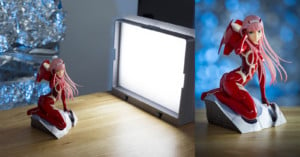
I got my first 3D printer recently, but it sits in a dark corner of my room, so I thought I'd design a light for it. Then I realized I could kill two birds with one stone and design it to be useful for photography as well.
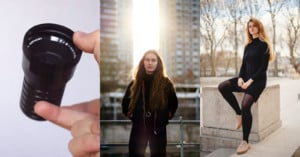
While browsing a flea market, photographer Mathieu Stern came across an old slide projector and managed to buy the Rollei 90mm f/2.4 MC lens mounted to it for just €5 (~$5.70). With a little bit of ingenuity and effort, Stern converted it into a camera lens and found that it's a terrific lens for shooting portraits.
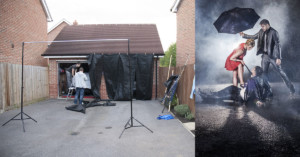
I’ve written about this project in the past, as I originally made the rain machine and shot with it in 2012, but we’ve now done it in video form! Hopefully it shows a little more detail about the construction and how I shot with it.
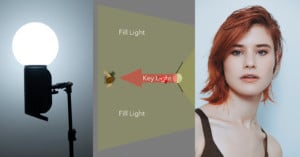
It’s not often I get to shoot very simple, clean white light shots, but in a recent shoot the model asked if she could get some updated ‘Polaroids’. For those of you not familiar with the term when used in reference to a model shoot, it’s actually not the now-obsolete and ludicrously expensive single-shot film, but a request for very basic portraits of the model for their agency.
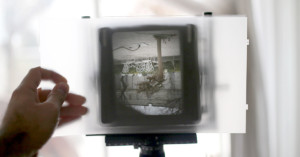
Iranian photographer Alireza Rostami loves experimenting with camera equipment, from flipping a lens element for "magic bokeh" to creating a working analog watch camera. His latest experiment is also off the beaten path: he found that a display from a broken laptop works perfectly as a view camera's ground glass.
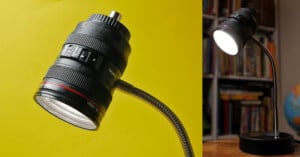
After Canon handed out camera lens mugs at the Vancouver Winter Olympics in 2010, novelty lens look-alike mugs and cups have flooded the market. If you've received one or more of them as gifts, one thing you can do is turn them into camera lens desk lamps.
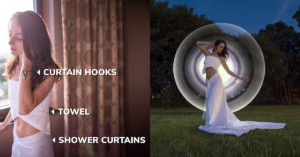
After our flight to NYC got canceled last summer, we got stuck in Chicago for one night with no light painting tubes, no dress, no tripods, and no battery chargers. During the shuttle ride to the hotel, we started joking about using a bed sheet to fake a dress and to use whatever we could find in the hotel room as a light-painting tool.
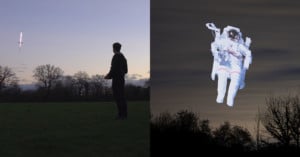
What do you get when you combine a pixelstick with a drone? Makers Ivan Miranda and Tom Stanton recently decided to show all of us by creating a custom light stick drone that can be used to shoot light-painting photos in the sky.
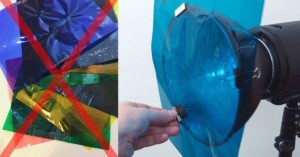
If you’re like me and you’ve tried to attach gels to your lights in the past, you’ve likely resorted to using one of the many types of sticky tapes available. When I used to manage a studio, I would see all manner of tapes being used to attach gels to hot modifiers.
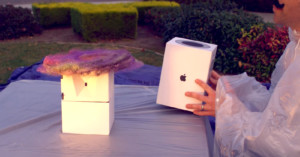
Wildlife photographers sometimes set up camera traps to capture images of elusive animals. Former NASA engineer Mark Rober recently spent months creating a glitter-bomb fart-spray camera trap to capture images of elusive package thieves. As the 11-minute video above shows, the results were glorious.
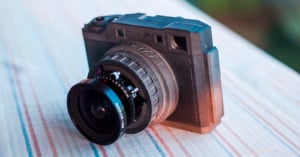
Back in July 2018, photographer Oscar Oweson started an effort to build a homemade rangefinder camera -- a 6x7 camera designed to be like an all-mechanical version of the Mamiya 7. Months later, the Panomicron Holmium was born.
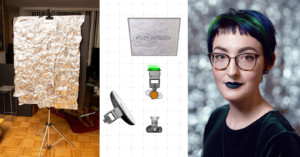
I love bokeh and wanted to incorporate it into some upcoming holiday-themed beauty shoots. Well, I didn't want to shoot in the cold and I really didn't want to buy strings of lights (or generally spend any money at all) so I put together this great backdrop with basically just tinfoil.
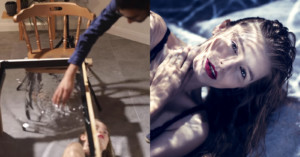
For a long time, I have been building sets or props for my images, which in time developed into making and selling furniture as a hobby business. I thought it about time I made videos detailing the process of those builds and the “high budget” results that can be achieved with little financial outlay and a little DIY.
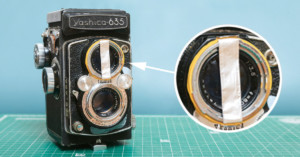
If you have a TLR camera, here's a simple trick you can try to help you to focus more easily. All you'll need is some rubber bands, scissors, aluminum foil, and a ruler (optional).
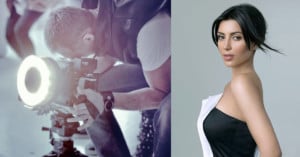
For many years, I have been modifying and adapting lighting and camera equipment to better fit my style of shooting. The process of altering lighting gear, as well as combining products that were not originally intended to work together, is of particular importance to me these days, as I constantly mix and match the best from many different brands.
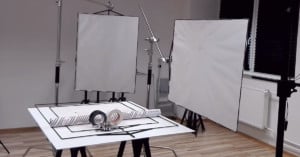
Light diffusion panels can cost $80 to $100 or more when purchased retailed, but very little when you make them yourself, and to do so is very simple. I can’t tell you how many times I have been asked about my diffusion panels and where I get them from. The ones I use in my studio have all been custom-made to fit my needs, and I’ll show you just how to make your own.
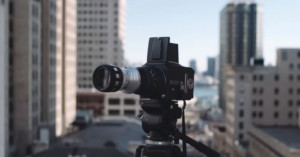
Freelance film photographer Casey Cavanaugh has always wanted a Hasselblad Xpan, but the cameras cost thousands of dollars used and have been out of his reach. So, Cavanaugh decided to build his own.
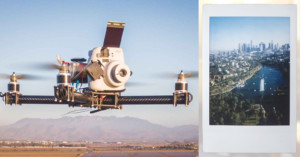
Over the last 5 years, drones have consumed every part of my life. From using aerial systems to carry cameras as a service provider with Drone Dudes, to selling drones with Dronefly, or designing and making drones in China with Yuneec, I’ve been involved in all aspects of the drone industry.
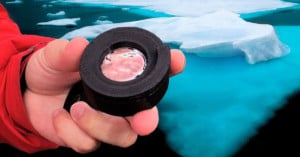
Photographer Mathieu Stern is a fan of creating strange lenses, but his latest creation is quite unusual, even by his standards. Stern visited Iceland and created a working lens out of ice from an iceberg.
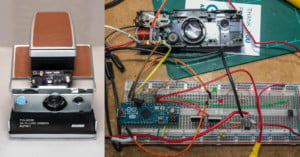
Polaroid began to market the SX-70 camera in Florida in late 1972, about 46 years ago. The camera was a technology and design icon from day one, the brainchild of Dr. Edwin Land.
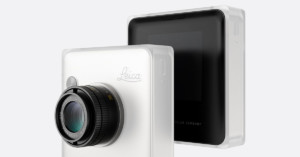
Good photos have become commonplace. Smartphones have demystified camera technicalities in the past decade, and its pervasive adoption has democratized photography for mass consumers. Since the first known photograph was made in 1820, camera functions evolved significantly to compensate for human error.
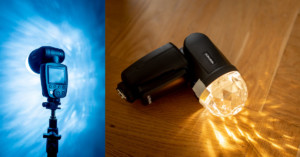
Controlling and modifying light is a lot of what photographing with studio lights and battery-powered strobes is about. Especially when it comes to portraits, I like to work with my lighting setups so they add something that is not perfect or flat.
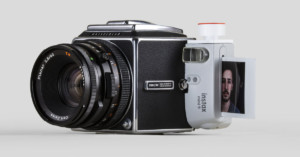
Instant photos are magical. They develop before your eyes. You can share them, gift them, spill water on them, draw on them. The only problem is that most instant cameras are pretty cheap — that’s why I’ve always wanted to hack my medium format camera to take instant photos with shallow depth of field and sharpness.
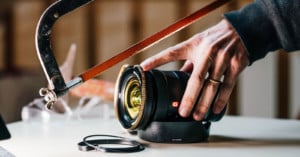
I always put a lens hood on my lenses. Except… when they fall! As I recently finished shooting at 6 AM in the Maldives with my wife, I kicked my tripod with my Sony a7R III, Sony 16-35 f/2.8 GM, and an ND-8 filter on it. The tripod fell over towards the ocean and, to my partial relief, fell on the wooden platform 7 feet (2m) below with the camera on it…
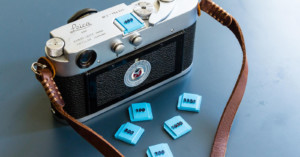
Amateur photographer Guy Sie of The Netherlands needed a better way of remembering what film speed he has loaded into his camera, so he created custom 3D-printed camera hot shoe covers with ISO numbers on them.
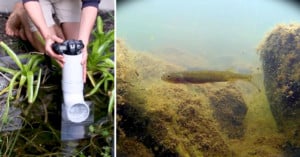
Want a cheap way of shooting right under the surface of water without having to buy a special housing for your camera? Alex over at I did a thing recently built himself a PVC periscope-style device for a total cost of around $10, and the results are great.
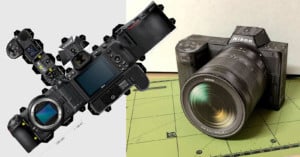
Can't wait to get your hands on the new Nikon Z Series full frame mirrorless camera? If you'd like to get a feel for the camera's size first, you can now fold yourself a paper version of the Nikon Z7 and Z 24-70mm lens.
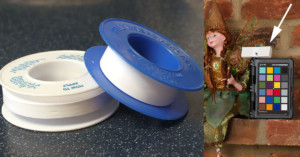
Want a cheap and easy way to white balance photos without having to buy a color checker or special cards? Here's a neat hack: you can actually use ordinary white plumber's tape -- the kind you use to seal pipe threads.
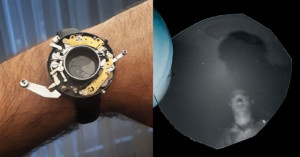
Iranian photographer Alireza Rostami had a broken vintage Chinese Seagull TLR camera on his hands, and he recently decided to get creative with it by turning the lens into a working wristwatch-style camera.