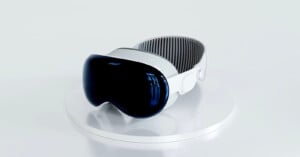
RIP Apple Vision Pro? Sales of Apple’s Mixed Reality Headset are Tanking
Apple Vision Pro, remember that? Apple is reportedly struggling to sell its existing stock of the headset and is cutting production because of low demand.
Apple Vision Pro, remember that? Apple is reportedly struggling to sell its existing stock of the headset and is cutting production because of low demand.
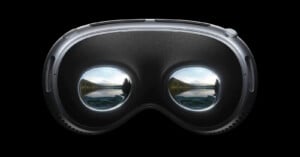
Apple’s Vision Pro features some of the highest resolution screens ever made for an augmented reality or virtual reality headset, so it’s not hard to believe it will take a serious camera to make top-tier immersive content for it.

Apple's Vision Pro isn't even available yet (in fact, no one has even seen a single Apple employee wearing one) but Qualcomm is already prepared to power a competitor with the announcement of the XR2+ Gen 2 chipset.

Apple's revolutionary Vision Pro AR/VR headset is slated to arrive early next year for $3,499, and developers have already been working on software for the device.

Canon has published a nearly seven minute long 180-degree virtual reality (VR) video that encourages viewers to reach the pinnacle of zen through immersion with cute rescue kittens.
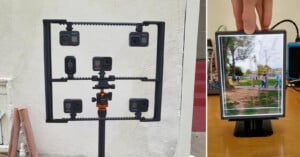
Filmmaker Josh Gladstone has recently begun working with light field video, an incredible technology allows him to capture volumetric video with a single camera rig and produce viewable video content in virtual reality (VR) and on the Looking Glass volumetric displays.

This morning, the Brooklyn Nets basketball team of the NBA posted a video compilation on Twitter of the "best from the Netaverse." The Nets tagged Canon USA in its post, leading PetaPixel to investigate, "What is the Netaverse and what's Canon's involvement?"

A new virtual reality (VR) app lets a user rewatch and relive memories they recorded on a smartphone.

Nikon just announced the 600mm f/4 TC VR S IS Super-Telephoto lens for its Z-mount cameras and photographer Steve Perry was fortunate enough to get some hands-on time with it. In short, he's quite impressed.
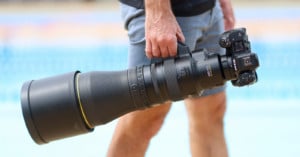
Nikon has announced the Nikkor Z 600mm f/4 TC VR S Super-Telephoto lens that features a built-in 1.4x teleconverter for its mirrorless Z-mount cameras. The company says it offers an unprecedented combination of versatility and powerful performance.

Immersive virtual reality (VR) headsets may reduce the amount of anesthetic that patients need during a procedure, a study has found.
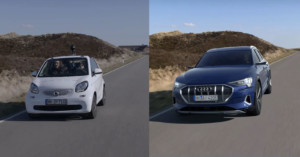
Thanks to the power of high-resolution 360-degree cameras and 3D compositing technology, production companies can produce full commercials for new cars before any model ever makes it off the line.
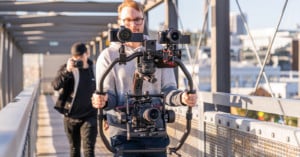
In this latest Film Science video, the team at Syrp Lab tests every kind of stabilizer -- digital and physical -- in order to determine which provides the smoothest footage.
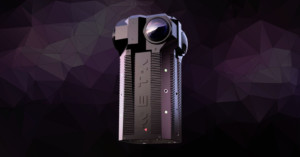
Meta Three is a new 360-degree camera that produces remarkable 12.5K resolution videos using four vertically oriented 6K sensors.
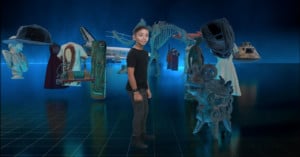
The Smithsonian's collection of historical artifacts is so large that only 1% of its 150 million piece collection is showcased at any given time. Mixed with age and fragility, the museum is quickly virtualizing its collection to be viewed online.

Some of the biggest names in technology have banded together to form the Metaverse Standards Forum to create open and consistent standards for interoperability in an open metaverse.
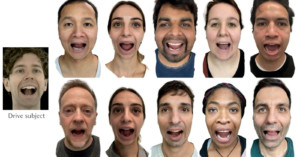
Scanning a photorealistic avatar for virtual reality (VR) once took more than 100 cameras to pull off, but now researchers at Meta have revealed it can be done with just an iPhone.

Samsung has developed what it claims is the industry's highest performing Universal Flash Storage (UFS). Called UFS 4.0, it boasts speeds twice as fast as the previous generation with read speeds of up to 4,200MB/s and write speeds of up to 2,800MB/s.

Miniatur Wunderland, the world's largest model railway, has published an hour-long, 360-degree video that takes viewers on a soothing ride through multiple miniaturized recreations of iconic global locations.
Autonomous drone maker Skyfish has announced an official technical integration with Sony's Alpha series mirrorless cameras which the company says will "deliver high-quality data capture and drone-enabled web based photogrammetry"
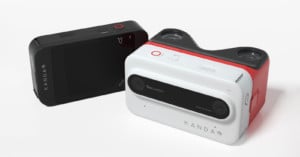
Kandao, a virtual reality technology company, has announced the QooCam EGO, what it calls the world's first handheld stereoscopic camera. It is a pocket-sized 3D camera and display device that allows photographers to shoot, edit, view, and share 3D photos.
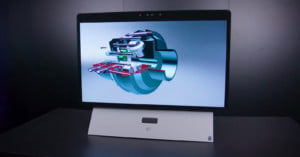
Spacial visualization company Dimenco has created what looks to be the wild future of displays with its 3D stereoscopic monitor. How does the next generation of 3D look? In short: breathtaking.

Canon has announced that it is developing a virtual reality (VR) software platform that it is calling Kokomo. It is designed with the intention of changing human communication by combining VR with "immersive" Canon camera-powered video calls.

Facebook CEO Mark Zuckerberg has said that his company is renaming itself as "Meta" as it aims at a future in virtual reality, a place he has repeatedly referred to as the metaverse.
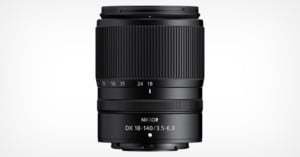
Nikon has announced the Nikkor Z-mount DX 18-140mm f/3.5-6.3 VR zoom lens for APS-C mirrorless cameras. Nikon positions it as a high-power zoom lens that is extremely compact and easy to carry, making it an ideal travel or everyday lens.

During a second-quarter earnings call, Facebook CEO Mark Zuckerberg told investors that video has grown in importance for the social media platform and now accounts for almost half of all time on Facebook. Instagram's largest engagement is also in video content as the company pivots away from photos.
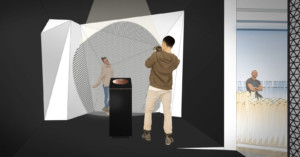
The Ernst Leitz Museum in Leitz Park, Wetzlar is a modern museum dedicated to photography that, in October, will open a facility where visitors will be able to enjoy what it calls an interactive photography experience.
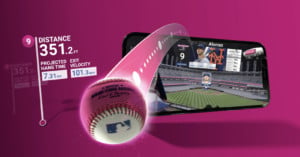
T-Mobile has announced that it will equip players at Major League Baseball's (MLB) 2021 Home Run Derby in Denver with point-of-view (POV) cameras on their helmets and allow viewers to witness the game as if they were on the field.
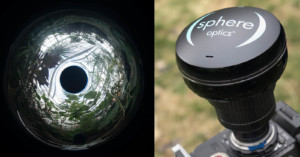
A designer duo has created a first-of-its-kind lens that can record 360-degree spherical video content that doesn't need to be stitched in post-processing and can be used with any conventional camera.

The Perlan Museum -- host of a state-of-the-art 8K planetarium and other exhibitions focused on Iceland -- commissioned filmmaker Ragnar Th. Sigurðsson, founder of Arctic Images, and drone pilot Arnar Þór Þórsson to fly an 8K-capable 360 camera over the erupting volcano to capture an immersive virtual reality (VR) experience.

The mixed reality headset that rumors have previously stated as in development is due for release by 2022, a new report states. Apple isn't stopping there, however, as augmented reality glasses are set to launch by 2025 and contact lenses by the next decade.
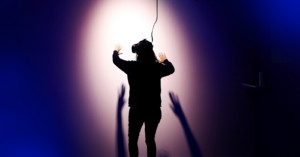
There have been rumors that Apple was going to enter the virtual reality/augmented reality hardware space, but a recent report cites the most detail that has been revealed thus far: more than a dozen cameras, dual 8K displays, and a $3,000 price.

Australian indie game developer Matt Newell has released a new free Steam game called Castle Rock Beach, West Australia. It allows you to freely explore a realistic recreation of Australia's southwest coast with a camera.
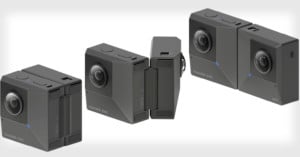
Insta360 has announced the EVO, a groundbreaking new camera that features a folding design and two cameras. Folded up, the camera can shoot 360° spherical imagery, capturing every angle at once. Unfolded, the camera can shoot 180° 3D content.
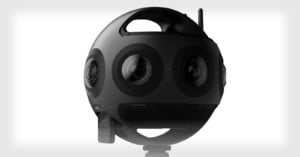
Insta360 has announced a new VR cinema camera called the Titan that packs a whopping 8 lenses and Micro Four Thirds sensors to capture 360-degree 11K-resolution footage. It's the first standalone 360-degree camera that's 11K-ready.
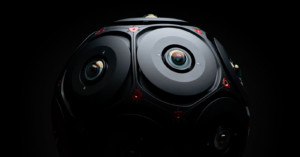
RED and Facebook have unveiled Manifold, a new VR camera for shooting 3D and 360° imagery. It's a "first studio-ready camera system for immersive 6DoF [6 degree of freedom] storytelling."
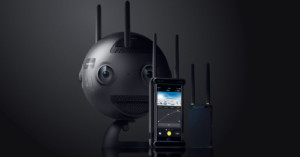
Insta360 just launched the Insta360 Pro 2, a professional VR camera that packs six separate cameras and lenses in a sphere to shoot 8K-per-eye 3D 360-degree video.

What if you could relive your photos and videos by stepping back into those locations in virtual reality? Facebook is about to make that possible. The company just showed off a mind-blowing new feature that creates 3D spaces from your 2D photos and videos.
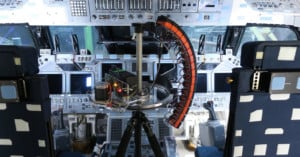
It seems Lytro has a new formidable competitor in the area of light field cameras. Google revealed today that it has created a rotating arc of 16 GoPro cameras arranged vertically to experiment with light fields.
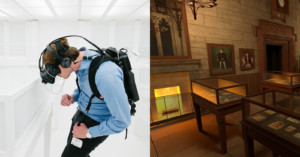
The world's first major photography exhibition was held back in 1839 when British scientist and photography pioneer William Henry Fox Talbot held a show to unveil his photo prints to the public. Fast forward nearly 180 years, and now an artist has created Talbot's first photo show as an immersive virtual reality experience.