Tutorials

Whether you are a beginning photographer or a seasoned professional, there are always new things to learn and more areas to improve in. PetaPixel regularly publishes in-depth tutorials on a wide range of subjects, from Photoshop tips and post-processing techniques to ideas on building your own cameras and do-it-yourself equipment.

How to Make a DIY Pizza Box Ring Flash

I have always been enthralled ring flashes, but they are so expensive! I recently found a pizza box ring flash how to, but it didn’t go on my camera (it was meant as an off camera ring flash) so I made some changes. And here, for all to use, is my version of the pizza box ring flash.

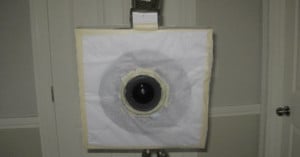
DIY High Speed Photography for $20

Turns out those crazy high speed photography shots you see of bullets shattering things aren't as difficult to achieve as you might have thought. All you need is about $20 and some brains (aka circuit skills). YouTube user destinws2 shows how its done in this 5 minute tutorial.

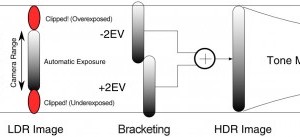
HDR Photography Explained in a Diagram

Reddit user MacTuitui created this simple diagram (click to enlarge) explaining the idea behind HDR photography. The first low dynamic range (LDR) taken normally with a camera isn't able to capture much of the detail found in the highlight and shadow areas of the scene. Two (or more) photographs are then taken at different exposure values to capture a wider range (the bracketing step) and subsequently combined into a single image with a high dynamic range (HDR). Since most displays aren't …

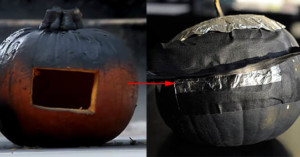
Turn Your Halloween Pumpkin into a Pinhole Camera

Claire O'Neill and Mito Habe-Evans over at NPR's The Picture Show blog have just posted a fun experimental project you can try out this halloween: making a pinhole camera out of a pumpkin. What you'll need is a pumpkin, aluminum foil, a knife, tape, photo paper, dark spray paint, and access to a dark room. Along with the disturbing skull camera we shared earlier today, this would be a fun way to capture photos of trick-or-treaters this halloween.

How to Create a Repeating Flash Effect with Light Painting

Certain higher end flashes have a strobe (AKA repeating flash) mode that can flash repeatedly, freezing a moving subject in various positions in a single exposure. This tutorial will teach you how to create a similar effect using light painting techniques, resulting in the above photo.

How to Recover Deleted Photos from a Memory Card with PhotoRec

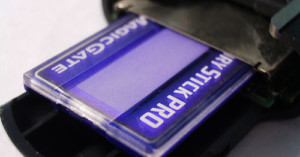
Last night my pastor emailed me telling me that he had accidentally deleted an entire folder of photographs off his Sony compact camera, and that Sony's technical support informed him that it would cost $200-300 for them to recover the photos. After I got a hold of the memory card, I checked some of the recovery programs I've used in the past, but discovered that they now require paid licenses to actual do recovery (though analysis is free). I then stumbled across PhotoRec, a free and open …

How to Make a Thread Wrapped Leather Camera Strap

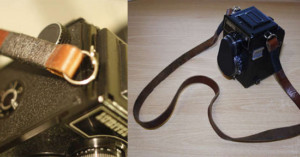
I have a small obsession with cameras, also, a slightly smaller obsession with film cameras. My favourite camera is Lubitel 166B. It is a medium format camera, this basically means it has a large image area to capture photos, using the larger 120mm film. The Lubitel's were twin lens reflex (TLR) cameras. They have a little pop up cover on top, you then look down through the viewfinder. The nature of holding the camera like this will getting the settings set up for the shot can sometimes be a …

Enlightening the Capture and Processing of Lightning

Living in the Southwest United States gives me a great opportunity to capture lighting. Every summer “Monsoon Season” arrives, officially June 15 through Sept 15th, in Arizona. Prevailing northwesterly winds carry humid air north out of Mexico where it meets the hot air of the desert, resulting in powerful thunderstorms nearly everyday. The thunderstorms often produce localized areas of heavy wind, thick blowing dust (Haboobs), rain, and most importantly, lightning. I regularly track the …

Video Tutorial for Making Custom Bokeh

Here's an easy to follow video tutorial by photographer Lucas Ridley teaching you how to create custom bokeh shapes using a construction paper cap placed over your lens. Ridley's design is flexible, allowing you to swap shapes easily by sliding them in and out of the cap.

How to Use Ultra-Fast Lenses on Modern DSLR Cameras

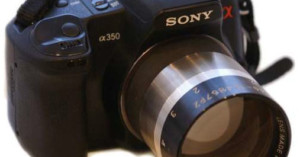
The ratio between the focal length and the aperture (diameter) of a lens is called the f/number. The smaller the f/number, the more light is let in. Fast lenses start around f/2.0, and the light let in goes as the inverse square. Compared to f/2.0, f /1.4 lets in twice as much light, f/1.0 four times, and f/0.71 eight times. The fastest camera lenses designed for DSLRs and widely available are between f/1.4 and f/1.2, but lenses as fast as f/0.75 have been made in quantity for special …

7 Easy Steps for Instant Cashback on Photo Gear Using eBay

A while ago my friend discovered Microsoft's Bing Cashback program, which provides instant savings for "qualified" purchases. What's neat is that any eBay purchase made with "Buy It Now" and paid using PayPal qualifies for the savings. After he discovered this, my friend bought Canon 5Ds in bulk on eBay and sold them on craigslist for a profit.

Tamron Launches YouTube Series for Newbies

This past Monday, Japanese lens corp Tamron launched a new 12 week video series on their YouTube channel geared towards helping beginners understand their equipment. Each video is 1 minute long, and will cover topics such as white balance, RAW vs. JPEG, and more. Once this introductory series is complete, they plan on posting intermediate and advanced videos as well.

Why Higher ISO Leads to Larger File Sizes

Something you may have noticed when adjusting your camera's ISO setting is that as you increase ISO, the number of remaining shots you have decreases. This is because the size of each photograph increases with ISO, and thus less of them can be stored in the available space of your memory card.

Adding a Subtle Vignette with Photoshop

Adding a vignette to a photograph can add depth to the composition and draw attention to interesting details. However, a cautionary word: overdoing post-processing and editing techniques like vignetting can be at best distasteful. At worst, it might seem to over-compensate for what might simply be an otherwise uninteresting photograph. Generally, the less editing needed on a photograph, the better the photograph. And naturally, the better the photograph, the better the photographer. The same …

Why You Should Probably Use sRGB

When I first started using Adobe Camera Raw, one of the options I experimented with was which color space the resulting JPEG should be in. Not thinking it mattered, I selected "Adobe RGB (1998)". However, a few days later I suddenly realized that the images looked different in a browser than when I had saved them in Photoshop. The once rich and vibrant colors were gone, and what I saw were images that were washed out and desaturated. After looking into why this happened, I found out that the …

Exploding Lightbulbs that Shatter Water

Editor's note: A few weeks ago I discovered James' photography in PetaPixel's Flickr pool and was completely blown away by his photos of exploding lightbulbs that shattered drops of water instead of shards of glass. The concept was so creative that I asked him to teach all of us by guest posting here on PetaPixel. I hope you all enjoy this walkthrough and his photographs as much as I did.

Shooting a Hummingbird (with a Camera)

Editor's note: Whenever I see a hummingbird, I always want to shoot a low depth of field photograph of it, but I've never been able to. Thus, I was pretty impressed when I came across this photograph of a hummingbird in flight in our Flickr group pool, and asked David if he would write this guest post teaching PetaPixel readers how to photograph hummingbirds.

Lessons from Street Photography

Editor's note: When I first came across the following post by Jessyel Ty Gonzalez of dailysnap, I loved it so much that I asked him if we could republish it on PetaPixel.

7 Steps to Taking Clone Photographs

As a lot of the interviewees we've had on PetaPixel have shared, a great way to improve in your photography skills is to experiment. Even though many of the experiments I share on PetaPixel have nothing to do with directly improving your photography skills, they've definitely helped me gain a deeper understanding of various aspects of photography, post-processing, and manipulation, and I hope they can do the same for you. Today, I'll show you how to take photographs of multiple yous. Let's get …

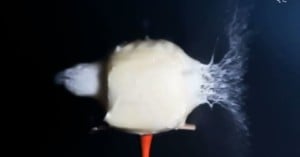
Water Balloons Popping

Felt like experimenting a little today, and started out shooting low depth of field photographs of flying insects. One thing led to another, and before I knew it I was taking photographs of water balloons popping (Don't ask me how). Here's what I used: …

Editing for Portraits

This entry will describe my thought process when editing a portrait, though it could apply to general photos too.

Using a Shallow Depth of Field for Portraits

People often use a shallow depth of field in portraiture to separate a subject from the distracting background, allowing the face (more specifically, the eyes) to be in sharp focus while the background is blurred. Instead of doing this, sometimes I enjoy focusing on something closer towards me, putting the subject's face out of focus instead and drawing the viewers attention to something else. Here are some examples: …

Sharpening Your Photos like Flickr

When browsing around on Flickr, I used to be amazed by how sharp many of the photographs I came across were, and thought that the reason my web-res images weren't as sharp was because I had poor technique or an inferior lens. However, even after I upgraded my camera equipment I still wasn't achieving the same type of sharpness I saw on Flickr.