Icelandic Police Vow to Stop Using AI-Generated Imagery
Police in Iceland have fallen foul of the apparent universal unpopularity of AI images after one force vowed to stop using the computer-generated pictures.
Police in Iceland have fallen foul of the apparent universal unpopularity of AI images after one force vowed to stop using the computer-generated pictures.
Software company Glass Imaging develops incredible technology that dramatically improves image quality, especially when dealing with small image sensors and lenses like those featured in smartphones. At this week's Qualcomm Snapdragon Summit in Hawaii, Glass Imaging demonstrated in real-time what its GlassAI tech can achieve, and the results are remarkable.
Canva continues its torrid pace, announcing Dream Lab, a generative artificial intelligence (AI) tool, alongside significant upgrades to Canva's Visual Suite, content library, and solutions for small businesses and students.
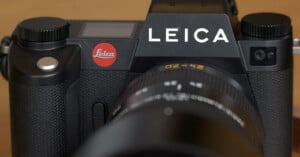
At Adobe MAX last week, Adobe, Frame.io, and Leica announced new Camera to Cloud (C2C) capabilities for the Leica SL3 full-frame L-mount camera. Alongside this news, Leica announced that Camera to Cloud integration won't stop with the SL3 -- C2C is coming to additional Leica models.
While the Content Authenticity Initiative (CAI) has made significant progress in recent years with Content Credentials and C2PA standards for still images, video has remained a slightly more challenging beast. However, YouTube, the largest video platform in the world, is now utilizing the C2PA standard to attach helpful information for some videos on YouTube.
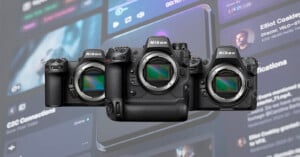
Easily missed in Adobe's giant dump of news out of its MAX creativity conference was Nikon's announcement that the Z6 III, Z8, and Z9 would get Frame.io integration through the NX Mobile Air app.
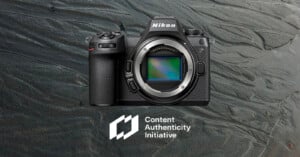
Nikon announced that it is preparing a firmware update that will bring the Content Authenticity Initiative's (CAI) C2PA content credentials to the Z6 III camera which will be ready to deploy by mid next year.
Adobe unveiled its Firefly Video Model last month, previewing a variety of new generative AI video features. Today, the Firefly Video Model has officially launched in public beta and is the first publicly available generative video model designed to be commercially safe.
Everyone takes photos but sharing them in the modern age is a bit of a conundrum. A new app called Swsh aims to help by using artificial intelligence.
Intel announced its new Intel Core Ultra 200S series processor family that promises to improve efficiency and power while ushering in a new generation of AI-powered desktop PCs.
In a move that is lowering the creative barrier, Meta is giving advertisers the ability to make a moving image from a still one with new AI tools.
AI images are spoiling Google Image search results, at least that's according to some creatives who have been sharing screenshots of AI images mixed in with real photos on Google.
Multiple U.S. states have sued TikTok over claims that the video app is designed to be addictive to kids and harms their mental health.
Adobe, a major player in the content authenticity movement and the founder of the Content Authenticity Initiative (CA) in 2019, announced Adobe Content Authenticity. This new, free web app enables creators to attach Content Credentials to their digital work easily.
The thermal hurdles engineers must overcome become even more significant as cameras get increasingly more robust video recording features. A new Canon camera patent hopes to overcome these concerns through a relatively compact active cooling system to keep internal recording media cool.
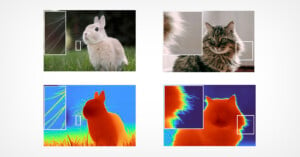
Apple's Machine Learning Research team created a new AI model that promises significant improvements concerning computer vision models and how they analyze three-dimensional within a two-dimensional image.
Nikon applied for a revised patent in Japan for a hybrid image sensor design the company has worked on since at least 2016.
Meta has previewed its AI video generator called Movie Gen by showing some impressive-looking examples, but there's no word on a release date.
Donald Trump and Taylor Swift are some of the most deepfaked people of 2024, according to a study.
YouTube Shorts will now allow creators to upload videos up to three minutes in length -- as the company takes on TikTok’s domination in terms of short-form video.
Google Lens will now let people search the internet via video as well as still images thanks to a set of new features just announced.
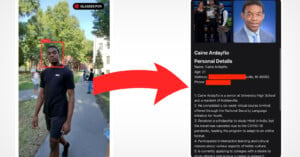
Harvard students have demonstrated the terrifying power of AI smart glasses by making a pair that reveals anyone's personal information by just looking at them.
JPEG XL is a new-generation image file format that recently got a big boost to awareness thanks to native support in the iPhone 16 series smartphones. So what is it, why does it matter, and why should you use it? Who better to ask than one of the people who helped make it a reality?
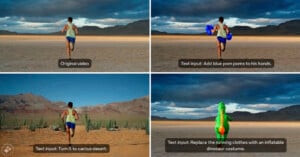
Pika, an AI video platform, has launched its 1.5 model with quirky features allowing users to crush, inflate, and squish objects.
When asked this week if Meta is using photos taken on Ray-Ban smart glasses to train its AI, company representatives refused to deny or confirm.
Despite being declared dead in 2017, Microsoft Paint has defied the odds. It continues to receive Adobe Photoshop-style AI features the latest being Generative Fill and Generative Erase.
The UnifyDrive UT2 is a portable and expandable NAS storage solution -- the first of its kind -- that looks like a bigger, better, and more customizable version of the now-defunct Gnarbox. Unfortunately, despite its many good ideas, the UT2 is plagued by poor design and a bad user experience.
California governor Gavin Newsom has signed two bills that will make it illegal for people to possess or distribute AI-generated deepfake nudes of children.
A German court has ruled against a photographer who sued the AI image dataset company LAION in a case that could have big implications.
Raspberry Pi, the company that sells small, single-board computers, released the Raspberry Pi AI camera which utilizes Sony's IMX500 Intelligent Vision Sensor.
Meta was fined more than $100 million for a security breach that saw the company store some users' passwords in plain text.
Researchers have made an AI bot capable of beating image-based CAPTCHAs 100 percent of the time, according to a new scientific paper.
The world's first museum of AI arts will open at The Grand in Downtown Los Angeles, California next year. The museum, called Dataland, is being spearheaded by Refik Anadol whom the Los Angeles Times characterizes as a "leader of AI-generated art."
A U.S. Senator had a Zoom call with a scammer using deepfake technology to pose as a top Ukrainian official.
An artist who infamously duped an art contest with an AI image is suing the U.S. Copyright Office over its refusal to register the image's copyright.
Runway has allocated $5 million in cash to help fund up to 100 original films that use the company's AI video generator in some way.
Hundreds of thousands of people have fallen for a hoax that claims to deny Meta the right to use their photos for training the company's AI.
A YouTuber had his voice cloned via AI technology by a company which then used it to narrate videos on its channel.
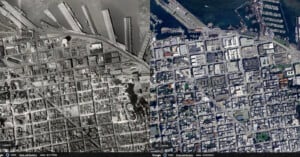
Google Earth is getting new historical imagery added to it with some pictures dating back to the 1930s.
At the Meta Connect event yesterday (Wednesday), Mark Zuckerberg's company announced that AI images might start appearing in people's Facebook and Instagram feeds. While some may react in horror to that news, what's even creepier is the AI images may be representations of the users themselves.
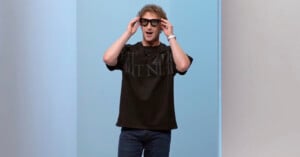
Meta unveiled its first pair of augmented reality (AR) glasses "Orion" as well as updates to the company's Ray Ban smart glasses and Meta Quest headset at the company's developer event.
Today at Meta Connect, the parent company of Facebook, Instagram, and Threads showed off a technology that is capable of fully recreating influencers as AI figures that can be spoken to as if they were the real person.
The United Nations (UN) says it wants to treat AI with the same urgency as climate change and the organization plans to take a more active role in monitoring the technology.
Legendary filmmaker James Cameron has joined the board of directors of Stability AI.
Google is introducing new video editing tools in the Google Photos app, including AI-powered capabilities aimed at simplifying the video editing process.
A Chinese startup has released an incredible video showing its reusable rocket failing to stick the landing causing catastrophic damage.
A mayor in Australia has been tripped up by generative AI after posting concept images of new parks containing humans with floating limbs and twisted bodies.
A lawsuit has already been filed against California's new laws designed to curb AI images and deepfakes.
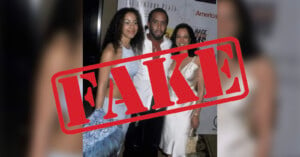
Presidential hopeful Donald Trump shared a doctored photograph falsely showing rival Kamala Harris with Sean "Diddy" Combs but later deleted it.
At PetaPixel, we've been covering generative AI advancements pretty heavily over the last two years for two major reasons. One, the technology is becoming inextricably linked to the software we use to edit photos, and two, it simultaneously represents an existential threat to the art of photography.