Falling in Love with the Process, Or: Why I Shoot Landscape Photography
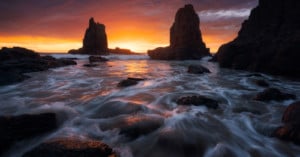
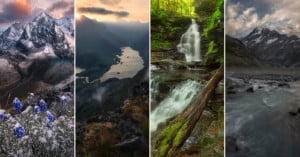
Why do I do landscape photography? I've been trying to conceptualize an answer to this question as I delve deeper into my self-expression through creating imagery.
Okay, I know the title of this article sounds a bit clickbaity -- and to be honest, it is. Proclaiming anything to “be dead” always sounds alarmist. But really, I don’t see a bright future for the medium I love.
For those who are anywhere near the microstock photography industry, you may have noticed that there is a lot of shouting going on at the moment about the latest release from Shutterstock.
There are many things about the photography industry that need to change to include our black community. One huge thing is a button on every strobe, light pack, and flash unit made in the photo industry called "slave" mode.
Any event photographer gets tons of requests from people asking for specific photos from an event. Sometimes they will acquiesce, but often not. Don't nag them if they don't get back to you or say no. Here's why.
I look at hundreds of photographs everyday and I’ve noticed that how people take photos is in direct correlation to how they live their day to day lives. This may not sound like a startlingly profound fact but, put simply: your personality can create the biggest barrier to achieving interesting and unique photographs.
After nine years covering the photography industry, today marks the end of that long journey across multiple outlets, ending with my time here at PetaPixel. I'm not leaving journalism, but I am switching things up a bit. After a short break, I'll be working in a new segment at a new outlet.
One of the most hotly debated questions for landscape photographers is how to answer the age-old question, “Where did you shoot that?” While the question is simple enough, whether to answer (and how to answer) is an internal question many shooters contend with in the age of Instagram.
Should your photograph have a name? If not, why not? If so, then why? And does anyone really care? I’m of the opinion that it should always have a name, an identity, a personality. Well, all of mine at least. What you do with yours is entirely up to you. And as it should be.
I don't normally rant, but this has been bothering me for quite some time. I try not to worry about what gets written on the Internet because I believe everyone is entitled to their own opinions and it's healthy to have many different opinions for others to pick and choose what works for them. Let's face it, there is no hard and fast rule that photographers must abide by.
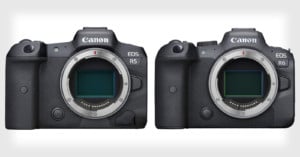
I'm not one to generally heap praise on camera products that one, I haven't tested or two, haven't even been fully announced yet let alone released. But given what we know about Canon's upcoming EOS R5, I have to change precedents, sit back and just clap.
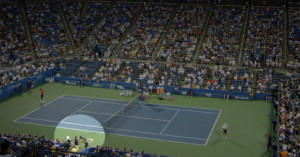
A few months ago, I was hired as an on-court, fixed broadcast camera operator for an Association of Tennis Professionals event as an independent contractor. While we were not broadcast live on a network, we were broadcasting throughout the stadium and event village as well as being taped for the network.
In many parts of the U.S. the reality of social distancing policies have only been in place for about a month. Yet during that time and the few weeks that preceded it, photographers have already churned through a number of phases to document and depict the outbreak.
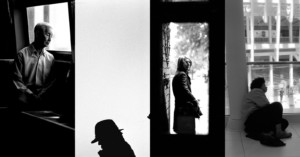
One of the byproducts of the new-wave approach to street photography, which champions anonymity, mystery, and a cinematic aesthetic, is that there is an absolute abundance of images featuring silhouetted figures and shadow play. These are the kind of images I started off creating, and there are some fantastic artists who have utilized this style over the years, my favorite of these being Fan Ho, one of the classic progenitors of this style.
The past few years have made it abundantly clear that platforms hold disproportionate power in the online sphere – from Uber to Grubhub to Amazon. Online success is predicated on building both utility as well as a critical mass of users, and for that, platforms should be congratulated.
I’m a wildlife photojournalist, my work and my personal project focus on stories related to wildlife conservation. I’ve seen first-hand the destruction left behind by the horrific illegal wildlife trade.
If you haven’t heard about this following situation, then you might just lose your temper now.
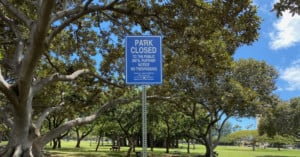
Since mid-March, various policies have been implemented at the state and federal level in the U.S. to mitigate the spread of the coronavirus and the disease it causes, COVID-19.
I have sometimes been critical when landscape photographers combine two or more photos not taken at the same time to make one great photo -- adding northern lights or beautiful skies to a photo that did not have them, for example -- and then making people believe it was something that really happened.
I don’t remember the first time I became aware of my family photo album, but from a very young age I always found looking at those photos a time absorbing, and totally enthralling pastime. I would sit for long periods of time staring at those familiar faces, all those captured moments of times gone by, and lose myself in a world of wonder.
As with a majority of newbies to photography, the obsession with gear and chasing the newest toys proved to be irresistible to me. I spent far more time reading reviews, comparing charts, watching youtube videos, and looking for deals than actually going out and shooting.
Let’s not waste any time. What is the most important element in someone’s photography style? The quick answer is repetition.
You’re pretty new to hiring professional photographers, so perhaps you feel you need to provide them with a wedding photo list in advance of your wedding. Here are 5 important reasons why you probably shouldn’t.
The particularity of the photo industry is its death wish. At its core, everything and everyone in this industry seems hell-bent into destroying itself and, along with it, the whole industry.
Late Winter and early Spring bring another cycle of photo contest season – that time of year when many major prizes are announced (especially in the photojournalism realm). And with each year brings another round of punditry regarding the value of photo contests and an almost inevitable controversy regarding the winners.
This is a question that I struggle with, because I truly believe that the best camera is the camera you already have. I want to believe that you can give me any camera and I will still make great photographs. But the truth is, camera gear does matter... kind of.
Sometimes you know about two things in completely different parts of your brain, and then one day, for no reason, you put them together and your head explodes — a cascade of understandings like the last scene in “Usual Suspects”. After 40 years of taking pictures, that happened to me. One idea changed me overnight. And if you have a camera it will change you, too.
I just did an ‘Ask Me Anything’ session on Instagram Stories, and someone asked the question: ‘Do You Photoshop Your Pictures?’
In Guns, Germs, and Steel, author Jared Diamond describes two systems of invention transmission: 1) idea diffusion: imitation of an idea, and 2) blueprint copying: literal copying of an idea.
The battle is on. The forces of truth against forces of deception. With visual AI making it easier to fake visual content, its credibility is at stake. And with it, the income of thousands upon thousands of people worldwide who depend on the credibility of visuals to thrive: newspapers, magazines, photographers, newswires, webcasters, television news, videographers, journalists, and photo agencies, among many others.
I did my first advertising assignment in the year 2000. I still remember how excited I was when I, a few months later, walked out of a bookstore on Chestnut Street in San Francisco with several magazines with my pictures in them.
I've noticed that a commonly used compliment for street photographs is to describe them as "timeless." My interpretation of this is that it is used to mean that there are characteristics of the image which in some way transcend the boundaries of the context it was made in and can exist almost in its own context, its own space.
Fourteen years ago I took an interest in street photography. I went looking for resources and information on this amazing genre, unfortunately to no avail, until I came across a great free ebook in 2006 called “Street Photography for the purist” by Chris Weeks.
The Fujifilm X100 was the single most impactful camera of the 2010s. I’ve seen folks say the same about the Sony a7/a7R, Samsung Galaxy NX1, and various Micro Four Thirds cameras, but I will argue that the Fujifilm X100 delivered a bigger bang than all of them combined.
I used to work for Nikon cameras. From 1995 through 1999, I was Nikon UK’s Senior Photographic Advisor. My job was basically to be the guy in the building who knew what a camera was for!
My name is Adam Marsh, and I'm a Melbourne-based event photographer. I recently wrote an article titled "Adobe, This is Why Photographers Are Hating on You,” and it seems to have been incredibly divisive. There was a huge amount of feedback and engagement on this topic in the wider global photography community.
When it comes to technology, consumers have been conditioned to expect notable feature changes with version numbers increases. The iPhone 11 Pro, for example, not only included the snappier A13 Bionic chip, it also sported a three lens array and significantly better low light performance.
When they were young, my children used to get very excited about Santa Claus and the Easter Bunny. But they saw through those by the time they were six. So why has the myth of saving JPEG files at 72dpi lasted far more than six years?
Well-curated portfolios can be some of the most powerful tools available to a photographer looking to efficiently communicate what they’re about to potential clients and customers. The classic portfolio is a physical book of prints, maybe 10-20 total, often accompanied by a declaration of intent in writing or in person if being showcased at an actual critique session.
As a part of the launch of the Fuji X100V, Fujifilm posted a video on their YouTube channel of Japanese street photographer Tatsuo Suzuki at work. Suzuki’s aggressive style rubbed people the wrong way, and within the week, he was scrubbed from the campaign, and then erased from the Fujifilm website.
Here’s why print wins over digitals every time. Really, it’s simple. It’s all about our children.
Photographer Usman Dawood recently published an article in defense of Adobe. Reading it was a lot like reading a Microsoft fanboy at the height of the Window Vista era -- sure, the product works, but at what level of financial cost and frustration?
Last week, Emerald Expositions, the owner of Photo District News (PDN), announced that PDN would no longer publish new content online or in print. The magazine had been a staple of the professional photography industry, particularly for advertising and commercial photography.
Over the last few years, it seems like it’s become really cool to hate Adobe; kind of like how it’s cool to hate Coldplay. Except the main difference is that Coldplay really does suck.
The crash that killed Kobe Bryant, his 13-year old daughter Gianna, and seven others aboard a helicopter shocked millions around the world. Near the Staples Center in California where Bryant played for 20 years as a member of the Los Angeles Lakers, make-shift memorials appeared. And online, fans posted messages of grief and condolences on social media.
Although some may feel like I'm some sort of rockstar photographer that is so busy he has to turn down work he doesn't want, the truth of the matter is right now I am just a guy sitting on a rock typing out a letter to people he has never met with the hopes that it helps just one person keep their head up.
I have a confession to make. I often shoot in aperture priority mode. I’m a reasonably competent photographer with a solid grasp of the factors that drive exposure, but I don’t want to fiddle with multiple dials when I just want to take a photo.
Sitting with a group of picture-takers last night, it dawned on me that even though all of us call ourselves “photographers,” so much of what we care about, the way we shoot, the very core of what we like about taking pictures, is distinct — almost to the point of us having little useful to share.
I’m not going to wax poetic about the Leica M6 TTL .85. I don’t need to.
The National Archives of the USA is putting on a show. "Rightfully Hers: American Women and The Vote." Out front of the show, there is a large visual display that includes an iconic photograph of the Jan 21, 2017 Women's March on DC with some blurred out elements. Specifically blurred out is some language on the protest signs, language the Archive staff judged to be political or NSFW. You can read more about it here.