Educational

PetaPixel's editorials are in-depth stories, thought-pieces, and opinions on the photography industry led by the minds of our editorial team.

A Behind The Scenes Look at The Making of a Lee Filter

Lee Filters is a world-class producer of high-quality filters for both photography and cinematography, and now we have a chance to see what goes into making these high-end accessories. Keep in mind that these filters aren't made by some machine on an assembly line; each Lee Filter is made by hand, and in this video Mike Browne shows you what that process entails from liquid start to solid finish.

Lens Diffraction and How It Affects Your Photos

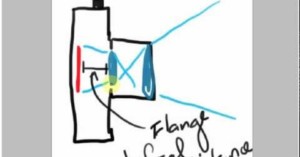
Really more useful for landscape and macro photographers who are going to be shooting through very small apertures (f/22 and above), this video from FStoppers explains what diffraction is and how it can affect your shots. The trade off, as they explain in the video, is between a large depth of field and a sharp image; and the trick is to find your "sweet-spot."
The Frozen Face Effect: Why You Look Worse in Photos than in Video

If you've always felt that you look more attractive in videos than you do in photographs, you're not alone. A recent study done by researchers at UC Davis and Harvard has found that subjects generally find video footage of people more attractive than stills showing the same face. It turns out that looking attractive in photos is no easy feat due to what the researchers are calling the "frozen face effect."

Trippy Example of Hitchcock Zoom Shot on a Beach

"Dolly zoom" is a technique that was popularized by Alfred Hitchcock in his film Vertigo, after which it was commonly referred to as "Hitchcock zoom" and the "vertigo effect". The basic idea is to photograph (or film) a subject while moving towards or away from it, and at the same time changing the focal length to keep the subject at the same size in each frame. French photographer Micaël Reynaud used this technique on a beach last year, snapping photos of a stone block at focal lengths …

Photographers’ Liability Insurance and a $300,000 Ancient Figurine

Last week we reported on how photographers and a magazine are being sued for $300,000 for allegedly breaking a 2,630-year-old statue while photographing it for an assignment. While many people, including us, pointed to it as an example of why carrying liability insurance is a good idea for photographers, a more appropriate question is: does a typical insurance plan even cover something like that? David Walker over at PDN writes that it doesn't: …

How to Take Great Pictures in Space

It might not be very applicable to the vast majority of photographers, but NASA astronaut Captain Alan Pointdexter has written up a fascinating article over on Luminous Landscape in which he shares advice about doing photography in space. Taking photos on the ground is one thing, but imagine using not just the sun, but the earth itself as a source of light.

The 10 Most Popular “Photographers” on Instagram

We'll go ahead and start by saying that we're using the term "photographer" lightly; in reality we should probably say "users." But there's a certain irony to calling celebrity Instagramers "photographers" that we quite enjoy. Unlike Flickr where many of the best loved users are well known photogs showcasing their most recent work, Instagram's top users are made up entirely of celebrities.

An 8-Bit Explanation of the Three Basic Components of Exposure

Matthew Gore of Light & Matter created this beginner-friendly video tutorial on the three basic elements of exposure: aperture, shutter speed, and ISO. It's explained with easy to understand illustrations and examples, and features graphics and sounds that are reminiscent of old 8-bit video games. You can also find a text-based version of the tutorial here.

The Only Anonymous Photo to Ever Win the Pulitzer Prize

Every photo has a story, and this particular photo has one of the most interesting stories of them all -- a story of anonymous fame, and famous anonymity. To this day the above photo, titled "Firing Squad in Iran," is the only anonymous photo to ever win a Pulitzer Prize. And although the photo was taken in 1979, the photographer behind the lens didn't receive credit until 2006.

The Afghan Box Camera: Not-So-Instant Instant Photography

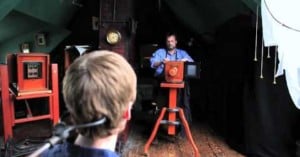
The Afghan box camera, or kamra-e-faoree as it's called in Afghanistan, is a humble creation that has served its purpose well for many years. We say humble because the "camera body" consists of a wooden box, the "focusing apparatus" is a metal shaft attached to a piece of wood, and the "shutter" is controlled by removing and reinserting the "lens cap" manually.

Claude Glass: The 18th Century Version of Instagram

Everybody knows that the Instagram app made its name giving photos an old, instant film look. But what if we were to tell you that there was something even before that time, even before cameras, that gave a scene the same aesthetic? Well there was, and it was called a Claude glass.

Exploding Photographers, Disappearing Clothes, And the Development of Film

It’s been a while since I wrote a history article and two or three people seemed to like them. I’ve pretty much covered the development of early cameras and lenses so it’s time to consider the way we recorded those images so other people could see them. No, I’m not talking about Facebook. I’m talking about film. Actually, I’m talking about even before film, mostly, but I really wanted to work that ‘development of film’ bit into the title. Pretty great, isn’t it? OK, maybe not.

Photograph the Left Side of People’s Faces to Capture More Emotion

Everybody has had pictures taken that they can hardly stand to look at. Even professional portraits that eliminate blemishes and show you in attractive poses sometimes look strained, or emotionless. Well, a recent study published in Experimental Brain Research seems to say that the remedy could be as easy as turning the other cheek.

Behind the Scenes with Camera and Lens Testing Service DxO Labs

Stephen Shankland over at CNET has written an interesting behind-the-scenes look at how DxO Labs -- one of the world's premier camera testing services -- evaluates equipment. DxO Labs is based near Paris, France and was the result of a 2003 spinoff from a company called Vision IQ, which specialized in swimming pool safety. Since then, the group has published over 185 in-depth camera reviews on its website DxOMark.

The Human Eye Can See in Ultraviolet When the Lens is Removed

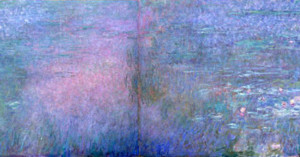
You may have heard that digital cameras can be made sensitive to infrared light by removing the IR filter found inside, but did you now that something similar can be done with the human eye? People who have aphakia, or the absence of the lens on the eye, have reported the ability to see ultraviolet wavelengths. Claude Monet was one such person.

Advanced Image Sensor Concepts Explained with Beer

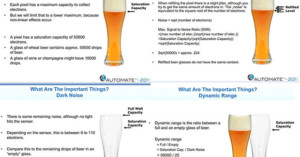
When German image sensor scientist Joachim Linkemann gave a talk called "Advanced Camera and Image Sensor Technology" at Automate 2011 back in March 2011, he tried to boil things down to terms people could understand and ended up using beer to illustrate the concepts. If you want to learn about how things like signal-to-noise, dynamic range, and dark noise would work if a glass of beer was the pixel on an image sensor, check out the PDF slideshow.

A Revolving Self Portrait Created in 1865

Here's a revolving self-portrait created back in 1865 by French photographer Félix Nadar (real name Gaspard-Félix Tournachon). Nadar was the first person in history to take aerial photographs (he was a balloonist) and was one of the pioneers of artificial lighting (he photographed in the catacombs of Paris).

John Cleese on How to Be Creative

Here's a 35-minute lecture by English actor and comedian John Cleese on the topic of creativity. A couple interesting points: creativity is absolutely unrelated to intelligence and is more a way of operating than an ability.

Miroslav Tichý’s Homemade Camera

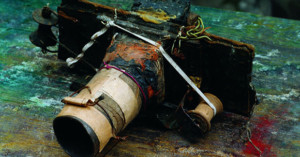
This might look like a pile of garbage, but it's actually one of the homemade camera used by photographer Miroslav Tichý from the 1960s until 1985. He made his camera bodies from things he had on hand, including plywood, road asphalt, and thread spools. His lenses would be created from toilet paper tubes with custom lenses created from Plexiglas that had been sanded with sandpaper and then polished with toothpaste and cigarette ashes. For his enlarger, he used sheets of metal, two fence slats, …

It Started with Muybridge: A Short Film Made in 1965 by the US Government

This past Monday was the 182nd birthday of photographer Eadweard Muybridge, who became famous for his high speed photographs of galloping horses. In 1965, the US Department of Defense commissioned this short documentary titled It Started with Muybridge, which tells the story of how Muybridge's early photography experiments contributed towards the advancement of science and technology during the Atomic Age.

Nikon D4 and D800 Designed by Italian Car Designer Giorgetto Giugiaro

Nikon's new flagship D4 DSLR and its cousin the D800 were both designed by famed Italian car designer Giorgetto Giugiaro and his studio Italdesign Giugiaro. The studio's website has put up portfolio entries for both cameras. The partnership was rumored prior to the launch and wasn't much of a surprise: Giugiaro has been involved in the design of nearly all the high end pro Nikon cameras that have been released since 1980.

A Simple Explanation of F-Stop Numbers

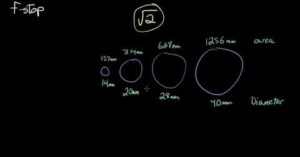
Even if you have a good command of using f-stop numbers and properly exposing photographs, you might not understand the math behind why f-stop numbers are what they are. Here's a simple (albeit math-filled) explanation by Dylan Bennett of what f-stop is, including a simple trick you can use to memorize the f-stop scale.

How Carl Zeiss Lenses Are Stress Tested

Want to see how high end camera lenses are tested for durability? Here's a video in which Carl Zeiss researcher Norbert Wittekindt shows off the various tests lenses are subjected to, ranging from temperature tests to mechanical vibrations.

Documenting the Human Condition: A Documentary on Street Photography

Here's an oldie but goodie: back in September 2009, photographer Chris Weeks released this documentary about street photography titled Documenting the Human Condition. It's occasionally preachy and at times feels like a stealthy Leica advertisement, but should be interesting to you if you're at all interested in the practice of street photography.

55-Hour Exposure of a Tiny Patch of Sky Reveals 200,000 Galaxies

This photo is what you get when you point a massive 4.1 meter telescope (VISTA in Chile) at an unremarkable patch of night sky and capture six thousand separate exposures that provide an effective "shutter speed" of 55 hours. It's an image that contains more than 200,000 individual galaxies, each containing countless stars and planets (to put the image into perspective, the famous Hubble Ultra-Deep Field contains "only" around 10,000 galaxies). And get this: this view only shows a tiny 0.004% …

Flash Applets on Some Technical Aspects of Photography

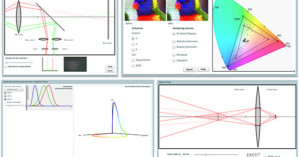
The digital photography course offered by Stanford (CS 178, which we featured last year) has an awesome page filled with flash applets that can help you gain a better understanding of certain technical aspects of photography. These include understanding how various factors affect depth of field, a visual look at how phase detection autofocus works, and a simple introduction to color theory.

What Landscape Photos Would Look Like if Earth Had Saturn-Like Rings

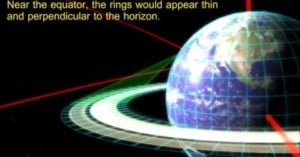
YouTube user Roy Prol created this fascinating animation that imagines what Earth would be like if our planet had Saturn-like rings. In addition to views from space, he show us beautiful renderings of what the rings would look like in landscape photos captured at famous landmarks (e.g. the Eiffel Tower in Paris, Christ the Redeemer in Rio de Janeiro) around the world.

Auroras, Meteors, and Photography from the International Space Station

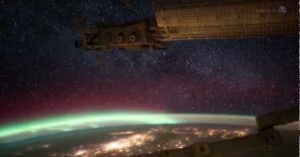
Here's a fascinating video by NASA that explains what auroras are and what they look like from space. It's filled with beautiful photographs and time-lapse sequences captured by astronauts on the International Space Station. Astronaut photographer Don Pettit, who maintains a blog about his experiences, writes that taking pictures of Earth is harder than it looks.

Why This Photograph is Worth $578,500

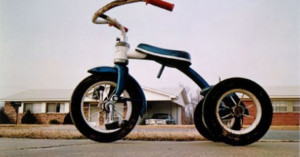
Last week, a collection of 36 prints by William Eggleston was sold for $5.9 million at auction.  The top ten list of most expensive photographs ever sold doesn't contain a single work worth less than a cool million. Just a few months ago, Andreas Gursky's 'Rhine II' became the world's most expensive photograph, selling for $4.3 million.

Space Shuttle Booster Cameras Capture 7 Minute Journey to Space and Back

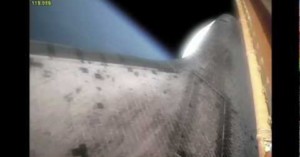
We've seen quite a few videos lately by people who send cameras up to the edges of space on weather balloons. Here's the big-budget version of that: footage from a camera attached to a NASA Space Shuttle's booster rockets. Lift off from Earth occurs at 0:27, separation from the shuttle occurs at 1:57, and splashing into the ocean occurs at 7:21. The sound captured by the cameras has been remastered by George Lucas' Skywalker Sound.

Albert Kahn’s Documentation of Humanity Through Early Color Photography

Albert Kahn was a wealthy French banker who launched a project in the early 1909 that aimed to create a photographic record of the world. The first commercially successful color photography process, Autochrome Lumière, had just arrived two years earlier, and Kahn decided to use the medium to both document human life and to promote peace. He sent out an army of photographers to 50 different countries, amassing 72,000 photos and 100 hours (183,000 meters) of film that became one of the most …

Undressing a Sony NEX Camera

I have to say I have one of the better jobs on the planet, at least for a photography gear-head. The part I like best — well, really there’s a lot of parts I like best — but one fun part is that my job description includes: Take things apart. See how they work. Learn how to fix them.