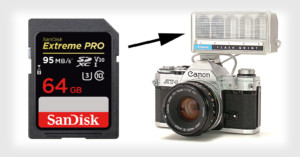
Did You Know: Flash Memory is Named After the Camera Flash
Here's an interesting piece of trivia: did you know that flash memory is named after the camera flash?
Here's an interesting piece of trivia: did you know that flash memory is named after the camera flash?
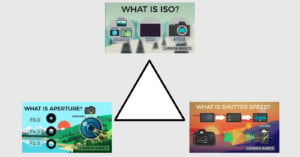
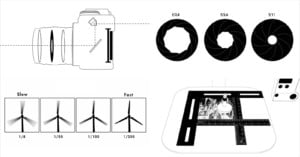
The exposure triangle forms the basis of creating a good exposure. Aperture, shutter speed, and ISO speed are the three different factors that contribute to determine the exposure of a photo.
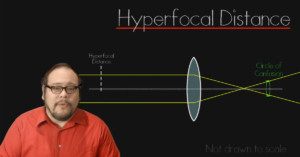
Hyperfocal distance is a tool often used by certain genres of photography to render an entire scene in focus. It allows you to capture the foreground through to the background, keeping the whole image sharp. But how does it work? This 12-minute video by Filmmaker IQ looks at the science behind hyperfocal distance.
Here's an interesting portraiture tip you may not have considered before: what you wear as a photographer can affect how your portraits turn out due to the reflected light. That's what's shown in this simple 43-second video by the Koldunov Brothers.
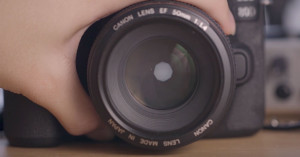
DSLR cameras often have a little depth of field preview button beside the lens mount. This 3-minute video by ZY Productions revisits the basics of a DSLR camera and looks at how this handy button works, as well as some lesser-known things to consider.
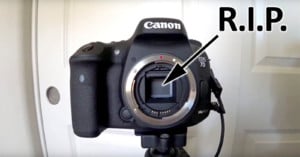
DSLRs generally have life expectancies based on how many "actuations" (i.e. openings and closings) their shutters can handle before they die and need to be replaced. To see what happens when a DSLR "dies" in this way, ContinueCrushingTech decided to torture test a Canon 7D Mark II with non-stop shooting until the shutter fails.
Now here's a lens you probably don't want to be seen with in populated areas these days: it's a Novoflex 600mm lens with a pistol grip, introduced in 1955 and manufactured in West Germany.
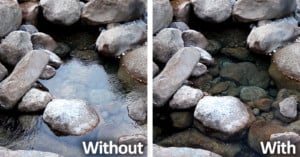
Polarizing lens filters help your camera see the world in a new light... literally. If you've never used a polarizing filter before, check out this great 3-minute video by photographer Christopher Frost in which he discusses why these filters are so neat and how to use them.
Rolling shutter is the answer to why concrete bends, propellors break up, and trees turn to jelly when you're filming them while either you, or the object, is moving quickly in front of certain cameras.
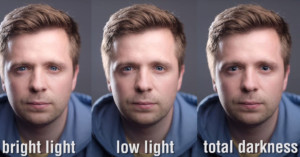
Here's something not everyone thinks about: the intensity of light that you shoot your portraits in doesn't just affect the exposure, but it also affects the pupil size of your model.
Have you ever been disappointed that your smartphone's camera doesn't quite live up to the shots seen in commercials? "Shot on a Smartphone" often tags along at the end of ads featuring beautiful, cinematic-style shots.
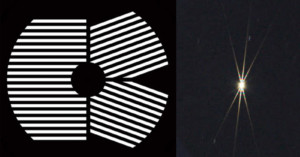
Finding razor-sharp focus when shooting astrophotography can be hard – stars appear as point light sources, and there are no detailed surfaces to aid the eye in achieving focus. The Bahtinov Mask is a widely used tool that cleverly uses diffraction as a focusing aid.
Commercial air-to-air photography is an art that very few photographers have the opportunity or skill to get involved in. This 14 minute behind-the-scenes video from Everyday Reviews is as close as most will get, as it takes the viewer on a shoot of Air Canada’s new livery.
I was nervous and excited. I had just left my 9 to 5 cubicle career and jumped head-first into full-time photography. Over the next 2 months, I would be traveling all over the world with a friend in order to build my portfolio. At this point, though, my sedentary lifestyle had caught up to me and I was about 25lbs overweight.
Dorothea Lange’s iconic “Migrant Mother” is one of the most famous photographs ever taken. But who was the woman featured in the portrait? This 7-minute video from Today I Found Out delves in to the complete story behind the image.
Apple announced High Sierra, the next version of their macOS, at the Worldwide Developer Conference last week. The final version will be available later this fall.
If you want to fly a drone for commercial purposes in the US, you first have to pass the FAA’s Part 107 sUAS test. This free 1 hour 45 minute guide from Tony Northrup is a hugely useful resource for your studies.
Have you ever wondered what a gale-force sneeze would look like if you could see air currents, temperature gradients, and differences in pressure and composition of the air? Or, less disgustingly, the strike of a match? This fascinating 6-minute video demonstrates Schlieren photography, which makes the invisible visible.
I was curious about how resolution (megapixels), aperture sizes, and sensor sizes have improved on smartphones over time. With the advent of phones with two back cameras with different focal lengths, like the iPhone 7, LG G6 and ASUS ZenFone 3 Zoom, I also wanted to look at how the number of camera modules on a device has increased.
Believe it or not, there was a time when photo sharing was a lot slower than in the age of digital photography, smartphone cameras, Instagram, and Snapchat. In the mid-1900s, instantaneously capturing and sharing photos online was unheard of. Then in 1997, the first camera phone was born.
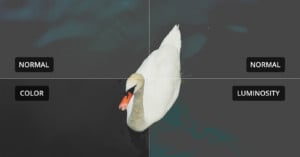
Blend Modes in Photoshop are simple at a glance, but it’s easy to forget exactly how each of the 27 modes work. This 10-minute video from Blake Rudis of f64 Academy goes in to detail on Luminosity and Color, which are both very useful for photo editing.
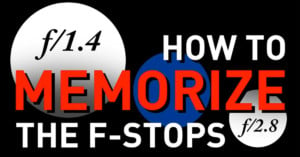
Off the top of your head, do you know how much more light f/2.8 lets in compared to f/5.6? Do you know the f-stop number that comes after 11? This 1.5-minute video reveals the simple pattern used by the scale.
Here's something you might not be able to "unsee" if you've never noticed it before: during an NBA basketball game, whenever there's some exciting action around the rim, there's a good chance you'll also see a bright flash of light illuminate your screen for a split second. These are the powerful strobes installed high overhead by photographers.
The foods you buy in the store and at restaurants are never as tasty as they look in advertising photos, but what many people might not know is that you probably wouldn't enjoy eating the foods seen in those pictures. The reason is because commercial food photographers use all kinds of non-edible products to cleverly make food look delicious in front of a lens. Here's a 9-minute video on 10 of those tricks.
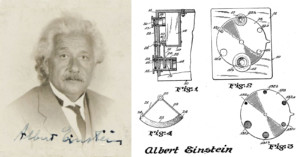
Here's an interesting piece of photo history: five years before Kodak’s automatic Super Six-20, Dr. Albert Einstein received a patent for a camera which could automatically determine the proper aperture and exposure to take a photograph. Yes, that Einstein.
If you are a photographer or fledgling retoucher opening Photoshop for the first time, it is a daunting experience, to say the least. There is a wealth of knowledge, free and purchasable online, but how do you know what to search for if you don’t know what you don’t know?
If you have never printed your own work before, you might not know that some careful preparation is needed to make sure the colors in your print match what you see on your screen. This 20-minute video from photographer Michael Woloszynowicz will teach you how to print your images with confidence.
I remember how excited I was when I first started posting on Instagram. I finally had a platform to get my work seen, tell my stories, share my life and get inspired by those of others. It was all about creativity and art and the work. It was fair and ethical and just awesome!
We've shared some impressive work by photo colorizers who use Photoshop skills and hard work to add realistic colors into historical monochrome photos. If you're wondering how its done, check out this 7-minute video by Vox that discusses the process. (Note: there's a bit of strong language.)
The "dolly zoom," also known as the "Hitchcock zoom" or "Vertigo effect," is a filmmaking technique that involves changing a zoom lens' angle of view while moving the camera toward or away from a subject to keep their relative size in the frame the same. Here's a 4-minute video by Now You See It that explains this technique and how (and why) it's used.
Every 53 days, NASA's Juno spacecraft flies close to Jupiter and travels from the giant gas planet's north pole to and past its south pole, shooting photos along the way. The eye-opening 2-minute video above was created using a set of these still photos.
Tanzania is one of the best places in the world to see nature and wildlife as it has been for thousands of years. The 947,303 square kilometer country holds some of the most famous national parks and nature reserves in the world with diverse landscapes and dense population of wildlife like the Serengeti and Ngorongoro crater.
Before you read the rest of the article, and it will be a long read, please allow me to share a few thoughts with you. Visiting the abandoned city of Pripyat and the disaster site of Chernobyl was an experience that I was looking forward to for a very long time.
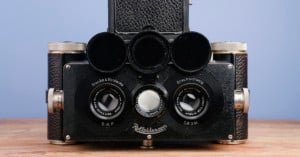
The Rolleidoscop was made from 1926 to 1939 in Germany alongside the Heidoscop, the same camera but with a sheet film or glass plate back. It was actually the very first camera that renowned manufacturer Rollei made.
If you'd like to get your hands on a legendary Canon lens without having to take out a mortgage, the 200mm f/1.8 may be one to consider. Sometimes referred to as the "Eye of Sauron" -- a Lord of the Rings reference -- the 200mm f/1.8 only saw 8,000 produced during its run from 1988 through 2004.
Back in February, we shared a simple animation made by the film brand Ilford that shows how a film SLR works. It turns out that video was the first in a series of many animations in a playlist titled "Introduction to film photography."
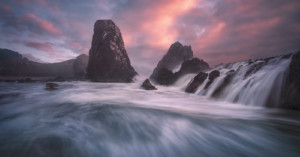
Long exposures are a great way to capture the movement of roiling ocean waves, but you can take that effect to the next level by combining multiple exposures, as shown in this 15-minute tutorial from photographer Greg Benz.
This handy 7-minute lighting guide from Aussie music photographer PJ Pantelis shows how you can use 2 lights and a reflector to create a professionally-lit headshot. Even if you’re not shooting portraits, the video is a great tutorial on working with light.
Macro photography can be incredibly expensive, but as British photographer Adam Kappa shows in this video, it doesn't have to be. In 7 minutes, Kappa demonstrates how to produce impressive macro shots using kit lenses, extension tubes, and a flash diffuser crafted from a Chinese takeout container.
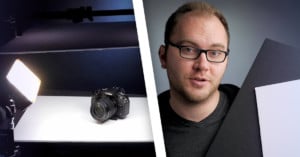
In this short-but-useful tutorial from DSLR Video Shooter, Caleb Pike runs you through 5 video and photography uses for simple foam board. Get out a pen and a pad, this photo DIY 101.
Neutral Density (ND) filters are a great tool for producing unique photos in lighting conditions where a long exposure would otherwise not be possible. This 7-minute video tutorial goes in to detail about which filter to select for your scene, with before and after photos showing the effects possible.
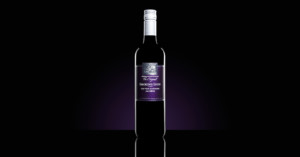
If you're interested in product photography, Dustin Dolby's channel workphlo is definitely worth a bookmark. Using minimal equipment, he's able to capture distinct looks like this makeup shot, and in this tutorial he'll show you how a single speedlight can produce a bold beautiful wine bottle photo that looks 100% pro.
I recently had a few prints made from some medium format negatives. The prints are for a specific purpose so I wanted them to be of the highest quality possible, this meant taking them to a local specialist where the film was scanned with a $16,000+ Hasselblad Flextight X1. The Flextight is about the best quality scan you can get before moving up to dedicated drum scans that can be messy, time-consuming, and expensive.
There are three basic types of surfaces, as far as lighting is concerned: reflective, transparent, and neutral. In this video, you'll learn about the 3 basic techniques for properly lighting each of these—in other words: the 3 techniques for lighting ... everything.
We just had a beautiful Aurora Australis hit New Zealand recently. I was fortunate enough to catch a quiet spot to myself where I could take in the atmosphere and shoot a few images.
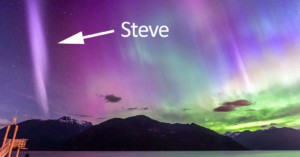
Aurora photographers have been buzzing in recent days about a newly spotted phenomenon in the sky. It's a purple ribbon of light that differs in appearance from standard aurora. After being confirmed as a new phenomenon, it was given a new name: "Steve."
Want to see one of the rarest Canon lenses in existence? Check out the Canon 300mm f/1.8. It's an extremely huge and heavy lens, and so few exist that you'll probably never come across one in real life.
When you watch nature documentaries like the BBC's famous Planet Earth series, do you take for granted that everything you're seeing is 100% real? We wouldn't blame you if you did, but as Simon Cade of DSLRguide explains in this video, you'd be wrong.
Is there such a thing as the 'perfect' portrait and headshot angle? When you're dealing with something as subjective as photography, probably not. But that didn't stop Ed Gregory from YouTube channel Photos in Color from applying some 'science' to try and find that perfect shot.
The Canon EOS (Electro-Optical System) ecosystem was born 30 years ago with the introduction of the Canon EOS 650 35mm SLR on March 2nd, 1987. Since then, over 70 EOS cameras have been launched. Here's a 1.5-minute video by Digital Camera Warehouse that shows the evolution of EOS cameras over three decades.