Comic: That’s a Moiré in Photography
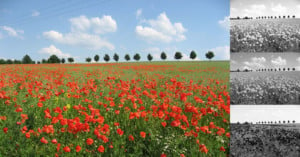
xkcd's comic today, titled "Color Pattern," is about the famous moiré pattern in photography, the interference patterns that appear when certain patterns are overlaid on each other.
If you're just starting out in photography (or know someone who is), here's a simple 5-minute animation that provides a crash course on the subject of aperture.

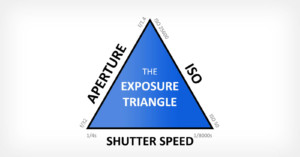
ISO is one of the three major exposure settings in the exposure triangle of a digital camera -- shutter time, f/number, and ISO. Of the three, it is ISO that is probably most misunderstood. Even more so than f/number. In fact, it is a common misconception that higher ISO settings will cause images to be noisier. In fact, the opposite is often true. Wait, what?

Just as how cars can fail after a certain number of miles, camera shutters can go belly up after a certain number of actuations (i.e. flapping open and closed for an exposure). If you've ever wondered what a heavily used DSLR shutter can look like after it bites the dust, today's your lucky day.
Tim Tadder is a wildly successful commercial photographer in a time when the term "wildly successful photographer" sounds like an oxymoron. So RGG EDU went to Tim's house and asked him 18 questions about the photo industry, which Tim answered while playing some leisurely putt putt in his backyard.
Abstract photography seems to be an elusive subject, hard to nail down to a single definition. This may be due to the abstract nature of the idea of “abstraction” and perpetuating misconceptions about abstract photography.
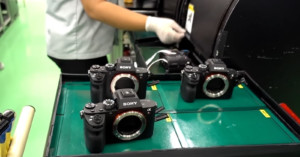
Want to see what goes on inside Sony's main factory for digital cameras and lenses? Here's a 4-minute video that shows how the Sony a7R II is assembled, tested, and boxed up at the Sony Digital Imaging factory in Chunburi, Thailand.
Sigma's Art series of lenses are already praised for their image quality and sharpness, but you can hone that sharpness even more by adjusting the focus of your lens using Sigma's USB Dock. Photographer Kyle Kozinski recently discovered just how much of a difference it can make.
In the 16-minute video above, Gavin Free of the The Slow Mo Guys answers a question he often receives: “Is using a high-speed camera similar to using a normal camera?” The answer is “Yes and No”, and we end up looking into the biggest challenges in using high-speed cameras.
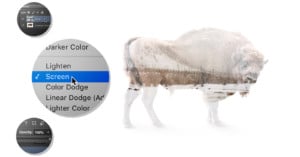
I once read a Quora question that went, “What can I learn in one minute that will be useful for the rest of my life?” I don’t know about the rest of your life, but if you're a photographer, head over to the Adobe Creative Cloud YouTube channel and check out their 'Make It Now' one-minute video tutorials on designing (not retouching) with Photoshop CC.
I am colorblind. And I am a photographer. In my particular case, and in the majority of those that are "color challenged", being colorblind doesn't actually mean we cannot see colors. Or at least, without borrowing your eyes and brain for a while and comparing what we see, I don't believe this to be the case.
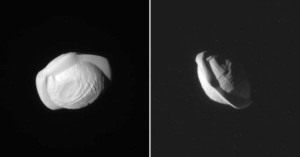
NASA has just released new raw photos of Saturn's tiny moon Pan, captured on March 7th, 2017, by the Cassini space probe from about 15,000 miles away (~24,500km). The photos reveal a bizarre-looking moon -- one that looks like a giant ravioli floating in space (or a dumpling or walnut or "paper mache mini-planet").
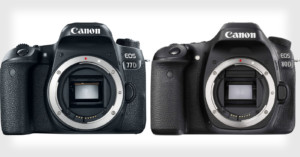
Canon made an unusual move in 2017 by announcing the Canon 77D as the first camera in a new line that fits between the 80D and the 800D (AKA the Rebel T7i). If you're scratching your head about what makes the 77D different, check out the 4.5-minute video above by ZY Productions about 8 differences between the 77D and 80D.
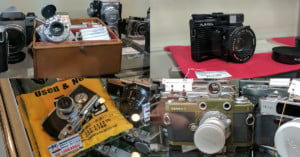
Japanese camera manufacturers dominate the digital photography landscape, so it might come as a surprise that the used film camera market is also thriving in Tokyo.
Polarized light is light that has waves oscillating all in the same direction. There are two basic ways to get polarized light: from reflection or by using a filter.
Wildlife photography and videography is more incredible today than ever before, thanks in large part to the last decade's amazing leaps in camera technology. This behind the scenes look at the cameras used by the BBC to shoot Planet Earth II shows you how advances in camera tech have allowed us to see the creatures of the night in ways never before thought possible.
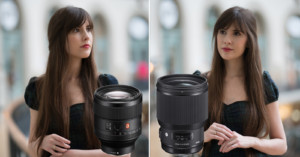
Another day, another lens comparison takes on Sigma's "king of portrait lenses," the 85mm f/1.4 Art. This time, our friend Usman from Sonder Creative tested the Sigma 85mm against Sony's well-liked 85mm f/1.4 GM out in the real world to see which of the two 85s he preferred.
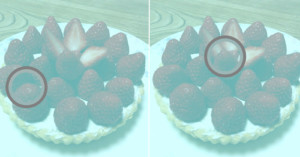
It's all over Internet by now: the baffling picture of 'red' Strawberries, and the claim it does not contain any 'red' pixel.
Since the introduction of the Fujifilm X-Series line of cameras, reviewers and consumers have struggled to compare them directly to the competition. Fujifilm’s is a tightly integrated system, wherein everything is a little bit different.
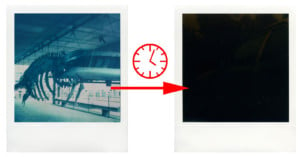
Snapchat is known for popularizing the idea of the self-destructing photo, but did you know that long before Snapchat existed, Polaroid had already offered its own line of self-destructing Polaroid pictures? It was called the Fade to Black line.
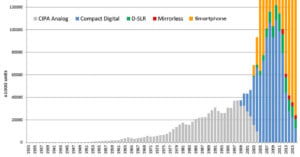
Things aren't looking good for the standalone point-and-shoot camera. As smartphone cameras continue to improve, compact camera sales continue to nosedive. A new historical sales chart with 2016 figures shows just how quickly point-and-shoots are dying off.
The new LG G6 smartphone ships with an artsy wallpaper that looks like a stylized number 6. A neat fact about the image is that it's not a computer rendered artwork: it took two months to create and shoot the photos.
Khan Academy recently teamed up with the team at Pixar to create a free online course for people who are interested in seeing how Pixar artists "do their jobs." But lest you think there's nothing there for photographers, think again. One of the classes in this course will definitely appeal to still shooters.
I initially refused to believe it when this photo came across my feed. My eyes aren't broken! I can see they're strawberries, and they're definitely red. They have to be trolling us with this image, right?
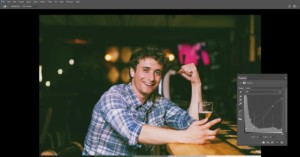
The tone curve is one of the most powerful tools in photo editing, allowing you to change multiple values and essentially doing the job of several different adjustment layers. But it's also complicated, and hard for beginners to understand. These two videos should help.
Same setting, same model, three different lighting scenarios. In this demo, Toronto wedding photographer Derrel Ho-Shing shows you the difference between shooting with natural light, regular strobe, and high speed sync.
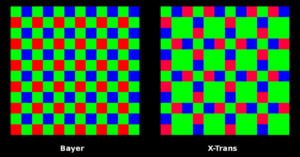
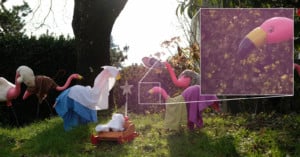
When FujiFilm’s X-Trans III sensor was introduced in the X-Pro2, many users began noticing a strange new artifact in their backlit photographs. Upon further experimentation, it became apparent that the same artifact could also be found in images from cameras using the older X-Trans II sensor.
Many a blockbuster movie and several popular travel photo/video creators out there use something called the 'Orange and Teal look' when they color grade their work. Today, Parker Walbeck of Fulltime Filmmaker will explain what that look is, why it's used, and how to apply it to your creations.
Sony is making a lot of their new 100mm f/2.8 GM lens with its Smooth Trans Focus technology. But what exactly is this so-called STF, how does it work, and why does it produce smoother bokeh? This short video explains all.
If you want sharp black and white images with fine grain, then you've come to the right place!
Need to add some fake blood to your photo shoot? Instead of going the digital route, you can easily whip up some realistic fake blood using recipes developed for Hollywood movies. The 2-minute video above is a quick look at some of the fake blood recipes that were used over the past decades.
We now know which cameras top photojournalists around the world are using these days, but what are they saying about the state of their industry? A newly published study uses responses from nearly 2,000 photographers to reveal the current condition of the photojournalism landscape.
If you're new to film photography, chances are that you'll get into shooting black and white sooner or later because you have been inspired by the masterpieces of old masters. But before you become the next Henri Cartier-Bresson or Sebastião Salgado, there are a few introductory things you should know.
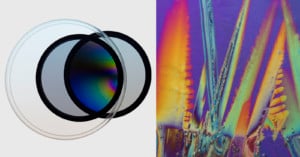
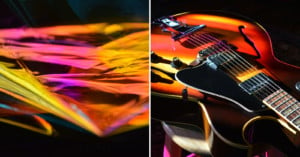
I came across dichroic film years ago while researching materials for an art lighting business, Lightlink Lighting. The color changing properties of this material was so inspiring I ended up creating new lighting designs based on it.
In the annals of photography, few people have made the kind of impact that Oskar Barnack can claim. While working for Leitz, then a microscope manufacturer, the master entineer and photography enthusiast invented the original Ur-Leica: a camera that would change the world.
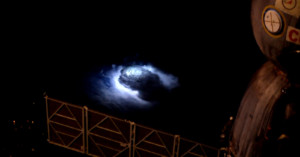
For years, airline pilots have reported seeing unusual lightning phenomenon that we don't get to witness from the ground. Luckily for us, astronauts on the International Space Station have a perfect vantage point, and one of them did capture "blue lightning" while orbiting the Earth.
Roger Cicala—the founder of Lens Rentals and one of the most entertaining and informative voices in the world of optical testing—has some news for you: zoom lenses are never as good as primes, and they vary so much from copy to copy that you should probably never trust a zoom lens review.
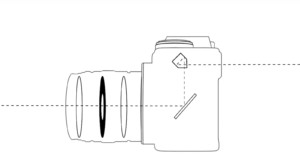
Here's a neat little animation from Harman Technologt, the folks behind the Ilford brand of film, that breaks down exactly how a basic film photography SLR (single lens reflex) camera works.
It's time to give some long-overdue love to two cheap films in price, but by no means in quality. It can be tempting to go for the expensive films when you're out buying rolls of 35mm, but let's not forget about the bottom of the shelf.
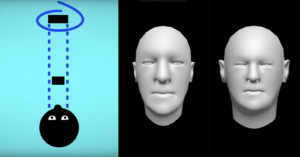
It's often said that a camera adds 10 pounds to a person being photographed. SciShow made this 2-minute video exploring reasons why cameras play tricks on our eyes when it comes to apparent weight.
How much of an impact does light pollution have on how we see the night sky? Photographer Sriram Murali has created a new video that aims to show us the answer.
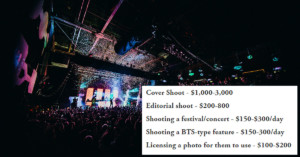
There are a lot more music photographers than there are music photography jobs — that’s just how it is in this corner of the industry. It's a port of entry for many hobbyist photographers, and the result is saturation of the market. A lot of budding photographers are willing to work for free, making the gigs that are out there even tougher to get.
On Saturday, PetaPixel ran the story of a photographer whose photo had been imitated to a surprisingly thorough degree by a German ad agency. While a poll on that article suggested that a clear majority (~74%) of respondents saw it as unethical plagiarism, I thought I’d dig into the legal aspects a bit.
A photography professor in Oklahoma recently had an awesome idea for teaching his students about the beginnings of photography: he turned his classroom into a giant camera obscura.
Pelican brand hard cases are a popular choice for photographers who need to safely transport camera and lighting gear from photo shoot to photo shoot. BrandmadeTV made the 6.5-minute video above that offers a behind-the-scenes look at how these durable hard cases are manufactured.
Want to see what's inside a modern instant camera? The website All About Circuits just published a teardown of the Fujifilm Instax Mini 8 to explore the inner workings of the camera.
Camera angle as composition isn't talked about as often as, say, how the elements in your photos are arranged. But changing your camera angle can completely transform the message an image sends, something Ted Forbes explains beautifully in this crash course on low angle photography.
Introductions to basic lighting don't get much simpler or better than this. You could call it Lighting 101, and whether that light is coming from a window or an artificial light source, the info here qualifies as "must know basics" for anybody with a camera in hand.
We talk about composition a lot, but have you ever really dived into the subject of color theory and thought about how it applies to your photography? If you haven't, you should... and arguably the best place to start is this incredibly comprehensive demo by landscape photographer Dave Morrow.
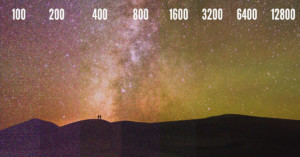
Ultra high ISO with lots of noise... There’s a lot of buzz going around about the new Pentax KP with it’s maximum ISO of 819200. Every comment I read says ‘what’s the point’?
Well, here are two benefits: late night framing and focus.