ChatGPT Is Scary Good at Guessing the Location of a Photo
Users pushing the limits of ChatGPT’s powerful new AI image model have uncovered yet another astonishing -- and slightly unnerving -- ability: it can pinpoint the location of photographs.
Users pushing the limits of ChatGPT’s powerful new AI image model have uncovered yet another astonishing -- and slightly unnerving -- ability: it can pinpoint the location of photographs.
ChatGPT's powerful new AI image generator continues to make waves as people keep finding creative ways to use it. The latest trend? Users are turning their dogs into humans.
Atomos, the brand that made a name for itself with its external monitors and HDMI recorders, is significantly diversifying its product catalog in what appears to be an attempt to see what it can release that will be its next successful offering.
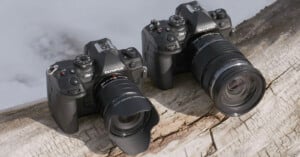
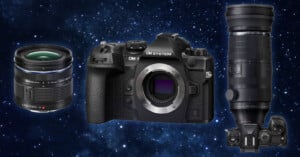
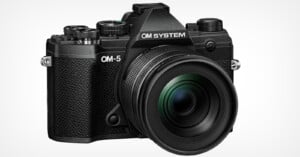
OM System isn't willing to sacrifice the performance of its computational photography features in order to increase the resolution of its sensors. That strategy leverages one of the company's competitive advantages, but it also very well makes it difficult for its cameras to appeal to any photographer.
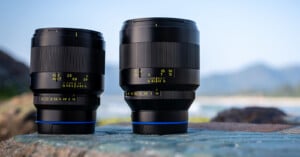
Zeiss unveiled its heavily teased Otus lenses for full-frame mirrorless cameras, revealing not only the expected Otus ML 50mm f/1.4 but a longer Otus ML 85mm f/1.4. Let's look closer at the two new premium manual focus primes for E, RF, and Z-mount cameras.
Today Sigma announced the BF, the company's latest camera that makes a series of wild, unexpected design choices. Sigma calls it "radically simple" and for the first time in a while, a company's marketing language isn't overselling the product.
In today’s world of photography, camera models come at us thick and fast. Some brands seem to update cameras yearly; for others, it’s two or three years between new models. However, there are always the odd ones out, and this is definitely the category in which Ricoh and its formidable GR III series fall. Despite being a runaway success for the brand, even the most loyal users now wonder when a successor will appear.
While Adobe's Firefly text-to-video generator leaves a lot to be desired, a secondary application of the technology is currently in the beta version of Premiere Pro. Called Generative Extend, it allows video editors to extend a clip by up to two seconds and does a surprisingly good job at it.
Adobe today launched its competitor to OpenAI's Sora, a text-to-video AI generator that Adobe is positioning as a possible alternative to licensing stock footage. It costs at least $10 per month with the "best value" option at $30 per month, but it's nowhere near good enough to warrant either price.
Meeting my friend in the corner of a traditional English pub, he slides the goods over to me on top of the table. "Here you go mate, I don't know if it will work. But good luck."
Late last night, OM System announced the OM-3. It costs $2,000... for now. I expect that will change very soon because I've been conditioned by the company to believe so.
2025 has so far proved to be the year of comebacks. Point-and-shoot compacts are flying off shelves faster than camera stores can restock them. But there could be another resurgence set to occur, and this one has flown well under the radar: camcorders.
An optical illusion has been making its rounds on the internet -- tripping people out when they are told that there is no human in the picture.
Computational photography features raise the hackles of many photographers, but many examples of these tools help photographers bring their creative visions to life and make their lives easier. That sounds good to me, not scary.
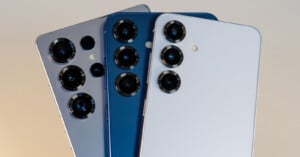
You could be forgiven for looking at Samsung’s latest crop of flagship devices in the S25 series and wonder what the silver lining is. It’s all about AI -- Galaxy AI, that is -- and in doubling down on these features, the company is betting that it has a leg up on what could be the next big thing for mobile devices.
"When I saw Blue Velvet for the first time, it changed my life," wrote photographer Gregory Crewdson last week as he reacted to the news that famed director David Lynch had died at age 78.
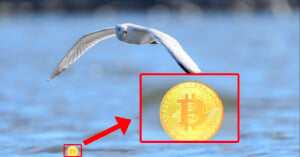
Last year, Adobe updated its Firefly generative AI platform multiple times, the most recent coming in September. Over that time, the Lightroom and Photoshop tools that rely on the technology have gotten steadily worse and the system's choice to add a Bitcoin logo to a photo of a seagull is a perfect distillation of the problem.
This week, Getty Images and Shutterstock announced an intent to merge, bringing two of the top three largest stock photography companies together. It's just one more step down the road to rock bottom.
As we close the book on 2024 and peer ahead to what should be an exciting year for new cameras and lenses, it is worth looking closer at one company's performance in 2024: Fujifilm.
As we enjoy the final hours of 2024, it's the perfect time to reflect on an exciting year of photography and reminisce about our favorite stories.
From an uncontacted tribe living deep in the Amazon rainforest to an animal previously believed to be extinct, trail cameras have captured some incredible images in 2024.
Canon had a strong 2024, launching a new flagship camera, a highly anticipated (and excellent) sequel to the popular EOS R5, and a bunch of diverse new lenses.
At the end of 2023 it was beginning to look like AI images -- a new and novel way of producing pictures -- were an existential threat to photography. By the end of 2024, that threat had been extinguished somewhat.
After a torrid pace in 2023, during which time Nikon launched a pair of cameras and nine all-new lenses, the company slowed a bit this year, releasing just two new cameras and three lenses. Nonetheless, it was a strong year for the Japanese company and one that helped Nikon continue to claw back market share in the mirrorless era. Plus, Nikon bought RED, so there's that.
Sony had a very solid year. Releasing two cameras and five lenses, Sony wasn't quite as busy as in 2023 but busy enough to maintain its firm grip on the mirrorless camera segment.
Fujifilm was prolific this year, launching four new digital cameras, including the hyper-popular X100VI, a pair of new Instax instant cameras, and four new lenses (although it's more like three).
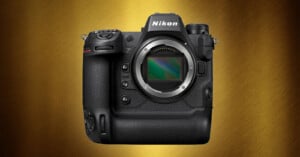
With firmware version 5.10 launching earlier this month, Nikon has made its flagship Z9 mirrorless camera, released in late 2021, even better. The new firmware is the latest in a long series of free post-launch updates that have made the Z9 even better and much more versatile. Many camera companies believe strongly in post-launch support, but arguably, no camera has benefited more from free firmware updates than the Z9.
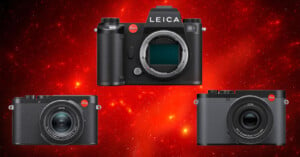
While Sigma absolutely earned its title of PetaPixel's Photo Company of the Year in 2024, legendary German photo company Leica was not far behind. Leica was not only prolific across multiple camera system segments, but the company posted the highest revenue in its 110-year history.
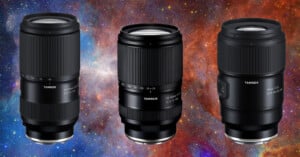
With three new lens releases, 2024 was a relatively typical year for Tamron. Last year, Tamron announced two lenses, while it released three in 2022 and 2020. 2021 was an unusually prolific year, with Tamron dropping five lenses.
What a fittingly unusual year for Ricoh Pentax, a photo company that itself is quite strange. Always one to march to the beat of its own drum, Ricoh Pentax did things unlike everyone else in 2024, and that's, by and large, a good thing.
Hasselblad was uncharacteristically busy this year, releasing a "new" camera and three new XCD lenses. The premium Swedish camera manufacturer continues to focus heavily on celebrating still photography and the experience of taking photos, and we're here for it.
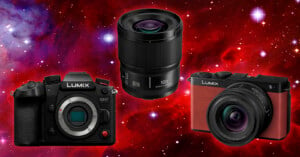
Two companies are actively developing products for two distinct camera systems: Fujifilm and Panasonic. In Fujifilm's case, it's the APS-C X Series and the medium-format GFX System. For Panasonic, it's the Micro Four Thirds platform and the L-Mount system, which includes full-frame mirrorless cameras and lenses. We'll look at Fujifilm next week, but for now, the attention is on Panasonic and its rather interesting (and diverse) year of product launches.
Buying a camera is like entering into an agreement with the brand. You’re handing over your hard-earned cash, and they are giving you the best product they can, or at least that’s how it used to be.
We're big believers not only in Micro Four Thirds as a platform but OM System as a company. But 2024 was, to put it mildly, a challenging year for OM System.
In the last year, I have written dozens of stories for PetaPixel about various incidents where people have died (or almost died) while taking a selfie, photo, or video. It may sound like a lot, but it is only a handful of the fatalities that I could have reported on.
This week, Adobe said that it would be making changes to its Photography plan pricing and eliminating the most affordable option entirely. Beyond that, as more camera and lens companies are pushing to support the "hybrid" creator (for good reason), Adobe continues to ignore them.
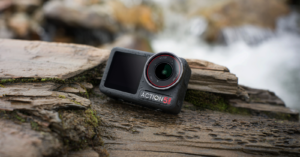
Think "action camera," and visions of snowboarders recording their high-adrenaline run down a slope spring to mind, and with good reason. Action cameras have unlocked new creative options for those wanting to capture their active pursuits on film. The results can be jaw-dropping, thanks to 4K or even 5.7K resolution options, enhanced slow motion, and mind-blowing stability. In short, an action camera can capture footage that looks like it was shot by a film crew rather than a tiny camera …
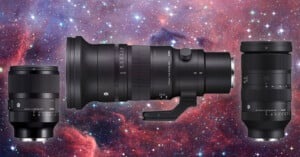
It has been a fantastic year for Sigma. While the company did not launch any new cameras, Sigma released six superb new lenses.
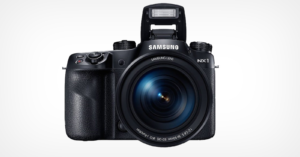
A decade ago, in the hallowed halls of the now defunct Photokina show in Cologne, Germany, photographers, journalists, editors, and all sorts of other industry movers and shakers were elbowing each other out of the way to get closer to a trade booth where a brand’s newly launched flagship models were being admired. But the most popular booth of 2014 didn’t belong to Sony, Nikon, or even Canon... it belonged to Samsung.
2024 was a great year for technology and photography. While we recently published The PetaPixel Awards, that's based on a vote from the entire staff. Sometimes, gear that is award-worthy isn't necessarily our favorite (and vice versa), so we wanted to take a moment to call out some gear from this year that we just think is neat.
No camera system provokes more opinion and vitriol than Micro Four-Thirds. It is the most divisive system out there; you either love it or stay clear. Micro Four-Thirds (MFT) cameras have been around for a long time, with the story beginning in 2008 when Panasonic brought out the G1, closely followed by the Olympus E-P1. In the here and now, this is a system under the microscope, and thanks to several factors, the next 12 months could be critical for its future and survival.
We are proud to announce the results of the fourth-annual PetaPixel Awards where we are able to honor the best new photography products released in the last year. 2024 was a heck of a year for photography and the results showed that: it was the closest batch of voting in the awards' history.
Earlier this year, students enrolled The University of Texas at Austin's School of Journalism and Media (in the Moody College of Communication) were encouraged to apply for a six-month mentorship with a Canon Explorer of Light. Leila Saidane's won that competition and recently completed her mentorship with photographer Natalie Keyssar.
On Friday, Microsoft confirmed it had discontinued the Surface Studio 2+, the company's all-in-one desktop computer. This computer failed not because it wasn't a good idea -- it was a brilliant idea on paper -- but because it was so poorly executed on all fronts.
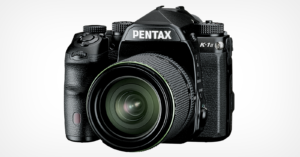
Despite being ahead of its time, the Pentax K-1 (and its Mark II upgrade) was a camera system that promised so much yet appears to have run out of road. Born seemingly from an R&D department whose chains had been freed, the engineers went wild, strayed off-script, and produced a camera full of innovation. Fast forward to 2024, and a lack of lens support paired with no upgraded models in over six years leaves Pentax owners in an unwanted state of limbo where even the most loyal customers are now …
Every year, PetaPixel recognizes the top cameras, lenses, and photography accessories in The PetaPixel Awards. Selections are voted on by the PetaPixel staff and while final awards will be announced next week, we are happy to share our nominees in each of the categories today.
Last week, FilmNeverDie announced that its Kickstarter-backed Nana 35mm film camera was available for purchase worldwide. PetaPixel readers pointed out that the press materials that accompanied that announcement were incomplete and worth greater scrutiny. We agreed.
Black Friday and Cyber Monday offered many deals for photographers looking to upgrade their equipment while saving a few dollars in the process. Typically, this online promotion on steroids allows brands and camera store chains to push stock that has been on the shelves for a couple of years and is likely to be superseded by newer models over the coming months. However, there are a few models that buck typical trends.
Foldable smartphones aren’t a total novelty anymore now that various brands make them, but they’re still far from being ubiquitous in people’s hands. There are various reasons to consider one, but how they can affect mobile photography helps make them more interesting.
"My goal with this book is simple: I want you to understand how to communicate an idea that resonates with the person who views the image," Ted Forbes, author of "Visually Speaking" and the face behind The Art of Photography YouTube channel writes.