I Fed AI Videos into a Deepfake Detector to See How Well it Can Identify Frauds
A security firm has released a deepfake detection tool as a useful aid to determine whether a piece of content is AI-generated or not.
A security firm has released a deepfake detection tool as a useful aid to determine whether a piece of content is AI-generated or not.
In just the last year and a half, Apple launched Final Cut on iPad and Final Cut Camera, updated Final Cut Pro to a new version for the first time in 13 years, and moved to purchase Pixelmator. As Adobe's public perception continues to struggle, Apple is making moves to take advantage.
Artificial intelligence (AI) might be running into a cul-de-sac thanks to data shortages and technological constraints, according to a report from Bloomberg.
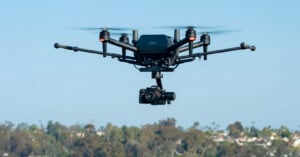
In 2018, I was happily flying my DJI Mavic 2 Pro above a waterfall in Maui. Next to me, struggling to even get his GoPro Karma off the ground, another photographer eventually gave up. The Karma failed because it just couldn't get the basics right. Sony's Airpeak suffered the same fate.
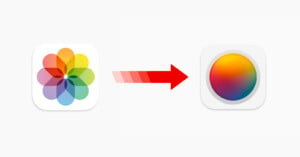
Early this week, I pulled a colleague into a video chat and shared my screen with him, asking if he was familiar with Apple Photos. He said yes, and proceeded to let me continue. That was when I told him what he was looking at wasn't Apple Photos.
On Friday, Pixelmator surprised with the announcement that it had signed the paperwork required to be acquired by Apple. If it passes regulatory approval, Apple will suddenly own a set of software that directly competes with Adobe Lightroom and Photoshop.
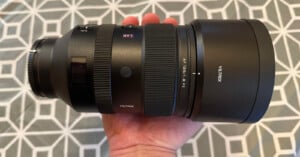
This morning, multiple blogs and YouTube channels published their reviews of the new Viltrox 135mm f/1.8 Lab lens for Sony E-mount cameras. PetaPixel has a unit in hand but chose not to review it because of an issue Viltrox made us aware of.
Earlier this month, the star of the new Wicked movie Cynthia Erivo shared that she was livid with a fan-edited film poster that more closely resembled the poster for the popular Broadway musical show of the same name.
Over the weekend, Meta's official Threads account posted a series of AI-generated images of major cities with the Northern Lights overhead along with the line, "You missed the northern lights IRL, so you made your own with MetaAI." It's a stark reminder of the contempt Meta, and much of big tech, have for artists.
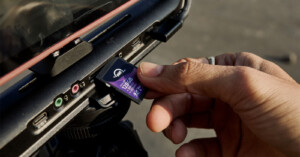
Yesterday, Moment announced the SuperCage: a smartphone cage system with integrated USB-C and an SD card port. That might lead some mobile filmmakers to believe they can use their existing memory cards to take advantage of the iPhone's ProRes Log capture, but as PetaPixel has written before, it's not that simple.
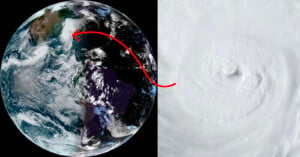
While browsing Reddit yesterday, I came across a gorgeous photo of Earth that had been downloaded from the NOAA's GOES-East orbital satellite. Looking more closely, I realized the NOAA was uploading a new, 470-megapixel photo every 10 minutes.
At PetaPixel, we've been covering generative AI advancements pretty heavily over the last two years for two major reasons. One, the technology is becoming inextricably linked to the software we use to edit photos, and two, it simultaneously represents an existential threat to the art of photography.
The iPhone 15 Pro series and the new iPhone 16 Pro series offer really gorgeous video capture capability, especially thanks to the addition of ProRes Log. The standard video capture suffers from oversharpening, but the log footage doesn't. But the log footage takes up a lot of storage, which means some creators might be tempted to use SD cards.
Earlier this week, Lexar announced a new SD 8.0 card that promised read speeds up to 1,700 MB/s and write speeds up to 1,000 MB/s, which is leaps and bounds faster than the all-metal SDXC cards it announced alongside them. As great as that sounds, this card is not fully compatible with anything and that speed will never be fully realized.
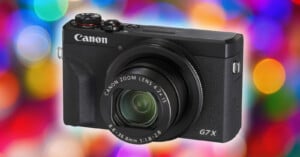
Point-and-shoot cameras are having a moment right now, but many now-popular models have been long forgotten by manufacturers. Cameras are selling with high markups on eBay and used marketplaces, and the latest generation of pocketable compact models from 2019 are widely sold out.
Last week, Blackmagic announced DaVinci Resolve 19, an upgrade to the popular video editing software that added over 100 new features. It's just the latest example of how the editor has become so reliable and feature-complete that it can't be ignored, even by direct competitors.
People are turning to ChatGPT to rate their Instagram profiles but asking the AI chatbot to be as mean as possible.
Since digital image editing tools like Adobe Photoshop hit the scene in the late 1980s, there have been heightened concerns about whether photos can be trusted. This long-time worry has become an increasingly common refrain among artificial intelligence's most ardent defenders, but it doesn't serve as a sound defense against criticisms of AI.
There is a widely held belief that AI images pose a danger to society. The technology is able to create fake images that can pass as genuine creating opportunities for bad actors to spread misinformation.
Pretty much as expected, Google leaned hard on the AI capabilities of the Pixel 9 series as selling points over major hardware improvements (a nice new design notwithstanding), but its implementation of these -- especially the generative AI additions -- lacks anything close to the proper levels of disclosure they needs.
Last week, Google updated its agreement with "Team Pixel" members to stipulate that they weren't allowed to support any other smartphone brand or else risk ejection from the platform. Because many in that program considered themselves reviewers, it exposed a major disconnect between how many perceived themselves versus how Google perceived them.
This week, PetaPixel published a podcast where the entire premise was simply posing questions provided by photographers to Adobe. But just the act of publicizing those answers immediately turned some viewers off, showing a huge number need to see action, not words -- if anything at all will work at this point.
We have been extremely skeptical of AI tools, especially as they relate to photography. But today during the launch of the Pixel 9 Pro, Google said its latest round of Gemini-powered AI would be actually helpful and after seeing some of what it can do, we might agree.
Starting earlier this year with the Samsung Galaxy S24 launch, the companies behind the most popular smartphones seem to be dead-set on using AI features as selling points for new hardware. Much of it will be free to start with, but eventually everything comes with a cost.
Yesterday, Ricoh announced the G900 II and G900SE II cameras. Designed for use by businesses, they come packed with multiple security enhancements including a password-locking option that should be a standard feature in every camera.
This past March, my dad Thomas Schneider passed away. He left behind a few things including a silver money clip, an Omega Speedmaster, and two cameras: a Nikon F and a Nikon FTN.
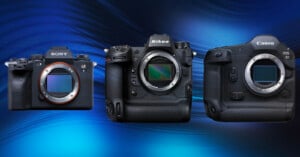
After today's initial testing of the Canon R5 Mark II sensor by DPReview, it's becoming increasingly apparent that camera makers -- namely the big three in Sony, Canon, and Nikon -- are not only willing to, but happy to, trade still photo image quality for other benefits.
There's a clear need for a consistently effective way to tell if an image is fake on news and social media. However, current implementations of fake-detection technology have missed the mark and can potentially undermine the more effective tools that will undoubtedly arrive later.
AI-generated headshots are now a thing. Tech companies can offer hundreds of "professional" images for just $10. The question is: Should photographers be concerned?
In an opinion piece I authored last weekend, I wrote: "Attracting and supporting professional shooters should be the priority." A commenter asked what I meant, since pros are not nearly as numerous as average photographers, so why do they matter more?
On Tuesday morning, a day before the R1 was announced, I was finalizing our coverage and looking over the materials Canon prepared. "The Canon EOS R1 is Ahead of the Game," a header in the press release promised. I scratched my head in confusion.
As with any laptop review at PetaPixel, we run through various benchmarks to gauge overall performance. The Razer Blade 16 (2024) and Lightroom Classic proved to be something of a mystery in the process, yielding unsatisfactory results that required further investigation.
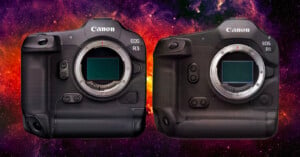
In this industry, perception matters -- a lot. Side by side, spec for spec, the Canon R1 is obviously improved versus the R3 but not to the degree that feels like an entirely different camera line.
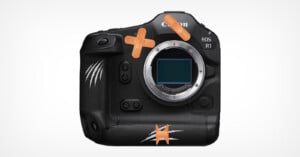
In some of PetaPixel's images of the Canon EOS R1, you may have noticed that the logo wasn't visible. In some cases, that was due to electrical tape blocking it, which is common practice for pre-release hardware that may be seen in public. In other cases, it's because the "R1" logo actually fell off.
I was a minor photojournalist once. I wasn't taking iconic photos and nobody cares about my body of work. But I will tell you two things: I loved it and I didn't get paid very much.
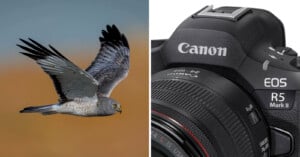
What makes a great wildlife camera? Excellent image quality, lots of megapixels, strong autofocus performance, fast shooting speeds, robust build quality, and access to great telephoto lenses. The new Canon EOS R5 Mark II checks all these boxes, and then some.
Regardless of the complex cultural, social, and political impacts of the attempt on former president and 2024 election front-runner Donald Trump's life, the event has left an indelible mark on the photography world and offers a chance to consider how society consumes, shares, and thinks about images.
Ricoh has experienced much success in the compact digital camera market with its GR series. Drawing on a lengthy heritage of its GR 35mm film cameras, the latest digital version is the popular GR III, and within that, is the GR III HDF.
In December, PetaPixel published a deep-dive on the wild west of CFexpress cards, highlighting how many were outright ignoring vital portions of the specification that allowed the cards to work properly with Sony cameras. Today, the story is very different.
Since Nikon announced the Nikkor Z 35mm f/1.4 lens last week, I have been asking myself -- and Nikon -- a lot of questions about it. What about the 35mm S-Line lens on the roadmap? Is this new lens a sign of affordable f/1.4 lenses to come? What's Nikon's overall strategy?
Adobe has had a rough go of it lately and as a result, more photographers have been asking what legitimate options exist that can replace Photoshop and Lightroom. I've been testing a few and while they're all capable performance-wise, I'm left feeling spoiled by Adobe's absurdly fast support for new camera RAW profiles.
For the past several weeks, photographers have been expressing a recurring sentiment online: the lack of supply for highly sought-after cameras like the Fujifilm X100VI, Ricoh GR III, or Pentax 17 is actually a strategy to "build hype." That's absurd.
When I first reported on Alexandra Conder, AKA the sepia tone bride, the situation was largely contained to a discussion on TikTok and Threads. Since then, however, The New York Times and a host of other publications have taken up the story.
Recently, Instagram has been rolling out its "Made with AI" tag which ostensibly flags AI-generated images on the platform but it has been enraging photographers after flagging photos that are not AI-generated.
Some YouTube personalities aren't satisfied with Apple's imaging products and have reiterated their desire to see the company make a standalone camera with interchangeable -- or even fixed -- lenses. Here's why Apple won't do it.
The iPad is quickly becoming a more viable tool for creators to use as their main workflow solution. The recent introduction of Final Cut Pro for iPad has been a big part of the improvement to making the iPad more useful for my own work. Now, Apple released a new version, along with Final Cut Camera for iPhone, which brings some thoughtful enhancements to the table.
Earlier this week, Nikon announced the Z6 III to considerable fanfare, and for good reason. It packs so many features into a $2,500 system that it manages to be a camera that is more than a compromise, even at that price. But the Z6 series has always been accompanied by the Z7 series yet this time, that wasn't the case.
I’ve been in the camera review business for over 15 years and in that time I’ve been fortunate enough to have tested and taken photographs with countless cameras, spanning a wide variety of designs and intentions. Curiously, as I prepared to review the Pentax 17 it occurred to me that I had never once reviewed a new production 35mm film camera in all that time.
Arguably, the Sony a7 IV has been the top dog in the mid-range camera space since it released in late 2021. And it's an excellent camera, as is 2023's Canon EOS R6 II. However, the Nikon Z6 III does something those cameras haven't: be more than a compromise.
Last week, Canon clarified that while the aperture control rings on its 24-105mm f/2.8L Z and 35mm f/1.4L VCM don't work in photo mode with its existing cameras, that will change with any camera announced after June 2024. That's really weird.