SD Cards Aren’t Going Anywhere Anytime Soon. Here’s Why
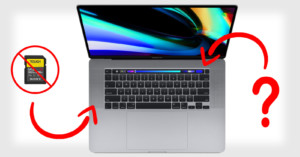
A few weeks ago, I wrote an article about Apple's latest laptop and a wish list for things that weren't included in its design. One of those things was a return to the built-in SD card reader.
A few weeks ago, I wrote an article about Apple's latest laptop and a wish list for things that weren't included in its design. One of those things was a return to the built-in SD card reader.
For Canon, Nikon and Panasonic, 2018-2019 was the first year where they all truly "went for it" when it comes to mirrorless. All three released full-frame mirrorless cameras, and all three seemed to have different priorities with those releases. In this three-part series, we're looking at each of these companies in their first year and evaluate where each of them stands today in what is now a very competitive market.
Quite often when I’m browsing my Facebook photographic communities I see posts from people who are depressed because they have lost interest in their hobby. They usually say that they can’t work up the enthusiasm to get out there and photograph anything and that they haven’t even picked up their cameras in weeks, months or even years. They have lost their ‘phojo’ and they wonder if they’ll ever get it back.
After 14 years as a professional photographer, I've decided to become a real artist. The pieces above, which I’ve birthed over the past 72 hours, show what I’m evolving into as a creator. I present to you my Suspended Sustenance, Part 1 (foodstuffs, wood, paint, tape, 2019).
It goes without saying that if you want to get better at something you have to practice. Simple, right? The thing is, that unlike more structured pursuits such as sports or music, the idea of practicing street photography seems a bit hard to wrap one’s head around.
Photographer and occasional PetaPixel guest author Robin Wong recently published a very interesting take on a question that most people thought was settled: why is the camera market shrinking? While most people would just blame the rise of smartphones and call it a day, Wong shares a more nuanced, and possibly more accurate, list of reasons.
Telephoto lenses and landscape photography may seem an odd pairing. Telephotos are more at home in the hands of wildlife, sports, and portrait photographers. They’re used to get close to the subject, help to compress perspective (cue the comments on "lens compression is a myth") and isolate distracting elements.
Photokina is keen to remind you that (1) it is still the industry's "leading trade fair," and (2) trade fairs are still relevant, even if Nikon, Leica, and Olympus dropped out of Photokina 2020. In a press release published last night, the show quotes Canon, Sony and Panasonic executives as they "confirmed their commitment" to the 2020 expo during conversations with Photokina organizers in Tokyo.
Ah, the night, what a wonderful time to go out and do some street photography! As a photographer who got his start in the streets of Tokyo, it was inevitable that I would end up photographing mostly at night.
For Canon, Nikon, and Panasonic, 2018-2019 was the first year where they all truly "went for it" when it comes to full-frame mirrorless. All three released full-frame mirrorless cameras, and all three seemed to have different priorities with those releases. In this first of three segments, we're going to take a look at each of these companies in their first year and evaluate where each of them stands today in what is now a very competitive market.
There is a wealth of information on the internet about composition—endless blog posts about visual rules, geometric concepts, and photos with all kinds of lines and shapes drawn over them to the prove the point. But all of this information focuses on the "what" of composition rather than the "why." A photographer must stop and ask themselves: "why even bother following visual rules?"
My son texted me the other day asking for my meatball recipe. It’s a rarity that he texts me for recipes, so I was thrilled to my toes. About a week later, my daughter texted me asking for my fresh pumpkin pie recipe. Again, joy spread through my body as I thought to myself, “Finally.”
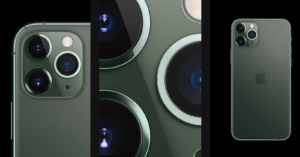
Should you buy an iPhone 11 Pro? That’s a big question many people have had on their minds since Apple recently released their latest flagship smartphone that contains 3 different rear-facing cameras. However, a thorough answer to that question isn’t cut and dry.
I used my Nikon D610 to take the last photograph of my mom before she died. I’ve documented my children's lives nearly everyday. The rubber grip is wearing thin in spots. A rubber tab on the bottom is chronically flapping loose; my fingers push it back into place out of habit. This camera has become an extension of me, and I have grown to love it. But it has not always been that way.
I know how easy it is to be upset at Adobe. Trust me, I feel like I'm in a constant state of that feeling for one reason or another, and for years I have been very hard on them repeatedly.
Today marks one year to the day that my book went on sale. It’s a very personal project that means a huge amount to me. I wanted to write a post that not only reflects on the past year since the book became available, but also on the project itself. It took a huge amount of work to get to that stage in the first place.
Photographer Joseph Cristina thinks the era of "good enough" is ending, and that's great news for photographers. In a recent vlog, Cristina explains why he thinks professional photographers are going to benefit from a "return to quality" as more and more clients get burned by sub-par work.
Before I going into this one, let me first share a little recap about my background with Apple. A number of years back, I was in love with the iPhone 4S. I felt it was a phone made for photographers and supported it wholeheartedly, going so far as doing speeches at Apple stores about how their products catered to my workflow.
Last Wednesday, Apple announced the new MacBook Pro with a 16-inch Retina display. I have been testing this new laptop computer (locked behind closed doors) for the last couple of weeks and am excited to share my findings with all of you.
I want to start this off by saying two things: one, this isn't a review or hands-on impressions as I have not used the computer (PetaPixel's hands-on coverage is forthcoming) and two, I am an Apple power user and have been since I was indoctrinated in high school.
It’s been around a year since I switched to photographing on 35mm film for the majority of my work. Beyond a couple of false starts and some misconceptions, I think I’ve adjusted well, and I’m really happy to have made the change. Now that I have a good amount of work to reference, I’ve been thinking a lot about some of the adjustments I needed to make in order to adapt to a film mindset.
Patrick Hall from Fstoppers and Pye Jirsa from SLR Lounge recently sat down for an in-depth conversation about how photography is changing in 2019. In a fascinating and insightful discussion that lasts almost 45 minutes, they ultimately try to tackle one question: is photography as we know it dying?
Getty Images has announced that it will be transitioning all of its creative stock photography offerings to a Royalty Free licensing model and ditching Rights Managed licensing entirely—a move that will be more convenient for customers, but worse for photographers.
Photography can be an expensive pursuit, and the cost of things (and the pressure to buy them all, buy them new, and buy them now) can get in the way of putting that money in better places.
For the last four or five years, I have tried to produce one annual workshop for aspiring architecture and interior photographers. While I hope that they are technically helpful and the students come away with new skills and knowledge, one thing that I’ve noticed is that every year each workshop inevitably transforms into a session of group therapy for all involved.
Yesterday, I was at the Children's Hospital of Philadelphia shooting for Flashes of Hope, a wonderful non-profit organization that gets photographers like myself to volunteer their time and create portraits of kids who are literally fighting for their lives. These portraits are given to the families for free. Flashes of Hope is a truly wonderful group.
At Adobe MAX 2019, Chief Product Officer Scott Belsky announced the Content Authenticity Initiative – a nascent and ambiguously defined way for attribution to travel with an image and allow consumers to know, in the words of Adobe VP Dana Rao, that “the content they’re seeing is authentic.”
Up until a few weeks ago, I had never used a Leica. I don't think I'd ever even held one or knew much about them other than the occasional story of an outlandishly expensive iteration on a camera previously on the market. I had preconceived notions about the kind of company Leica was, about their goals, and about their strategy. I expected very little, regardless of what they were going to show me.
Commercial photography seems so glamorous and it certainly can be. But I’ve found that a few things were really bothering me over the last several years. Don’t get me wrong: I’m always crazy honored when any client anywhere chooses to hire me to photograph something for them. I realize that a client has hundreds if not thousands of choices when it comes to choosing a photographer. So I’m not bitter, I’m thankful. Always.
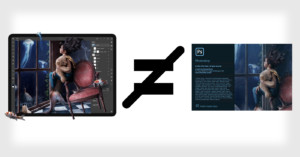
Adobe has launched Photoshop on the iPad, a fully rebuilt application on the real base of Photoshop that purportedly runs smoothly and efficiently despite being on the pseudo computer that is the Apple tablet. Normally, this achievement would be seen as a gigantic accomplishment, but multiple stories over the past year have put a damper on what would otherwise be a celebrated announcement.
Over four years ago in 2015, when we were all still optimistic about the Canon 5D Mark IV, Sony released the a7R II. This was a 42.4MP full-frame camera that also offered the ability to shoot 4k video using the full width of the sensor. This camera took many photographers by surprise because almost no one was expecting Sony to release such a camera. Sure, it had lots of flaws and it was somewhat of a beta release; but still, it put Sony on the map.
One of the most unintentionally useful influences on my photography has turned out to be the time I’ve spent playing computer games. Some photographers use cinema as a learning tool to observe the way cinematographers and DOP’s use their cameras to capture a scene. This can be a great source of inspiration, but I think it can lead to some photographers heading out and seeking to recreate shots or aesthetic styles (color palette, depth of field, grain, etc) rather than capturing anything …
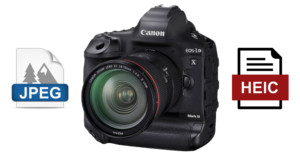
A report by Digital Camera World earlier this week initially claimed that Canon was ditching JPEGs, replacing them with 10-bit HEIF files in the upcoming Canon 1D X Mark III, and possibly beyond. And while Canon eventually clarified that they are not getting rid of JEPG, the format may be (ought to be?) on its last legs.
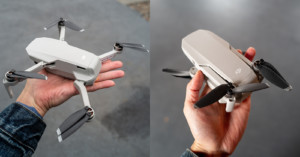
Consumer drones were first released in 2010, and over the years, the technology, size and price have improved considerably. The DJI Mavic 2 Pro, for example, folds up to the size of a brick, features a Hasselblad-badged 20MP camera, and cost about $1550. But unless you’re a photographer who specializes in aerial photography, the cost is still steep for a “see if you like it” approach.
The DUGA over-the-horizon radar was one of the most important elements of the early warning system against an American nuclear attack on the USSR. More expensive to build than the nearby nuclear power plant, the complex consisted to two massive sets of receiving antennas located in Chernobyl and one transmission unit—which no longer exists—60km away in the town of Lubech-1.
Lightroom is misunderstood and under-utilized by many photographers. Hardly a day goes by without someone asking about how to arrange their catalogs, and great swathes of people replying that you should use a new catalog for *every* *single* *shoot*. A clear indicator that they’re missing out on some incredibly useful tools Lightroom has to offer!
Taking a look at popular images featuring food on Instagram, you'll see a pattern. Andrew Scrivani, a New York food photographer veteran puts it bluntly: "They are almost exclusively shooting from the top. Almost everything is a round dish of food and in a square, because Instagram is square, and a lot of it is on white or very light backgrounds, and white or very light plating, and consistently less and less propping."
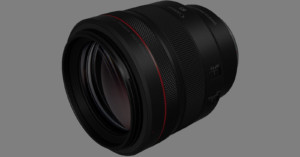
Does that photo of the new Canon 85mm f/1.2L DS IS lens look a bit dark to you? Well, that's because the new Defocus Smoothing coating Canon applied to its latest prime lens isn't without its tradeoffs. Though the Defocus Smoothing that helps improve the look of bokeh in photos, it's going to cost you a stop and a half of light wide open.
The Canon 1DX Mark III is shaping up to be one of the most exciting mirrorless cameras on the market, matching or outpacing the current industry standard in the Sony a9 and a9 II. Yes, you read that right: if the upcoming 1DX Mark III only has the features that were teased yesterday, it will be a killer mirrorless camera that just happens to have a mirror.
The release of the Fuji X-Pro3 this morning came as a bit of a surprise to me; not what was unveiled, but the general reception to it. So many comments (yes, I know you're not supposed to read the comments) of ridicule and annoyance were not what I was expecting. And as I read them (which I promise not to do again) I noticed an underlying theme that was a bit worrying.
Let me get this clear right from the start: this is not a Nikon bashing post. Rather, it’s a Fuji X Series love story.
Right now if you head over to Kickstarter and search for "camera bag," three active choices pop up. That's three more camera bag ideas vying for your attention in addition to the tons that have hit Kickstarter over the years and the hundreds more made by larger brands like Lowepro, Manfrotto and Think Tank.
A year or so ago, I wrote an article on why I switched from Nikon to Sony. A few people asked why I didn’t move to the Nikon mirrorless system. And the answer was simple: I didn’t want to risk shooting a wedding with a single memory card slot.
It can be very easy to arbitrarily limit oneself by genre; I think the effect this has on the mindset of a photographer can potentially really damage the quality of the work they look to produce.
Recently I came across a blog post that essentially blamed professional photographers for creating boring stock photos, and that boring stock photos are the key reason that companies should be using User-Generated Content.
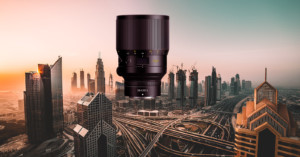
In 2010, the world's tallest skyscraper was completed in Dubai. Standing a staggering 2,722 feet tall, the Burj Khalifa towered over the next tallest building by over 700ft. It was a feat of engineering, and a beautiful and shining addition to one of the most impressive skylines in the world. But they didn't consider one issue: feces. In this way, the Burj Khalifa and the new Nikon Noct lens have something in common.
Two months ago, popular photographer and digital artist John Wilhelm's Facebook was hacked. Below, he shares the step-by-step story of how the hack happened, and how the hacker used his very popular Facebook page to scam hundreds of his followers out of their hard-earned money.
Photography offers an escape unlike any other. It allows us to capture moments, create moments, and interpret the worlds we see through a lens. We document, we study, we create art, and for me, this was lifesaving.
It is now exactly 2 years since I started uploading stock photos to Unsplash, the "slightly" controversial stock photo platform where everything is free for everyone. I thought this would be a good occasion to share what I've gained from my presence on Unsplash.
While reading the reaction to our coverage of the Sony a9 II announcement yesterday, one comment really stuck out to me as an excellent summation of a subject that's been buzzing around my mind for about a month now: "Sony reaching the edge of feasible. Now they don't know what to add anymore."