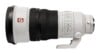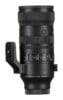
Sigma has finally released a pro-level, $1,499, 70-200mm f/2.8 for mirrorless cameras and has proven that it can at least compete with the other lenses available, but the market is getting a little crowded and the competition is fierce.

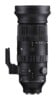
Sigma has finally released a pro-level, $1,499, 70-200mm f/2.8 for mirrorless cameras and has proven that it can at least compete with the other lenses available, but the market is getting a little crowded and the competition is fierce.
If you are looking for a versatile telephoto lens that delivers some of the best image quality possible in a lens, look no further.
Xiaomi proves there’s a way to cut under a certain price yet still deliver an excellent, fully-featured camera array.
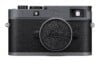
The M11-P would make an excellent art photography camera, wedding camera, or photojournalist tool that protects the creator's files from copyright infringement and maintains its journalistic integrity.
The new features make a lot of sense by themselves but feel somewhat at odds when paired together in one camera.
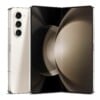
If I were to pick one foldable to buy, it would be the Open, simply because it feels great to hold and carry, with software that will surely get even better.
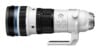
If you are serious about wildlife and sports shooting on an OM System body, the M.Zuiko Digital ED 150-400mm f/4.5 TC1.25x IS PRO is the one to get.
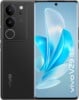
The V29 is a fine phone but I’m not entirely clear where it fits in, or what it’s truly replacing. It's too similar to its most recent predecessor, so for roughly $500, you can find alternatives that bring more to the camera array.
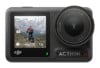
I bring the DJI Osmo Action 4 everywhere, and you should too.
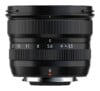
This is an excellent choice for photographers looking to pack a single lens instead of multiple lenses.
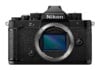
It may look like a blast from the past, but inside it is a real glimpse into the future for Nikon.
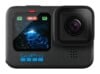
What we have is essentially a minor evolution of the Hero11.
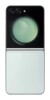
Image quality is simply not up to the standard of today’s $1,000 phone, and were it not for the foldable design, the Flip 5 would be a flipping disappointment by that metric.
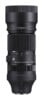
The Sigma 100-400mm is not a bright lens by any stretch and there is some compromise there, yet it provides some excellent sharpness and good overall optical performance without breaking the bank, or the arms.
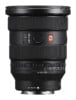
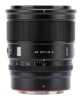
The Sony 16-35mm f/2.8 G Master II makes such a strong showing that it's hard not to recommend it to almost anyone.
Should you buy it? Only if the idea of a foldable phone works for you in other ways because the camera is not the main reason to buy this device.
The wide aperture, quality of manufacture, optical sharpness, and fast focusing speak volumes.
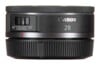
This lens has some ups and downs, but it does provide an ultra-compact and much needed wide angle range to the RF system.
Should you buy it? Yes. It's a sharp lens with nice construction and a take-anywhere size.
The Nikon Z MC 105mm f/2.8 VR S lens is an incredibly versatile lens that can handle pretty much anything you can throw at it.
Should you buy it? No. If we judge this camera as a way to appeal to the smartphone crowd like Canon designed, it falls short.
If you’re looking for a range of focal lengths for your drone photography and videography, the Mavic 3 Pro and Mavic 3 Pro Cine are your best choice.
If you need something wide, fast, performant, and cheap, the Viltrox AF 16mm f/1.8 FE does not disappoint.
The X-S20 has become a very powerful hybrid camera but still retains what made the X-S10 such a great camera.