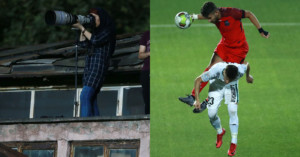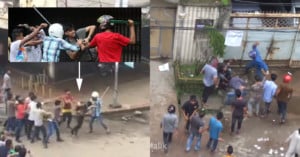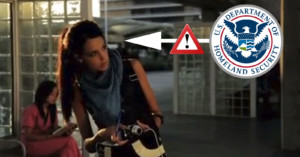
The ACLU writes that there’s a 100-mile-thick buffer around the borders of the US called “The Constitution-Free Zone,” in which electronic devices (e.g. laptops and cameras) can be searched and seized without suspicion. Wired writes that a man’s laptop was seized in this zone in 2010 and returned 11 days later:
At an Amtrak inspection point, Pascal Abidor showed his U.S. passport to a federal agent. He was ordered to move to the cafe car, where they removed his laptop from his luggage and “ordered Mr. Abidor to enter his password,” according to the lawsuit.
Agents asked him about pictures they found on his laptop, which included Hamas and Hezbollah rallies. He explained that he was earning a doctoral degree at a Canadian university on the topic of the modern history of Shiites in Lebanon.
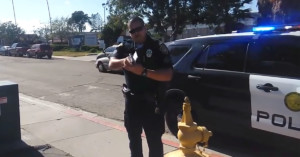
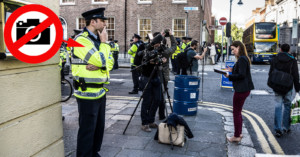
The US Department of Justice issued a statement this past Sunday that confirms the fact that the 1st, 4th, and 14th Amendment protect citizens’ rights to photograph police in public places. Read more…
Paparazzi photography is a topic that has come up quite a bit in recent days, with most of the stories putting the camera wielders in a pretty bad light. Joerg Colberg over on Conscientious has a thought provoking piece on how photographers’ rights seem to be trumping basic human decency — with the blessing of our culture.
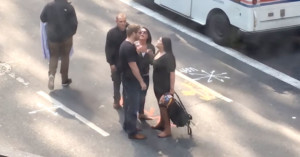
I am not going to actually show the photograph I am going to write about. [It] shows a young woman in the center of the frame who is surrounded by six male figures [...] five are photographers. They’re photographers we call paparazzi. The young woman – actress Sienna Miller – is caught “mid-action”: Her posture looks defensive, her arms are raised, in particular her right one, as if to defend herself from the paparazzo at the left edge of the frame whose gaze is centered on her [...] The activities that produce photographs like the one I am talking about here are widely accepted.
If you did not know anything about paparazzi your impression might be very different: A young woman surrounded by young men, in a very defensive posture, looking terrified – that’s imagery we usually attribute to assault, to the presence of physical or emotional violence [...] Does our right to make or take any photograph really trump people’s right to live dignified lives?
Photographer, blogger, and photographers rights’ activist Carlos Miller has made headlines quite a few times over the past few years with his legal rumbles with authorities over photography in public places. Miller, who often instigates the disputes for the purpose of bringing photographers’ rights into the spotlight, recently had another big confrontation with authorities in Miami (it’s not the first time it has happened).
The video above is Miller’s documentation of the incident. He says he was “attacked, choked, suffocated and handcuffed by 50 State security guards” for shooting photos and video on the Miami-Dade Metro rail this past Sunday night. Read more…
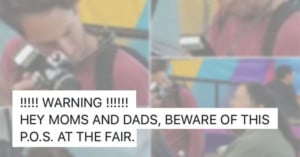
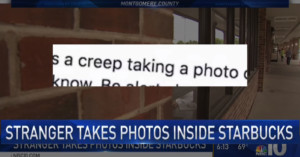
Well, this can’t be good for photographers’ rights: An anonymous man over in Seattle, Washington is causing a stir in his area and on the web by walking up to random people in various locations — both public and private — and sticking a camera in their faces to film them. When asked to explain his actions, he simply responds in vague statements such as “It’s OK, I’m just recording video.” Read more…
A 16-year-old aspiring journalist named Jakub Markiewicz was arrested last month at the shopping mall Metropolis at Metrotown, the 2nd largest mall in Canada. After photographing security guards arresting a man, he was unable to comply with multiple demands to delete the photographs he had taken… from a film camera. Read more…
The National Press Photographers Association announced this week that it will be joining a major lawsuit filed against NYC and the NYPD for civil rights violations during the Occupy Wall Street protests. Read more…
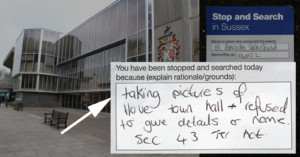
Bad news for photographers in Southern California: the Los Angeles Police Department issued a notice regarding its official terrorism handling policy earlier this week, and the document still identifies photographers as potential terrorists. The intradepartmental correspondence, sent out by the Chief of Police, warns officers about the following:
Photography. Taking pictures or videos of facilities/buildings, infrastructures or protected sites in a manner that would arouse suspicion in a reasonable person. Examples include taking pictures or videos of ingress/egress, delivery locations, personnel performing security functions (e.g., patrol, badge/vehicle checking), security-related equipment (e.g., perimeter fencing, security cameras), etc.;
Observation/Surveillance. Demonstrating unusual interest in facilities/buildings, infrastructures or protected sites beyond mere casual or professional (e.g., engineers) interest, such that a reasonable person would consider the activity suspicious. Examples include observations through binoculars, taking notes, attempting to measure distances, etc. …
The New York Times has published a great interview with Michael H. Osterreicher, the general counsel for the National Press Photographers Association and the editor of the organization’s advocacy blog. In it, NYT Lens Blog co-editor James Estrin asks Osterreicher about photographers’ rights and the trend of people being stopped while shooting public locations. Read more…
One of the common reasons given for being wary of photographers is that terrorists commonly use cameras as part of their information gathering tactics prior to devastating attacks.
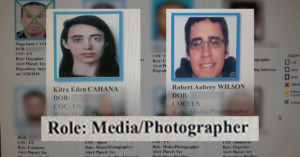
The disconcerting video above is a terrorist prevention video that was funded by the Department of Homeland security and uploaded to Houston’s city website back in January 2011. Starting at 1:42, it attempts to convince people that photographers may be potential terrorists, and that the police should be called if one appears to “hang around for no apparent reason.” Read more…