Police Can Trace Cameras Thanks to Sensor Imperfection ‘Fingerprints’
Computer scientists at the University of Groningen have created a system to analyze the noise produced by individual cameras to help law enforcement fight child exploitation.
Computer scientists at the University of Groningen have created a system to analyze the noise produced by individual cameras to help law enforcement fight child exploitation.
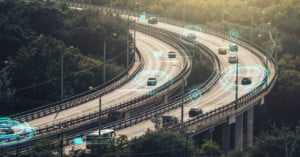
Driverless vehicles have been tested on public San Francisco streets for several years, but a newly revealed training document shows the cameras that allow them to avoid obstacles are also being used by the police to surveil the public.
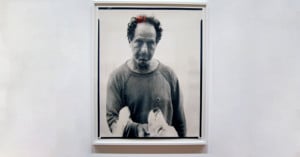
Photographers are often viewed with suspicion by police, and there are regular headlines about people being harassed and detained for simply shooting photos. However, being stopped by police for this type of "suspicious" behavior is not an issue unique to the digital age. Renowned photographer Robert Frank was even jailed for three days while driving through Arkansas in 1955 as he shot his famous photo book The Americans.
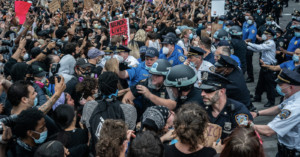
A group of five photojournalists who were arrested and or beaten during last year's protests against racial injustice has sued the NYPD in an attempt to stop what they call egregious and repeated violations of journalists' right to record police activity on public streets.
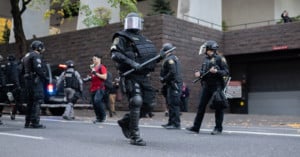
Every police officer in a crowd-control unit in Portland has resigned from the squad after one of its members was indicted on an assault charge for "excessive and unlawful" force against an activist photographer.

The NPPA has announced that it will instruct police, first responders, and journalists across the United States about citizens' right to record police and officials who are carrying out their public duties.
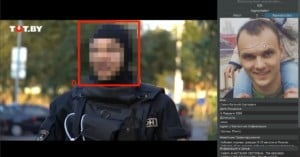
A Blarus-born digital artist named Andrew Maximov recently went viral after posting a video that shows how it is possible to "unmask" riot police who are violently cracking down on protesters in his home country, even if the only part of their face that is visible is their eyes.

As New York City -- the US epicenter of the pandemic -- continues to battle the coronavirus, mayor Bill de Blasio is now asking New Yorkers to report people and businesses who are breaking social distancing rules by photographing them.
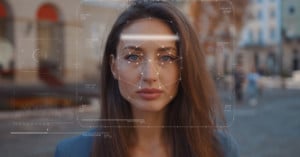
Facial recognition is an incredibly useful consumer tool for organizing our burgeoning photo albums. Companies like Google and Apple have slowly integrated machine learning algorithms into their consumer photo products, which allow you to search by keywords without the need for manual tagging, or to simply click on a face to see more photos of that person.
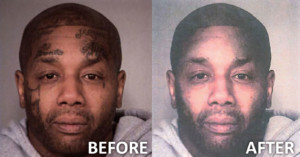
Police departments aren't often accused of unethical Photoshop manipulation, but that's the controversy that has erupted in Portland, Oregon. The police were discovered to have Photoshopped a suspects mugshot to make his face look more like the perpetrator in a bank robbery.
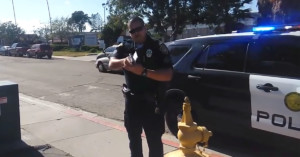
Here's a video of a disconcerting encounter between a police officer and photographer that's making the rounds online. It shows a police officer in San Diego drawing his gun on the photographer filming because he "doesn't know" what the GoPro attached to the main camera is.
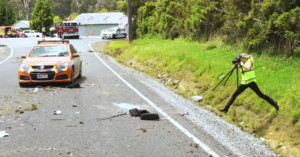
The Auckland, New Zealand police department posted this interesting 9-minute behind-the-scenes video that shows a day in the life of a Kiwi Police Photographer.
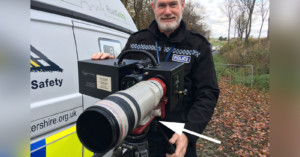
Gloucestershire police have unveiled Britain's biggest speed camera. Called the A417, the portable camera can catch drivers violating laws from roughly 1,000 meters or about 3/5 of a mile. And on the front of the camera is a Canon 100-400mm f/4.5-5.6L IS telephoto zoom lens.
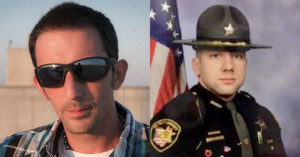
Back in September, Ohio photojournalist Andy Grimm was shot by a sheriff's deputy while photographing a traffic stop -- it turned out that the cop had mistaken Grimm's camera and tripod for a gun and decided to shoot first and look more closely later. Grimm is now filing a civil rights lawsuit against the officer and the city.
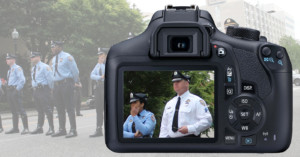
Photographing and filming police officers in public is a constitutional right protected by the First Amendment. That's what a federal appeals court unanimously affirmed this week in cases involving Philadelphia officers retaliating against citizens pointing cameras at them.
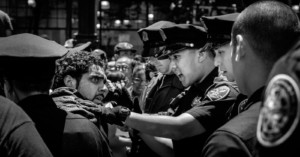
Peter Thoshinsky joined the San Francisco Police Department back in 1982. After serving as a cop for 31 years, his career in the department took a major turn: he became the official "historical photographer" for the SFPD.
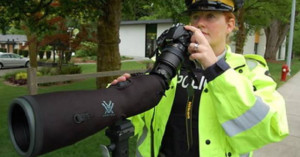
Police in Canada are using a super-telephoto camera setup to spot distracted drivers from afar and capture evidence of their misbehavior. The kit consists of a DSLR, 50mm lens, and a spotting scope.
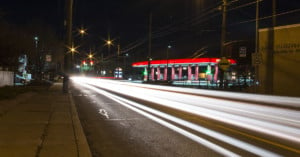
Recently I've been trying to get better at bracketing, where you take overexposed and underexposed photos and then merge them together. It can create a very neat effect when done correctly. It can also be abused, as many photographers tend to do, which results in unrealistic looking photography.
A few days ago, I was out playing with this feature in my hometown of Cheswick, Pennsylvania, to better understand it when I was stopped by police.
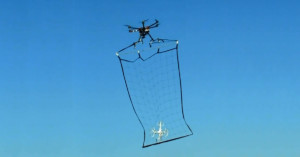
Tokyo's police force has come up with a clever solution for dealing with rogue drones: they're going to catch them using larger drones and giant nets.
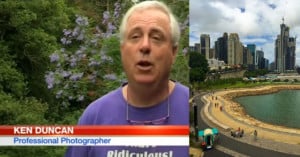
Ken Duncan, one of Australia's most famous landscape photographers, is publicly fighting for photographers' rights in Australia after being "nearly arrested" last Friday after being spotted by "Big Brother" while shooting on public land.
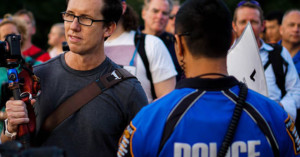
Photographer Trey Ratcliff is currently on a photo walk tour of the United States. On Wednesday, he visited Atlanta, Georgia, and led a large crowd of photographers on a route through the city. While strolling through Centennial Olympic Park, however, the group was confronted by police officers and told that their photography wasn't allowed in the public park.
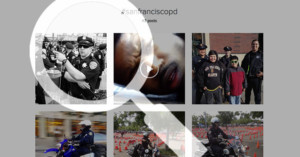
Over the past several years, there have been a number of arrests that have resulted from photos posted to Instagram. It seems that oftentimes criminals can't resist sharing photos of their illegal activities online for everyone (including police investigators) to see.
Perhaps in response to this strange trend, the San Francisco Police Department is now employing at least one "Instagram officer" who patrols the pages of Instagram in search of lawbreakers.
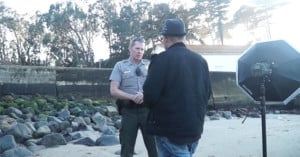
Photographer Jason Lanier is on a mission to end "discrimination against photographers." He just posted the video above showing two encounters he recently had with law enforcement while doing a photo shoot in San Francisco. In both cases, the officials noticed his "nice" camera and high-end equipment and questioned him to see if he was shooting commercially without a proper permit (which can cost hundreds of dollars).
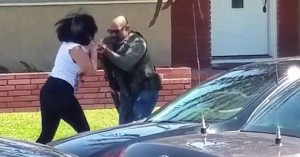
Yesterday we shared a startling video in which a woman who was pointing her smartphone camera at a group of law enforcement officers had the device snatched from her hand, smashed against the ground, and then kicked back at her. It turns out the man who did it is a deputy U.S. marshal, and the U.S. Marshals Service says it's now investigating the incident.
Here’s a video that’s causing an uproar among those who care about photographers’ rights. It’s a 53-second clip recorded …
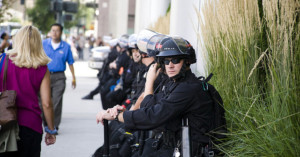
A Texas lawmaker recently attracted death threats after proposing a law that would make it illegal for photographers to take pictures of police officers from within 25 feet of them. Colorado is moving in the opposite direction.
The state is considering several bills that would increase police oversight, and one of the bills outlines punishments for police officers who interfere with people who are lawfully using their cameras.
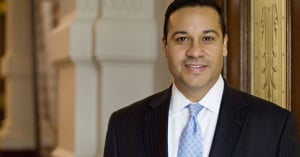
Texas House of Representatives lawmaker Jason Villalba sparked quite a controversy earlier this month after proposing a bill that would make it illegal to photograph a police officer from within 25 feet. People were so angered by the idea that Villalba has received death threats from angry members of the public.
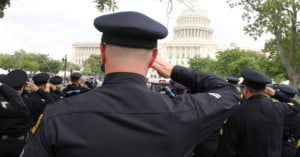
A week after Los Angeles agreed to train its law enforcement that public photography is not a crime, a bill has been proposed in Texas that would make it a crime for citizens to photograph or film police from within 25 feet of where the are.
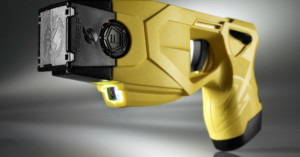
At the end of 2014, we reported that Los Angeles will be the first major city in the US to equip every officer on the street with a body camera. Now the city is announcing that it's going one step further towards making sure its cops are held accountable by the devices: newly issued Tasers will trigger the cameras when fired.
A federal judge has decided that it's okay for police officers to befriend Instagram users with fake accounts in order to gain access to photos shared through the service.