
Is the Problem of Lens Breathing Being Blown Out of Proportion?
This week, Chris, Jordan, and Jaron tackle the topic of lens breathing and whether or not it is "blown" out of proportion (pun intended) by YouTubers and lens reviewers.
This week, Chris, Jordan, and Jaron tackle the topic of lens breathing and whether or not it is "blown" out of proportion (pun intended) by YouTubers and lens reviewers.

OWC’s Thunderbolt Go Dock not only solves the problem of ports and connectivity but also provides a go-anywhere solution that creatives can use daily on their desktop or when traveling.

OWC has announced the Thunderbolt Go Dock, a fully-featured peripheral that includes multiple USB and Thunderbolt 4 ports, Ethernet, HDMI, an SD reader, and a headphone/microphone jack without needing a bulky power brick.

The term laptop is often used quite liberally by those designing computers for gamers, and that idea is perfectly encapsulated with the MSI Titan GT77. This won't fit comfortably in basically any lap, but that's the price you pay for power.

A long-running scam targets frustrated Canon printer owners who are looking for the right drivers. They find themselves on fake customer service websites that lure them into handing over cash or even control of their computers.

The Apple Self Repair Store gives tech-savvy Apple fans the tools, manuals, and parts to repair their own devices, but it may not be as helpful nor as cost-saving of a resource Right to Repair fans were hoping for.
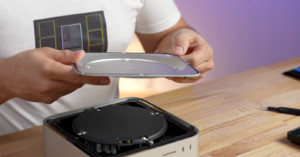
According to a pair of recent YouTube videos from Max Tech and Luke Miani, the M1 Ultra Mac Studio might actually be upgradeable, but only by Apple. The SSD is removeable, but upgrades appear blocked on a software level.

Ever since Apple moved to the M1 chip, we’ve consistently lauded the performance improvements we’ve seen. It feels like with each iteration we say “most powerful” or “surprising” in some way, but those are still perhaps the best words to underscore just how impressive the M1 Ultra in the new Mac Studio is. Because it is impressive.

Apple's newly-announced Mac Studio with its new M1 Ultra chip looks to be a juggernaut, but pretty much no photographer will need that kind of power. The base model Mac Studio is a better choice and might be the best deal for a new computer on the market.

Following the announcement of the new Mac Studio, Apple has discontinued the 27-inch variant of the iMac, leaving only the 24-inch M1-powered version launched last year as the only iMac the company continues to sell new.
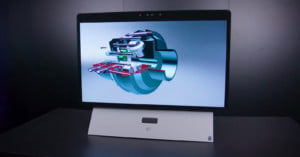
Spacial visualization company Dimenco has created what looks to be the wild future of displays with its 3D stereoscopic monitor. How does the next generation of 3D look? In short: breathtaking.

Due to the ongoing global chip shortage, Canon is finding it difficult to obtain the chips that are attached to ink cartridges that confirm their legitimacy to its printers. As a result, it has to explain to customers how to bypass its own DRM.

Following a successful launch of the original TourBox in 2018, the company is back with its follow-up: the TourBox Elite. This compact Bluetooth controller is designed to provide better control over editing tasks than can be done with a keyboard alone.
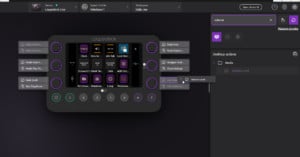
Loupedeck has released Software Version 5.0, an update for the Creative Tool and Live devices. The free update for the photo, streaming, and video editing consoles includes a simplified profile for easier streaming, native plugin support for Ecamm Live, vMix, Capture One Pro, and more.

Intel has hopes that it can win back Apple's business after the company has moved on to in-house silicon, and said that the best way to do so was to "simply make better chips" than Apple can.
Apple has announced the latest generation of its in-house M1 silicon, the M1 Pro and M1 Max chips that both build on the original chip and dramatically expand their power across multiple categories.

Some new M1 iMac owners are reporting that their computers arrived from Apple with crooked mounts. The amount that the monitors are off-kilter varies, but some are rather extreme. One YouTuber, Faruk from iPhonedo, shows that in his case it was particularly bad.

My name is Sebastiaan de With, and I'm the co-founder and designer of the iPhone camera app Halide. Some reviewers with advance access to the iPhone XS have been kind enough to share technical readouts of the new phones with our team, detailing several camera hardware specs. After some analysis, we can now give you an overview of what’s new in the iPhone XS camera hardware and its technical capabilities beyond what Apple stated at their keynote.

The Google Pixel smartphone and its "best camera ever" will soon be even more "Made by Google." The search giant just announced that it would purchase the Pixel hardware division from Taiwan's HTC in a $1.1 billion deal.
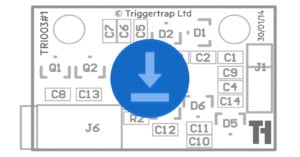
As Triggertrap continues winding down its business, their Triggertrap Mobile Dongles are becoming increasingly difficult to find. But there's some good news now: the company has decided to open source the hardware, making it is possible to build your own dongle.
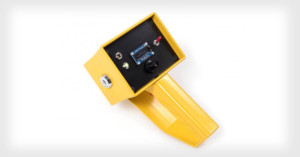
The Trophy Camera is an experimental camera powered by artificial intelligence that can only shoot images that it deems to be "award-winning."

Olympus Russia had recently posted a photograph showing the above image, which showcases a secret data screen on one of their OM-D cameras. In fact, there are three pages of data screens that provide information from how many times the camera’s shutter has been released, to how many times the flash has been fired, and much more. Olympus has since taken down the image, but the secret access code has now been outed.
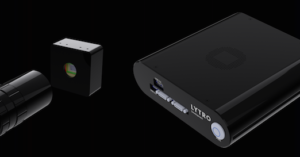
The folks at Lytro have always believed that light field technology is the future, and not just for photography and storytelling. They believe that anything with a lens and a sensor can benefit from the technology, and with today's announcement of the Lytro Platform, they're opening up their proprietary tech to anybody who wants to partner up with them and expand light field into new markets.
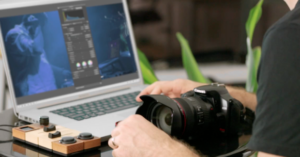
When engineers Calvin and Ashish got in touch with us to tell us about their upcoming Palette interface, we immediately got excited. That's because a lot of people have thought up ways to speed up your post-processing workflow with everything from video game controllers to MIDI controllers, but none of them hold a candle to Palette's potential.
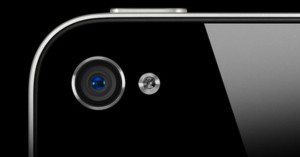
Want to take better photographs using your mobile phone camera? It helps to know what you are working with. I'll assume you already know the basics for all kinds of photography (composition, exposure, focus and DOF, shutter speed, aperture, et cetera).
Once these are set, its time to get to know your equipment, and using that knowledge to your advantage.

In addition to the Photoshop CC and Camera RAW announcements, the Adobe XD team also debuted something entirely different at the MAX conference: the company's first shot at hardware. Coming in the form of a pressure-sensitive stylus and digital ruler, the two accessories are meant to take the creative brainstorming experience and shift it from pen-and-paper to pen-and-tablet.
In the video preview above, Adobe's VP of Product Experience, Michael Gough, introduces the two products -- code named "Mighty" and "Napoleon" -- and walks you though the experience of using them.
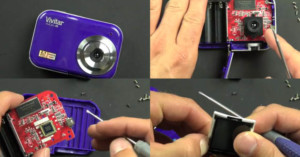
Here's a dissection video for those of you who like photography better than biology. It's a Khan Academy lesson that offers a glimpse into how digital cameras work on the inside. The camera being dissected is a Vivitar V25, a 2.1 megapixel camera that you can pick up for around $18 from places like Walmart. Although it's basically the digital equivalent of a disposable camera, the camera still shares some things in common with higher-end digital cameras. You might be able to learn an interesting thing or two about how your own camera works.
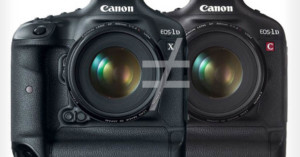
Last month we wrote that DSLR blog EOSHD had learned from at least one Canon rep that the upcoming 1D C cinema DSLR was essentially a 1D X with tweaked firmware. This would mean that the 1D X is also capable of 4K video with "no heat or bandwidth issues." However, that claim is now being challenged by Canon Rumors, which writes that the cameras do in fact have some important hardware differences as well.
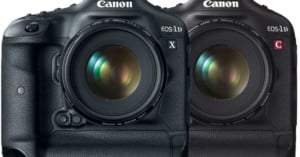
If you thought the design and hardware specs of Canon's upcoming 4K-capable 1D C are strangely similar to the company's flagship 1D X, you're right: the two models feature identical hardware loaded with different firmware. At Photokina 2012, DSLR filmmaking blog EOSHD spoke to Canon representatives, who confirmed this fact to be true.

When learning about ISO, you've probably heard that the lower the number, the lower the noise and the higher the image quality, but did you know that this isn't always the case? The reason is something called the base (or native) ISO of a camera -- the ISO achieved without amplifying the data from the sensor. This is usually somewhere between ISO 100 and ISO 200.

If you've ever wanted to know what the guts of a Nikon D5100 look like, iFixit just published a meticulously documented teardown of the camera. Aside from pointing out the various parts found in the body, an interesting conclusion the iFixit team came to was that the D5100 has a horrible "Repairability Score" of 2/10, where 10 is easiest to repair. The reason? "Approximately 4 billion screws hold the device together" (They're exaggerating, of course).
Photoshop is a pretty resource intensive program that can slow down to a crawl when you’re working with large …
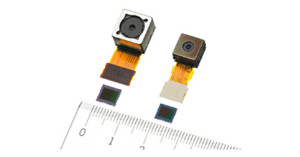
It was only at the beginning of the year that the megapixel race for cell phone cameras hit 14.6 megapixels, but now Sony has unveiled a 16.41 back-illuminated CMOS sensor that can shoot 15 frames per second at full resolution, and is capable of HD video recording (30fps at 1080p and 60fps at 720p).

An interesting story that popped up a couple days ago is that Sony …