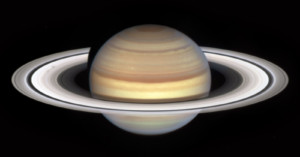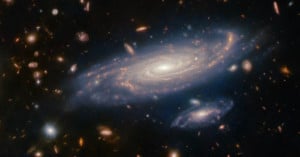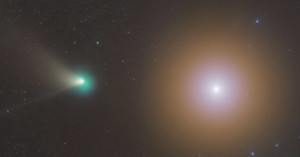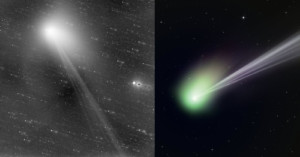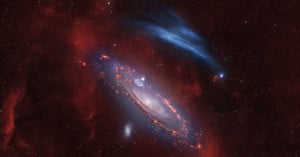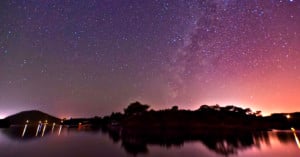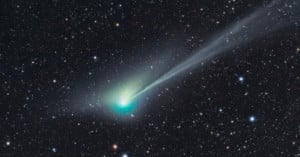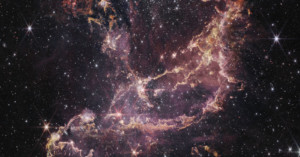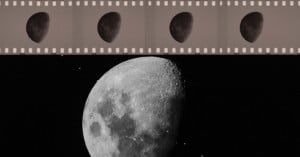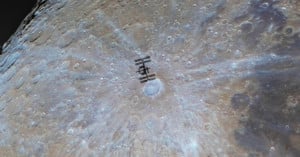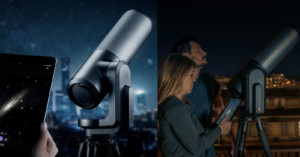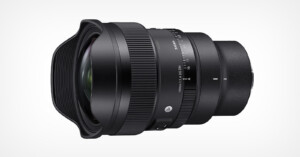
Photography is an expensive hobby as it is, but if you’re interested in astrophotography, you’re looking at adding at least one more item to your camera bag. Well, actually, it won’t fit in your camera bag, because that item is a telescope.
And when it comes to selecting your first astrophotography-worthy telescope, the tips offered in the above video by Mr. Forrest Tanaka are invaluable and very well presented. Read more…
On Friday, February 15th, 2013, near-Earth asteroid 2012 DA14 did a flyby of our planet — the closest approach ever of an object of its size (30 meters in diameter). Photographer Colin Legg of Western Australia decided to capture the close pass in a time-lapse video, and set up his cameras after midnight around 220 miles east of Perth.
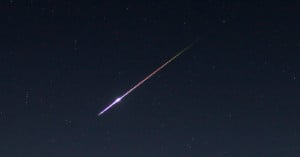
He ended up capturing the amazing video above, while captures a shooting star burning a trail across the sky while DA14 slowly travels through the shot. The video also shows how much random stuff in the sky you can see if you have eyes/cameras sensitive enough to see it. Read more…
Parallax 3D images use two photos captured from slightly different vantage point to create the appearance of depth. In astrophotography, however, the distance between human cameras and distance objects are so great that real parallax generally cannot be achieved.
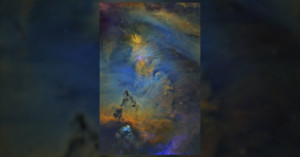
Finnish astrophotographer J-P Metsavainio has developed a brilliant experimental technique that overcomes this (kinda): he converts astrophotographs into 3D volumetric models, and then uses those models to create dazzling 3D animations of nebulae. Read more…
Alan Friedman of Buffalo, New York is an amateur astrophotography enthusiast who captures amazing photographs of the Sun through a telescope in his backyard. His highly detailed photographs show the sun in ways you never see with your naked eye. Using special filters that allow the photos to be captured without destroying his camera or his eyes, Friedman creates images of our life-giving star that look more like something you might see under a microscope. Read more…
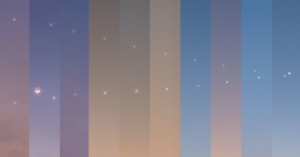
Behold, a photograph of the moon. Can you see it? No, it’s not that tiny bright crescent you see… The moon is that faint giant crescent. That tiny one to its left is Venus. Hungarian astrophotographer Iván Éder captured this beautiful photograph back in 2004 from Budapest, Hungary. Read more…
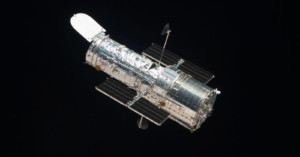
The space agencies that run the Hubble Space Telescope may have some of the most powerful photographic equipment at their disposal, but every now and then they can still use a little help from amateur astrophotographers.
Amateur astrophotographer Robert Gendler created the beautiful photograph above showing the spiral galaxy M106 by compositing existing imagery captured by the Hubble telescope with his own photos captured from Earth. Read more…
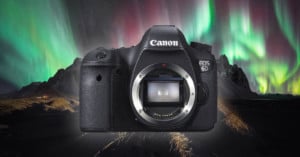
Astrophotography enthusiast Don Marcotte wanted to find out whether the Canon 6D or Canon 5D Mark III was more suitable for his area of photography, so he pitted the two cameras against one another in a few noise tests at his local camera store. He simply shot long exposures without any light (the cap was on) in order to see how much noise would show up in the frame. Read more…
Back in September, we shared the first photos snapped by the world’s largest and most powerful digital camera: the 570-megapixel Dark Energy Camera located on a mountaintop in Chile. Reuters recently paid a visit to the massive astro-camera and the scientists behind it, and created the short 2-minute piece above that offers a closer look at the unique piece of camera equipment. Read more…
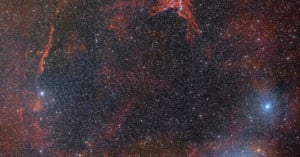
Astronomers at the European Southern Observatory’s Paranal Observatory in Chile have released a breathtaking new photograph showing the central area of our Milky Way galaxy. The photograph shows a whopping 84 million stars in an image measuring 108500×81500, which contains nearly 9 billion pixels. Read more…
An apparent meteor struck Jupiter yesterday, creating an explosion so massive that amateur astronomers looking through their telescopes her on Earth were able to see it. Amateur astrophotographer George Hall of Dallas, Texas happened to have a camera and telescope pointed at the planet at the time, and managed to snag some video footage of the fireball, which he soon uploaded to his Flickr account. Read more…