Educational

PetaPixel's editorials are in-depth stories, thought-pieces, and opinions on the photography industry led by the minds of our editorial team.

Wacky Rolling Shutter Effect Captured by iPhone Placed in Guitar

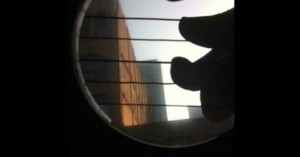
Kyle Jones wanted to see what it was like to film from inside a guitar, so he stuck his iPhone inside and started recording. The resulting footage shows the strings vibrating in wacky wave patterns thanks to the rolling shutter effect, which we also saw in the Canon 5D Mark II footage of a bass player shared earlier this year.
Nikon’s Reasons for Lens Stabilization Over Sensor-Shift Stabilization

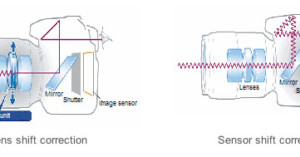
Nikon has a support page for people who wonder why the company hasn't added sensor-shift image stabilization to its DSLRs. The first point is that stabilizing the image before it enters the camera allows the user to see exactly what the sensor "sees" through the viewfinder, and allows the autofocus and metering sensors to take advantage of this stabilized image as well. Secondly, they state that they can optimize the system for each lens to achieve finely tuned stabilization that gains extra …

How Leica Lenses are Manufactured

You might have heard about Leica's legendary manufacturing quality, but have you seen it? The company released this promotional video a couple days ago providing a behind-the-scenes peek into its production facilities.

How “Polaroid” Instant Film is Made

Want to see how instant film for Polaroid cameras is made? How It's Made recently paid a visit to The Impossible Project's factory in the Netherlands (purchased from Polaroid a few years ago) to give us a neat behind-the-scenes look at the processes that go into making the popular film.

Basics of Photography Cheat Sheet

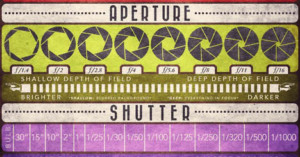
Here's a beautifully designed cheat sheet by Miguel Yatco that you can use to introduce people to the fundamental concepts in photography. You can also order it as a poster for your wall over on Zazzle.

A Glimpse Inside the Fujifilm FinePix X100 Production Plant

Fujifilm recently put out this infomercial showing the company's efforts to restore production capabilities after having their manufacturing plant damaged by the disastrous earthquake and tsunami back in March. We get a behind-the-scenes glimpse of what the manufacturing plant looks like, and the assembly line that puts the X100 together.

The Revival of Instant Film: Behind the Scenes at The Impossible Project

After Polaroid stopped manufacturing instant film in 2008 -- breaking the hearts of Polaroid lovers around the world -- a small new company called The Impossible Project purchased Polaroid's manufacturing equipment and factory in the Netherlands in an attempt to save the film from extinction. They were successful in doing so, announcing new lines of instant films in 2010. The above video is an interesting mini-documentary that gives us a behind-the-scenes look at what goes on at The Impossible …

What Image Stabilization Looks Like on a Dissected Canon 18-55mm Kit Lens

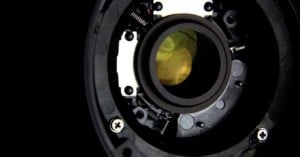
We shared a video of Canon's Image Stabilization technology in action in the beginning of the year, but that was on a pro telephoto lens and inside a glass display case. What would the same technology look like in a cheaper, consumer lens? Preston over at Camera Technica decided to find out, disassembling a Canon 18-55mm kit lens to capture this short video of the IS mechanism in action. I had no idea the thing used springs, did you? …

How Dust and Damage on Lenses Affect Image Quality

This photograph was taken by a lens with some "obstruction" on the front element. Aside from the blurry patch of nastiness in the bottom portion of the frame, the rest of the image looks pretty decent. What do you think the "obstruction" is? A little dirt? A smudge where the photographer accidentally touched the front element? A scratch? The answer is a little closer to a scratch than a smudge...

Experimenting with Stacks of UV Filters

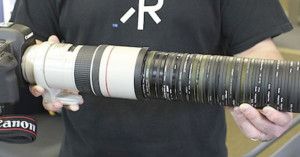
One of the benefits of running a gear rental business is that you have a ton of equipment you can use for random experiments. That's exactly what Roger Cicala, the owner of LensRentals, did with the UV filters he had on hand. One-upping the 19 filter stack we shared a while back, he mounted 50 different UV filters to a Canon 5D Mark II and 300 f/4 lens to see what the resulting images would look like.

There are 12 Hasselblad Cameras on the Surface of the Moon

Last week we shared about how astronauts left some Nikon DSLR gear to burn up in the atmosphere instead of having it brought back to Earth, but it certainly wasn't the first time cameras were left in space. Did you know that there are 12 Hasselblad cameras currently sitting on the surface of the moon? The cameras that shot those iconic images of the moon's surface between 1969 and 1972 were left there to allow for the 25kg of lunar rock samples that were brought back instead. Only the film …

Real vs. Counterfeit Nikon Accessories

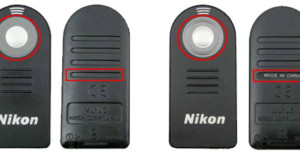
One sad truth about the photo industry is that there's a ton of counterfeit products floating around, and unless you buy directly from a reputable source, it can be difficult to know for sure whether you're getting the real thing. Last month we posted on how up to 1/3 of memory cards labeled "SanDisk" are actually counterfeit. Over on Nikon's website, there's a support page that shows photographs of counterfeit Nikon accessories next to genuine ones, with many of them almost indistinguishable …

A Neat Look At How Hard Drives Work

If you're like me, you have a bazillion photographs backed up on external hard drives, but have you ever wondered how digital photographs are stored on the magnetic surface of a platter spinning at thousands of rotations per minute? This interesting video provides a neat look at how hard drives work, though it will probably also convince you to back up your photographs by some other means as well (e.g. online or on discs). The engineering that makes hard drives possible is amazing!

Nikon Lens Acronym Glossary

Confused about what a certain acronym means when it comes to Nikon's line of Nikkor lenses? There's a helpful Lens Glossary over on the company's website that provides a short explanation of each one.

Floppy Disk Style Kodak Film from 1982

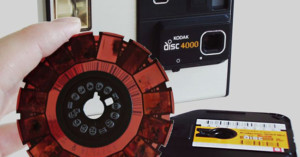
Here's a fun bit of photo history: did you know that back in 1982, Kodak attempted to introduce a cartridge film format that resembled a floppy disk? Each rectangular cartridge contained a circular film disc with 15 exposures, and the disc was rotated 24 degrees after each exposure to line up the next frame.

Animation Showing How the Canon 10D and 24-85mm Lens are Assembled

This animation was created by students of the Engineering 128: Advanced Engineering Design Graphics course at UC Berkeley during the Spring 2008 semester. The first part shows a Canon 10D DSLR exploding into its individual parts, and then those parts coming together again to slowly rebuild the camera, while the second part does the same for a Canon 24-85mm lens. Pretty dang impressive considering that it's for an undergraduate course.

The Government’s War on Cameras

Libertarian magazine Reason created this video about the erosion of photographers' rights in the United States. One of the cases highlighted is the one involving Antonio Musumeci, who was arrested for filming a government building and came out victorious in a lawsuit with the help of the NYCLU.

Special Back Transforms Nikon F2 SLR into Instant Camera

See the big box hanging out from under this Nikon F2 film SLR? It's called the Speed Magny, a special back that transforms the camera into an instant film camera. Instead of loading the camera with film, you take off the back of the camera and attach the 4lb contraption that's loaded with Polaroid pack film. Light entering the camera is directed onto the instant film below using lenses and mirrors, giving you a neat way to capture instant film photos at the expense of 5 stops of light.

Light Sensitivity of the Human Eye

As the low-light capabilities of high-end (and even low-end) cameras rapidly improve, it's easy to marvel at technology and forget how amazing our own eyes are, but here are some mind-boggling facts to consider: did you know that the human eye can detect as few as two photons entering the retina, and that, under ideal conditions, a healthy young adult can see a candle flame from 30 miles away? To see how mind-boggling that is, try using Google Maps to find a location 30-miles away from where …

The Psychology of Wedding Photography

Here's a short and sweet video in which famed wedding photographer Joe Buissink shares some advice regarding the "psychology" of wedding photography, or how to capture genuine emotions and expressions on camera. The tips he shares are useful for other kinds of photography as well, not just wedding or engagement photography.

Color Photography Turns 150 Years Old

Color photography was born on this day 150 years ago in 1861 when Scottish physicist and mathematician James Clerk Maxwell and photographer Thomas Sutton -- inventor of the SLR camera -- shot the above photograph of a colored ribbon.

History as Seen through Magnum Eyes and Leica Glass

Back in February 2011, Leica Camera and Magnum Photos announced a partnership that will spawn a series of multimedia essays created by Magnum photojournalists with Leica equipment. They also created this inspirational video telling the story of how many of history's iconic photographs were captured by Magnum photographers using Leica gear.

Canon vs. Nikon: Comparing the Two Heavyweights Camera Makers

Dutch consumer product website Beste Product ("best product") decided to set up a royal rumble between the two heavyweights of the camera industry: Canon and Nikon. They created an infographic comparing the two companies in things such as expert and user opinions, popularity, and sales. Even if you're sick and tired of the endless comparisons and debates (as you should be), the infographic provides some interesting facts about how the two companies are doing.

A Detailed Explanation of Depth-of-field and the Factors That Affect It

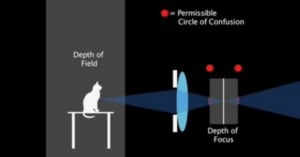
Learning how to control depth of field with your camera isn't too difficult, but do you know the science behind how it works? This uber-educational 20-minute video lesson gives a thorough explanation of depth of field and the different factors that affect it. It was made by artist Justin Snodgrass, and is also available for download (and in parts) over on his website.

Time-lapse of a Nikon D300s Getting Bent Pin Replacement Surgery

Ever wonder what happens when you drop your camera off at a repair shop? This time-lapse video shows a Nikon D300s going "under the knife" to have a bent Compact Flash card pin fixed. The camera sensor is removed to get access to the CF pin housing, and the faulty pin is replaced thanks to an "organ donor" (a Canon 40D).

Online SLR Simulator is an Easy Way to Learn Camera Fundamentals

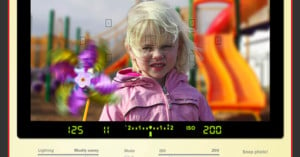
Online SLR Camera Simulator is a neat flash app that helps teach the fundamentals of using an SLR camera by letting you tweak different variables and settings, then showing you what the resulting photograph would look like. It's a great way for any beginner to become more familiar with a camera's controls, though nothing beats going out and practicing by taking real photos -- though this app would have been a lifesaver before the digital era.

Words of Wisdom Shared by Acclaimed Photographers

Ovation TV made this interesting video showing acclaimed photographers Albert Maysles, Sylvia Plachy, Andrew Moore, Timothy Greenfield Sanders and Gregory Crewdson answering various questions about photography and sharing words of advice regarding things they've learned over the years.

Chromogenic Prints Modified with Bleach

These bizarre looking images are what you get when you "modify" chromogenic prints with chlorine bleach. Flickr user Sarah Palmer has done a number of experiments with these technique, and the results are pretty abstract.

Biology for Photographers: Why is the Aperture Scale Logarithmic?

One of the main stumbling points for new photographers is the seemingly random series of numbers that we have come to know as the f-stop scale or aperture scale. Things start out innocently enough f/1, f/1.4 (just add 0.4 every time, right?), but things get ugly quickly -- f/2, f/2.8, f/4. Why would anyone invent such an arbitrary scale?

DSLR Mirror Vibration Shown Using a Laser Pointer

How much does a camera vibrate due to your finger pressing the shutter or the mirror flipping? Camera Technica decided to conduct a test by strapping a laser pointer to the hot shoe of a Canon 7D. They then filmed the red dot on a far wall against some text while shooting normally (i.e. pressing the shutter with a finger), using a remote shutter release, and finally with a remote shutter as well as mirror-lockup.

The Story of How the Influential Nikon F SLR Camera Was Designed

The Nikon F, Nikon's first SLR camera, played an important and influential role in photographic history after it was unveiled in 1959. It was the first to combine many of the emerging camera design ideas into a single body, and was the first SLR system widely adopted by professional photographers around the world. This is an interesting 20 minute documentary film that tells the story of how the camera was designed.

Lower ISO Doesn’t Always Lead to Higher Quality Images

When learning about ISO, you've probably heard that the lower the number, the lower the noise and the higher the image quality, but did you know that this isn't always the case? The reason is something called the base (or native) ISO of a camera -- the ISO achieved without amplifying the data from the sensor. This is usually somewhere between ISO 100 and ISO 200.

Three and a Half Rolls of Melted History

On June 6, 1944 -- also known as D-Day -- war photographer Robert Capa braved the defenses of the heavily fortified Omaha beach, swimming ashore with the second wave of soldiers. Using two Contax II cameras, a 50mm lens, and several rolls of film, he managed to capture 106 photographs documenting the first couple hours of the now-famous invasion (Omaha beach is the one seen in the opening scenes of Saving Private Ryan). After he raced back to London to have the film processed, a Life magazine …

How Canon DSLR Cameras Work

Ever wonder what actually happens between the time you press the shutter button on a DSLR and when the image shows up on the LCD screen? Canon made these two videos explaining how their DSLR cameras work and how they use CMOS sensors to turn photons into photos. You'll probably find this pretty interesting if you've never learned about CMOS sensors before. For a more in-depth lesson, check out the sensor tutorial over on Cambridge in Colour.

Strange Effect When Shooting Bass Player with a Canon 5D Mark II

urbanscreen discovered this strange string-wobble effect when shooting a bass player with a Canon 5D Mark II. No special effects or slow motion were added to the footage -- what you see results from the frequency of the strings and the fast shutter speed of the camera. Here's another video showing the same effect from different angles.