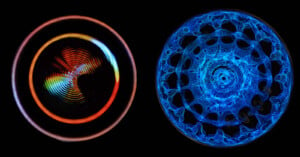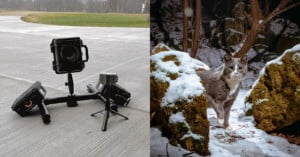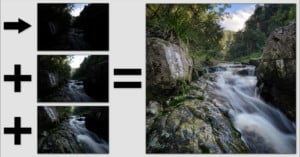
Freelensing is a relatively inexpensive way of getting the similarly unique effect of an expensive tilt-shift lens, where the focus plane is thrown out of whack with the added bonus of natural light leaks. No, this isnt anything new, and the look that an expensive tilt-shift lens gives has been around for a while, but I wanted to share with you my experience with it and how I did it. Read more…
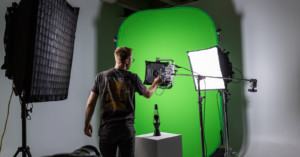
Mark Vargo is a big time cinematographer who has worked on too many well-known movies to list. He’s credited as a second unit director of photography on everything from Deep Impact and The Green Mile to Rise of the Planet of the Apes and Ted. In other words, knows what he’s doing, and now he’s chosen to share some of that knowledge with his fellow photographers and videographers. Read more…

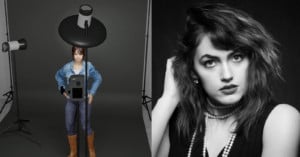
In addition to taking beautiful fashion photos, Serbian born photographer Elena Jasic also occasionally uploads a tutorial or two to her YouTube channel. One that has gotten some attention lately is this simple video that offers one way to dodge and burn non-destructively in Photoshop. Read more…
Ever see those pictures where the stars streak across the sky in a big arc? Or maybe the whole sky looked like it was spinning? What you saw was star trails. The streaks were light left behind on the sensor or film from the star as it traveled across the sky in front of an open camera shutter. In fact, what are being recorded are stationary stars and the rotation of the earth as it spins past them. For me, the images seem to have a certain magic or mystery about them.
You must have heard a photographer talking about capturing that perfect moment in time. Well for capturing star trails you will need to capture the perfect hour or two in time. For such amazing looking images, the technique used to capture them is really quite simple. Keep reading for a complete set of instructions from start to finish. Read more…
Older Sigma lenses that were designed for Canon EOS film cameras often don’t work correctly when mounted onto a new EOS digital SLR, even though the newer bodies still use Canon’s EF mount. If you’re an owner of such a lens, you might have heard that you can send it in to Sigma’s service center for them to rechip it in order to make it compatible again.
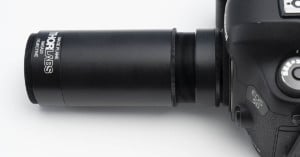
Did you know that those of you who are handy with electronics can actually do the rechipping yourself at home? Photographer Martin Melchior recently did this with his Sigma 70-210 f/2.8 APO lens, and says that anyone with basic soldering skills can do the same. Read more…
More and more photographers are attempting to build their own DIY lightboxes these days as they look for ways to easily digitize their film at home using a digital camera. However, a common problem that plagues these lightboxes is vignetting — lighting is uneven and shadows form gradients near the edges of the surface.
Photographer RafaĆ Nitychoruk of Gdynia, Poland tells us that he has solved the problem with his own custom lightbox. The trick? Make your lightbox short, and stack multiple layers of glass. Read more…
Here’s a step-by-step tutorial on how you can make a pretty nice flash diffuser for your macro setup for just a little time and a little money. Read more…
Canadian astronaut Chris Hadfield has been serving as one of the International Space Station’s resident photographers. Every day he posts beautiful photographs showing what our planet looks like from orbit to his Twitter account, @cmdr_hadfield.
Today the Canadian Space Agency released the video above, in which Hadfield takes the time to explain how to best photograph Earth’s landscape from 400km (~250 miles) above the surface. Read more…
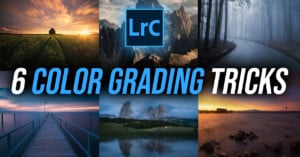
After posting a before-and-after of a concert photo she had taken and edited in Lightroom, photographer Kohl Murdock received several requests to post a tutorial on how exactly she edited it.
The photograph was taken at a Shiny Toy Guns concert and is a great straight on portrait of lead singer Carah Faye Charnow with the exception of the massive amount of red fill light plaguing the snap. This is a common problem with concert photos, and so we’re as glad as everyone else that Murdoch obliged and created the tutorial. Read more…
Over the course of your comings and goings on the internet, you’ve probably spotted at least a few of those mind-bending GIFs that loop perspectives rather than a snippet of time.
Well, it turns out that making them yourself isn’t that difficult, just as long as you have a 3D camera and some time at your disposal. And in the how-to video above, The Creators Project enlists the help of half the Mr. GIF team, Mark Portillo, to show you just how easy it is. Read more…