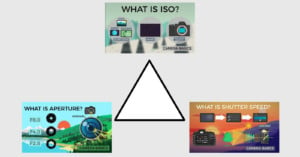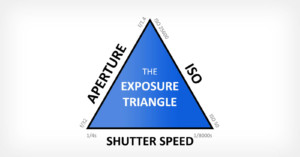
Check out this awesome exposure triangle graphic found in this Exposure Guide tutorial on the fundamentals of exposure:
When these three elements are combined, they represent a given exposure value (EV) for a given setting. Any change in any one of the three elements will have a measurable and specific impact on how the remaining two elements react to expose the film frame or image sensor and how the image ultimately looks. For example, if you increase the f-stop, you decrease the size of the lens’ diaphragm thus reducing the amount of light hitting the image sensor, but also increasing the DOF (depth of field) in the final image. Reducing the shutter speed affects how motion is captured, in that this can cause the background or subject to become blurry. However, reducing shutter speed (keeping the shutter open longer) also increases the amount of light hitting the image sensor, so everything is brighter. Increasing the ISO, allows for shooting in lower light situations, but you increase the amount of digital noise inherent in the photo. It is impossible to make an independent change in one of the elements and not obtain an opposite effect in how the other elements affect the image, and ultimately change the EV.
If you’re just starting out in photography, do yourself a favor and work through the Photography Basics page over on Exposure Guide. It’s a fantastic resource.
Matthew Gore of Light & Matter created this beginner-friendly video tutorial on the three basic elements of exposure: aperture, shutter speed, and ISO. It’s explained with easy to understand illustrations and examples, and features graphics and sounds that are reminiscent of old 8-bit video games. You can also find a text-based version of the tutorial here.
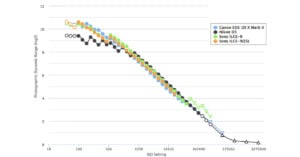
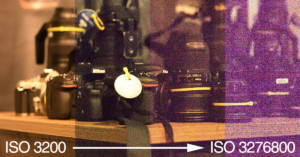
The folks over at NoFilmSchool recently did a low light comparison of the Canon 5D Mark II, Canon 5D Mark III, and Nikon D800. The cameras were used to film the same dark candlelit scene with the same settings, and the ISO was slowly pushed up to the cameras’ respective limits. It’s pretty striking how big of a difference in low light/high ISO quality there is in the cameras, especially in light of DxO Lab’s test results for the cameras’ sensors…
YouTube member eaglejm shot this video in downtown St. Louis to show the Canon 5D Mark III’s high ISO video performance. Be sure to watch it full screen and in HD.
Japanese website mono-logue released this short 30-second video comparing footage from the Canon 5D Mark II and the new 5D Mark III captured at ISO 12,800. The difference in noise levels is remarkable (be sure to watch it full screen and in HD). Read more…
If you’re a fan of learning things through Khan Academy, then you might enjoy learning about how ISO works in this similar-styled tutorial by Dylan Bennett. Bennett might not have Salman Khan’s soothing voice, but he does his best to break down the magic of digital camera sensors into easy to understand ideas. For a more detailed and comprehensive understanding of how things work, check out Cambridge in Colour’s excellent tutorials.
Want to see how far DSLRs have come in the past decade? Lee Morris of Fstoppers published these two photos taken at Super Bowl halftime shows. The crop on the left was captured in 2001, possibly with the Nikon D1H at 2.7 megapixels and ISO 800 (state of the art specs at the time). The slice on the right was from this past weekend, and was shot with a Nikon D3s at 12MP and ISO 12,800.
Image credits: Photographs by Lonny Krasnow/AP and FilmMagic
When Fujifilm said that the X-Pro1′s sensor “resolution and low noise will surpass rival 35mm full size sensor[s]“, they weren’t kidding. Photographers Christian Fletcher and Michael Coyne have both been testing out the camera, and have extremely positive things to say about it:
My initial feelings are that this camera is a worthy replacement for a bulky dslr system. If you have to travel light, this is the camera for you. Physically it is only marginally larger than the x100 so slinging it around your neck for a day is no problem. In fact I am wearing mine right now!, it is a fashion accessory!! Man bling! or Girl Bling too for that matter. [#]
Fletcher has published a number of untouched sample photos to his blog, including the ISO 6400 image above shot by Coyne. Click here to check out the full-res version (be prepared to pick your jaw up off the floor). Some more sample photos can be seen here, including an ISO 25600 one.
Technicolor just released a new Picture Profile for Canon DSLRs, and recommended that ISO be used in multiples of 160. Andrew Schär decided to test this using his Canon 60D, and found that in terms of the amount of noise present in the footage, ISO numbers that are multiples of 160 are best (i.e. least noise), followed by multiples of 100, and finally multiples of 125 being worst. Read more…
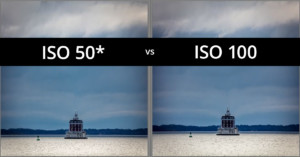
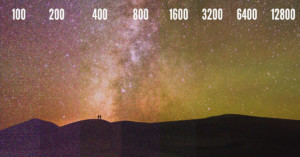
When learning about ISO, you’ve probably heard that the lower the number, the lower the noise and the higher the image quality, but did you know that this isn’t always the case? The reason is something called the base (or native) ISO of a camera — the ISO achieved without amplifying the data from the sensor. This is usually somewhere between ISO 100 and ISO 200. Why does this matter? Bob Andersson of Camera Labs explains:
We all know that using high ISO numbers results in more sensor noise. More surprising, perhaps, is that using an ISO number below the native ISO number also degrades the image.
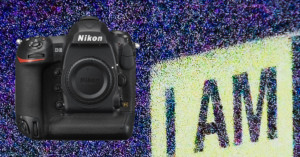

An interesting example is that when shooting on a Canon EOS 1Ds MkII, ISO 50 has roughly the same signal to noise ratio as shooting at ISO 800. This explains why the lowest possible ISO numbers can only be accessed through custom functions on some cameras.