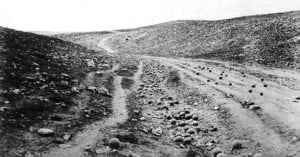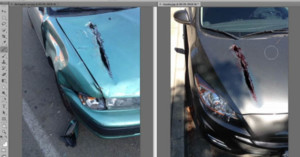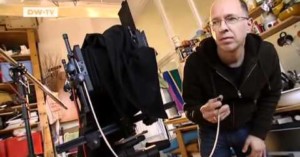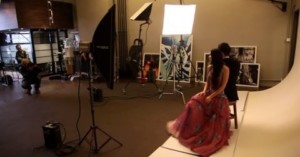
Photographer Kim Keever creates large scale landscape photographs using miniature dioramas. He first creates the topographies inside a 200-gallon tank, and then fills it with water. He then uses various lights, pigments, and backdrops to bring the scenes to life for his large-format camera to capture. Read more…
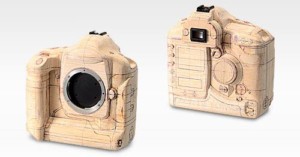
Back in 2003, Canon published a tutorial on how to carve a Canon 1D mockup out of balsa wood. The tutorial has since been taken down, but thanks to Internet Archive’s Wayback Machine, much of the tutorial has been preserved. If for whatever reason you suddenly feel the urge to carve a fake camera, Canon’s step-by-step guide is a great place to start.
Photographer Lee Morris recently purchased a Nikon MB-D11 battery grip from Amazon.com for $216. It worked perfectly fine, but after Morris purchased a second grip for a wedding, he noticed something was different about the first one. After some investigation, he came to realize that he had purchased a Nikon-branded version (i.e. counterfeit) of a grip that ordinarily sells for $40 on Amazon.
Even if you’re buying directly from Amazon.com, verifying that the product is being fulfilled by a reputable dealer can reduce the chances of you unwittingly buying something fake.
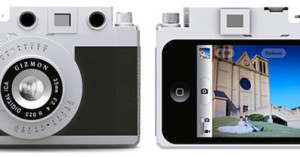
Here’s a bit of photo humor to start off the day: Jeremiah Warren made this satirical video imagining what it would be like if Apple announced an “iPhone 5 iDSLR”:
Who really needs photography skills when you have such an incredible device? You don’t really have to think about it. Just press the button.
What’s sad is that some people will inevitably believe that this is a real product, and of those people, some will be disappointed when they find out this is fake.
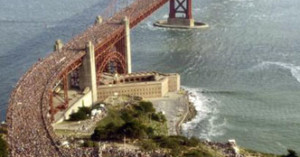
Update: Erin from Reuters contacted us informing us that this is in fact a genuine, non-manipulated photograph. Here’s a good explanation of why it’s real.

Reuters published the above image as an Editor’s Choice photo yesterday, and almost immediately readers began leaving comments questioning whether the photograph was Photoshopped. The debate soon spread to other websites, including Reddit, and it appears that the photographs has since been taken down (though it can still be seen in its original slideshow from last week). Read more…
In this video, UK photography instructor Damien Lovegrove demonstrates how you can add some pseudo-sunlight to portraits by simply placing some weeds or part of a bush — which he calls a “dingle” — between an off-camera flash and your subject.
The photographs in Adam Magyar‘s Square series appear to show crowds of people bustling about in open town squares, seen from a height that makes them look almost like ants. In reality, each photograph is actually a composite of hundreds of individual photos, and none of the squares actually exist. Magyar photographed strangers walking on sidewalks from only 3-4 meters off the ground, and then blended the photographs together to make them seem like they were captured from a fake height! Read more…
What just about every scene kid and hipster under the age of 25 calls themselves these days. Many own Canon Rebel xtis and rely heavily on cropping and Photoshop filters to give their otherwise mundane photos an “artsy” feel. It is also not uncommon to see them wielding Lomography cameras (usually a Holga, now that they’re sold at Urban Outfitters) on any given day. Typically, these “photographers” cite Diane Arbus, Robert Mapplethorpe, or, in the case of those Vice Magazine devotees, Terry Richardson, Cobrasnake, or Richard Kern, as major influences, because they couldn’t name any other photographers to save their lives.


The typical subjects of their photographs include, but are not limited to: pidgeon-toed girls in Converse that have been drawn on with ballpoint pens and/or Sharpies, flowers/weeds growing out of cracks in sidewalks, juxtapositions of objects that typically don’t go together (in one such case, a Queen of Hearts playing card on a cracked sidewalk), a girl who looks like something out of an American Apparel ad smoking a cigarette, decaying buildings, and just about anything that looks “vintage” (ie, yellowing washing machines in a laundromat).
If you actually know what you’re doing enough to make money from photography, you’re just a poser.
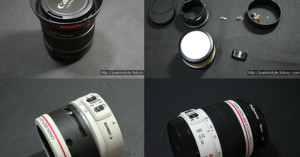
This Canon 7D and 70-200mm combo only costs $36 and helps you save money. How? Well it’s actually a fancy piggy bank! Like the Canon 350D and 24-105mm L piggy bank we shared last year, you use this one by shoving coins into the lens. Read more…