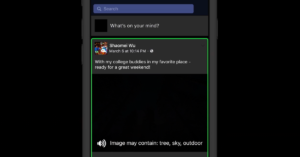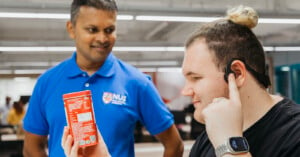
A team of researchers led by PhD student Dustin Adams at the University of California at Santa Cruz have created an amazing application that may someday soon help visually impaired photo enthusiasts and photographers take better photos. Read more…
Photographer Gary Albertson calls himself “the luckiest unlucky guy in the world.” In 2010, after decades spent shooting the outdoors, he developed a rare form of glaucoma that has left him with little more than a circle of peripheral vision in each eye. But after some time away from the camera he’s come back stronger than ever, creating photography so stunning he’s attracted the attention of a Pulitzer Prize-winning photojournalist. Read more…
Craig Royal is an award-winning fine art photographer based in Tampa, Florida. Visit his website here.
PetaPixel: Can you tell us a little about yourself and your background?
Craig Royal: I’m a visually impaired fine art photographer. I’m legally blind due to a congenital form of optic nerve atrophy. I have been legally blind since birth. My vision had been 20/200 corrected up until 1992, when a white blind spot began to develop in the center of my visual field in both eyes. Read more…
Tommy Edison is an incredible person. Born blind, he has managed to lead a successful, fulfilling life as a film critic, receiving national attention for his spot on reviews of movies like “Water for Elephants.” But in addition to successfully reviewing a genre most would consider to be in the domain of the sighted, Mr. Edison is also a prolific Instagram user. Read more…
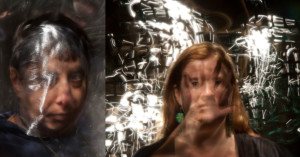
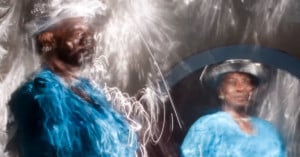
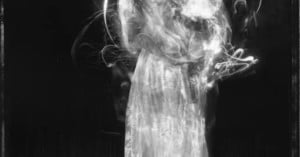
Sonia Soberats’ journey in photography didn’t start until she couldn’t see the photographs she was producing. Around two decades ago, she lost her eyesight to glaucoma between losing her son to Hodgkin’s disease and her daughter to ovarian cancer. At the turn of the century, Soberats began taking photography lessons in New York City as a form of therapy and self-expression. Her technique of choice? Light painting. Read more…
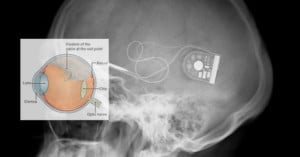
Image sensors and the advent of digital imaging have been met with differing reactions from the photographical community. But what a team of doctors at the Oxford Eye Hospital have managed to do with the technology is 100% digital, and 100% amazing. Clinical trial leaders Robert MacLaren and Tim Jackson have helped two blind men to partially see again. Read more…
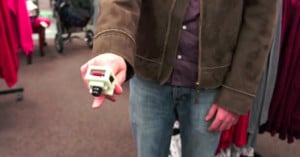
MIT’s Media Lab is no stranger to innovation; from super-high-speed cameras to cameras that can see around walls, they always seem to be on the cutting edge of imaging innovation. Their newest project, the EyeRing, is yet another innovative idea that could some day revolutionize the way we take pictures and experience our world. Read more…
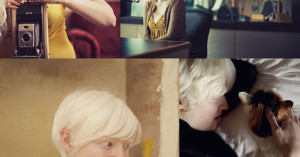
Cincinnati native Amy Hildebrand was born completely blind due to albinism, a disorder in which the body is unable to produce melanin (the pigment that gives color to hair, skin, and eyes). After receiving a special surgery as a teen that drastically improved her eyesight, Hildebrand fell in love with photography and went on to study it in college. She is now a successful commercial photographer and is nearly finished with an ambitious “1000 photos in 1000 days” project she started in 2009. Her mother says that Amy’s albinism is actually an advantage in her photography:
As sighted people we have so much information we are processing because our eyesight is seeing so much. It complicates it. But in Amy’s view of the world, she’s so used to seeing things in intimate spaces, that she’s learned to appreciate what’s in front of her. [#]
You can find Hildebrand’s commercial work here, and her photography blog here.
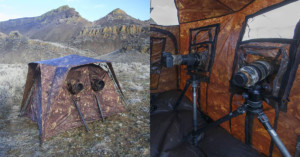
Want to get closer to animals when doing wildlife photography? If there’s access, your car can do the trick by serving as a photography blind. Scott Bourne of Photofocus writes,
For whatever reason, most wildlife (birds included) won’t spook or flush when they see a car. Open the car door, step out of the car, now that’s a totally different situation. But as long as you stay in the car, your chances of getting close enough to wildlife to get the shot are improved by 90%.
Pete Eckert didn’t start out too seriously in photography. Trained in sculpture and industrial design, he was working as a carpenter when one day a doctor diagnosed him with retinitis pigmentosa, a genetic eye condition that leads to permanent blindness. He eventually discovered photography and has been doing amazing work since. The beautifully made video above sheds light on how he goes about creating art despite his visual impairment. Read more…