

Photoshopped Campaign Banner Sparks Controversy
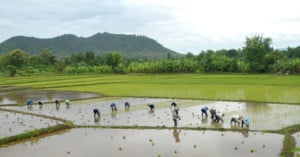
A banner on Andrew Romanoff's Senate campaign website provoked a bit of an outrage from a minority group when people realized that it was digitally manipulated.
A banner on Andrew Romanoff's Senate campaign website provoked a bit of an outrage from a minority group when people realized that it was digitally manipulated.
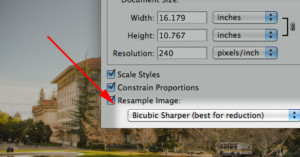
We posted a while back on how to sharpen your photos like Flickr for smaller resolution images. The technique used "Unsharp Mask", but today we'll quickly describe how you can ensure sharpness using a simple setting.
Adding a vignette to a photograph can add depth to the composition and draw attention to interesting details. However, a cautionary word: overdoing post-processing and editing techniques like vignetting can be at best distasteful. At worst, it might seem to over-compensate for what might simply be an otherwise uninteresting photograph. Generally, the less editing needed on a photograph, the better the photograph. And naturally, the better the photograph, the better the photographer. The same …
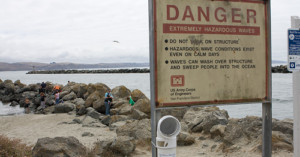
Went to Bodega bay to do some crabbing for the first time, and took this photo while walking to the beach (it's the untouched RAW): …
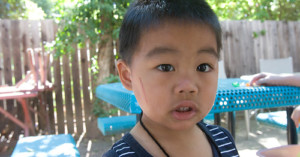
Here's an unprocessed portrait I took a couple days ago.
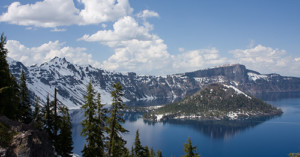
Crater Lake in Oregon is such a beautiful place that post-processing isn't really even needed for photographs taken there. Here's an unprocessed photograph I took there this past summer on a road trip with friends: …
Today I'll be doing a post-processing walkthrough with the following photograph I took about a week ago: …
One of the results of always carrying around my camera is that I end up with a lot of portraits of my friends. I had lunch with a few of my buddies last Sunday, and snapped this photograph while waiting for a friend: …
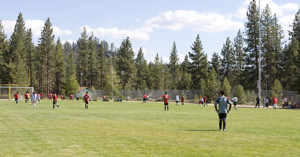
I was over at Lake Tahoe attending my brother's soccer tournament this past weekend, and took this photograph from behind the opponent's goal: …
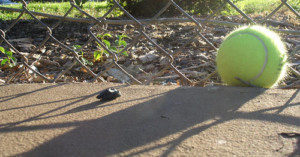
Here's a photograph I randomly snapped on a tennis court a few days ago: …
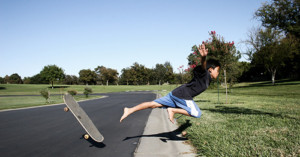
Here's a photograph I took of my brother skateboarding (or attempting to) back in 2005: …
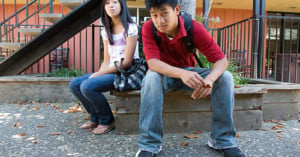
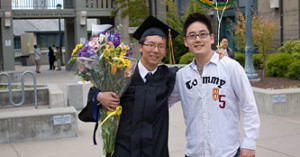
A few weeks ago, I was taking photographs of my friend Tommy at his Berkeley graduation using a Canon 40D and the 24mm f/2.8. I had originally purchased the 24mm as part of a package and was planning on selling it off, but decided to keep it after being shocked by its quality and versatility. Anyhow, here's an unprocessed photograph of my friends Tommy and Jacob I took right after the graduation: …
One of the things I became very aware of during a recent road trip to Oregon is how much easier it is to salvage an underexposed photograph versus an overexposed one. When you overexpose a photograph and "blow out" the highlights in the image, those areas that were blown out to white are unsalvageable, whereas much more detail could have been preserved in areas of the photograph that appear to be pure black but are not (though noise results from salvaging these areas). An implication of this is …
This entry will describe my thought process when editing a portrait, though it could apply to general photos too.
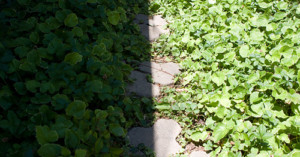
Here's a photograph I took today while hiking with friends on the Bailey Cove Trailhead in the Shasta-Trinity National Forest: …
When browsing around on Flickr, I used to be amazed by how sharp many of the photographs I came across were, and thought that the reason my web-res images weren't as sharp was because I had poor technique or an inferior lens. However, even after I upgraded my camera equipment I still wasn't achieving the same type of sharpness I saw on Flickr.
You've probably heard many of the common arguments people give for whether to shoot in JPEG or RAW. When people discover the power of RAW, they usually never go back to shooting purely in JPEG. Sure, RAW files are enormous compared to JPEGs, the whole process will take you longer, and you'll definitely need much more storage in terms of external hard drives and memory cards, but I definitely feel like the benefits of shooting in RAW outweigh the costs.