
How a Photographer Became a Writer to Tell an Even More Powerful Story
Photographing and writing an in-depth project enhanced the published product, says an award-winning independent photojournalist.
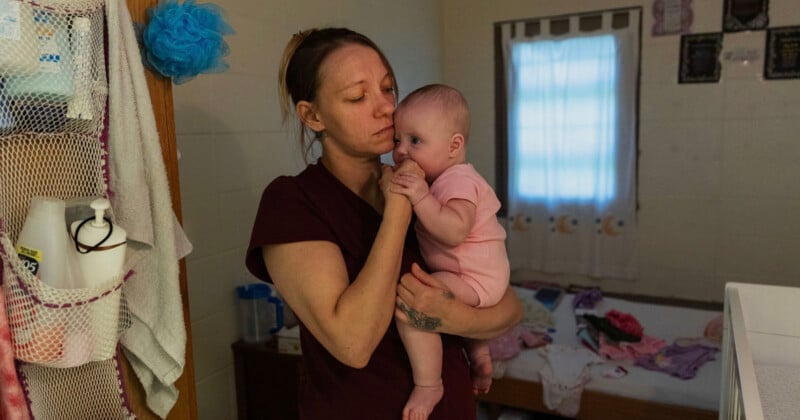
Maddie McGarvey pitched, reported, photographed, and wrote a report for The Marshall Project on incarcerated mothers who are allowed to keep and raise their babies while serving sentences.
“Rather than feeling like I was sacrificing one medium for the other (photography/writing), I felt that combining them created a more complete and layered piece of journalism,” says McGarvey.
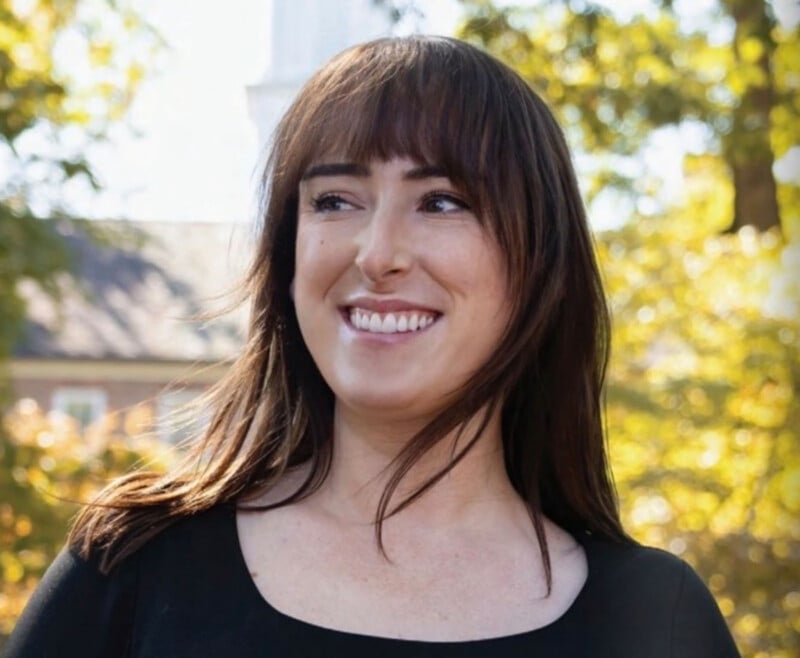
The do-it-all approach on a big project was a first for McGarvey, who was trained as a photographer. She became increasingly interested in reporting and writing, especially on long-form projects. Her comprehensive work for The Marshall Project represents another example of the erosion of strict silos for storytelling and journalism.
McGarvey’s Long-Form Project
McGarvey’s report focused on the Leath Unit at Indiana Women’s Prison. The Leath Unit was named in honor of Officer Breann Leath, who once served as a correctional officer on the nursery unit before joining the Indianapolis Metropolitan Police Department. Officer Leath was killed in the line of duty in 2020.
McGarvey’s two-year project, published May 8 by The Marshall Project, follows Heather Hornberger: pregnancy, raising her daughter Innocence in prison, reentry, and celebrating the toddler’s second birthday after release.
Her work involved extensive reporting, in addition to photography: interviewing, reviewing court and prison records, fact-checking, synthesizing complex information into a cohesive story, and coordinating with prison officials and advocates.
“The writing helped provide context, history, and emotional continuity, while the photographs grounded the reporting,” McGarvey says.
Maddie McGarvey, Photojournalist
Based in Columbus, McGarvey gets photography assignments from leading news outlets.
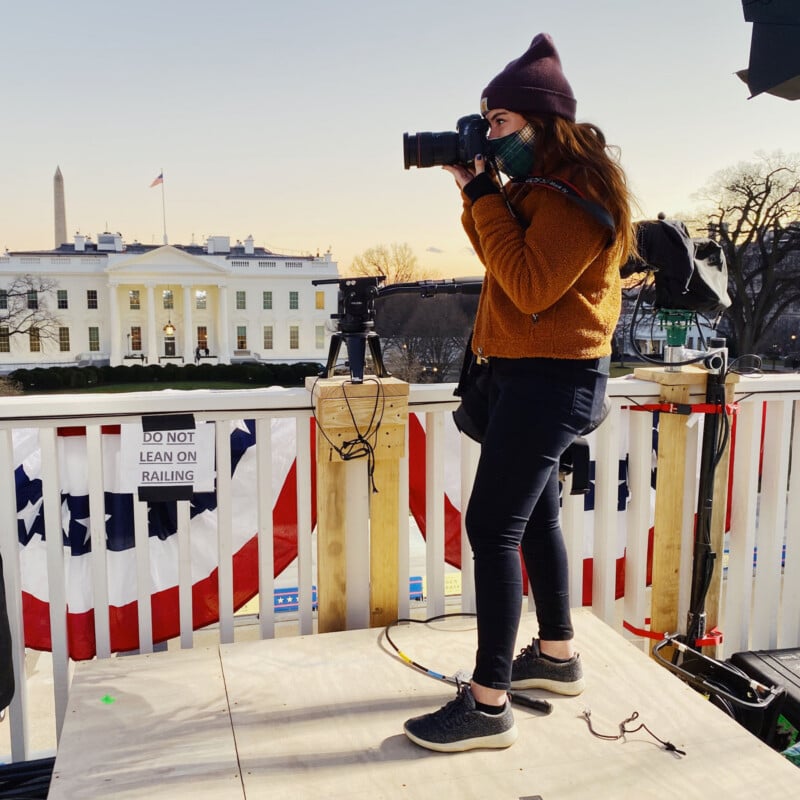
Maddie McGarvey covering the presidential inauguration in January 2021
She has received byline credit for photography and video, such as the April 28, 2025, New York Times’ report on challenges facing food banks.
Her photo of a Trump rally in Erie, Pennsylvania, was included in TIME Magazine’s Top 100 Photos of 2023 and was published on the front page of The New York Times.
Seeing your photos in print never gets old 🙏 📸 pic.twitter.com/O5mhdegfXd
— Maddie McGarvey (@maddiemcgarvey) August 15, 2023
From the earliest days of her career, McGarvey was drawn to long-form journalism. As a 19-year-old sophomore at Ohio University, she began a multi-year project to document grandparents raising grandchildren.
In February, McGarvey’s “Legacy of Daughters” documentary work won first place in the Pictures of the Year competition (Community Awareness category) sponsored by the Donald W. Reynolds Journalism Institute at Missouri School of Journalism.
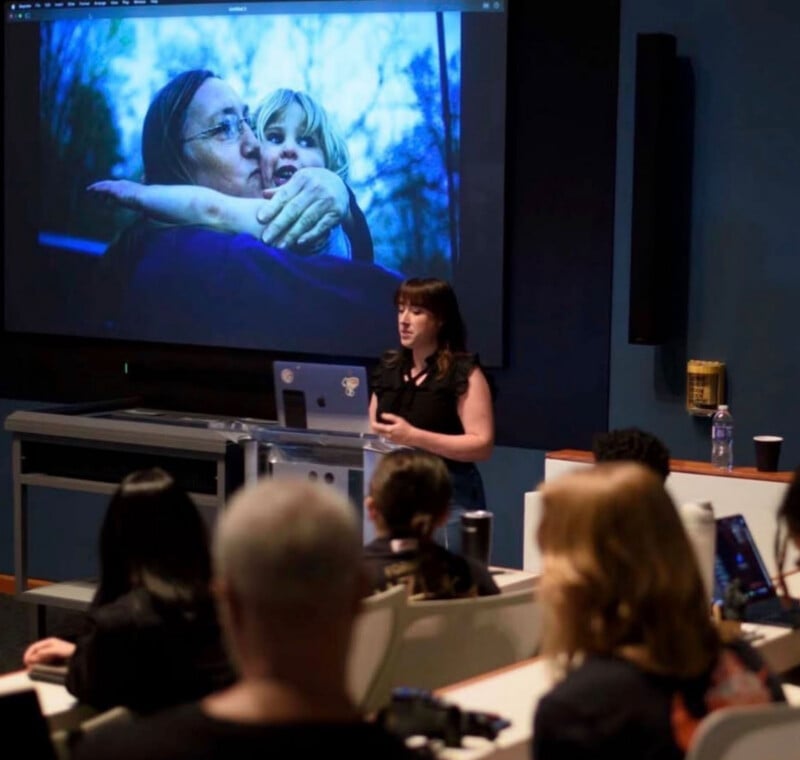
The Big Picture: Dual-Role Photographers
In his 1952 book “Words and Pictures,” legendary LIFE Magazine editor Wilson Hicks said, “pictures and words together perform a more effective function than either can perform alone.”
Quality photojournalism training has long included writing (beyond captions, including pitches, support essays, and the design of visual narratives).
Modern storytelling tended to favor specialized roles for writers and photographers, but dual talent has precedent.
Pioneering LIFE Magazine photographer Gordon Parks (1912-2006) also wrote novels and poetry and directed films. Pulitzer Prize-winning fiction writer Eudora Welty (1909-2001) photographed life in Mississippi during the Great Depression.
Best known for “Alice’s Adventures in Wonderland,” Lewis Carroll (1832-1898) was also a prolific portrait photographer.
Photographer Bylines on News Stories
The overall news industry trend is to give photographers byline credit if they report the story. Photographers increasingly are multimedia professionals:
- For two decades, journalist David Jablonski has photographed, reported, and videotaped sports for Cox publications in Ohio.
- Reuters recently assigned Tampa-based photojournalist Octavio Jones to document vandalism at a predominantly African-American cemetery south of Tampa in Palmetto, Florida. Byline credit on the May 14 Reuters report was “By Octavio Jones,” who also was credited by name for multiple photos. His photos from Palmetto were featured in Reuters’ global Photos of the Day (posted May 15) and Photos of the Week. From 2011-2020, Jones was a staff photographer at the Tampa Bay Times.
- The New York Times political report posted May 15 from rural Kentucky published byline credit for “Photographs and Video by Michael Swensen.”
- The San Antonio Express-News published double byline credit (May 23) for its photojournalists covering the NBA playoffs.
A Word of Caution
On fast-breaking assignments, trying to do everything can dilute the quality of the work, says McGarvey.
“But,” she adds, “for long-form documentary projects like (her report for The Marshall Project), I found that writing and photographing actually reinforced each other.”
Image creditsPhotos provided courtesy of Maddie McGarvey
Affiliate Disclosure PetaPixel articles may include affiliate links; we may earn a commission if you buy through one.