How Lenses Convey Emotion in Nat Geo’s New Doc, ‘Chris Hemsworth: A Road Trip to Remember’
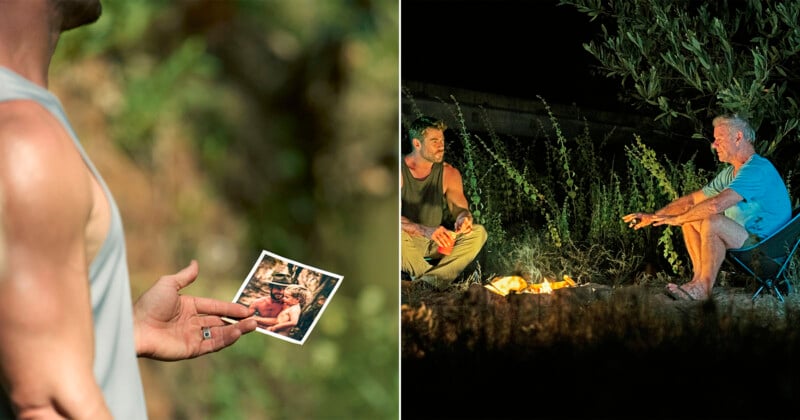
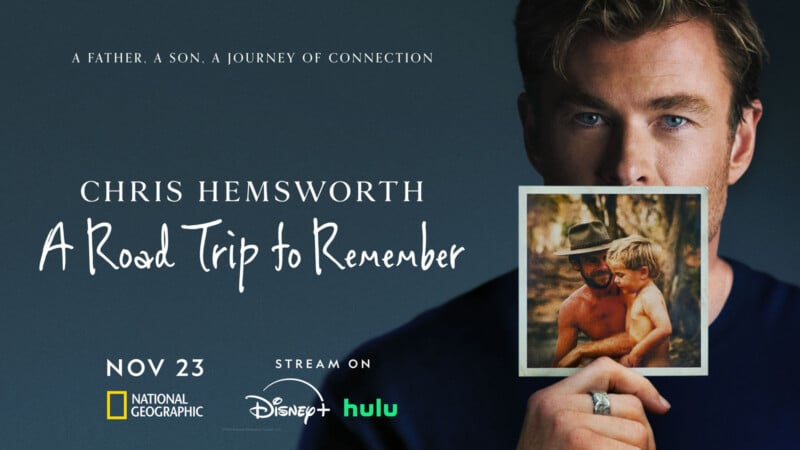
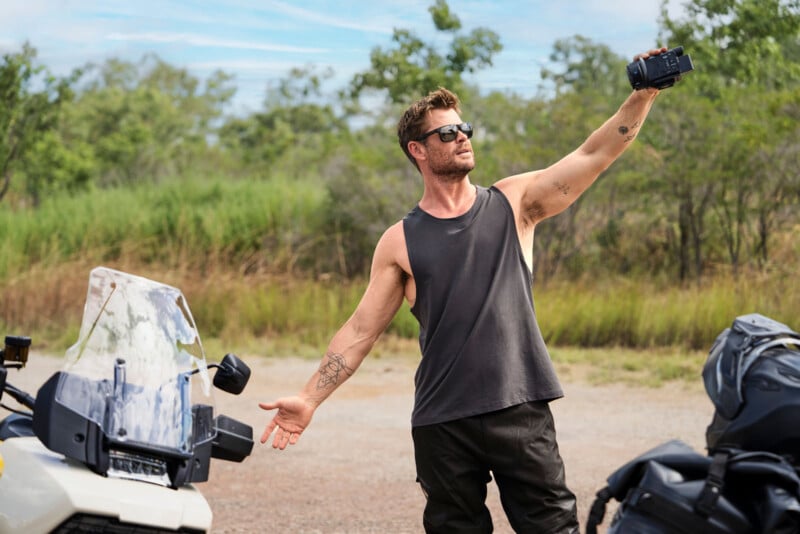
In National Geographic‘s new documentary, Chris Hemsworth: A Road Trip to Remember, filmmakers follow the world-famous actor as he connects with his father, who has Alzheimer’s, on a therapeutic “road trip back in time.”
It is a powerful story, and PetaPixel spoke with the film’s Director of Photography, Jim Jolliffe, about what it was like working on such a deeply personal documentary.
Filming Something so Personal
“It was a very special documentary to work on, “Jolliffe says. “It was so deeply intimate. It was quite a privilege working on it and seeing Chris’ relationship with his dad and seeing his dad’s Alzheimer’s coming out at times and filming it.”
The veteran cinematographer explains how vital it is to be sensitive throughout the entire process.
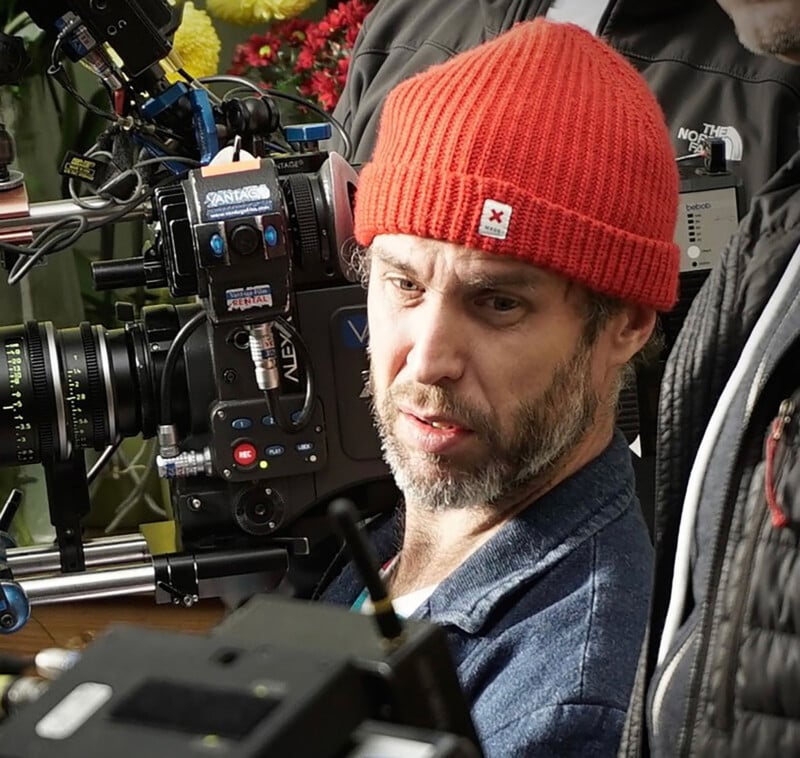
“I feel that a lot of the work I do is very humanistic, so I felt quite natural doing it — I feel that’s the kind of work I do. But it was a privilege. It’s an important subject,” Jolliffe adds.
Per the World Health Organization, as of 2021, nearly 60 million people worldwide had dementia, with Alzheimer’s being the most common form.
How Lenses Set the Tone
Filming something so personal significantly changes how Jolliffe works and shoots.
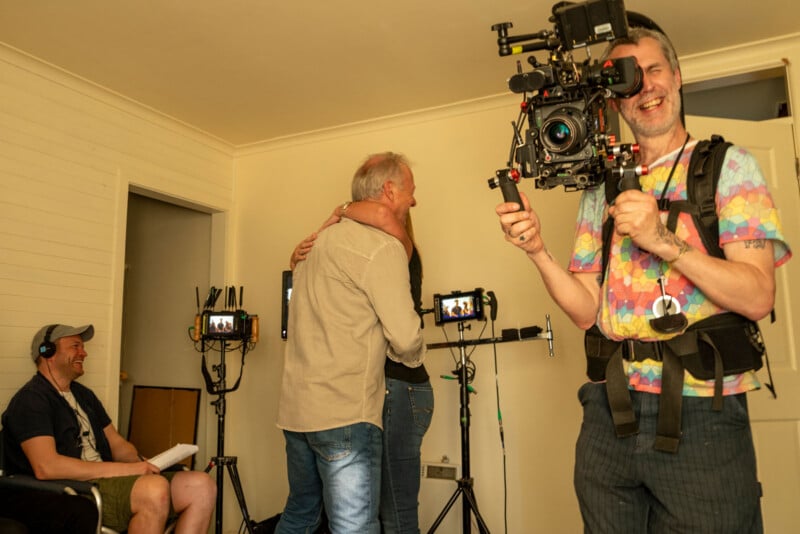
“It affects everything from the choice of lenses we use to the way we shoot,” he says. “I tend to go with more organic-feeling lenses for a project like this, [often] vintage glass.”
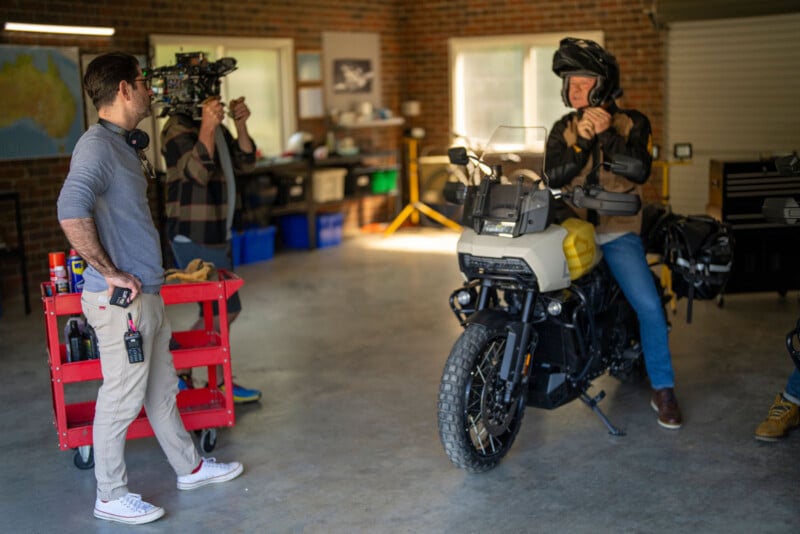
Jolliffe adds that he has to be right there, in the scene, up close, but somehow find a way to blend in. It’s a challenge, because the best shots are the intimate ones, but they must always remain authentic and unaltered by the presence of a film crew.
“I always shoot on primes. I don’t like the idea of being on a zoom far away. It doesn’t really work. I’d rather be on a prime and just be there, become a gray person in some ways, if that makes sense,” the filmmaker explains.
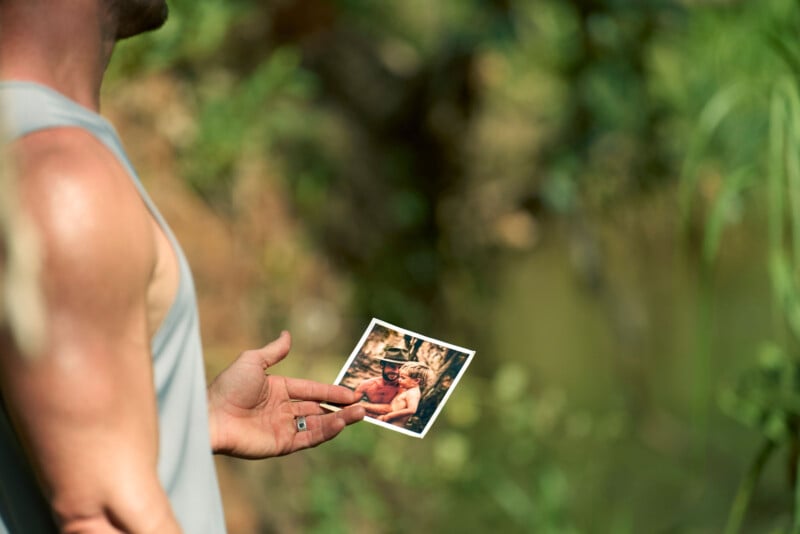
Further, given the nature of the subject matter, Alzheimer’s, memory, and connection, Jolliffe says he shot as much as he could with wide-open apertures. He wanted that narrow depth-of-field. He also played with different optical effects, including using broken glass in front of his lens to add a layer of visual confusion that he hopes will subconsciously impact the viewer.
“I don’t think anyone will watch a thing and go, ‘I love that [effect].’ Unless they know about lenses, they don’t go, ‘I love that bokeh.’ I think it’s a subconscious feeling and people know that they watched something that felt a certain way. That’s down to lens choice more than anything,” Jolliffe says.
How the Canon 5D Informed Jolliffe’s Filming Style
As for his ability to blend in while shooting, Jolliffe credits the legendary Canon EOS 5D DSLR series, which transformed how filmmakers worked and how easily they could film with a small, almost invisible setup.
“I picked up [the ability to blend in] when the 5D first came out and people started shooting . It was great because it brought filmmaking to the masses. Anyone could buy a 5D and go make a cinematic-looking film,” Jolliffe says.
He recalls it being a ubiquitous sight on smaller productions and commercial sets.
“Everyone was using it. It was a new toy, everyone loves new toys.”
Jolliffe was a camera operator at the time, working under a cinematographer who loved the 5D. He had come from a stills background, and using the 5D, Jolliffe remembers that his mentor could just get right up to people and nail the shot.
“I learned off him operating B camera, and since that same portraiture, street photography vibe is the kind of feel I’ve got, I still love working with little cameras,” Jolliffe says. While the 5D is long gone, Jolliffe still has a Canon camera in his kit, an R5C he uses as a B cam and for on-set stills work.
For Chris Hemsworth: A Road Trip to Remember, Jolliffe wasn’t using a super-small camera, but rather a Sony Venice 2, which the Director of Photography notes “Can be made compact.”
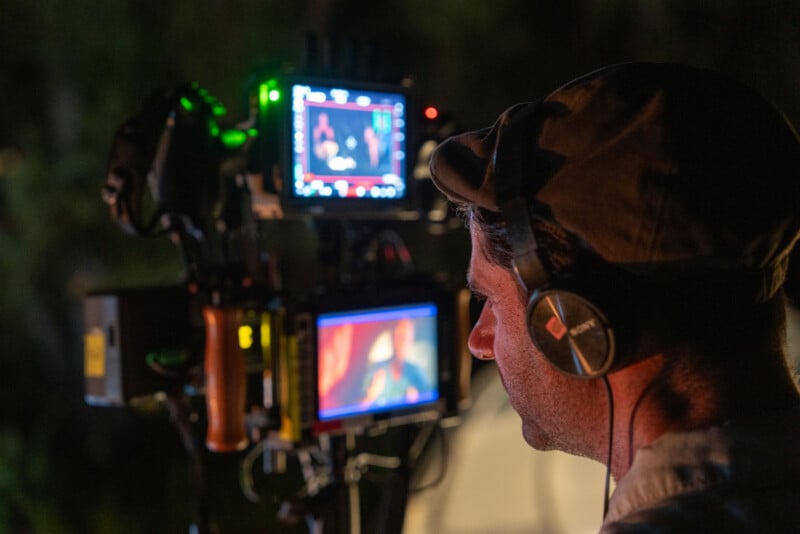
But when Jolliffe can pick any camera to use, he opts for “little square cameras with a lens on it” because they let him run around easily. He cites a RED Komodo as a popular choice for his preferred workflow.
Unfortunately, it rarely works out like that, Jolliffe says. Soon enough, there are focus motors, a bunch of accessories, big monitors and transmitters, and “suddenly the camera’s getting bigger and bigger.”
The Connection Between Still Photography and Motion Picture
Jolliffe, like his old mentor, also does still photography, which he believes informs his motion work.
“In a way, because you’re still just looking at one frame [in photography], composition is so important. I think trying to put that [approach] into video is key,” Jolliffe says, admitting it is never quite as easy to do as he’d like, though.
“Everything’s moving, you’ve got cameras moving, subjects are moving,” Jolliffe says, making achieving the carefully composed shot very tricky.

“In my dream world, film would be made up of a load of really love still, static frames, just beautifully composed frames,” Jolliffe laments.
He has to remain reactive in many cases, although he notes that there were some sequences in Chris Hemsworth: A Road Trip to Remember that he could pre-light and pre-visualize. But of course, when Jolliffe went to shoot the scene, “Chris walks over there somewhere and his dad’s over here and you’re fighting trying to shoot it,” Jolliffe laughs.
It’s such a different workflow than when Jolliffe does his commercial work, which is much more controlled and planned. For documentary filmmaking, it is constant adaptation and reactivity to ensure that every important shot is captured as well as possible, but there is no ability to ask people to relive a genuine moment.
“Sometimes it gets frustrating when you want to light smoothing a certain way and you don’t have the time or the Sun is in a bad place. Nothing you can do,” Jolliffe explains. “But the subject matter is so important. That’s the key thing, getting that story across and getting it across in the most beautiful way you can.”
In this case, there were also creepy-crawly critters in the Australian Outback to contend with, adding another challenge to the production.
“We were in the Northern Territory in Australia, which I think has more dangerous animals and creatures than anywhere else on Earth,” Jolliffe, who is from the United Kingdom, recalls. “We are night in the bush filming and you just think, it’s like snakes, and how many poisonous ones? Crocodiles… we’re right by a river as well.”

“We had a local guy who was like, ‘No, it’s fine.’ I don’t know if he was just saying that.”
‘Chris Hemsworth: A Road Trip to Remember’ Premieres November 23
But Jolliffe made it home safely, and the final documentary is a powerful one. It is a story of a father and son’s connection, revisiting precious memories, and learning how to deal with one of the most devastating diseases of all.
Chris Hemsworth: A Road Trip to Remember premieres on November 23 at 9 PM ET on National Geographic. It will be available to stream the following day, November 24, on Disney+ and Hulu.
Image creditsNational Geographic
Affiliate Disclosure PetaPixel articles may include affiliate links; we may earn a commission if you buy through one.