Inside Leica’s Chicago Flagship: Where Gallery, Retail, and Community Converge
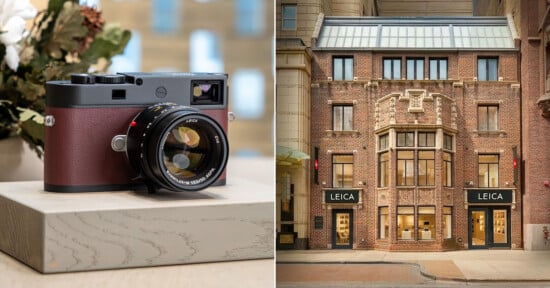
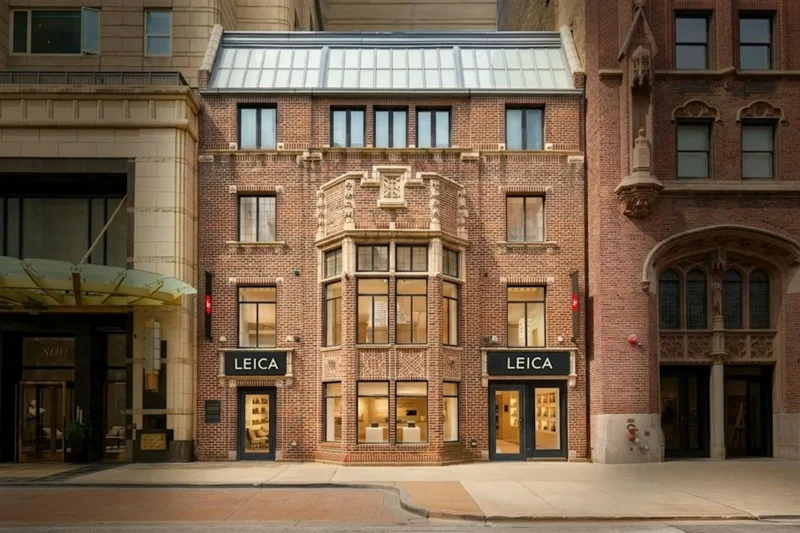
Leica Camera AG has opened a new flagship store and gallery in Chicago, marking a milestone moment that aligns with two major anniversaries: 50 years of Leica Galleries and 20 years of Leica retail. The launch reflects the company’s continued shift toward experiential spaces that combine photography, culture, and community.
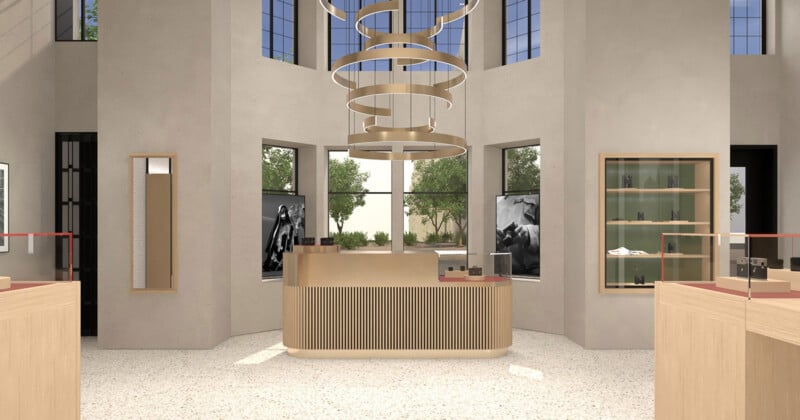
Located in Chicago’s Gold Coast district, the new flagship positions itself as both a retail destination and a cultural hub, expanding Leica’s global network of approximately 120 stores and 30 galleries worldwide. The space is designed not only as a point of sale but also as a place for exhibitions, conversations, and creative exchange across multiple levels of engagement.
A Moment of Reflection and Renewal
For Karin Rehn-Kaufmann, Art Director and Chief Representative of Leica Galleries International, the Chicago opening sits at the intersection of reflection and forward momentum. She frames the moment as part of a broader evolution in how Leica understands its role within photography culture.
“For me, Chicago feels like a moment of reflection and renewal at once. Fifty years of Leica Galleries is not just an anniversary, it’s a testament to our belief that photography matters, that images shape how we understand the world and ourselves,” says Rehn-Kaufmann.
She places equal weight on Leica’s retail evolution, which has brought the brand closer to its audiences through more immersive, experiential approaches. The Chicago flagship, in her view, is a physical embodiment of that dual history.
“Twenty years of retail speaks to something equally important: our desire to bring that belief closer to people, to make it tangible and represent the Leica brand in the right way. This space carries both spirits. It honors the quiet, almost sacred experience of encountering a photograph in a gallery, while also embracing the openness and energy of a place where anyone can walk in and feel they belong. Chicago is not just another location; it’s a statement about where we come from and where we’re heading to,” says Rehn-Kaufmann.
Why Chicago
Chicago’s selection as the next flagship location was rooted in its architectural legacy and its long-standing reputation as a city of makers, builders, and visual storytellers. For Leica, it represents a place where structure and experimentation coexist.
“Chicago has a certain honesty to it. It’s a city that doesn’t pretend, but builds, experiments, and endures. That resonates deeply with Leica. There is a rawness and authenticity in its creative community that mirrors what we value in photography: truth, clarity, and perspective,” says Rehn-Kaufmann.
Rather than approaching the city as a blank canvas, Leica sought to engage with its existing identity and creative energy. The result is a space shaped as much by listening as by design intention.
“When I think about Chicago, I think about strong voices and strong contrasts like light and shadow, history, and reinvention. That tension is incredibly inspiring. We didn’t want to impose something onto the city; we wanted to listen to it. This space is shaped by that dialogue, by the people who create here and the stories that emerge from it,” says Rehn-Kaufmann.
From Store to Cultural Hub
Across its global network, Leica has steadily redefined what a retail environment can be. The Chicago flagship continues that shift, positioning itself as a hybrid space where commerce, culture, and community intersect.
Rehn-Kaufmann reflects on this evolution as a natural extension of Leica’s philosophy around photography as a shared experience rather than an isolated act.
“I have always believed that Leica is not just about cameras, it’s about seeing. And seeing is something you share. Over the years, our spaces have naturally evolved into places where people come together, not just to look, but to connect,” says Rehn-Kaufmann.
In Chicago, that idea becomes more explicit, emphasizing openness, exchange, and emotional engagement rather than transactional interaction.
“In Chicago, we’re leaning fully into that idea. I want this space to feel alive, to be filled with conversations, with different perspectives, even with disagreement. It should be a place where a young photographer feels just as welcome as a master, where inspiration can come from an exhibition, a talk, or simply a chance encounter. If we do it right, people won’t come here because they need something. They’ll come because they feel something,” says Rehn-Kaufmann.
Curating Global and Local Dialogue
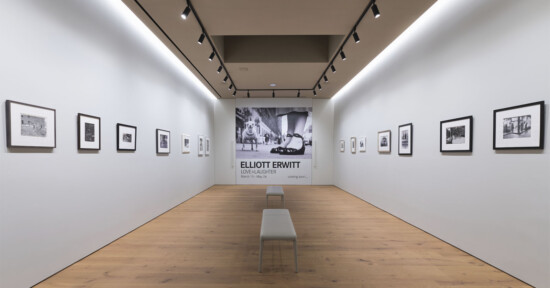
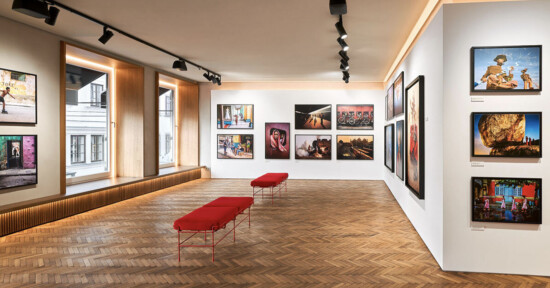
Exhibition programming at the Chicago flagship will continue Leica’s international curatorial approach while actively integrating local perspectives from the city’s creative community.
For Rehn-Kaufmann, curation is not simply about selection, but about emotional and conceptual connection between works, contexts, and audiences.
“Curation, to me, is deeply emotional. It’s about intuition as much as it is about knowledge. Of course, we carry a global responsibility, and we have access to some of the most important photographic voices in the world. But that means very little if we don’t also create space for what is happening here, now, in Chicago,” says Rehn-Kaufmann.
She describes the curatorial process as a form of dialogue rather than balance, where meaning emerges through interaction rather than hierarchy.
“I don’t see it as a balance in the traditional sense. I see it as a conversation: sometimes harmonious, sometimes challenging. A local artist can shift how we understand a global narrative, and an international perspective can illuminate something new about the local context. My role, together with our Gallerist in Chicago, is to create those moments of connection, where something unexpected happens between the works, and within the viewer,” says Rehn-Kaufmann.
A Next Generation Perspective
As Leica expands its physical and cultural footprint, generational involvement within the company is also evolving. Karin Rehn-Kaufmann’s son, Maximilian Kaufmann-Schösswender, represents part of that transition, with a growing role in shaping how the brand engages with future audiences.
“Leica Camera has always been an important part of my life and it will be even more so in the future. Over the past years I have already played an active role in the oversight of the Leica Camera brand and our real estate activities. While the gallery network is developed by my mother Karin Rehn-Kaufmann, the global community around the brand is something where I would like to further engage,” says Kaufmann-Schösswender.
He emphasizes continuity in Leica’s core values while acknowledging the importance of adaptation as the audience base broadens.
“Both the culture of photography and the community, ‘the Leica family’ as we like to say, are unique and core principles of our brand. As the next generation, our role is to carry forward this well-established model while further expanding it to attract new and younger audiences. We want to inspire people who are discovering photography for the first time, as well as those who are already deeply passionate about it,” says Kaufmann-Schösswender.
More Than a Gallery
Leica Galleries are positioned not as standalone exhibition spaces, but as nodes within a wider cultural and educational ecosystem that includes workshops, talks, and long-standing programs such as the Leica Akademie.
“A Leica Gallery is more than just a place where photography is exhibited—it is a space where the art form is nurtured, discussed, and experienced. Our ambition is to be an essential part of the global culture of photography,” says Kaufmann-Schösswender.
He highlights the interconnected nature of Leica’s programming, where exhibitions, education, and community engagement reinforce one another across locations worldwide.
“These initiatives have been part of Leica’s DNA for decades as the Leica Akademie was founded more than 90 years ago. In that sense, the gallery is part of a larger ecosystem – one that connects artists, collectors, enthusiasts, and newcomers, and fosters a deeper engagement with photography as a cultural practice,” says Kaufmann-Schösswender.
The Chicago flagship itself is designed to reflect its surroundings while maintaining a consistent Leica identity. Architectural influences drawn from the city’s design history are integrated into the space in subtle, contextual ways.
“It is very important to me, especially from my perspective as an architect. I’ve personally been inspired by figures like Frank Lloyd Wright, and the goal was to reflect that influence in a subtle and respectful way within the store,” says Kaufmann-Schösswender.
At the same time, he emphasizes the importance of maintaining visual and conceptual consistency across Leica’s global locations.
“Of course every Leica space should be immediately recognizable as part of our brand. The challenge and the opportunity is to create a balance: a space that clearly communicates Leica’s identity while also integrating the character, history, and cultural context of its location. When done right, the store feels both globally consistent and locally rooted,” says Kaufmann-Schösswender.
Looking Ahead
As Leica continues to expand internationally, the focus remains on deepening engagement rather than simply increasing scale. The Chicago flagship is positioned within a long-term strategy that prioritizes experience, connection, and cultural integration.
“The opening of the Chicago Store and Gallery is part of Leica’s retail strategy bringing the unique experience to more people around the world. But growth for us is not just about scale, it is about deepening the connection,” says Kaufmann-Schösswender.
He describes Leica’s future direction as a more integrated ecosystem linking physical spaces, education, and community programming across global markets.
“Looking ahead, it’s about creating a coherent ecosystem: connecting galleries, the Leica Akademie, our events, and our digital touchpoints. A space where people not only see images, but understand where they come from, what stories they carry, and why they matter,” says Kaufmann-Schösswender.
The Chicago flagship underscores a broader evolution for Leica Camera AG, where retail, exhibition, and education are increasingly unified into a single cultural framework. As the Leica Galleries mark 50 years, the company continues to position photography not only as a medium or product, but as a shared language of observation, memory, and meaning.
Affiliate Disclosure PetaPixel articles may include affiliate links; we may earn a commission if you buy through one.