Just How Good is the Sigma BF’s Autofocus Tech?
It started with an offhand question during a casual conversation: Can the Sigma BF autofocus keep up with the demands of wildlife and sports photography?
Chris Niccolls is the host of the PetaPixel YouTube show and co-host of the PetaPixel Podcast. He has worked with his creative partner Jordan Drake now for over fifteen years, starting with their first YouTube show, The Camera Store TV. They moved on to create and grow the popular show DPReviewTV, and have since moved to PetaPixel.
Chris began his photographic career in the black-and-white darkroom and still loves analog photography to this day. Over his twenty year career Chris has seen the evolution of photography from its analog roots, through the growth of digital technology, and now to the age of the smartphone and AI imagery. In this time, he has reviewed just about every photographic tool there is. With a passion for sharing his photographic knowledge, Chris was an instructor of photography at Calgary's SAIT institution for ten years, and continues to share his love for the artform with his worldwide YouTube audience. He is often invited as a guest speaker on photographic technology and has also presented at the SocialWest social media symposium. Chris almost always has a camera in-hand but you can often find him trading the camera for a fly rod to pursue his passion for fishing as well.

It started with an offhand question during a casual conversation: Can the Sigma BF autofocus keep up with the demands of wildlife and sports photography?
It was eight years ago that I reviewed the Panasonic ZS200, and I was immediately impressed by the compact size of the camera, along with a massive 15x optical zoom range. Most importantly, the ZS200 didn’t make any compromises when it came to handling and manual control, and the EVF was imminently useful.
There has long been a grand concept in the digital camera world to have a device that takes great photos and is constantly connected to the internet. This would allow for powerful on-device editing and the convenience of sharing your content immediately. Many attempts have been made to bring the creativity that a larger sensor and interchangeable lenses offer, but have it connected to your favorite apps and social media outlets. These have all failed.
Zeiss is nothing if not consistent. The Otus ML lenses bearing the illustrious blue Zeiss badge have always unapologetically strived to make optical lenses the old-fashioned way.
In all my time reviewing cameras, I've come across some hidden gems, but also some real dogs. Today we are going to be talking about the latter. I want to give some dishonorable mentions to some of the worst-designed cameras throughout history.
An ultra-wide lens is not something I often reach for. They can be useful as interior architecture lenses, for capturing dramatic vistas, and even for the occasional shot on the street, however, I usually find the propensity of the lenses to capture so much in the frame a tricky proposition.
Is there room for a new full-frame 35mm film camera? When the Pentax 17 half-frame camera came out, it represented a serious risk to see if beginner photographers would be willing to buy a new camera. When you consider the saturated used camera market with all of the options that are still available, it’s hard to imagine much demand for a camera that will cost substantially more.
The passage of time has not been kind to the Nikon F4. At the time of its release, it was a modern superstar, highly sought after, and bristling with modern advancements. It truly bridged the gap between classic manual-focus SLRs and modern autofocusing and advanced metering, flagship cameras.
I’ve reviewed my fair share of Fujfilm Instax cameras. Most recently, I played with the creatively powerful Instax Mini 99 and the entry-level Instax 400 Wide for those who want bigger pictures. However, it has been a long time since I’ve tested the most basic of Fujfilm Instax cameras. The latest iteration is the new Instax Mini 13, and I felt that I could test it with a fresh perspective.
While browsing online shopping, I have often come across unusual and unheard-of 35mm film stocks. My curiosity won out because black and white photography is artistic alchemy, and the film plays a big role in how the final images turn out. So, was this Temu film any good?
Sigma created an art form out of its Art series of lenses. They are beautiful, professional, and often chosen over OEM options. But there is always room for improvement, and the Art series has been on the market for a minute, so new technology inevitably leads to new updates. It could be argued that the Sigma 35mm F/1.4 Art is one of the most popular primes in the Sigma arsenal, and now we have a successor.
A wet and rainy San Francisco was the venue for this year’s Galaxy Unpacked launch event and the testing ground for shooting the new Samsung Galaxy S26 Ultra. The Ultra model is priced at $1,299, which is the same as last year’s model. I’m going into this review with the usual intention of testing this phone more as a camera and seeing how it stacks up as a creative tool.
The Chinese tech industry is a colossus, but there is a distinct lack of access to many of the more interesting options in North America. While Chinese lens designs are fairly common in North America, we are largely ignorant of the mobile phone options, as they are so rarely available.
If you own an APS-C E-mount, RF-mount, or X-mount camera, Sigma has a brand new prime lens that provides wide-angle coverage and plenty of light. This new $579 Contemporary lens makes a lot of sense for darker interior shots, so I headed to the Contemporary Calgary art museum to see what I could find. You just have to shoot with a Contemporary lens at Contemporary Calgary.
The Yamnuska Wolfdog Sanctuary is located just outside of Calgary, and does amazing work housing and rehabilitating these amazing wolf hybrids that often prove too much for owners to handle. We took the $3,199 pre-production Nikkor 70-200mm f/2.8 VR S II lens out to see how it handles this dynamic location.
Photography is an art form of trade-offs. When the shutter speed goes up, the aperture must come down. Higher ISO raises the exposure but hurts the image quality. A brighter maximum aperture means more cost and more weight. Everything is based on a give-and-take relationship, and balancing these factors is key to success.
Tamron consistently creates zoom lenses that break the norm when it comes to focal length, offering alternatives to the classic patterns that most other manufacturers pursue. Even the more conventional Tamron 28-75mm f/2.8 and 70-180mm f/2.8 refuse to match the more common 24-70mm and 70-200mm formulae. However, the standout lens from Tamron in recent memory is the oddly effective 35-150mm f/2-2.8 lens, which proves to be an ideal event lens for almost any situation. If it could be faulted in any way, it would be due to its rather heavy weight and bulky size.
Canon has created, in a very short time, a complete line of L-series prime lenses that cater to the hybrid photo and video shooter. It is quite an achievement to build a whole line of professional prime lenses that are all similar in size, weight, and form factor, while still maintaining the quality expected of an L-series optic. The latest addition to the family is the 14mm f/1.4L VMC, a first for Canon in its RF-mount. I took this $2,600 lens for a spin, appreciating its compact nature, but with serious trepidation that Canon may have pushed the envelope a little too far this time.
Learning to love the rangefinder was a long process for me. I could appreciate the simpler and sometimes slower approach to photography that a rangefinder represents. There is more demand on the photographer to focus, compose, and pre-visualize the image.
Ultra-fast 35mm lenses are not a new thing. Leica users have had access to the excellent Voigtlander 35mm f/1.2 Nokton across multiple versions for many years. The Noctilux title isn't new either. Leica has multiple insanely fast 50mm lenses, going down to as bright as f/0.95, on the market.
The Leica M-mount is a dynamic arena for third-party lens manufacturers, even though the brand is considered quite exclusive. These prestigious cameras come with huge price tags and the easy assumption would be that Leica users would only stick to Leica lenses. However, as one of the oldest camera manufacturers around, third-party lens makers have been creating for this illustrious mount for almost a century, and I got to play with a piece of history for my latest review. Well, sort of.
Why buy a dedicated monochromatic camera when a regular camera can take black and white photos? It's more expensive, far less versatile, and made for a very small market of users. That's the question I hear a lot, and I get it. But I would argue that photography isn't always about the most efficient tool, or the easiest path to a final result.
By now, everyone knows about the dominance that Fujifilm holds over the instant photography market. Instax is a huge part of its business and has become the de facto photography gift for birthdays, parties, and at the holidays.
With all the budget lens manufacturers available to a prospective buyer, it’s hard to separate the wheat from the chaff. Sirui is a well-known manufacturer of tripod gear, and when I heard they were making lenses too, I was very skeptical.
If you're looking at picking up a drone, you probably are thinking of one made by DJI, or another DJI, or yet a third DJI option. Others have tried, but largely, all have failed to get a solid foothold. However, this only refers to the drone market that appeals to the creative videographers. When it comes to the first-person view (or FPV) market, there are many brands vying for attention.
It’s the holiday season, and Reto has come up with the perfect Christmas present for photographers. The new Kodak Charmera is a tiny keychain-sized camera that uses licensed Kodak designs and logos to incredibly popular effect. The Charmera is true to its name and is a marketing masterpiece that is almost impossible to get now. I wanted to find out if this toy camera is worth all the hype, and whether it is worth purchasing after the holiday season.
Your favorite holiday tradition is back! Yes, it is time for our annual Best and Worst camera gear roundup. Jordan and I get together to battle it out with some not-so-friendly challenges, drink more than we probably should, and reminisce about the last year’s gear releases.
Everyone wants a point-and-shoot digital camera. There is something to be said for having a compact, simple, fun, pocket camera that you can take photos with, just for the pure joy of it. Memories to be made, without having to know the exposure triangle, or shoot RAW photo formats and edit later. But not everyone wants a used hand-me-down that may or may not function properly, and Camp Snap is hedging its bets that some consumers out there want a fresh start.
We made a promise to our viewers: Show us your support for the Petapixel YouTube channel by helping us reach certain subscriber milestones, and we will carry out some "challenges" for your entertainment.
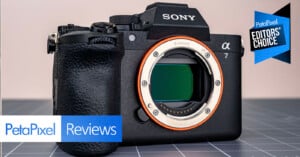
Canon recently made a huge stir with its excellent do-it-all R6 III and for a while, it looked like the year was going to end with a big win for Canon. But with the Sony a7 V coming seemingly out of nowhere, we have a serious contender for the best all-round camera on the market.
In a photo industry of ever-increasing prices, it's refreshing to see optics that supply exceptional value for the dollar. The new Canon RF 45mm f/1.2 STM made the entire industry double-take upon seeing an f/1.2 optic for only $479. Surely, there must be a catch, so I took the handy little 45mm to a local Christmas market to explore the myriad lights using an extremely shallow depth of field lens.
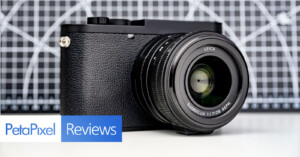
Leica is by far the leading company to create monochromatic versions of its most popular camera models, and that is because, love it or hate it, black and white exclusive cameras sell really well. Now the Leica Q3 gets the Monochrom treatment that we've seen in the recent Q2 and M11 models. It comes with a higher price at $7,790 and the limitation of only shooting monochromatic images, but it also comes with some image quality improvements.
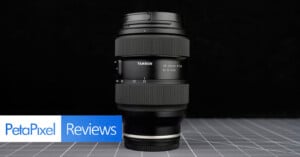
Tamron has a long and illustrious history of making travel-zoom lenses with massive focal ranges. These lenses provide a maximum amount of convenience, but how much of a compromise needs to be sacrificed to make this all possible? The new $900 Tamron 25-200mm f/2.8-5.6 Di VXD G2 is set to make a mark on the travel-zoom industry.
I recently took a trip to Aizuwakamatsu, Japan and this represented an ideal situation to also test the Sigma Contemporary 20-200mm f/3.5-6.3 DG super zoom lens. The autumn colors were just staring to turn and the mountainous area around Mt. Bandai promised some excellent landscape and wildlife opportunities.
The "M" in the Leica M series stands for Messucher, which refers to a large and accurate rangefinder incorporated with a viewfinder. For decades, this Leica rangefinder system has been synonymous with its brand and is the basis for the charming shooting experience that Leica M cameras are famous for. But with the Leica M EV1, Leica has forged a new path, and it is sure to polarize its fans.
Fujifilm has a crowded lineup of cameras, which, from an optimistic viewpoint, offers photographers many choices. However, from a pessimistic viewpoint, the degree of choice can be intimidating to beginners. This is part of why it is so important to have a solid entry-level camera to welcome new photographers into the Fujifilm family. For many years, the X-T30 series has served this role well, and now a third version has arrived. Priced at $999, it keeps photography affordable.
Many of us started our photographic journeys with a fixed 50mm lens. Arguments abound about what the best focal length is, but none can deny that a 50mm is the crossover point from wide angles to telephotos. It is a versatile focal length that can accommodate so many different kinds of photography if one is simply willing to move their legs.
Zeiss is a famous and prestigious name in the world of optics, and it is very willing to partner with other brands to bring the weight of its name to the table. So often we see the Zeiss name attached to Sony products, Vivo smartphones, Contax cameras, and Cosina optics, to name a few brands, both past and present.
Sony was one of the first major manufacturers to switch from DSLRs to mirrorless cameras and subsequently rushed to bring out a line of dedicated lenses for what was then the new E-mount. To be completely honest, some of these lenses were less than stellar, but nonetheless had to carry the line for many years.
Nikon debuted its Z-mount cameras in 2018 and shortly thereafter came out with its first professional 24-70mm f/2.8 S lens. Unlike some of the other companies that also began making mirrorless full-frame glass, Nikon came out with a legendary lens right out of the gates. The original 24-70mm f/2.8 lens may have been a little bulky, but it was incredibly sharp, immune to flare issues, and excellent for video work, too.
Two things that I love are 85mm lenses and Tokyo, Japan. I was fortunate to experience both, and PetaPixel's Jeremy Gray joined me for a week in Japan to visit Canon headquarters and the Utsunomiya optical factory. We missed Jordan on this trip, but Jeremy had never before visited Japan, and we wanted him to experience all that it has to offer for the first time.
Arguably, a smartphone is the most important piece of tech most of us own, considering how integrated it is into our daily lives. However, they are also capable picture takers, and it is in this spirit that I look over the new iPhone 17 Pro and Pro Max.
When it comes to the longer telephoto ranges, even Micro Four Thirds lenses can still be big, and not everyone needs -- or can afford -- the full reach of an OM System 150-400mm f/4.5. OM System has a couple of 40-150mm lenses in various sizes, and they have longer zooms up to 300mm with slow apertures. The time is ripe for something in the middle, and that's where the 50-200mm f/2.8 IS Pro comes in; but it will cost you $3,699.
Apple unveiled its iPhone 17 family today, including the much-improved iPhone 17, the ultra-thin iPhone Air, and the redesigned flagship iPhone 17 Pro and Pro Max. The PetaPixel team flew to Apple Park in Cupertino to witness the unveiling and go hands-on with the new-look iPhone 17 Pro, and there is much to like for photographers and videographers alike.
In an effort to learn to love the 35mm full-frame focal length, I took the latest Meike 35mm f/1.8 Pro lens out for a spin. The Meike 35mm f/1.8 is an affordable take on the popular focal length, but it has some handy tricks up its sleeve that belie its lower cost. Many creatives who are looking for a compact and sharp lens will find the Meike 35mm ideal for street photography and travel. I carried it on a little road trip around southern Alberta, and it proved to be a handy companion.
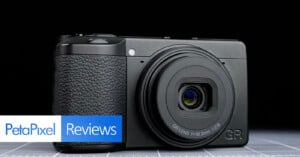
Small, pocketable cameras with fixed lenses hold an enviable position in the camera world. If a manufacturer makes one, it sells out.
Smartphone season is here, and, as usual, Google is starting things off. The Pixel 10 series has arrived, and although a telephoto lens has now been added to the base model, we prefer to evaluate the highest-end Pro series for its creative photo and video usage. At first glance, the specs and hardware look almost unchanged from the previous models. So is new software enough, or is this the most iterative update Google has ever released?
The industry desperately needs more lens support for APS-C cameras and it often feels like a neglected market. Full frame is clearly the favored child when it comes to the camera game, but I happen to love smaller sensor cameras, which give a great mixture of compactness and quality. Sigma is on a roll, making sure to give users excellent and affordable optics for Sony E mount, Canon RF mount, and Fujifilm X mount. The latest $629 Sigma 12mm f/1.4 DC Contemporary lens seeks to cover the ultra-wide arena with plenty of light-gathering potential to boot.
The fixed 200mm f/2 is a very rare and specialized lens. In the DSLR days, there were very few available, and they were all ridiculously expensive. Canon and Nikon both made some very prestigious versions that delivered razor-sharp optics and incredibly shallow depth-of-field. They were also useful for low-light sports and action photography.
The Sony RX1R II was such a unique product for its time, offering high resolution mated to a stunning Zeiss lens, all in a compact size. However, it was always a premium product that demanded an exorbitant price. The RX1R II debuted at around $3,300, and let’s keep in mind that was nine years ago.