
Google Android Feature That Scans All of Your Photos Can Be Turned Off
Around this time last year, Google quietly added a service to smartphones running Android 9 called Android System Safetycore, which left many confused about what it actually did.
Around this time last year, Google quietly added a service to smartphones running Android 9 called Android System Safetycore, which left many confused about what it actually did.

Google is updating its AI-powered search feature, called AI Mode, so that results now include images and photos as well as text.

The UK government has issued a new order to Apple seeking access to encrypted iCloud backups of British citizens, according to a report from the Financial Times. The order, known as a “technical capability notice” (TCN), is the second demand the Home Office has sent to the company this year.
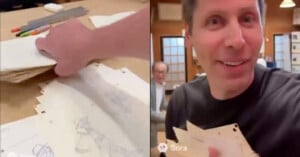
A new feature on OpenAI's video generator Sora 2 called 'Cameo' is allowing users to make videos of CEO Sam Altman stealing content and GPUs.

OpenAI has launched Sora 2, its latest AI video generator that will further undermine people's belief in what is real and what isn't.
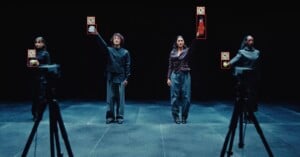
A team of engineers transformed video surveillance cameras into musical instruments, creating the world’s first orchestra made entirely of cameras.
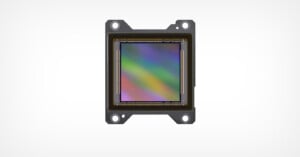
Sony Semiconductor has announced a new high-speed, high-resolution image sensor called the IMX927, a backside-illuminated and stacked CMOS sensor with a global shutter. While designed for industrial use, it showcases Sony's sensor capabilities and may give some insight into what may trickle down to consumer devices.
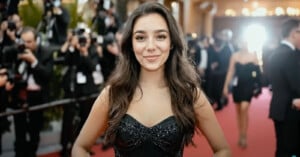
The creator of an AI-generated actress says she is about to announce which talent agency will represent Tilly Norwood -- the first creation to emerge from the AI studio Xicoia.

Facebook and Instagram users in the U.K. will be able to pay a subscription of up to $5.36 (£3.99) per month to use the platforms without ads.

President Donald Trump has deleted a video he posted to his Truth Social page of an AI-generated Fox News report about a mythical hospital containing "medbeds."

Most of the world’s art is locked away and will never be seen. This isn’t due to any nefarious reason, simply the ravages of time -- historical paintings are degraded and can require months, years, or even a decade of sluggish, painstaking restoration. As a result, about 70% of paintings in institutional collections are not on public view.
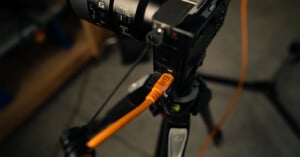
Tether Tools has long been a key player in the tethered photography community. This specialized but vital niche of the photography market has very specific cable requirements, which, when faced with increasing issues with USB-C PD, forced Tether Tools back to the drawing board. The company developed a brand-new USB-C cable, Optima, to deal with growing USB concerns on modern cameras.

A judge approved a $1.5 billion settlement between Anthropic and a group of U.S. authors who alleged that the company stole their work to train its AI models in a high-profile class-action lawsuit.
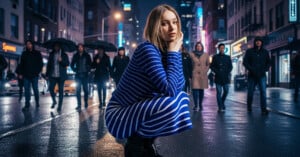
Adobe has added two popular AI image models to Photoshop Beta, including Google's viral Gemini 2.5 Flash Image, otherwise known as Nano Banana.

A history professor at the University of Zurich is working with a computer expert for an unusual project: building a historically accurate AI image generator.

Conceptual and advertising photographers planning a shoot often turn to mood boards to help sculpt the aesthetic of their project; with that in mind Google Labs has released an intriguing new tool called Mixboard.

Remember the days when swapping out a background in a photo meant hours of work on Photoshop? They are well and truly behind us now as Google continues to roll out its editing by voice feature in Google Photos.

Continuing to fulfill its promise to bring third-party AI models into its Firefly ecosystem, Adobe has added Luma AI's newest generative video model, Ray3, to Firefly.

Last year, the AI video company Runway joined forces with the major Hollywood studio Lionsgate in a partnership the pair hoped would result in AI-generated scenes and even potentially full-length movies. But the project has hit a snag.
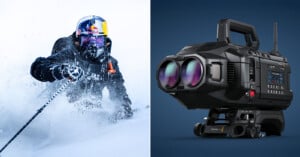
Apple is all in on immersive video content. The company has previewed an array of new films shot in Apple Immersive for the Apple Vision Pro, including projects from Canal+, MotoGP, Red Bull, CNN, and more.
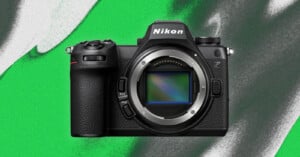
Nikon suspended the brand new C2PA functionality introduced in the Nikon Z6 III's first major firmware update after a major security issue was discovered. Nikon has taken the critical step to revoke all C2PA signatures issued before the C2PA functionality was taken offline, but a complete resolution will require changes to the C2PA validation tools themselves.

President Trump is expected to sign an executive order this week to finalize a long-rumored TikTok acquisition. In view of the impending deal, more details surrounding how the U.S. will tweak TikTok have come to light, including changes to the app's algorithm that is essential to its success and core to security concerns surrounding the app.

Albania has appointed the world's first AI-generated minister, which has made its first speech to the country's parliament promising to help fight corruption.

Meta is under scrutiny after the company used parents' photos of schoolgirls as young as 13 to promote its Threads platform to adult men.
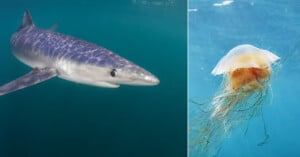
A novel AI model from MIT is blending science, art, and technology to inspire a deeper connection to the natural world, proving that generative AI doesn’t have to be soulless.

They said AI wouldn't come for wedding photographers, but a new trend driven by Google's Gemini image generator sees couples create fantastical pre-wedding pictures, without going anywhere.
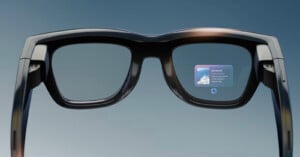
Meta unveiled "Meta Ray-Ban Display," its first pair of AI smart glasses with a built-in augmented reality (AR) display, at the company’s annual developer event.
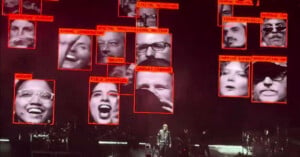
The band Massive Attack used live facial recognition and tracking on their audience during a recent concert in a powerful warning about the technology.

Disney, Universal, and Warner Bros Discovery have jointly filed a lawsuit against popular Chinese video generator Hailuo AI, over what they claim is “wilful and brazen” copyright infringement.

Hasselblad is one of the most storied names in photography. The company was founded in Sweden in 1841 as a trading business, but by the early 1900s, Victor Hasselblad began producing cameras that defined the brand and set a new standard for precision and design.

The United States and China have reportedly agreed on the framework of a deal to bring TikTok under majority U.S. ownership.

A new study has revealed a new type of cyber threat linked to AI agents, where ordinary-looking photos can be altered to secretly issue malicious commands.

Earlier this month, PetaPixel reported that Adobe's Acrobat Chrome extension made it absurdly easy to steal other people's photos, including AI-powered watermark removal. Since that report, Adobe has made changes to its extension.

The new Asus ProArt P16 notebook aims at the Apple MacBook Pro, promising to deliver the powerful performance high-end PC notebooks are known for while maintaining a sleek style that is much rarer in the PC space. Powerful PC notebooks aren't just for gamers, after all.

Bending Spoons has entered a definitive agreement with Vimeo to purchase the video platform for $1.38 billion.

Google recently introduced a powerful new AI model that can edit photos as well as generate synthetic images. And now a viral trend sees people turning theirphotos into imaginary figurines.

OpenAI plans to produce a feature-length animated film using AI technology, in roughly a quarter of the time normally required for a project of this scale.
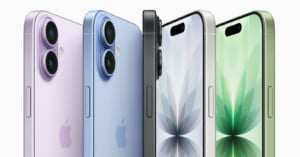
Apple has officially announced the base iPhone 17 which has a new 'center stage front camera' that means users will no longer have to rotate their phone to change the orientation of the shot.

As a photographer, there is nothing worse than looking back at an image and realizing it is all blurry. But new research reveals that there could be precious data in that soft photo.

Over the Labor Day weekend, rumors swirled about President Trump's health. On Monday, Getty Images photographer Andrew Caballero-Reynolds captured a grainy image of Trump leaving the White House.

Nikon's first major firmware update for the Nikon Z6 III arrived last week, adding bird-detect autofocus, Auto Capture, and C2PA Content Credentials.
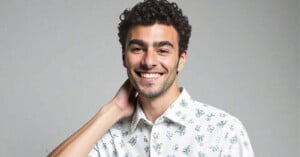
An image of Luigi Mangione, the man accused of killing Healthcare CEO Brian Thompson, has appeared on the Shein website showing him modeling a shirt for the fashion brand's spring/summer clothing line.
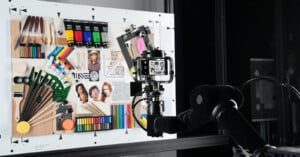
Tecno and DxOMark have launched the world’s first fully automated AI imaging lab, bringing faster, more precise, and inclusive smartphone camera testing.

Camera Intelligence, which most will know by its former name, Alice Camera, is slightly adjusting its business model. Rather than focusing on Micro Four Thirds or the fact that control of its camera system is handled through an attached smartphone, Camera Intelligence is pivoting to AI.
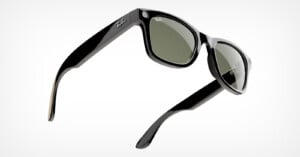
Ever since the Ray-Ban Meta smart glasses arrived on the market, the elephant in the room has always been: what if someone uses them for clandestine recording?
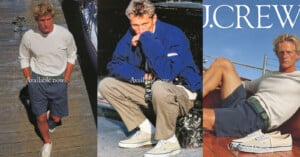
The clothing brand J.Crew has been accused of AI-generating a series of pictures which, at first glance, look as if they were taken by an actual photographer.

The BBC recently shared a fascinating news report from all the way back in 1970, which featured a state-of-the-art camera accessory at the time: a gyro-stabilized camera.
Artificial intelligence company Anthropic has reached a settlement in a high-profile class action lawsuit brought by a group of U.S. authors who alleged the company used pirated books to train its AI systems without permission or compensation.

The Panasonic Lumix S1 II is the first full-frame hybrid camera to employ Dual Gain Output (DGO), significantly improving its dynamic range performance in certain photographic situations. But for some reason, Panasonic didn't tell anyone about this when it launched the camera.

A 6-foot-2-inch-tall man was wrongfully arrested after New York Police's facial recognition technology linked him to a suspect who was significantly shorter and lighter than he was.