Posts Tagged ‘metadata’

Study Looks Into Whether Photo Websites Play Nicely with Copyright Metadata

Study Looks Into Whether Photo Websites Play Nicely with Copyright Metadata iptcdata

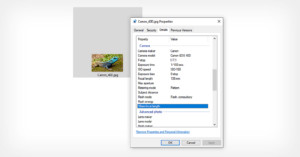
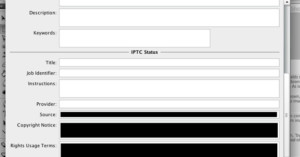
How well does your favorite photo hosting and/or sharing service handle the copyright information and EXIF data of your photographs? How do the popular services stack up against one another in this regard?

Metadata handling isn’t often discussed when photo sites are compared, but that’s what the International Press Telecommunications Council (IPTC) has been devoting an entire study to. The organization has published its findings regarding which companies play nicely with your metadata, and which pretend it’s not there.
Read more…

The Use of EXIF Data in Digital Photos as Courtroom Evidence

The Use of EXIF Data in Digital Photos as Courtroom Evidence exif

Donalee Moulton over at The Lawyers Weekly has an article describing how EXIF data is beginning to be accepted as valuable evidence in courtrooms — at least in Canada:

Traditionally, a photograph was a picture of one point in time. It could only tell what someone was doing, or not doing, at a particular moment on a particular day. What came before or after was unknown. This uncertainty meant that even what appeared to be a damning image had little value as a piece of evidence because there was no context [...]

Digital photography does not pose the same problem. In some cases, the metadata are enough to counter the snapshot argument by demonstrating that an activity was performed repeatedly or for a lengthy period [...]

Apparently judges are considering EXIF data to be relevant in personal injury lawsuits, in which photos could “prove” that the plaintiff isn’t too injured or depressed to function properly. Hopefully the courts are aware of how easily EXIF data can be faked.

Smile, You’re on Metadata [The Lawyers Weekly]


Thanks for sending in the tip, Phil!


Image credit: More Exif Info configuration by mortimer?, Courtroom One Gavel by Joe Gratz

Exif4Film Helps Analog Photographers Infuse Metadata into Film Photos

Exif4Film Helps Analog Photographers Infuse Metadata into Film Photos exif mini

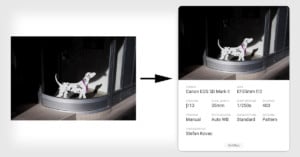
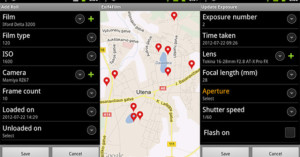
One of the big conveniences of shooting digital is that your pictures pop out with useful details baked into the EXIF data. Exif4Film is a tool that makes recording EXIF information easier for film photographers. It comes as a pair of programs: an Android app helps shooters store specific details as soon as photos are captured, and a desktop application takes the Android app data and automatically adds it to your film scans. The apps are completely free, and developer Kostas Rutkauskas tells us that they’re planning to open-source the project soon. If you’re an Android user and analog shooter, give it a shot and let us know how it goes!

Exif4Film [CodeUnited]

US Army Warns Soldiers That Geotagged Photos Can Kill

US Army Warns Soldiers That Geotagged Photos Can Kill cameracurrent mini

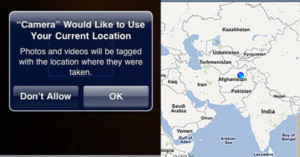
Earlier this month the US Army published an article warning its soldiers that the ubiquitousness of geotagged photographs these days can present a serious security risk, citing a real-world example of something that happened back in 2007:

When a new fleet of helicopters arrived with an aviation unit at a base in Iraq, some Soldiers took pictures on the flightline, he said. From the photos that were uploaded to the Internet, the enemy was able to determine the exact location of the helicopters inside the compound and conduct a mortar attack, destroying four of the AH-64 Apaches.

Officer Kent Grosshans recommends disabling the geotagging feature on your phone (or camera) and double-checking your social media settings to see who you’re sharing location-based info with, regardless of whether you’re an enlisted soldier or a civilian.

Geotagging poses security risks (via John Nack)

New Campaign Seeks to Make Metadata Permanent

New Campaign Seeks to Make Metadata Permanent metadata mini

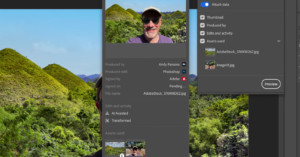
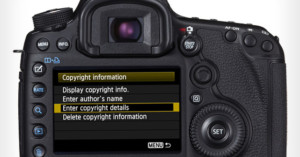
EXIF data embedded in an image file can shed quite a bit of information about a photo, including how it was created and the owner of the copyright. It’s useful, but can be easily stripped away. A new consortium led by three organizations (IPTC, 4A’s, and ANA) is pushing to make metadata permanent. It recently published an Embedded Metadata Manifesto, which states,

Ownership metadata is the only way to save digital content from being considered orphaned work. Removal of such metadata impacts on the ability to assert ownership rights and is therefore forbidden by law in many countries.

[...] Properly selected and applied metadata fields add value to media assets. For most collections of digital media content descriptive metadata is essential for retrieval and for understanding. Removing this valuable information devalues the asset.

Do you want to live in a world where it’s illegal to remove or tamper with a photograph’s EXIF data?

(via NPPA via PopPhoto)

Generate an Infographic Showing Your iPhone Photo Habits

Generate an Infographic Showing Your iPhone Photo Habits infog

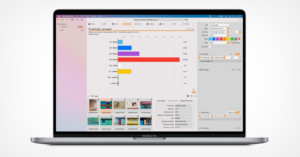
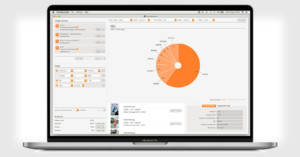
Photo Stats is a new iPhone app that can help you visualize your iPhoneography habits by automatically generating interesting infographics showing things such as where you snapped photos and the time of day you shoot the most. You can buy it for $1 in the App Store.

Does anyone know of any programs that does the same thing for the photos on your computer? That would certainly be neat, and much more applicable to photo-enthusiasts.


Thanks for sending in the tip, Mladjo!

Magnum Turns to Crowdsourcing to Tag Their Massive Photo Collection

Magnum Turns to Crowdsourcing to Tag Their Massive Photo Collection magnumtag

Want to play role in the legendary agency Magnum Photos? Well, now you can as a “Magnum Tagger”. The cooperative is having a tough time keeping their large archive of historical photographs organized and easily searchable. Of the 500,000 images they’ve uploaded to the web, about 200,000 have little or no associated metadata. Magnum has decided to tackle this problem by crowdsourcing it, asking for volunteers to sift through the photographs and add useful information. For the trial run they’re looking for 50 volunteers, which shouldn’t be hard to find given the hundreds of thousands of followers they have on sites like Twitter and Facebook.

Maybe they should take a page out of Google’s book by turning image tagging into a game!

(via Popular Photography)

Fake EXIF Data Helps Photographer Overcome Megapixel Myth

Fake EXIF Data Helps Photographer Overcome Megapixel Myth exif

Here’s an interesting snippet from an article published today by David Pogue of the New York Times that describes a trick one photographer uses to overcome the megapixel myth:

A few years back, one of his clients, a stock-photo company, rejected his submissions because they didn’t meet the company’s minimum-resolution requirements. All photos had to be, for example, 10 megapixels or higher.

Tom knew that his five-megapixel photos (or whatever they were) would print perfectly well; he knew that the megapixel myth was at play. But he couldn’t convince the stock agency that its megapixel requirement was based on mythology.

So he took a photo file from a buddy who owned a fancy high-end Canon SLR, pasted in his low-res photo, and dragged it out bigger, so that it filled the full area of the higher-resolution photo. (Why did he start with his buddy’s file? So that the metadata—the invisible information about the photographic settings embedded in every digital photo—would indicate to the stock agency that the picture was taken with that high-end camera.)

Not only was the stock agency fooled, but to this day, many of its customers have used Tom’s phony high-megapixel photos in professional publications. They’ve all been delighted by the quality.

It would be interesting to find out how widespread this kind of fakery is in the photo industry.


Image credit: exif data by jbylund

BP Gets Heat for Doctored Command Center Photo

BP Gets Heat for Doctored Command Center Photo photoshoppedBP

The most recent fuel for resentment towards BP comes from a doctored photo of the company’s crisis center in Houston. America blog’s John Aravosis made the connection when he examined a hi-resolution version of the photo, which was displayed prominently on the BP website. All this comes after BP promised for increased transparency between the company and the public.
Read more…