Posts Tagged ‘memorycard’

Eye-Fi Doubles Capacity of Flagship Card to 16GB, Drops Price of Smaller Siblings

Eye Fi Doubles Capacity of Flagship Card to 16GB, Drops Price of Smaller Siblings eyefi

Eye-Fi, a pioneer in the Wi-Fi-enabled memory card market, has announced a new flagship SD memory card. The new Pro X2 doubles the capacity of the old one, from 8GB to 16GB, and increases the speed as well, from Class 6 to Class 10.
Read more…

XQD a No-Show at Photokina, SanDisk Opts to Avoid the Format

XQD a No Show at Photokina, SanDisk Opts to Avoid the Format missingxqd

When XQD memory cards were announced in December 2011, the CompactFlash Association touted the format as the successor to CompactFlash cards. We definitely seemed to be moving in that direction at first: one month after the unveiling, Nikon’s flagship D4 DSLR was announced with XQD card support. The day after that, Sony became the first major memory card maker to announce a line of XQD cards. Six months later, Lexar also announced its intentions to join the party.
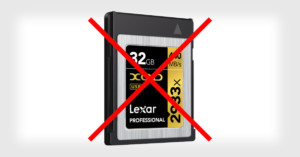
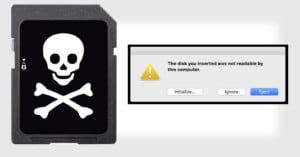
Since then, things have died down to the point where you can hear grasshoppers chirping. Not a single XQD-capable camera was announced at Photokina 2012 this past week. Despite being the first to make them, Sony strangely decided to leave the cards out of its top-of-the-line cameras as well.
Read more…

Lexar Unleashes the World’s First 256GB SDXC Memory Card

Lexar Unleashes the Worlds First 256GB SDXC Memory Card 256sdcard

Lexar has set a new bar in SD memory card capacity with its new 256GB card — the largest size offered in the SDXC (Secure Digital eXtended Capacity) format. SDXC has an upper limit of 2TB, compared to the 32GB cap that restricts the SDHC (Secure Digital High Capacity) format.

The official name of the card is the Lexar Professional 400x SDXC UHS-I. It’s geared towards photographers who need to “capture, store, and transfer a large number of high-quality photos” and videographers who need to record massive amounts of HD video.
Read more…

PQI Offers Eye-Fi-style WiFi Cards With microSD Slots for Flexible Capacity

PQI Offers Eye Fi style WiFi Cards With microSD Slots for Flexible Capacity pqiaircard mini

Eye-Fi cards have seen their fair share of competition, but a new product from memory manufacturer PQI could pose a bigger threat than they’re used to. The Air Card, as PQI are calling it, made its debut at Computex 2012 and, for the most part, offers exactly what we’d expect from a WiFi memory card: it creates its own WiFi hotspot when the camera is turned on, at which point photos appear automatically on whatever tablet, phone or PC you happen to have connected. The card can even connect to three sources at once, although this will slow down the transfer rate quite a bit. One specific feature, however, makes the Air Card stand out. Read more…

Scientists Discover a Way to Store and Retrieve Images from a Cloud of Gas

Scientists Discover a Way to Store and Retrieve Images from a Cloud of Gas gasstorage mini

We’ve by no means reached the limits of flash and hard drive storage capabilities, and newer WiFi capabilities open up a seemingly unlimited amount of cloud storage, but a group of researchers at the National Institute of Standards and Technology in Maryland have taken the term “cloud” a bit literally. They’ve managed to store and retrieve two sequential images in a cloud of rubidium atoms.

The specifics, which you can find here, are somewhat complicated and non-scientific types may want to stay away; but the result of years of experimentation is that they have now been able to store images of the letters T and N in the atom cloud, and then retrieve them with 90-percent accuracy. This breakthrough is a big step towards the future of what scientists refer to as “quantum memory.” It’s true that you probably won’t be seeing quantum memory cards any time soon, but this technology can only lead to a future with more storage options — and that we’re all for.

(via Technology Review via Engadget)

Tip: Put Your Contact Information on Your Camera’s Memory Card

Tip: Put Your Contact Information on Your Cameras Memory Card dogtag mini1

If you were to lose your camera today, would anyone who found it be able to get in touch with you? If not, it might be a good idea to put a couple “digital dog tags” on your camera’s memory card. First, add a photo with your contact information onto the card so that anyone looking through the photos on the camera will come across it. Next, add a series of text documents to the root directory of your memory card (the first directory that appears when you access the card on a computer). Give these files names that both attract attention and contain your contact info. Open up these text documents and add your full contact details. This way, anyone who opens up your card on a computer will (hopefully) see your info as well.

These tips are especially useful if you’re traveling with your camera, since you might not be clearing the data off your card very frequently and may have a higher chance of losing your camera.

(via Reddit)

Keeping Your Memory Cards Healthy

Keeping Your Memory Cards Healthy CARD mini

KEH has published a helpful primer on memory cards that describes the different types, common error codes you might come across when using them, and how to take care of them:

Memory cards are quite sturdy and commonly expected to work through one million read/write/erase cycles. The weakest part of the card is the connectors however, and should withstand around 10,000 insertions/removals into a camera or card reader.

No matter which type of card (CF I&II, SD, XD, SM, MS, etc.) your camera takes, it’s a good idea to format it on a regular basis. While it may not happen often, these little cards of information can fail and reach the end of their life unexpectedly. To keep your card in good health, format it in the camera from time to time. (I format my card after every major download). This clears up the card and erases all of the data. Of course make sure that you have downloaded and saved onto a computer all of the files on the card before formatting.

Since the number of insert/remove cycles a card can handle is far less than the number of read/write cycles, it’s very important to handle your cards gently in order to prolong their lifespan.

Memory Cards: Compatibility, Error Codes, and Health (via Photojojo)


P.S. Last month Canon also published a helpful guide on its cameras error codes and what they mean.


Image credit: 4GB Memory card by Jorge Quinteros

CompactFlash Cards to Be Replaced with the Smaller XQD Format

CompactFlash Cards to Be Replaced with the Smaller XQD Format xqd mini

Perhaps in response to the growing capacities and falling prices of SD cards, the CompactFlash Association has announced a new format to replace CF cards for professional photographers. It’s called XQD, and has a size that falls between CF and SD cards (it’s thicker than SD cards, but smaller than CF cards). The interface used is PCI Express, which has a theoretical max write speed of roughly 600MB/s, though the target for real-world write speeds at first will be 125MB/s. It’ll start making public appearances at trade shows early next year, and will be licenced out to card makers around the same time.

(via CompactFlash)

Get a 16GB Compact Flash Card for $23

Get a 16GB Compact Flash Card for $23 16gbcard

Deal alert: you can buy a 16GB Kingston 266x CompactFlash card over at Buy.com for just $23 with shipping included. Just for comparison, these cards are listed for $33 everywhere else. Not sure how long this deal is good for.

Kingston 16GB Ultimate CompactFlash Card (via Photography Bay)


Update: Reader Benjamin Watson points out that the deal involves a mail-in rebate, and that your checkout price will be $33.

SanDisk and Eye-Fi Join Forces to Offer Wireless SD Goodness in Europe

SanDisk and Eye Fi Join Forces to Offer Wireless SD Goodness in Europe sandiskeyefi mini

Last week Toshiba announced “FlashAir” SD card with built-in LAN functionality, and today SanDisk is launching a counterattack. Rather than develop its own wireless cards, the company is partnering with Eye-Fi to sell co-branded wireless SD cards to European customers. The cards, which allow photos to be transfered to a computer over Wi-Fi, will be available in 4GB and 8GB sizes, and are basically Eye-Fi cards with a SanDisk logo slapped onto them. No word on price or release date as of yet.

It looks like wireless memory cards are going to be one of the next big things in digital photography as more and more big players are hopping onto the bandwagon.

(via Eye-Fi via MegaPixel)