Technology

Self-Portrait Machine Turns Your Hand Into a Photo Printer

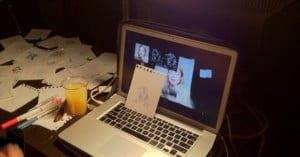
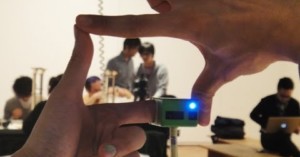
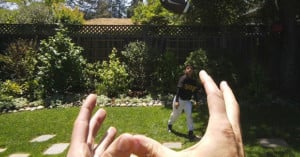
"Blind Self-Portrait" is a project by artists Kyle McDonald and Matt Mets that's based around a machine that can help you turn photographs into sketches. The machine constantly track's the subject's face using a camera and translates the image into a line-drawing and x- and y-coordinates. The user then rests their hand on the machine's "hand" and presses a pen into a piece of paper. The robot hand does the rest of the work, guiding the hand into drawing the photograph as the person sits back and watches the magic happen.
Ricoh Patents Shock-Absorbing Lens Caps

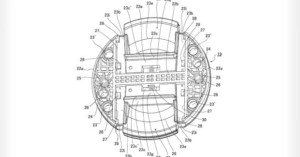
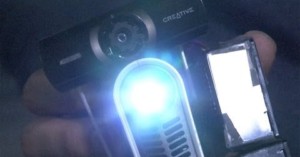
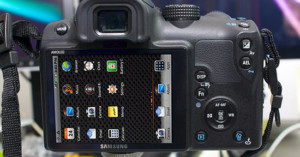
As the saying goes "if it ain't broke, don't fix it," but why not make it better? That's probably the attitude Ricoh is approaching their newest patent with, because they're making modifications to one of the few pieces of camera equipment that hasn't changed since the early days -- the lens cap.

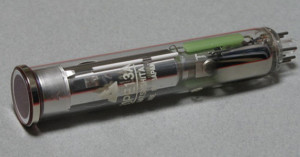
This 112MP Sensor Can Capture the Sun and the Stars At the Same Time

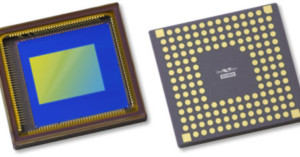
There are many different levels of camera, ranging from point-and-shoot compacts to medium format behemoths, but what if there was something much more powerful than even the highest end Haselblads? What if someone other than space stations could get their hands on a camera that could shoot, say, 112MP photos with enough dynamic range to capture the sun and the stars... in the same exposure... in broad daylight? Well, if we play our cards right, we may just get to see that.

Creating Still Photographs by Extracting Frames from HD Video

Are we close to the point at which HD video cameras are so good that professional photographs can simply be extracted from footage rather than shot with a still photography camera? That's a question photographer Kevin Arnold had, and when he finally got his hands on a $65,000 RED camera he decided to seek an answer.

LightPlot: A Robotic Arm That Creates Animated Light Paintings

The photos that went into the animation above were all created in-camera using software and a robotic arm programmed before hand with predetermined patterns. The project, known as LightPlot, started as an NXT Lego experiment in stop-motion photography by Ben Cowell-Thomas. He wanted to create a motion control rig for stop-motion using NXT, but as he was looking through some light painting projects online, he began to wonder how he could turn his lego project into a light painting rig.

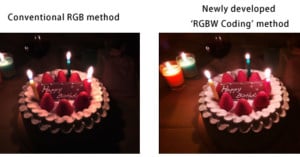
Newer Smartphones Packing CMOS Sensors with Dedicated White Pixel

Some time ago Sony announced a new series of "stacked" CMOS sensors that would bring a new level of quality to smartphone cameras. And now, several months later, rumors are floating about that Sony's new LT29i smartphone -- codenamed the Hayabusa -- will be packing a 13-megapixel version of the new tech.

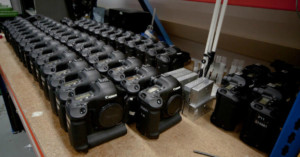
Animated Pirates Movie Made With One Million Stills From Fifty 1D Mark IIIs

High-end DSLRs have already made inroads into the world of professional cinematography, but the new animated movie "The Pirates" was actually shot using only Canon 1D Mark III's -- 50 of them to be exact. The movie, made by Oscar-winning British animation house Aardman (the same people that brought us Wallace and Gromit), is the first full-length feature film the studio has ever shot using only DSLRs.

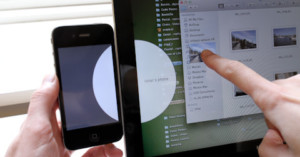
Futuristic Drag and Drop Concept for Transferring Photos and Media

Tired of fiddling with cables and memory cards? You might not have to in the near future as wireless data transfer becomes more and more common. This brilliant concept video by designer Ishac Bertran imagines how we might soon be using "spatially aware devices", or devices that can share data simply by holding them close together. Want to transfer some photos off your camera? Simply hold it close to your computer monitor and drag them off!

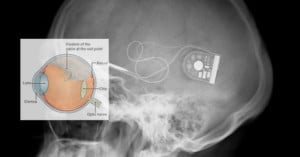
Image Sensor Implants Used as Makeshift Eyes for the Blind

Image sensors and the advent of digital imaging have been met with differing reactions from the photographical community. But what a team of doctors at the Oxford Eye Hospital have managed to do with the technology is 100% digital, and 100% amazing. Clinical trial leaders Robert MacLaren and Tim Jackson have helped two blind men to partially see again.

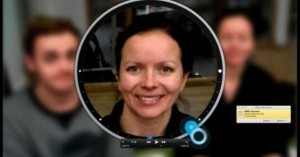
BlackBerry 10 Timeline Feature is Indeed Scalado Rewind Rebranded

A couple of days ago the world was wowed by the up and coming BlackBerry 10's new camera app. The app, demoed by RIM at BlackBerry World 2012, allowed you to select someone's face and scroll through frames captured before and after you hit the shutter button. If you thought the app looked familiar, you were right: it's actually a rebranded version of Scalado Rewind.

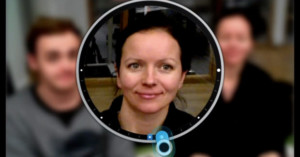
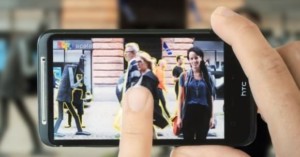
BlackBerry 10 Camera Features “Timeline Lens” that Captures Moments You Miss

The new BlackBerry 10 operating system was unveiled BlackBerry World 2012 today, and one of the amazing new features that wowed the crowd was the camera app. It features a seemingly-magical "timeline" lens that lets you rewind sections of photographs in order to recover moments that your fingers weren't fast enough to capture. Did your subject blink in the photo? No worries... simply rewind their face and you're good to go! Basically, the camera is constantly capturing frames as soon as the app is loaded, so there's always a small buffer of previous moments stored for you to recover.

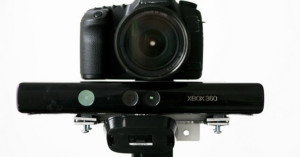
New Imaging System Captures 3D Interiors in Minutes

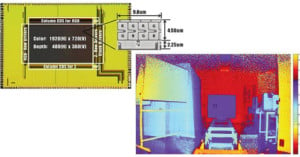
If it looks like a Kinect, and the prototype was once a Kinect, you'd think the result would be Kinect-like; but the Matterport system is much cooler than that. It can't record you dancing with your friends in front of your TV, but what the it can do is render 3D interiors in minutes -- something that was once a painstaking many-hour process.

Camera Phones Used for Augmented Reality Presentations in London Museum

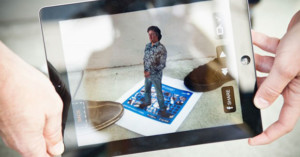
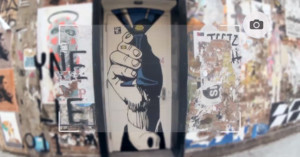
Typically, augmented reality falls somewhere between technological breakthrough and really cool thing to show your friends; but in the Science Museum in London's Making of the Modern World exhibit, augmented reality also takes up the mantle of education.

Using the $3 Science Stories app, visitors to the museum can point their iOS or Android devices at markers set in front of particular exhibits, and prompt a 3-dimensional James May (one of the hosts of BBC's Top Gear) to appear and explain the particulars of the display.

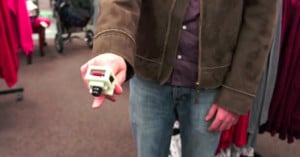
EyeRing is a “Point and Shoot” Camera for the Visually Impaired

MIT's Media Lab is no stranger to innovation; from super-high-speed cameras to cameras that can see around walls, they always seem to be on the cutting edge of imaging innovation. Their newest project, the EyeRing, is yet another innovative idea that could some day revolutionize the way we take pictures and experience our world.

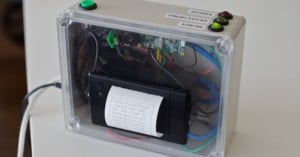
Descriptive Camera: An Instant Camera that Prints Text Instead of Photos

Many photographers enjoy receiving feedback about their created images. Services such as Flickr and even Instagram are built at least partially around sharing your images and, hopefully, receiving some comments and praise in return. There's something fascinating about having your work interpreted though someone else's lens, and when Matt Richardson invented his "Descriptive Camera" he kept this in mind.

The Future: Snap and Share Photos Using Augmented Reality Glasses

If Google's vision of the future pans out, we may soon be snapping and sharing photographs using augmented reality "glasses". The company is working on a product that's currently going by the code name "Project Glass". As the concept video above shows, the aim is to have a wearable "computer" that can project useful information about the world directly into the user's eye, allowing people to constantly interact with the Internet throughout their everyday lives. The glasses would even be able to snap photographs based on voice commands, and then instantly upload them to the web.

Untouched Sample Shots Captured with Nokia’s New 41MP Camera Phone

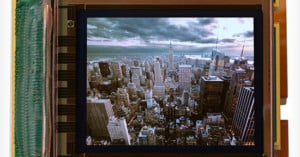
Nokia has released a set of sample photographs in order to show off the camera quality of its new 41MP 808 PureView camera phone. The 33.3MB ZIP file contains just 3 untouched JPEG images -- the largest of which (seen above) is a 5368x7152, 38-megapixel photograph that weighs in at 10.3MB. The quality is quite impressive, given that the images were captured with a phone.

Scalado Remove Helps You Un-bomb Your Photobombed Photos

Last year imaging company Scalado showed off an app called Rewind that lets you create perfect group shots by picking out the best faces from a burst of shots and then combining them into a single image. Now the company is back with another futuristic photo app: it's called Remove, and lets you create images of scenes without the clutter of things passing through (e.g. people, cars, bikes). It works like this: simply snap a photograph, and the app will outline everything that's moving in the scene with a yellow line. Tap that person or object, and it magically disappears from the scene!

Jumping Spiders’ Eyes May Inspire New Camera Technologies

In a paper published in Science this week, Japanese researchers reported on a discovery that jumping spiders use a method for gauging distance called "image defocus", which no other living organism is known to use. Rather than use focusing and stereoscopic vision like humans or head-wobbling motion parallax like birds, the spiders have two green-detecting layers in their eyes -- one in focus and one not. By comparing the two, the spiders can determine the distance from objects. Scientists discovered that bathing spiders in pure red light "breaks" their distance measuring ability.