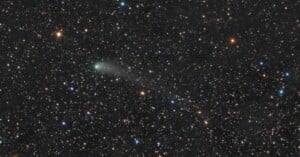
Astrophotographers Needed: Can You Capture This Comet’s Broken Tail?
Scientists are calling on astrophotographers to capture a comet's broken tail and keep the Earth safe from the Sun.
Scientists are calling on astrophotographers to capture a comet's broken tail and keep the Earth safe from the Sun.
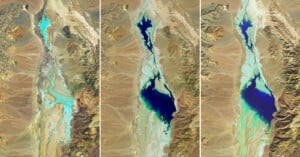
This week, NASA Goddard released a new video that highlights the Landsat program's achievements in 2023. A joint mission between NASA and the United States Geological Survey (USGS), satellite imagers have been orbiting Earth since Landsat 1 was launched in July 1972.
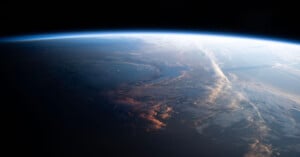
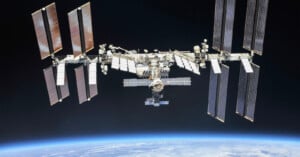
Swedish astronaut Marcus Wandt recently returned from a three-week mission on the International Space Station (ISS) and captured some incredible photos and videos during his time in orbit, including footage of a powerful thunderstorm.
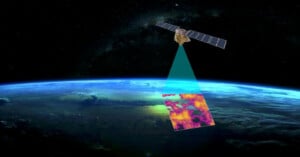
Google is working alongside the Environmental Defense Fund (EDF) to better understand methane emissions and potential mitigations.
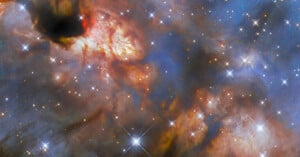
The Hubble Space Telescope (HST) has done it again, delivering a spectacular image of the cosmos that is a veritable smorgasbord of color and detail.
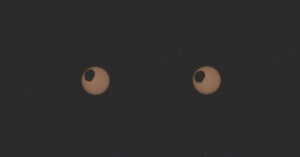
The Mars Perseverance Rover captured an eclipse last week from the surface of Mars as a moon passed in front of the Sun.
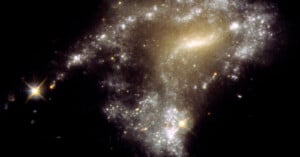
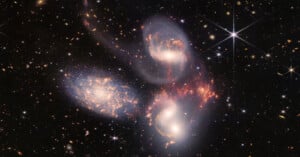
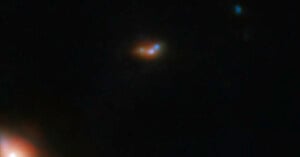
When galaxies collide, they don't necessarily destroy the stars within them. As NASA explains, contrary to popular belief, such a galactic "rough-and-tumble" actually triggers the generation of new stars and -- presumably -- planets.
Swedish astronaut Marcus Wandt has just returned from a 20-day voyage into space and he shared some incredible images of the views he saw while in Earth's orbit.
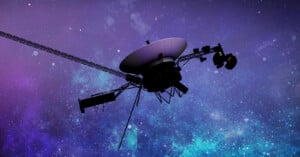
NASA engineers are working hard to resolve a critical issue with the Voyager 1 but communications with the longest-operating spacecraft in history may ultimately be lost.
A photographer spent five years traveling the world to turn the lens on amateur astronomers who have contributed to science.
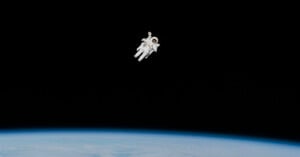
On February 7, 1984, astronaut Hoot Gibson aimed his camera out of the crew cabin window of the space shuttle Challenger towards Bruce McCandless II as he floated freely in space. What resulted is one of the most, if not the most, iconic photos and most requested images. It turns 40 years old this week.
The Hubble Space Telescope (HST) upended beliefs about the fundamental nature of the Universe, delivering evidence that the Universe was not slowing down, as gravity seemingly implied it must be, but expanding. 25 years later, the James Webb Space Telescope (JWST) can help scientists make another breakthrough.
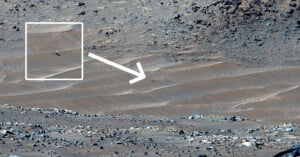
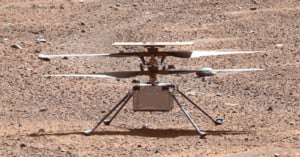
As seen from the Perseverance Rover as it drives away, NASA's Martian helicopter Ingenuity sits alone amidst windswept sand dunes, its mission complete.
The International Space Station (ISS) has been equipped with a large batch of Nikon Z9 cameras as the astronauts there prepare to finally retire the Nikon DSLRs that have served as the primary systems in orbit for years.
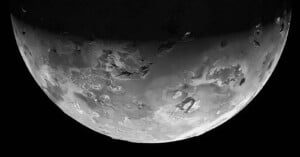
Over the weekend, NASA's Juno spacecraft made another close flyby of Jupiter's moon, Io. Like a prior flyby last December, the encounter is designed to help scientists understand the volcanic nature of the moon, the most volcanic in the entire solar system.
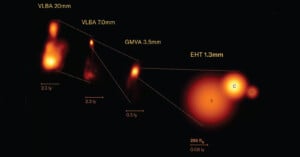
The Event Horizon Telescope (EHT) Collaboration and scientists from the Max Planck Institute for Radio Astronomy (MPIfR) in Germany used an Earth-sized radio telescope array to observe the jet base of an evolving plasma jet outflow from a supermassive black hole at an unprecedented angular resolution.
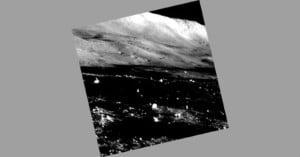
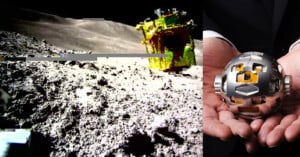
In space, no one can hear a shutter click, and so Japan's moon lander sent off what may be its final photo in silence.
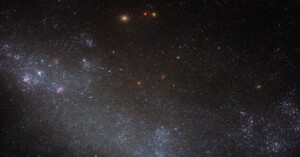
The Hubble Space Telescope's new Picture of the Week shows a remarkably dense field of stars. However, what at first glance looks like just a field of stars, spread somewhat irregularly through the frame, the photo shows a considerable portion of a galaxy.
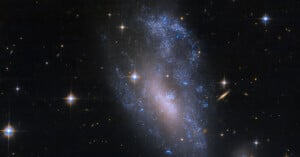
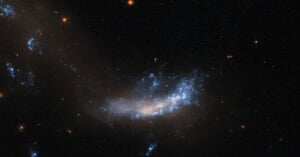
The spiral galaxy UGC 3912 doesn't look like much of a spiral in a new image captured by the Hubble Space Telescope. Its unusual and distorted shape is due to a gravitational encounter with a separate galaxy.
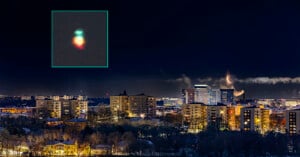
Swedish photographer and self-described amateur astronomer Peter Rosén witnessed a magnificent and rare sight in Sweden's night sky on January 8. While watching Venus rise above Stockholm's skyline, Rosén captured a colorful green flash around the planet.
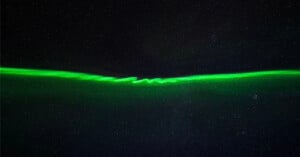
The aurora tends to show itself as shapeless illuminations that dance and swirl but one photographer in Iceland recently looked up and saw the northern lights being "curled" in a highly unusual way.
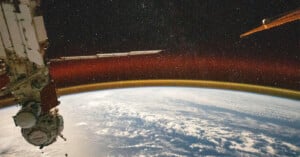
Photographers are often inspired to shoot during the "golden hour", but the International Space Station (ISS) has just snapped a photo that takes "golden" to a whole new level.
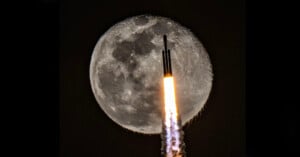
A photographer captured a thundering photo of a Falcon Heavy SpaceX rocket passing in front of the Moon -- making the edges of Earth's satellite look as if they're rippling.
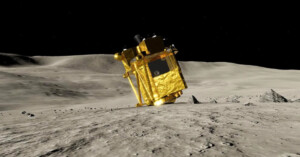
Last week, Japan became the fifth country to land a spacecraft on the Moon successfully. However, the historic accomplishment had its challenges. The Japanese Aerospace Exploration Agency's (JAXA) Smart Lander for Investigating Moon (SLIM) landed upside-down on the lunar surface, preventing the lander from recharging its batteries with its included solar panels.
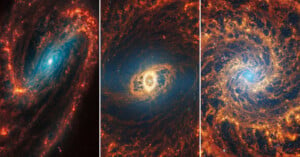
The James Webb Space Telescope captured images of 19 nearby spiral galaxies as part of its long-term Physics at High Angular resolution in Nearby GalaxieS (PHANGS) program.
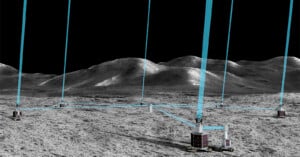
A team from NASA's Goddard Space Flight Center has proposed a design for a lunar-based multi-camera telescope array that could start small, but expand to be much larger over time.
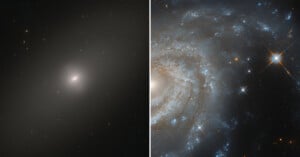
Not to be outdone by the James Webb Space Telescope and its beautiful new nebula image, the Hubble Space Telescope delivered a pair of fresh new space photos this week.
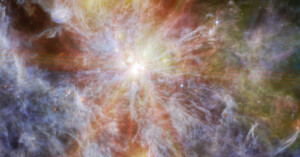
The James Webb Space Telescope set its sights on a region of ionized interstellar atomic hydrogen in the Large Magellanic Cloud (LMC) this week, delivering one of Webb's most colorful photos yet.
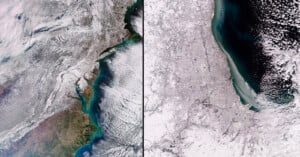
North America has been subjected to some of the most extreme cold in recorded history and views from space emphasize how frigid a couple of major U.S. cities have looked in recent days.
After greatly exceeding expectations and making dozens more trips into the Martian sky than planned, NASA's Ingenuity helicopter drone has made its final flight. Rest now, king.
Japan became the fifth country ever to land a spacecraft on the Moon this week but the country's precision lander face-planted on the surface causing power issues.
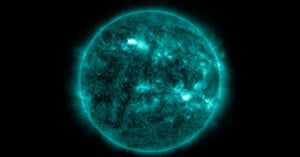
Two powerful solar flares exploded nearly simultaneously on the Sun earlier this week, creating a spectacular and exceptionally rare sight.
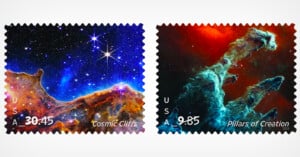
NASA and the United States Postal Service (USPS) have teamed up on two new Priority Mail stamps that celebrate the James Webb Space Telescope (JWST/Webb).
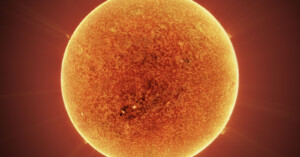
Backyard astrophotographer Andrew McCarthy has released his highest-ever resolution image of the Sun -- a 400-megapixel image made up of over 100,000 photos.
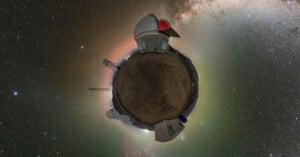
While this surreal image looks like a planet floating in space, it is actually a 360-degree image of an astronomical observatory.
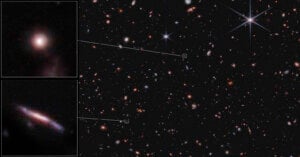
While the James Webb Space Telescope has been busy helping scientists solve some of the greatest mysteries of the early Universe, the powerful telescope has also found that many distant galaxies have flattened oval disk and tube-like shapes, unlike the spiral and elliptical structures that are more typically seen in closer galaxies.
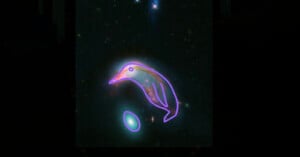
NASA has shared an image of a pair of galaxies that look like a penguin and its egg millions of light-years from Earth.
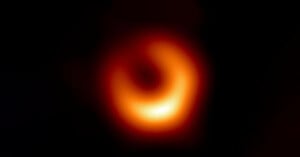
In a research paper published today in Astronomy & Astrophysics, scientists have released the sharpest image ever of a black hole.
While the James Webb Space Telescope (JWST) has delivered many beautiful images, its primary mission is to probe the early Universe and help humanity solve some of the most significant questions it faces. Webb has delivered on this promise by revealing, for the first time, what is in the local environment of galaxies in the very earliest days of the Universe.
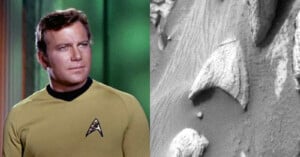
An amateur astronomer spotted a familiar sight on the surface of Mars in a photograph taken by NASA's Curiosity Rover.
150 million light-years from Earth, a relatively small galaxy, UGC 5189A, was the site of a massive supernova, a super-powerful star explosion.
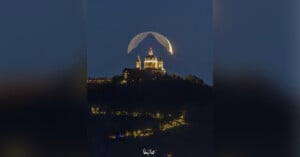
A photographer was forced to wait for six years to capture a stunning triple-alignment photo of the Moon, a mountain, and a Basilica.
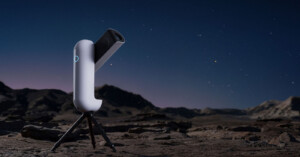
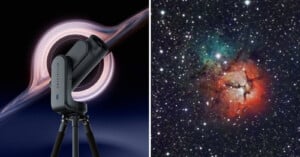
Vaonis has announced the next-generation Vespera smart telescope. The aptly named Vespera II includes significant upgrades, including a longer focal length, higher resolution, and more expansive internal storage.
Unistellar, makers of intelligent, automated telescopes like the eQuinox 2, announced two new telescopes at CES: the Odyssey and the Odyssey Pro.
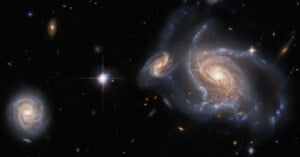
Hubble continues to generate some some outstanding visuals of space and its latest is no exception. However, as much as this photo looks like it portrays a densely packed region of galaxies, reality is not quite so straightforward.
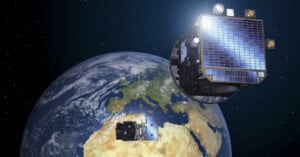
The European Space Agency (ESA) is preparing to launch a pair of satellites called the Proba-3 which will do what was previously thought impossible: block out the Sun in order to observe its corona for an extended period of time.
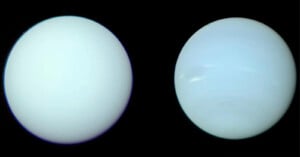
Fresh analysis of images taken by NASA's Voyager 2 probe has revealed that the planets Neptune and Uranus are actually far more similar in color than previously thought.
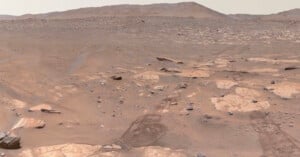
NASA has released a spellbinding 360-degree image of an ancient river found on Mars recorded by the space agency's Perseverance Rover.
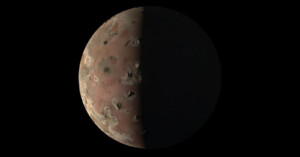
NASA's Juno spacecraft has performed nearly 60 flybys of Jupiter and documented close encounters with three of the planet's four largest moons. Over the weekend, Juno made its closest flyby to the Jovian moon, Io, and it was the closest any spacecraft has come to the Jovian satellite in more than two decades.
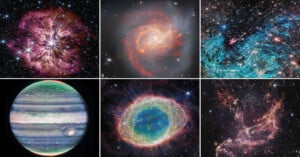
The James Webb Space Telescope (JWST) has wrapped up its first full year of scientific operations, and beyond "breaking" cosmology, the telescope has also delivered some of the most spectacular photos of deep space ever seen.