Why I Use Getty Images to Sell My Photos
By doing a quick calculation, my photos make up 0.002% of the still images available on GettyImages.com. Which means I have 1,600 photos for sale out of about 80,000,000.
By doing a quick calculation, my photos make up 0.002% of the still images available on GettyImages.com. Which means I have 1,600 photos for sale out of about 80,000,000.
It’s an undisputed fact; there are fewer women in the arena of nature photography than there are men. But why? Do men bring something special to the arena? Or is it simply a stereotype that this is a man’s profession? There doesn’t appear to be a clear reason for the disparity between the numbers of men and women in this profession.
I've been shooting analog for almost four years now, and all I can say is: analog has truly changed my life and what I think about what it means produce photo imagery. My first deep contact with analog photography was during college, and back then I would never imagine I would be shooting film today, in 2018.
I don't usually go the negative Nellie with anything photo related, sometimes it's best to keep your mouth firmly shut. But I'm not going to take it anymore, I'm as mad as hell, and I'm going to lean right out the window and shout it to the world, enough, I'm done with rubbish samples of film technology on the Web.
I had the great privilege of tagging along with photographer Eric Kim for Gulf Photo Plus in Dubai back in 2014 and 2016. GPP is an annual event: the region’s biggest and only photography festival, bringing the world’s best photographers and instructors to Dubai to share their knowledge and experience with the professional and amateur photography community in the Middle East and Africa.
Two decades ago, DSLRs were introduced to replace film cameras. With only a few megapixels, very short battery life, and an overall low quality, it was only natural that most photographers were very skeptical at first. It took a few generations until digital cameras were fully accepted and analog photography was left to the enthusiasts rather than the professionals.
My youngest daughter and I are visiting New York City this week. After visiting the 9/11 Memorial in the late afternoon on March 11, we made our way to Battery Park to catch the sunset, view the Statue of Liberty, and take a few shots. I shot the above photo with a Nikon 28-300mm lens that evening. The next day I found out that one of these helicopters is the Eurocopter AS350 that crashed in the East River about 8 minutes after this photo was taken.
In drought-stricken Cape Town, we’ve been living with just 50 liters of water per person per day since the beginning of the year. That’s 13.2 gallons. It doesn’t go far when you think about how often you turn on the faucet each day for drinking, cleaning, flushing toilets, showering, washing dishes, and doing laundry.
There are many reasons why people may like one brand of camera equipment versus another. And if you ask a room full of photographers which camera manufacturer they like the best, and why, you will often get a wide range of responses and opinions.
My name is Steffen Jahn, and I'm a seasoned car photographer based in Germany. With over 20 years in the business and having worked with all the famous manufacturers like Porsche, Lamborghini, Ferrari, Mercedes and Audi, I have a basic understanding what professional car photography is all about.
This week, TIME magazine published James Nachtwey’s photo essay on the opioid crisis. Over his decades-long career, Nachtwey has carved out a reputation as a stoic and relentless documentarian of conflict and pain. His latest effort took over a year to produce, and it has all the hallmarks of great photojournalism, providing a level of intimacy and rawness that can only be captured with persistence and skill.
We all plan for our shoots, we pack our kits, check it twice, and always heave a sigh of relief when we get to the job and everything is there. The airline didn’t lose anything, nothing was dropped, there are no shattered lenses and those anxious few hours is over and done with.
The year-long world tour of photojournalist Hossein Fatemi’s controversial Iranian photos is coming to an end. In a year in which fake news and the abuse of power has never been in sharper focus, it’s worth examining some of the incomprehensible decisions that led to Fatemi’s work being given such a massive platform to deceive.
Are you a freelance photographer like myself? Have you already put up your masterpiece on 500px? Maybe you’re trying to share your photos and sell them at the same time in case some stranger admires your work? If you’ve answered YES to all these questions, I'd like to share the terrible experience I had with 500px.
Notable American photographer Kalliope Amorphous has published a warning to other photographers who are considering protecting their copyright using ImageRights International. She accuses the company of an "egregious grab" that forces photographers to use the company's legal services.
I write a version of this story every year around this time: photo contest result time. And every year, it’s addressing the same grousing and whining and complaints about everything from non-diversified juries to images being too newsy or not newsy enough.
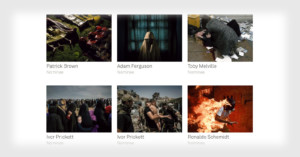
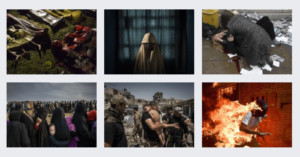
In a break from the past, World Press Photo (WPP) released the short list of finalists in advance of naming the winners to their annual contest – arguably the most prestigious in all of photojournalism. The photos are remarkable for their composition, exposure, and intimacy. But judging by the subject matter one might surmise that we’re living in a hellish dystopia, or that the jury believes pain and suffering is the most valid form of photojournalism.
This past Saturday was a really horrible day for me. But before I tell you all the story, I should preface this by saying that even though yesterday was brutal, I know that I am at the 2018 Winter Olympics and lucky to be here. OK, I got that out the way, so here it goes.
Vanity Fair contributor Joanna Robinson raised the ire of photographers with this tweet regarding an image taken of figure skater Adam Rippon by Getty Images photographer Dean Mouhtaropoulos.
Are you setting out on your journey of discovery in the wonderful world of photography? Are you wondering whether to go for digital or follow the fad for film? Are you intending to invest in some gear but don’t want to waste your hard earned cash on kit that doesn’t help you to progress? Here’s some advice from a photographer who has seen both sides extensively.
A few months ago, a girl came in to apply for a social media position at my last job. I was one of three photographers at the company and we had an opening for another photographer position. She mentioned to the HR recruiter that she also does photography.
In light of another prominent figure in the photography industry being accused of sexual misconduct, I feel compelled to pen my feelings about it all, specifically what it has done to MY profession of choice; photojournalism.
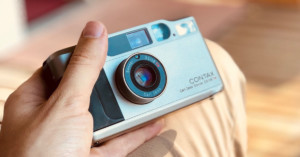
I recently went on short vacation in Italy. Visiting La Spezia was the perfect opportunity for me to finally try out the famous Contax T2 that I got recently. I hit the streets of La Spezia with the camera loaded with Kodak TX400 film.
No matter how you feel about Instagram, if you’re reading this you know that you need it. Period. Social media can change careers. Instead of being stuck working with people in your 15-mile radius, you’re now open to the world. But if you’re reading this, you’re probably also using Instagram wrong.
Late last year, my wife and I had to say goodbye to one of our beloved dogs, Sophie. She was far too young and our loss was devastating. After several months, one of my breeder clients (Kristen from Zero Gravity Australian Shepherds) announced a litter coming.
This is a story about a camera, a rather special camera. Every camera has a history, so they say. But it is not all that often that one has such a rich and documented history. One that was thought to be lost but has been found again. This is the story of Sean Flynn’s Leica M2.
I have been shooting using Zeiss optics for decades. The appreciation was instilled in me by my grandfather who collected cameras quite seriously, including a large Leica collection. He passed on a few cameras like the Argus C3, Zeiss Ikoflex Twin Lens Reflex, Rollei 35, etc. as well as a few large format and enlarging lenses, often explaining to me that Zeiss was the real leader of optics.
This post is dedicated to all the people who have completely lost their sense of common decency. I have a destructive humbleness that most people do not understand (myself included). I do not have a Patreon page, I do not run ads on my website, I have never asked for donations. However, for some reason, I get the feeling that this leads people to believe I do everything for free. This could not be further from the truth. You want to use my work? Great! How about you pay me for it? No? Of course …
Many Sony shooters rave about their cameras but rant about the menu systems within them. Camera reviewer Maarten Heilbron has some ideas on what's wrong and how things can be improved. Here's his 11-minute video "rant" on the subject.
I’ve been a professional photojournalist for 24 years and I’ve seen major changes in my industry. I’ve gone from film to digital. I’ve seen the reduction of staff, the reduction of print pages, and even the complete shut down of newspapers and magazines. And I’ve been at the forefront of the explosion of the World Wide Web and digital content.
The Internet is becoming a hectic and volatile place for photographers to share their work. Social media enables photos to be put in the hands of tens, thousands, and even millions in a matter of minutes. However, one small break in this sharing frenzy can lead to massive loss and frustration for the creators that dedicate themselves to doing their passion well.
It was a classic NCAA Championship game. Perennial powerhouse Alabama comes back to tie the game in regulation and then win it in overtime. The game-winning play was a 2nd down, 41-yard heave-ho into the end zone that broke a lot of Georgia fan’s hearts. It was a play that will be etched in their collective memories for a long time. And one image, a screen grab of that play, will also be etched in the memories of a few people... for a totally different reason.
Designing and manufacturing camera gear ain’t easy, as anyone who has invested in a Kickstarter project can attest. The amount of technology that’s stuffed into gear is astonishing, but that doesn’t mean each product meets the needs of the photographer. So in the spirit of “there’s always room for improvement,” here are a few of our hopes in the new year.
I see the posts. You see them, too. A session gone wrong because a photographer didn’t know want to do. And they didn’t know what to do because they hadn’t yet acquired the skills necessary to do that thing they were hired to do. They said “yes” before they knew what they were doing.
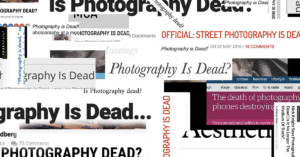
Lately, the photography sphere has been inundated, not with the gazillions of photos everyone is talking about, but with article after article proclaiming that photography is dead/over/irrelevant/trash.
Just another article about film photography? Well yes, but bear with me and hopefully you’ll see why film really does still have a place in my heart and might have a place in yours too... even when digital is such excellent quality and so convenient.
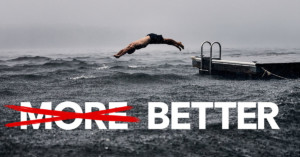
The other night I couldn't sleep (too much coffee at 5 pm) and was in bed scrolling through my Facebook feed, when this ad for the Samsung Gear 360° camera came up (below), with the instruction to "capture more of the moment." Through my groggy state of semi-consciousness, it hit me in a new way. We don't need to capture more, we need to hone a vision. If anything, we need to capture less. More wheat, less chaff.
Image quality, weight and value for money. We have come to accept that most lenses are strong in only one or two of these three factors, which I personally focus on when researching lenses to buy. Sometimes though, we stumble upon a great lens design which is strong in all three.
On December 22nd, I received an email from 500px saying that I sold a photo for $600. Obviously, I was thrilled -- it's nice to get something like this right before Christmas. Upon logging into my 500px account, I saw that there was another sale too for the same photo. The total from the two sales: $2,700.
My name is Eli Dreyfuss. I'm a professional portrait photographer and documentary filmmaker attending Florida Atlantic University and studying film. This past month at my university (FAU), I had the honor and privilege of producing a short film about a man named Bobby.
My name is Connar L’Ecuyer, and I shoot photographs for the National Park Service. That's me in the photo above, off-duty in front of one of my LAX prints. Currently, I am working at the Santa Monica Mountains National Recreation Area, which is down in Southern California, near Malibu and Santa Monica.
It’s not surprising when camera companies hire photographers to pitch their products. But photographers have also been enlisted to sell other types of products -- the result of Madison Avenue trying to romanticize the occupation, even though the reality often fails to meet the expectation. Nowadays photographers are more likely to spend the majority of their time sitting at a desk in post-processing or trying to collect on invoices that are 6 months past due.
Something just happened that shocked the hell out of me. I made my first sale on Adobe Stock and was notified that I earned a commission of 18 cents.
Choosing the right camera can be one of the hardest decisions you will make and possibly one of the most expensive one too. In the last 3 years, I've gone through over 10 different cameras before finally being happy and content with what I have now.
Detaching ourselves from the amount of work we've spent on something, and the end result, is a critical part of the creative creation process. Nobody cares how hard it was to create something unless it shows in a material way.
My name is Leila Boujnane, and I'm the CEO of TinEye, a reverse image search tool many photographers use to find copyright infringements on the Internet. This post is about how not even copyright infringement search tools are immune to copyright infringement.
As creatives, we all go through a very similar journey when it comes to improving our skill. Though details of the turbulent ride vary for everyone, it always boils down to two things; the how, and the why.
Maybe you’re aware of Netflix. Maybe you even have a subscription for their services. You might have also heard of or watched a series called Stranger Things, produced by Netflix. But did you know that Netflix has been selling a Collector's Edition box set of Stranger Things that incorporates pictures from my webpage, The VHS Corner? I didn’t, until some kind netizens contacted me to tell me all about it.
My daily stroll through the newly-built but already-decaying park near my apartment in Hanoi while listening to Spotify on a brisk (by Southeast Asia standards) morning has me in deep thought. We only get this type of weather for a couple months a year here and I absolutely love it.
What if your house burned down? Have you still “made it” as a photographer?