Do It Yourself

Sometimes, the best products are the ones you make yourself. PetaPixel is your guide to custom lenses, handmade camera rigs, custom-coded artificial intelligence cameras, and the 3D-printed parts that makes photography truly personal.

Photographer Promotes New Site with QR Code Made from Ordinary Objects

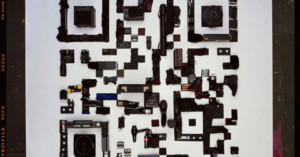
QR codes have become an extremely popular way of linking to digital things from the physical world, and more and more businesses are displaying them in order to direct customers to their websites. Photographer David Sykes (whom we previously featured here) decided to take advantage of the craze to promote his new website and blog. Instead of an ordinary QR code, however, he decided to create an 8-foot square model of the code using things such as boots, calculators, briefcases, boomboxes, and champagne bottles. He then photographed the code on film and mailed out limited edition prints.

Trippy Photos Shot From Inside a Box Made of Mirrors

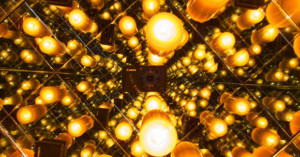
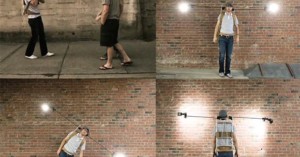
These photos might look like they were computer generated, but they're actually unmodified photographs. Ron Brinkmann took 6 mirror tiles and made a box with them with the help of some duct tape. He then placed a camera inside and triggered shots using the timer.

Turn a Pringles Can into a DIY Snoot

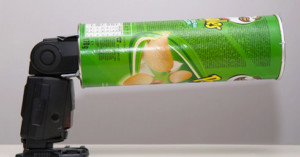
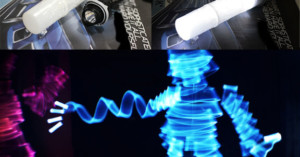
If you have a potato chip tube lying around, you can convert the tube into a super simple DIY snoot. All you need to do is cut an opening in the closed end that's the size of your flash head (tip: use some duct tape to prevent it from scratching your flash).

Use the Front Element of a Broken Canon ‘Nifty Fifty’ Lens for Macro Shots

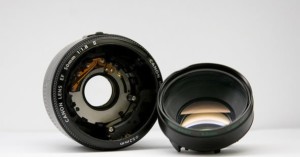
Canon's 50mm f/1.8 Mark II is a terrific lens for its price, but its build quality definitely leaves something to be desired. Do a quick search, and you'll find legions of broken-hearted Canonites who had their 'Nifty Fifty' split into two pieces after accidentally bumping or dropping it. Flickr user tastygiant is one such Canonite, but he subsequently discovered an awesome use for the broken lens:

Being a geek, I figured I could use the broken pieces in the future, so I shelved it and bought a new 50mm 1.8 Canon lens. One day, while taking shots around my apartment, I stumbled across the broken lens again and decided to reverse the "barrel assembly" onto the front of my intact 50mm. Everything was blurry of course, but I noticed if I got very close to an object the detail came into view. After adjusting the aperture to around f5.6, I had a clear image.
It's important to note that you should switch to Manual focusing and rotate the focusing ring to "infinity".

The World’s Smallest Wet Plate Camera

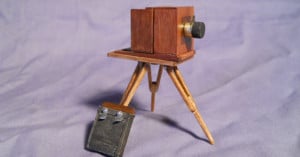
Kevin Klein has a hobby of miniaturizing Victorian technology, and recently he made the world's smallest wet plate camera using 1/32-inch plywood and other wood materials. The camera is only a little bigger than a quarter, and shoots miniature 1/2-inch square plate images.
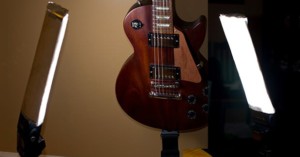
Cheap Ring Light Made for $20 Using Compact Fluorescent Light Bulbs

Caleb Barrett wanted a simple ring light to play around with, so he built himself one for just $20 using built himself a makeshift ring light using eight cheap compact fluorescent light bulbs. The lights are pretty dim and have a horrible color rendering index, but are fun to play around with if you're just looking for something to experiment with.

A Homemade Potato Chip Tube Lens

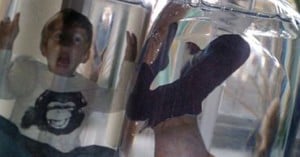
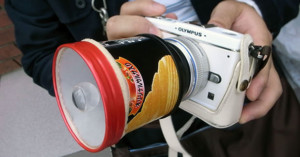
John Sypal of Tokyo Camera Style spotted a photographer on the streets of Tokyo using this homemade lens created out of a potato chip tube. It captures photos that show the world in a glass-like sphere, with everything else blurred.

How to Make Your Gloves Compatible with Touchscreen Cameras

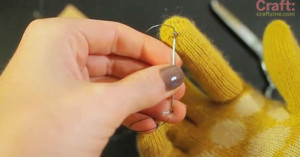
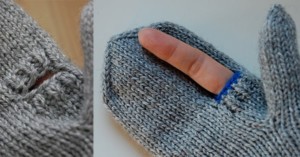
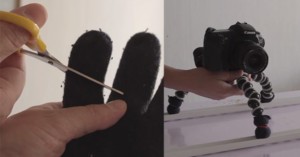
We've featured special gloves and mittens designed for photographers before, but what if your camera uses a touchscreen instead of physical controls? Here's a video by Make's Becky Stern showing how you can sew some conductive thread into your glove to make it compatible with capacitive touchscreens.

Mountain Biking Photos Captured with a Chest-Mounted DSLR

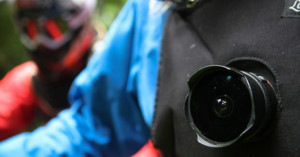
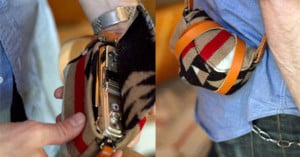
Many extreme athletes these days use helmet-mounted HD cameras for photos and videos captured from a first person point of view, but photographer Justin Olsen does things a little differently: he uses a chest-mounted DSLR. Using a custom rig created for him by a local sewing shop, Olsen snaps his unique photos using a 15mm on a Canon 1D Mark III or a 5D Mark II, and a PocketWizard to trigger the shutter wirelessly.

Homemade Digital Lomography Camera

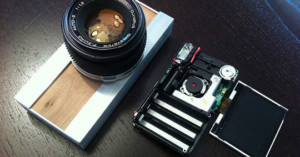
Faking toy camera effects with apps or software is a big fad these days, but Joel Pirela of Blue Ant Studio went a step further: he built his own homemade digital Lomography camera using some walnut wood, hand-polished aluminum frame, parts from a 5-megapixel Vivitar Vivicam, and an Olympus OM series lens.

Strobist Jet Pack: A Ridiculous Looking Apparatus for Off-Camera Lighting

Photographer Jesse Rosten wanted a more efficient and mobile way to do off-camera lighting, so he invented this backpack-style apparatus that he calls "The Strobist Jet Pack". Although it's pretty ridiculous looking (it reminds us of Ghostbusters), it works well for placing lighting equipment in exactly the place needed while still being able to move about.

Lens and Film Wedding Boutonnieres

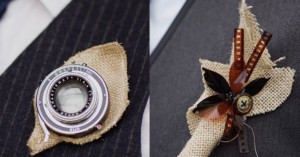
When husband and wife photography duo Jodi and Kurt got married last year, they were determined to do something photography-related for the guys' boutonnières. Luckily for them, Kurt's sister Lynn is a brilliant wedding stylist who helped make these one-of-a-kind designs. Kurt's featured an old camera lens, while the best man's was a flower made from film negatives.
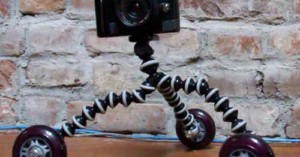
How to Build Your Own Cineskates Using a Gorillapod and Rollerblade Wheels

Editor's note: Since we featured in back in August, Justin Jensen's Cineskates project has raised nearly half a million dollars. Here's a DIY tutorial by Ed Lewis on how to make your own.

Want to get a nice dolly shot without spending a lot of money? With less than $20 and a GorillaPod you can have an adjustable tripod dolly. You can adjust the angle, the direction, and the radius for circular dolly shots. It's also ridiculously easy to make. With all the supplies and tools, the build time here is less than 10 minutes.

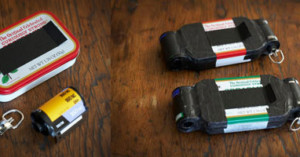
35mm Altoids Mint Tin Pinhole Camera

Photographer Chris Keeny came up with a nifty design for a pinhole camera made using an Altoids mint tin. It's pretty fancy too, utilizing a re-loadable film take-up spool that uses a metallic turn key to advance the film.

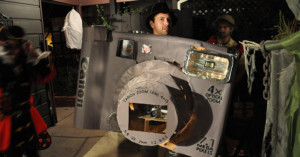
Camera Costume Ideas for Halloween

Want to create a photography-related costume this halloween? Here are some fun costume ideas to give you some ideas. The above is a standard Canon point-and-shoot that has a tiny camera in the lens.

Fully Functional Nikon DSLR Costume

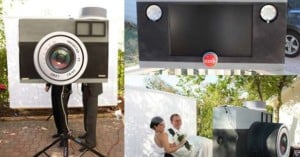
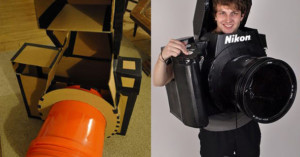
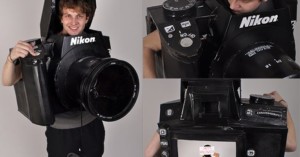
For Halloween this year, photographer Tyler Card decided to made a giant Nikon DSLR costume. Not just any DSLR costume, mind you, but a fully functional one. The camera actually takes pictures when the shutter release button is pressed, and the photograph is displayed on the giant LCD screen on the back. The built-in flash also works, and the camera is even capable of triggering Alienbees strobes.

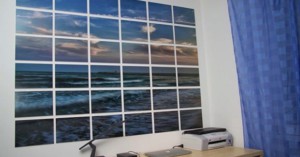
Display a Giant Photo on Your Wall Using Wooden Boards

Inspired by Caleb Ungewitter's giant poster project, Andy Beckmann decided to try his hand at making a nicer version. Instead of attaching prints to the wall directly, Beckmann purchased 36 210x297mm wooden boards to mount the prints on (the photo was split into smaller prints using PosteRazor). The result is a more durable and professional looking display that can be easily reused in a different location.

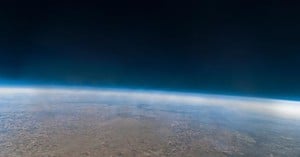
Students Send Nikon D300s to Space in a Beer Cooler

Sending cameras to the edges of space on a weather balloon has become a pretty popular activity as of late, but up to now people were mostly sending up cell phones, compact cameras, and small HD video cameras (e.g. GoPros). While those devices are light and relatively cheap, the quality of images produced isn't the best.

How to Make a Sturdy Camera Strap for $7 Using Parachute Cord

Eddie had a hard time finding a camera strap he liked, so he decided to make his own in the style of some rifle slings he found online. The slings were weaved together using 550 Paracord (parachute cord), which has a breaking weight of 550 pounds. He found some for sale for $7 at his local army-navy store, and weaved together his own rugged DIY camera strap.