Life as a Photographer on Capitol Hill
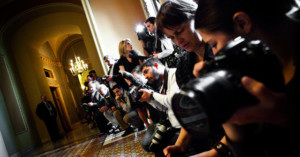
We've already featured a video showing what life is like as President Obama's official photographer, and now here's an interesting behind-the-scenes video that gives us a look into shooting on Capitol Hill.
We've already featured a video showing what life is like as President Obama's official photographer, and now here's an interesting behind-the-scenes video that gives us a look into shooting on Capitol Hill.
Here's a side-by-side comparison of Fujifilm's Finepix X100 and the classic Leica M3. Needless to say, the X100 is one classy looking digital camera. It just started shipping this past weekend in Japan, and should begin arriving elsewhere in the very near future. If you want a closer look at the camera's features, check out the 124 page owners manual that recently found its way online.
Hayashi Natsumi is a girl who lives in Tokyo, has two cats as housemates, and shoots daily photographs of her adventures in levitation.
Having a camera with you may get you better customer service at places like restaurants, retail stores, and hotels. Consumer advocate Christopher Elliott writes, …
Toronto-based artists Brad Blucher and Kyle Clements have an exhibition titled "Take a Picture" which features paintings that are invisible to the human eye but visible to cameras. To do this, they use a frequency of light that is outside the visible spectrum but visible to the CCD and CMOS sensors found in digital cameras.
Here's a fun blast from the past: in the early 2000s The Daily Show ran this short segment in which Ed Helms (now known for playing Andy Bernard on The Office) introduces viewers to digital cameras. It's an interesting glimpse at how some people felt about the emergence of digital photography as it was starting to become popular.
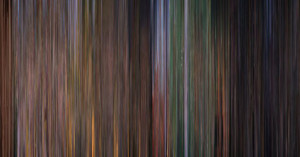
What you see here is every still frame of the famous 1939 film The Wizard of Oz compressed into a single frame, creating a colorful "barcode" for the movie. moviebarcode is a neat blog that publishes these images for a wide range of famous movies.
You won't really learn anything about how to use cameras from this short film, but it's pretty amusing and can be a nice photography-related 2-minute diversion from your work.
No, this isn't some advanced beam weapon from a sci-fi flick. It's actually a do-it-yourself ring flash created using 150 optical fibers, with one end wrapped over the pop-up flash of the DSLR and the other end spitting out the photons in a ring-shape. If you want to learn how to make your own, here's an in-depth writeup on how this was constructed.
"The Portrait Machine Project" by Carlo Van de Roer consists of new-age portraits taken with a controversial camera called the AuraCam, a modified Polaroid camera that supposedly shows what psychics see when they look at people.
Here's a short 5-minute news segment on Ruth Gruber and her work as a photojournalist during the Holocaust. Currently 100 years old, Gruber was an eyewitness to much of the history most of us have only read about in books.
Cop Block created an interactive map showing the "War on Cameras" in which each marker shows an incident where someone was "harassed, detained, threatened, attacked, arrested, or charged with a crime" by government officials for using a camera. It only has about 60 markers on it at the moment -- a more solution would be to have a crowdsourced map where anyone can contribute and add events. Still, this is pretty neat for those interested in photographers' rights (a pretty big issue last year).
If you want to play around with lo-fi photography, you don't have to venture into the world of analog or hack together a DIY lens for your DSLR. There's cheap plastic lenses you can buy for a toy-camera look, and one of them is the Holga HL-N lens available for both Canon and Nikon mounts.
David Gallagher was one of the earliest photobloggers with his (now defunct) website lightningfield.com. He is currently an editor at the New York Times.
Here's a glimpse at how selecting an autofocus point works on the upcoming Fujifilm Finepix X100. The hybrid viewfinder -- which overlays an electrical viewfinder view over the optical view -- provides a rich user-interface previously impossible for fully optical viewfinders.
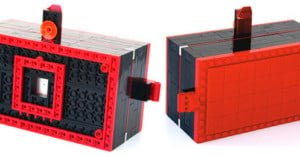
Flickr user Chase Lewis created this working pinhole camera using ordinary LEGO pieces (we featured an uber-fancy LEGO Mindstorm camera before) for his high school film photography course.
What do you get when you combine a design-less white living room with two projectors and two 3D projection gurus? The answer is a living room that can be completely transformed in the blink of an eye. It's almost like having a living room that behaves like a digital picture frame!
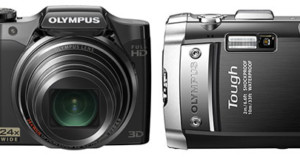
Olympus announced new compact cameras today. The SZ-30MR (on left) is the world's first compact that can shoot both 1080p Full HD video and 16 megapixel stills at the same time. What's more, the camera can record two different videos at once -- videos that differ in zoom, quality, or filters.
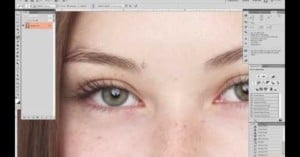
Like the Pen Tool tutorial we shared last month, here's another awesome tutorial by Sean Armenta showing how to use the Healing Brush and Patch Tool in Photoshop. Perhaps these are two tools that you've never gotten around to learning how to use. If that's you, watch this video and you'll soon have two new weapons in your portrait retouching arsenal.
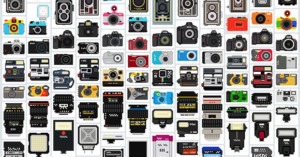
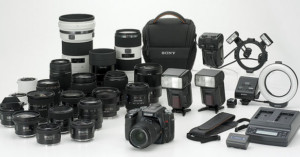
Artist Billy Brown took 100 different pieces of photography gear and turned them into pixel art. What's neat is that he's making them available for any kind of use as long as you credit him. There's everything from old film and Polaroid cameras to memory cards and the latest telephoto lenses.
This video shows a beautiful way of displaying your photographs using a birch-wood plaque and clear epoxy resin. You can order them from The Resin Man for your Facebook photographs, or you can try doing this yourself for your next photo project.
Panasonic wants to move portrait retouching off of computers and directly into cameras. Their Lumix FX77 compact camera released last week has a "Beauty Retouch Mode" that allows users to make all kinds of edits to faces immediately after capturing the photo: …
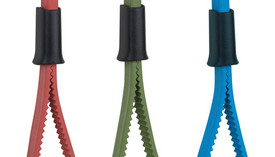
Last year we posted a tip on how you can use jar openers to remove stuck lens filters, but have you ever thought of using them as a cheap follow focus? Tony Carretti was shopping at Bed, Bath & Beyond when he came across a twist jar opener in the kitchen aisle that he realized could be used on his camera.
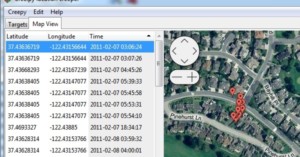
creepy is a desktop application written by Yiannis Kakavas that demonstrates how the geotagging features found in newer cameras and phones can violate your privacy. Simply provide it with a Flickr username and it will map the places and times photos were taken conveniently on a map.
Do you like movies that make you think and make more sense the second time around? If so, "Tick Tock" is a short film that you'll probably enjoy. This 4 minute film was shot in one take with a Canon 5D Mark II and 24-70mm lens, and required a whopping 36 takes to get right. If this doesn't inspire you to do something awesome with your DSLR, we don't know what will.
Mel Stringer (aka girliepains on Etsy) keeps dreaming up cooler and cooler camera papercraft decorations. Her latest creation is a Polaroid model that include fake Polaroids to stick in the slot.
This creative time-lapse video (a commercial for Volvo) shows a beautiful outdoor scene transform from one season to another through time-lapse photography. If computer trickery wasn't involved in the creation, then this video must have required a whole lot of patience and hard work.
Google has changed the way it limits Picasa photo storage, allowing users to store a virtually unlimited number of photos... provided that they're small. Previously the service limited users to 1GB in storage and 1,000,000 photographs (split between 1,000 albums). While the photo limit is quite generous, it was difficult to reach since users would likely hit the storage limit very early on (you could only store about 10,000 100KB photos). The million mark is easier to reach now thanks to Google …
If Adam Elmakias' lens bracelets aren't retro enough for you, photographic.ly is now selling these f/stop lens bracelets featuring a colorful design based on old Nikon/Nikkor lenses.
Lyrebirds are ground-dwelling Australian birds that have the remarkable ability to mimic sounds, both natural and artificial. In addition to copying the calls of other birds, they imitate whatever they hear around them, including the sound of cameras if photographers are working nearby.
Update: This giveaway is now over, and the winner can be found at the bottom of this post.
Here's one of the most creative examples of light painting and long-exposure photography we've seen -- a few techie guys built a special 12-foot-long rod with 80 LED lights that light up depending on how strong a particular Wi-Fi signal is. By walking the stick around and capturing the lights in real time, they were able to photograph "light charts" showing how a particular Wi-Fi signal strength fluctuates in a particular area.
If you want your kids to grow up with the same love of photography you have, you can try performing some "inception" giving them photography-related toys from a young age. "Zoom" is a camera windup toy by Z Wind Ups that waddles around, looking at things with a magnifying glass.
This short video gives a beautiful and inspiring introduction to night photography. Don't watch it if you already have plans tonight -- it might make you want to grab your camera and shoot once the sun goes down.
Photojojo has a new ring flash adapter that allows you to shoot soft, studio-style portraits without shelling out the big bucks for an actual ring flash. It's a plastic add-on with a reflective circle that simply channels the light from your existing flash, so it doesn't require any batteries.
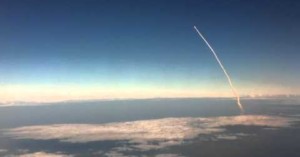
We're lucky that cameras and camcorders can be used during flights, or we wouldn't have this amazing view of the Space Shuttle Discovery's final launch from inside an airplane. There was also a student project that captured the launch from the edges of space using camera-laden a balloon.
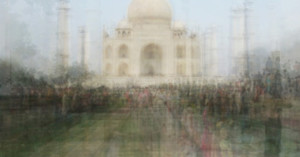
For her series entitled "Photo Opportunities", photographer Corinne Vionnet gathered hundreds of photographs taken by tourists at famous locations and combined them by layering them together, creating surreal views of places we've all seen before in photographs.
Scientists at Stanford have found that looking at pictures of loved ones can reduce pain. The study involved performing MRI scans on the brains of lovestruck students who were subjected to heat pain on their skin while focusing on photographs of their significant others. The results showed that the images have a calming effect on the pain processing parts of the brain -- similar to the effects of Tylenol or narcotics like cocaine -- and reduced pain by a whopping 36 to 44 percent on average.
All of us can now experience what it's like to accidentally fall off a giant cliff thanks to a GoPro helmet camera and one brave skier who miraculously escape unscathed. Warning: you might pee your pants while watching this.
In 1999 Corbis -- privately owned by Bill Gates -- paid $20 million to acquire Sygma, a legendary photo agency that was the largest in the world at the time. After the acquisition, the agency bled money and suffered heavy fines due to the mismanagement of photographs, paying $2 million at one point for losing 750 of one photojournalist's photos. In 2010 the new agency, named Corbis Sygma, filed for bankruptcy after its debt had risen to €73m (~$100 million). Now the court appointed …
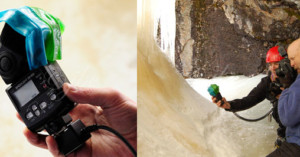
Photographer John B. Crane was ice climbing in Colorado when he came upon a little ice cave full of "tiny wonders". Wishing he had a green gel, he suddenly had the brilliant idea of using some Fruit Roll-Ups he had brought along for that purpose.
If you were given the seemingly impossible task of photographing a giant 300-foot-tall Redwood tree, how would you go about doing so? National Geographic photographer Michael Nichols chose to use raise up a special rig of three Canon 1Ds Mark II DSLR cameras into the air, photographing dozens of photographs that he stitched into a beautiful panoramic tree photo. The photograph was used as the cover photo of the October 2009 edition of the National Geographic.
In the boring old past, printed portfolios were a great way of showing off your still photographs, but any video you also wanted to show off had to be included and viewed separately from the main portfolio. Now, new technology is allowing photographers to embed video right into their portfolios, with a small LCD screen displayed right on the page.
3D Photo is hardly a useful app, but it's a fun way to play with the camera on your iPhone. What it does is map your photographs onto geometric shapes, giving them a pseudo-3D effect by allowing you to move the shapes and view them from different perspectives. You can find it for $1 in the iTunes store.
If you want to make your camera stealthy for whatever reason (maybe wildlife photography?), there's special camouflage-patterned bags or cases you can buy to put your camera in. Those can be pricey though, and an easier do-it-yourself solution is to simply tape up your camera with some camouflage duct tape. Instructables member Nano_Burger posted a series of photos showing how he did this with a cheap film camera.
Sony and Olympus are headed in very different directions when it comes to DSLR cameras. While Olympus may be looking to step out of the DSLR market in favor of EVIL cameras, Sony is opting to stay put while transforming its line of DSLRs into translucent mirror cameras. During a Sony event in Zaragoza, Spain, company representatives confirmed to Quesabesde that all future Alpha DSLRs will have the translucent mirrors found in the A33 and A55.
Did you know that while cameras provide the things you see in movies, most of the sounds that you hear -- aside from dialogue and music -- are generated by Foley artists who reproduce everyday sounds with everyday things? Here's an interesting behind-the-scenes glimpse into how award-winning Foley artist Gary Hecker "paints" sound over what's captured with a camera.
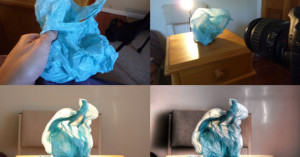
In his series "Elastic" photographer Edi Yang shows that you can fake smoke photography by shooting plastic bags a certain way. What you need is a strong backlight and some post-processing mojo.
Apple just refreshed their line of MacBook Pro notebook computers, and one of the new features is a Thunderbolt I/O port, making the MacBook Pro the first notebook computer to have this blazing-fast interface developed by Intel (it was known as Light Peak during R&D). As the technology makes its way into more and more computers, camera makers will undoubtedly begin offering it in their cameras. Nikon Rumors recently received a rumor that the upcoming Nikon D4 will be the first DSLR camera to …
Sorry that this is the second beard-themed time-lapse video we've posted in two days, but it's so neat that we had to share it with you. Cory Fauver spent one year and six weeks growing a beard, taking roughly one photo a day and creating this awesomely creative video.