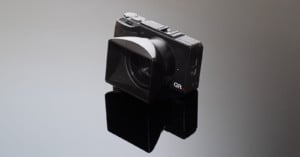
Ricoh GRm: My Custom ‘Monochrom’ Camera
For a long time now, I've been looking a little enviously in the direction of Leica because of the monochrome versions of the M and Q models.
For a long time now, I've been looking a little enviously in the direction of Leica because of the monochrome versions of the M and Q models.
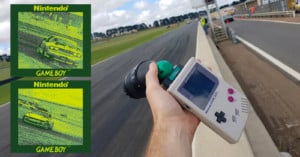
The Game Boy Camera has been modded countless times over the years, mostly just for nostalgia. But what about putting one into a real-world situation? How would it fare? YouTuber and car enthusiast Conor Merrigan decided to find out.
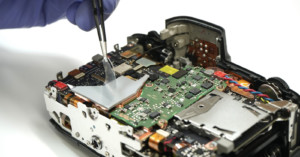
Kolari Vision -- a company that makes both filters and modifications for cameras -- has announced what it claims is the first commercially available after-market mod for the Canon EOS R5 that it claims will nearly double 8K recording time and cuts its overheating recovery time by a factor of three.

The Canon R5's overheating time limit has been the subject of much discussion and controversy. Regardless of how or why the overheating happens, Matthew Perks over at DIY Perks has come up with an unusual mod that actually works to fix it: he watercooled his camera.
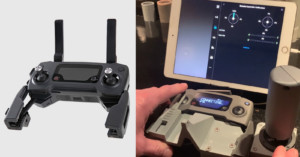
I'm having a go at converting my Mavic 2 remote controller from two thumbsticks to a more Aircraft style controller where a whole hand joystick controls Pitch, Roll, and Yaw, and the left stick only controls Throttle/Altitude.
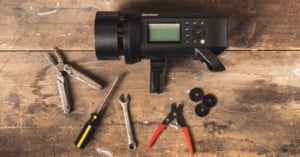
Photography equipment has come a long way in recent years; staggering megapixel counts, blisteringly fast AF systems, and low-light performance that was unheard of not long ago. But in my opinion, one of the most useful and underrated advancements has been in off-camera lighting, notably portable, battery-powered strobes.
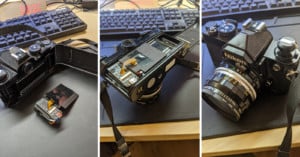
A Japanese tinkerer who goes by the name Sanasol has created something pretty cool. Using a homebrew sensor cartridge, he's converted his classic Nikon FM SLR into a functional digital camera without having to alter the 35mm film camera at all.
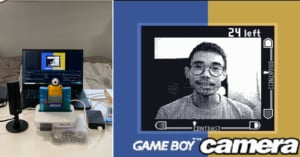
A couple of days ago a user on r/Gameboy asked the community if there was any way to turn his Game Boy Camera into a functioning webcam so that (in his words) "I can be an a** to people I don't respect." Well, someone came through and showed that it is actually possible to do this.
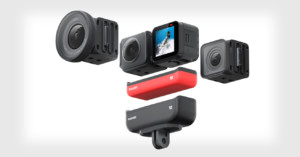
Insta360 has just revealed the (painfully) teased Insta360 One R "adaptive" action camera. The modular creation was co-engineered with Leica, and features a "unique interchangeable lens design" that lets you swap between modules for standard 4K, 360° video, 5.3K with a 1-inch sensor, and more.

Iranian photographer Alireza Rostami has been studying and tinkering with lenses for years, and a few years ago he made a discovery: by reversing one of the elements in a vintage lens, he found himself with a lens that produced beautiful and unusual "magic" bokeh.
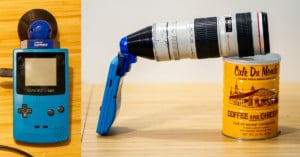
We've seen the Game Boy Camera used with a telescope and with smartphone lenses, but photographer Bastiaan Ekeler did something even more unusual: he designed and built a Canon EF lens mount for his.
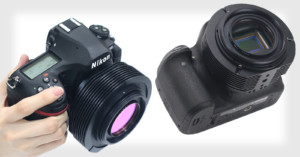
Ordinary cameras can be modified for astrophotography by introducing additional cooling for the sensor. CentralDS has one extreme way of keeping sensors chilly: it extracts sensors from cameras and moves them into their own external cooling module.
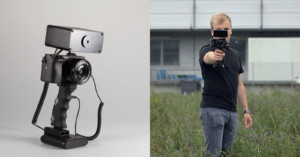
Want to shoot beautiful photos without having to lift a finger or think about it? The Prosthetic Photographer can help you. It's a camera attachment that uses artificial intelligence and electricity to shock you into shooting good photos.
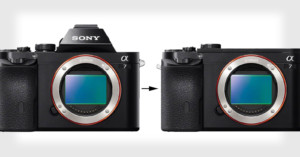
Here's one of the more unusual camera modifications we've seen: a Chinese photographer over in the Xitek forums posted photos showing how he removed the electronic viewfinder from his Sony a7 full frame mirrorless camera. As you can see, his camera now looks more like a Sony a6500.
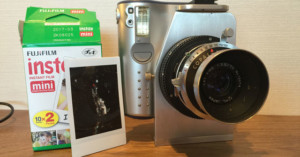
How's this for an unlikely couple: what you see here is a heavily modified Fuji Instax Mini 10 instant camera that has a vintage 4x5 lens mounted to the front.
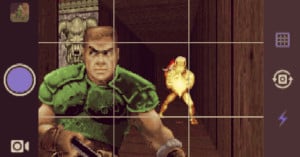
It's becoming trendy to offer selfies as a feature in video games now. Just weeks after World of Warcraft added self-portraits through a new patch, the classic first-person-shooter Doom is getting the same treatment -- albeit unofficially.
There's a new mod for the game called "InstaDoom" that adds a selfie stick and 37 Instagram filters to the game, opening the door to some strange in-game photo ops.
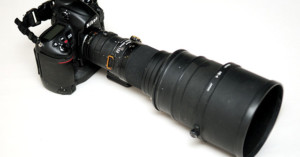
If you'd like to use legacy Nikkor lenses on your modern Nikon camera, one thing you can do to improve functionality is add a CPU to them. While there are services out there that can convert your lenses for a fee, you can also buy the programmable component for $30 on eBay and do it yourself.
That's what photographer Kalafok Vlakostnitsj recently did with his Nikon AI-S 300mm f/2.8 lens.
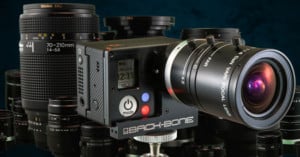
GoPro cameras may be ready to migrate from helmets to film schools thanks to the Ribcage, an in-development assembly that allows the tiny action cams to be outfitted with interchangeable lenses.
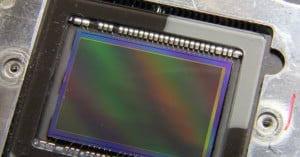
In October 2012, astrophotographer Raymond Collecutt of Whangarei, New Zealand shared a new (and risky) idea he was playing around with: converting a standard DSLR into a sharper monochrome camera for photographing space.
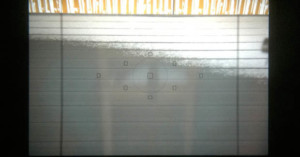
Alternative focusing screens for DSLRs aren't hard to find, but they usually don't have any guide lines geared toward photographers who are used to framing scenes in a square format. Zurich-based photographer Howard Linton is one such shooter. Linton decided to take matters into his own hands by modifying his DSLR's focusing screen with custom lines etched in using an X-Acto knife.
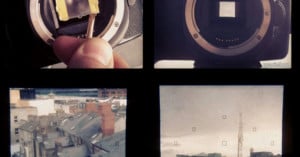
Photographer Maciej Pietuszynski has posted a (hopefully tongue-in-cheek) …
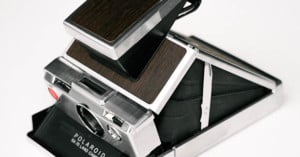
Siebe Warmoeskerken of De Vetpan studios is a photographer and woodworker based in The Netherlands. This weekend, he decided to combine his two passions by building a custom wenge wood edition of the popular Polaroid SX-70 Alpha instant camera.
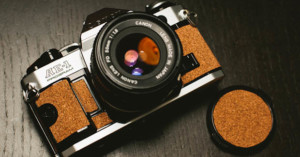
After seeing the "woodenized" Canon F-1n that we featured earlier this month, Vancouver, Washington-based photographer Charlie Boucher decided that he wanted to give the mod a go. Unable to find any wood shoots locally, Boucher decided to go with a somewhat different (but slightly related) material: cork.
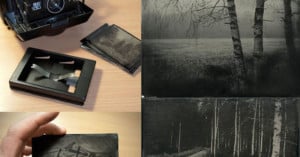
Have an old Polaroid camera lying around collecting dust? Did you know that you can use it for wet …
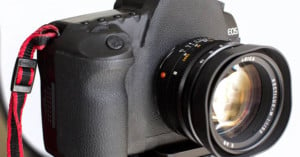
San Diego-based photographer Robert Benson had a curious problem a while back. He had a $6,500 Leica Noctilux 50mm f/1 lens, but no camera to use it on. Not being able to afford the Leica M9 at the time (and unsure if he wanted to ever buy one), he decided to make massive modifications to his Canon 5D Mark II so that it would accept any Leica M lens without needing an adapter. The frankencamera above is what emerged from the brand-change operation.
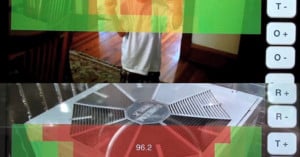
Modder Andy Rawson needed an easy way to find air leaks in his 100-year-old house in order to improve its energy efficiency. Not wanting to spend thousands of dollars on a thermal imaging camera, he decided to go the DIY route. He built a box containing a 64-zone temperature sensor, and managed to connect the device to his iPhone via the dock. By overlaying the temperature data onto the iPhone's camera display, the $150 attachment instantly turns the iPhone into a cheap thermal imaging camera.
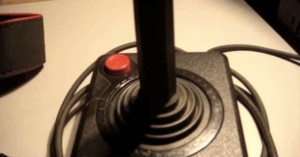
Self-described creative technologist Thiago Avancini hacked this Atari 2600 joystick into a shutter release cable -- complete with an autofocus control for his Canon T2i. The controller is considerably larger than the average cable release or remote control, but it's a pretty nifty.
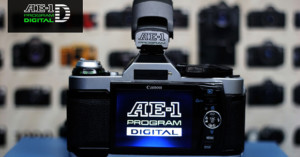
Ken Rockwell posted some links to photos of a Canon AE-1 Program Digital a couple days ago, and photo-enthusiasts around the web have been discussing whether or not it's a real camera.
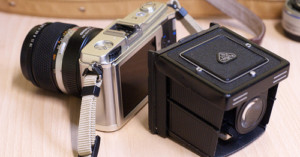
Hong Kong photographer Lok Cheung found that …