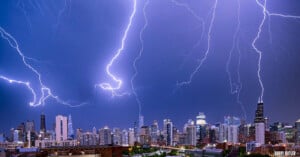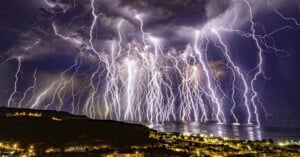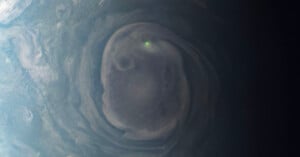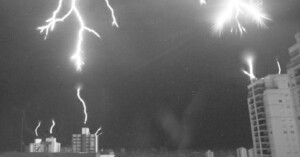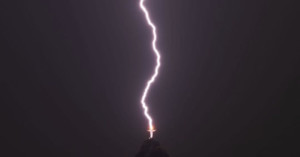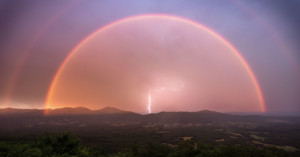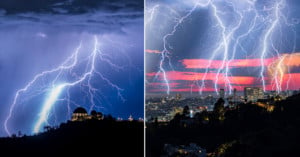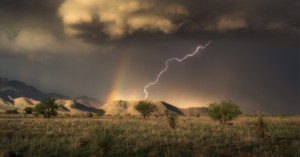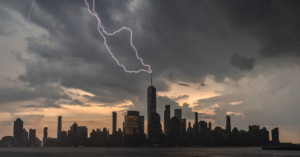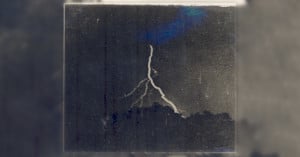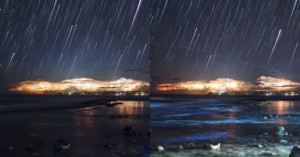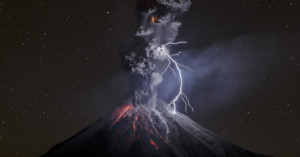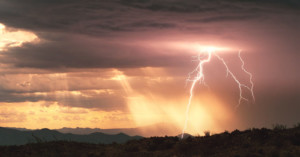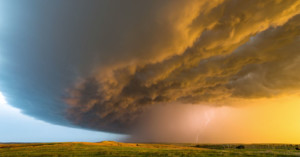
This incredible photo of a lightning strike at the South Rim of the Grand Canyon was shot by photo and videographer Travis Roe in July of 2012. A spectacular capture by a photog who has been shooting lightning since he was a teenager, the most surprising thing about this photo is that it went viral only after it somehow didn’t even place in the National Parks Service 2012 photo contest. Read more…
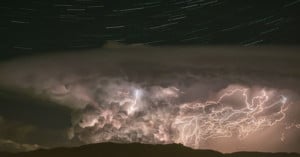
According to the Encyclopedia of World Climatology, lightning happens about 40–50 times per second worldwide; that translates into almost 1.4 billion flashes per year. But of the 1.4 billion that happen in 2011, we’re pretty sure this was the only one captured at 11,000 frames per second, turning a one second lightning flash into an incredible 6 minute experience. Read more…
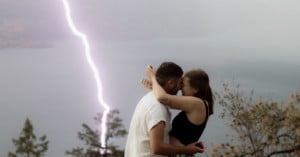
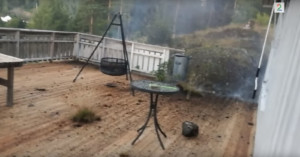
Here’s a wedding photographer who probably wishes now that he had set up a second camera with a lightning trigger. It could have resulted in an epic “altar shot”.
Now that storm season for North America is either already here (or coming soon), I thought it would be a good time to write a tutorial on how to photograph lightning.
Lightning is a very elusive beast that many seem to struggle with, so read on, and by the end you will be able to hunt and capture it like a pro! Read more…
The Sakurajima volcano in southern Japan has been quite active so far in 2013, and photographer Martin Rietze recently traveled to the site to document the eruptions through photographs. His images capture smoke billowing out of the crater, lava exploding in trails of orange light, and lightning flashing back and forth inside the dark ash cloud. Read more…
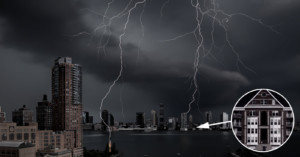
Photographing a lightning strike from close-up is a difficult and dangerous task, but Toronto-based wedding photographer and weather buff Richard Gottardo managed to capture something even crazier: a double-exposure photograph caused by the bolt of lightning itself. Read more…
Photographer Tom Warner shot this slow motion incredible video of lightning at 7,207 frames per second. APOD writes,
The above lightning bolt starts with many simultaneously creating ionized channels branching out from an negatively charged pool of electrons and ions that has somehow been created by drafts and collisions in a rain cloud. About 0.015 seconds after appearing — which takes about 3 seconds in the above time-lapse video — one of the meandering charge leaders makes contact with a suddenly appearing positive spike moving up from the ground and an ionized channel of air is created that instantly acts like a wire. Immediately afterwards, this hot channel pulses with a tremendous amount of charges shooting back and forth between the cloud and the ground, creating a dangerous explosion that is later heard as thunder. Much remains unknown about lightning, however, including details of the mechanism that separates charges.
It’s amazing how much action goes on in just a blink of the eye.
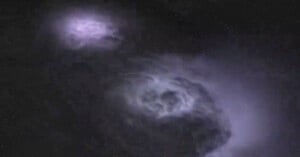
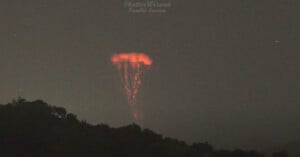
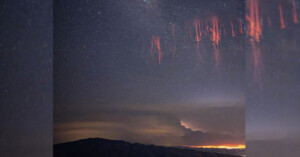
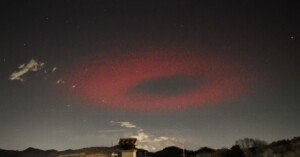
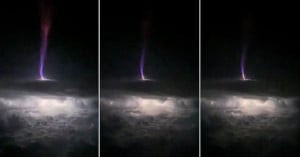
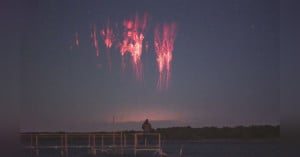
Photographing lighting from the ground is cool enough, but if you happen to be taking pictures of a thunderstorm from, say, space (we know, unlikely, but never say never) on rare occasions you may capture something like what you see above. This is a picture of a “red sprite,” a phenomenon that takes place when lightning doesn’t shoot down but instead explodes 50-miles high in the clouds and fires red tendrils even higher. Read more…
There are plenty of light-sensitive triggers on the market, some triggers even use your smartphone, but Ubertronix‘s new StrikeFinder app is the first mobile app that lets you actually take the pictures with your phone. Instead of designing a trigger app that attaches to an external camera, the StrikeFinder app released earlier today lets everyday iPhone users simply point their phone camera in the direction of say, lightning or fireworks, and the phone does the rest for them.
The app only just hit iTunes today and will run you $1.99 if you wanna give it a shot. And although we won’t know how well it works until people get it out in the wild, the Ubertronix press release made a good point: “Thunderstorms can pop up anywhere.” Whether you’re a photographer stuck watching a lightning storm without your camera; or an everyday photo-lover who would love to get a few, good quality lightning shots; the StikeFinder app is definitely promising.
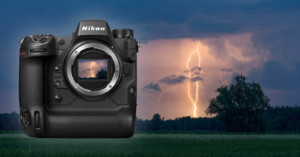
The Nero Multi Trigger is a nifty camera triggering device that can make your DSLR and external flash unit respond automatically to sight, sound, and motion. It has built in optical, audio, and laser sensors, allowing you to shoot everything from lightning flashes to balloon pops. There’s also an intervalometer for time-lapse photography. The device mounts to your DSLR’s hotshoe and is powered by a pair of AAA batteries. They cost $200 each and are available for both Nikon and Canon DSLRs from the NERO website.