Man’s iPhone Camera Left Destroyed by Party Lasers
The camera on a man's iPhone 14 Pro was left totally destroyed after attending a DJ party where lasers were being used.
The camera on a man's iPhone 14 Pro was left totally destroyed after attending a DJ party where lasers were being used.
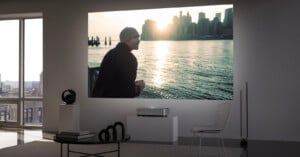
Leica's first-ever home entertainment system, the Leica Cine 1, is coming to the U.S. market this September starting at $8,995. It is the first in a new product category that the company says it is committed to expanding.
A concert-goer had their smartphone camera broken by a laser beam that fired directly into the lens.
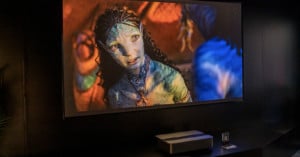
Leica making a TV seems very out of place, and yet, it showcased its new Cine 1 Laser TV at CES this week, opening a new product category the brand says it’s committing to going forward.

After its most financially successful year ever, Leica is not slowing down. The company has announced that it is expanding into the Laser TV market through a partnership with Chinese television manufacturer Hisense.
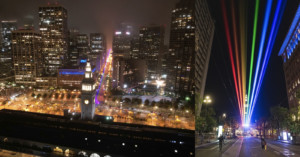
For three nights over the weekend of June 24, a 4.1-mile-long laser light installation depicting the Pride flag stretched down Market Street from the Ferry Building in San Francisco.
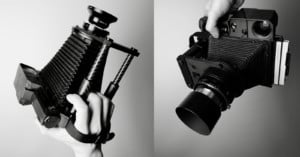
Photographer Aleksi Koski has created what he calls the world's first 4x5 camera that is equipped with autofocus. Called the Conflict AF45, it uses a laser-based focusing system to create what is basically a giant point-and-shoot.
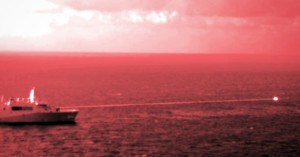
The US Navy has shared photos and videos of a powerful new laser weapon system that it has been testing to take down both drones and small crafts.
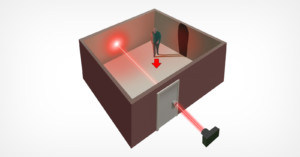
Researchers from Stanford University's Computational Imaging Lab have developed a novel method of non-line-of-sight imaging. They call it keyhole imaging because the contents of a room can be captured from a single point as small as a keyhole.
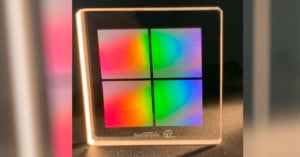
A new high-speed laser writing method claims that it can pack 500 terabytes (TB) of storage onto a single CD-sized glass disc. That equals somewhere in the neighborhood of 125,000,000 photos.
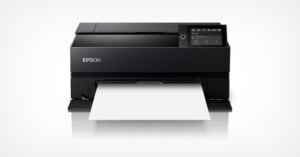
Photographers rarely need to carry a portfolio book of their work to show potential clients these days, but even with constant access to photos online, there will still be moments when every working photographer will need -- or want -- a printer.
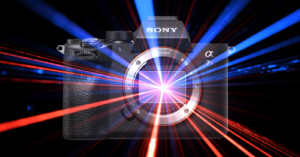
Sony has published an official warning on its website that states that it is aware that lasers can cause damage to its cameras' image sensors. While this information is probably not news to most, Sony notably has finally publicly acknowledged the danger.

As photographers, we are immersed in a world of creativity, expression, and individuality. Our craft is one that we pursue in hopes of creating something that evokes emotion and thought, insight and so much more. So why are our cameras so... boring?
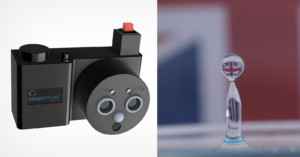
In addition to the typical time intervalometer, Snaperture is a new camera trigger that combines all the popular ways of firing a camera shutter into one product using sensors that can react to light, sound, movement, and even distance.
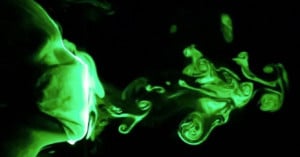
With a supply crunch in medical-grade facemasks, the general public has been turning to homemade masks in order to slow the spread of COVID-19. Now researchers are using lasers to reveal how effective different kinds of DIY masks are at blocking tiny droplets from coughs and sneezes.
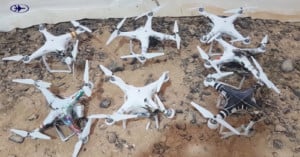
Israeli defense technology company Rafael Advanced Defense Systems Ltd recently released a demo of their special "Drone Dome" counter-drone defense system. A car-mounted anti-drone solution that can fry unwelcome drones from miles away using a high-powered laser beam.
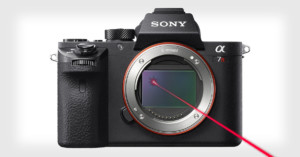
Self-driving cars widely use a technology called lidar (which stands for light detection and ranging) to "see" the world using laser pulses. These lasers are designed to be safe to human eyes, but it seems they may not always be safe for cameras. A man at CES in Las Vegas says that a car-mounted lidar permanently damaged the sensor in his new $1,998 Sony a7R II mirrorless camera.
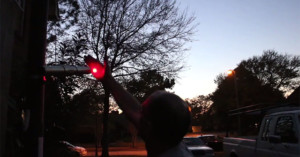
Streetlights polluting your shots of the starry night sky? A strategically placed laser might be just what you need.
Destin Sandlin of the YouTube channel SmarterEveryDay recently paid a visit to the house of NASA astronaut (and photographer) Don Pettit, who showed Sandlin a trick that he uses to temporarily disable an annoying streetlight just down the street. You can see this "life hack" in action at 1:04 in the video above.
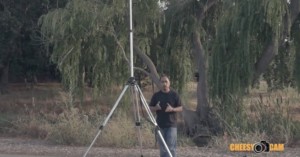
There are times when all you need to capture the perfect photograph is just a few more feet in height. A common technique is to carry around and use a ladder to stand on and snap the needed photograph. But a ladder is far from convenient in terms of weight in size.
Thankfully, there’s an alternative that’s far smaller and not overly cost-prohibitive. It’s often called a construction tripod, laser tripod or contractors tripod and it’s a much smaller, more convenient way to get your camera high up in the sky.
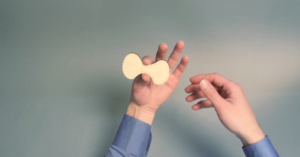
Created by Netherland-based director and animator Andre Maat, this incredible little stop-motion animated film, dubbed WOODOO, was created with the help of a whole lot of laser-cut wood pieces.
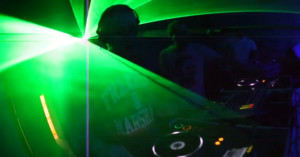
After all the videos and examples posted online of everything from RED EPICs to 5D Mark IIs being fried by lasers, you'd think just about everybody in the photo community would know to keep their cameras safely stowed during a show where lasers are at play.
Update: The video has been taken down by the uploader.
The harmful effects of concert lasers when exposed to your camera's image sensor are well documented. In the past we've shared several videos (here and here) that showed three different Canon 5D Mark IIs rendered unusable after a concert laser passed over them for only a second.
And if it can happen to a 5D Mark II, you better believe it can happen to a sensor much more expensive than that. The video above shows what happens when a $20K RED EPIC's image sensor goes head to head with a similar laser. Gear lovers might want to look away ...
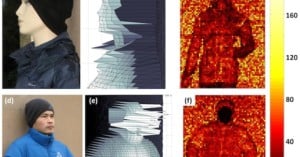
A team of researchers at Heriot-Watt University in Edinburgh have developed a new laser camera system that can take extremely precise 3D depth scan images from up to a kilometer away (0.62 miles). An impressive advancement in laser imaging, the camera uses a low power infrared laser beam to create 3D images precise to the millimeter.
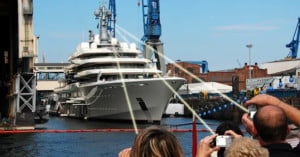
Earlier this month, we featured an upcoming license plate frame that uses bright flashes of light to prevent traffic enforcement photographs. In the article, we mentioned that the concept could potentially be used by the rich and famous to avoid the constant gaze of paparazzi cameras. Turns out the rich and famous are already one step ahead of us.
Eclipse, the world's largest private yacht owned by Russian billionaire Roman Abramovich, already features a high-tech anti-photography system that uses lasers to seek out and deny cameras.
The Nero Multi Trigger is a nifty camera triggering device that can make …
German scientists have been awarded a Guinness World Record for “fastest movie” after successfully capturing two images of an …
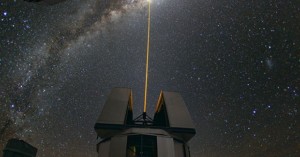
European Southern Observatory photo ambassador Yuri Beletsky shot a series of epic photos showing astronomers shooting powerful laser beams into the night sky. The photo above showing a laser beam pointed at the center of our galaxy was voted as last year's Picture of the Year over at Wikipedia.

On a rainy day recently, light painting photographer Jeremy Jackson was …
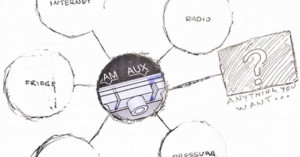
We have a bit of a scoop for you today: there's going to be a new Kickstarter-funded gadget announced on Thursday called the Triggertrap. It's a pretty nifty universal camera trigger that can trigger your camera's shutter with anything you can think of using a built-in intervalometer, a laser trigger, a sound sensor, and an Aux input that you can connect custom triggers to:
Think about it: You press your car horn, it takes a photo. Your phone rings, it takes a photo. The sun rises, it takes a photo. Anything is possible - and that's why this camera trigger is so eminently hackable and exciting to experimental photographers all over the world!
There's also a private sneak-peek of the Kickstarter video over on Vimeo. The password is TriggerTrap123.
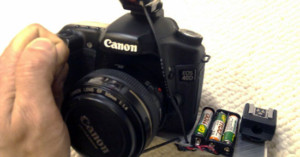
Photographer Adrian Onsen wanted to use the AI Servo autofocus mode on his …

We all know pointing your DSLR directly at the sun for extended periods of time isn't too healthy for your sensor, but what about laser lights like the ones used at concerts? Turns out those can be even more lethal for your camera, even with very brief exposures.
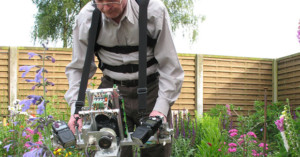
Belgian photographer fotoopa (“photo grandpa” in Dutch) …